Was Lindsey Graham Iran’s First Target?
The Iran–Russia Shadow Hanging Over Trump
Was Lindsey Graham Iran’s First Target?
The Iran–Russia Shadow Hanging Over Trump
Lindsey Graham returned from Kyiv carrying what may have been one of the most consequential weapons of his political career: a sanctions plan designed to threaten the economic machinery sustaining Vladimir Putin’s war. Within hours of returning to Washington, Graham was dead.
The official explanation is medically credible. A preliminary finding from the District of Columbia medical examiner identified an aortic dissection related to arteriosclerotic cardiovascular disease, a condition in which the inner wall of the body’s principal artery tears and can cause rapid death. Toxicological and microscopic testing were still pending when the preliminary finding was announced, but neither authorities nor Graham’s office disclosed evidence of poisoning or foul play. President Donald Trump, who said he had spoken with Graham shortly before the senator became ill, publicly rejected rumors of an attack.
Those facts must govern any responsible conclusion, but they do not explain why Graham’s death immediately acquired the atmosphere of an espionage thriller.
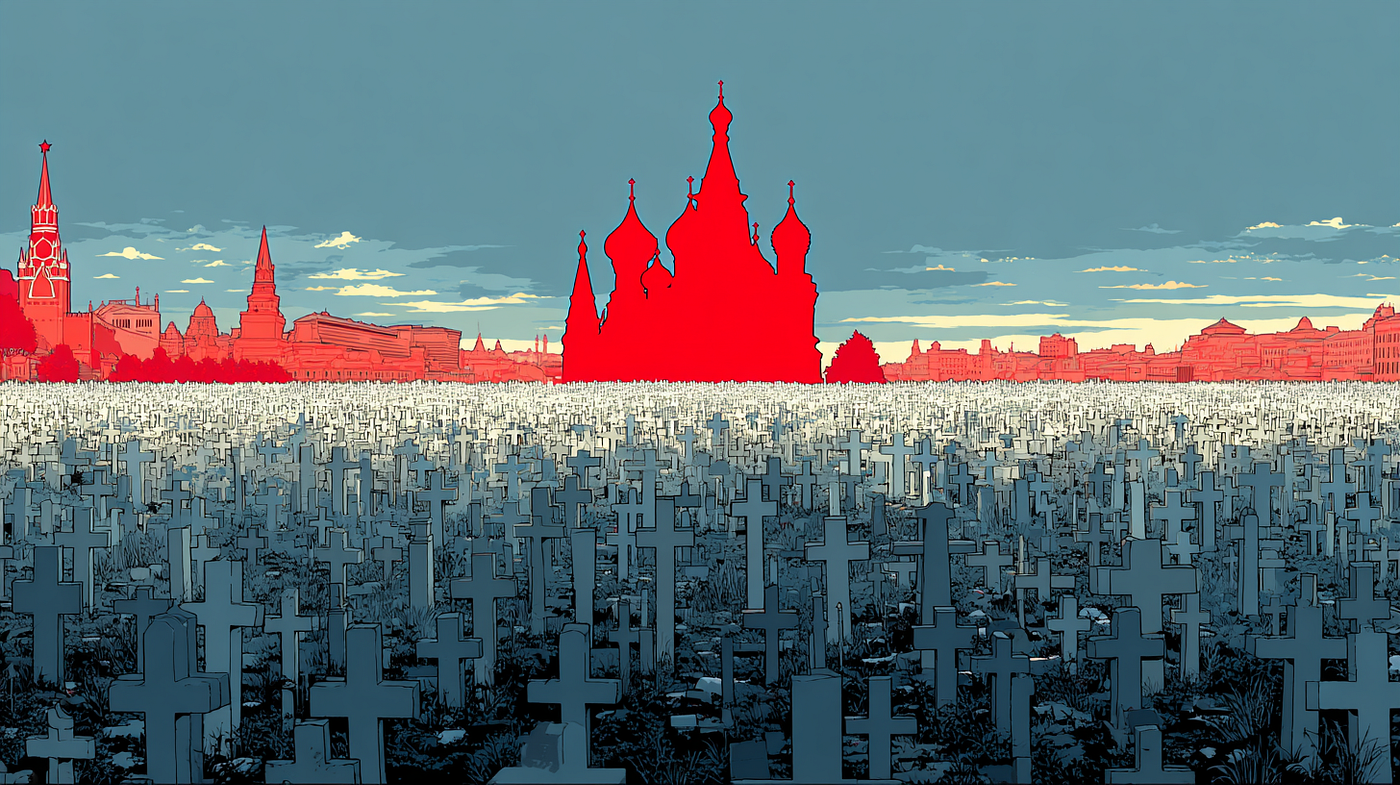
The answer lies in the identity of the man who died, the adversaries he confronted, and the unfinished mission he carried home from Ukraine. Graham stood at the intersection of America’s confrontations with Russia and Iran, two governments that increasingly cooperate against Washington while using different forms of pressure, intimidation, covert action, and strategic ambiguity.
There is no public evidence that either state killed him, but there is abundant evidence that both states had reasons to fear his influence.
The Weapon Graham Carried Home
During his final visit to Kyiv, Graham met Ukrainian President Volodymyr Zelenskyy and discussed Ukraine’s air-defense needs and legislation intended to increase economic pressure on Russia. He also argued that China could use its influence over Moscow to force Putin toward negotiations.
The sanctions initiative was potentially more dangerous to the Kremlin than another conventional weapons package because Russia has survived Western restrictions partly by redirecting energy exports toward China, India, and other buyers outside the traditional Western alliance. Graham’s strategy was to attack that arrangement indirectly by threatening penalties against countries that continued to purchase Russian energy.
This was economic warfare through secondary pressure. Rather than isolating Moscow alone, Washington would confront the governments and companies helping Russia evade isolation.
The true target was therefore not simply Russian oil, but the international network that converts Russian oil into military revenue.
That distinction created an unusual geopolitical triangle. Graham was threatening Moscow, but his pressure would also reach Beijing and New Delhi. He was attempting to turn access to the American economy into a weapon against Russia’s relationships with the Global South.
This explains why his final trip mattered. Graham was not returning from Kyiv as a ceremonial supporter of Ukraine, but as the political salesman for a measure designed to make Russia’s most important commercial partners reconsider the price of helping Putin.
If Moscow wanted the legislation to disappear, Graham’s absence may have appeared to solve a problem, but it may instead have created a larger one.
The Martyrdom Paradox
Political assassination, whether real or imagined, often contains a strategic contradiction. Removing a leader may destroy the network that only that person could command, but it can also transform that leader’s unfinished work into a moral obligation.
Graham’s sanctions bill could now become tribute legislation.
Members of Congress who might have objected to its economic consequences could find it harder to oppose a measure presented as Graham’s final mission. A complicated sanctions debate could become a referendum on whether the Senate intends to honor one of its most recognizable foreign-policy figures.
The dead politician can sometimes exercise greater emotional influence than the living legislator.
This is the first out-of-the-box conclusion produced by Graham’s death: anyone seeking to stop his sanctions campaign would risk strengthening it by turning the bill into his political monument.
If the package is renamed for Graham, his death could become embedded in American policy toward Russia for years. Every tariff imposed under the legislation would carry his political signature, and the Kremlin could find itself facing a sanctions law made more durable by the disappearance of its most visible architect.
The Man Between Trump and the Old Republican World
The more important loss may not be the sanctions bill’s author, but the disappearance of the one Republican who could translate an older interventionist worldview into the language of Trump’s movement.
Graham believed in American military power, NATO, support for Ukraine, pressure on Iran, and a close strategic relationship with Israel. These positions belonged to the Republican Party of John McCain, George W. Bush, and the post-Cold War national-security establishment.
Trump transformed that party. The MAGA coalition is more skeptical of alliances, foreign aid, prolonged wars, and the assumption that every international crisis requires American leadership. Vice President JD Vance and other influential figures have promoted a more restrained and transactional doctrine.
Graham survived this ideological revolution because he developed a relationship with Trump that was personal rather than merely institutional. He became a trusted golfing companion, political ally, and foreign-policy advocate who could challenge isolationist instincts without being immediately dismissed as an enemy of the president.
This made Graham strategically unusual. Ukraine had many supporters in Washington, but very few possessed his access to Trump. Israel had many defenders, but few combined his hawkish convictions with his influence inside MAGA.
Traditional Republican foreign-policy officials could write reports, testify before committees, and appear on television. Graham could telephone the president.
His death therefore creates what intelligence analysts might call a missing node inside a decision-making network. The most effective covert operation does not always remove the most powerful official; it can remove the person who connects institutions that would otherwise drift apart.
There is no evidence that this happened deliberately, but it accurately describes the political consequence. Trump has lost one of the last people capable of connecting him simultaneously to the Senate, Ukraine, Israel, the traditional national-security establishment, and the interventionist wing of his own party.
Iran’s Revenge Architecture
Russia had an economic motive to oppose Graham’s work, while Iran’s hostility was more ideological and personal.
Graham was a determined advocate of military pressure on Tehran and a vocal supporter of Israel. Iran, meanwhile, has maintained a long-running campaign of threats against American officials connected to the January 2020 killing of Qasem Soleimani.
The threat against Trump is not merely internet speculation. In November 2024, the United States Justice Department charged an Iranian asset, Farhad Shakeri, and alleged that the Iranian regime had tasked him with surveilling and developing a plan to assassinate Trump. The case also described the use of criminal associates to pursue Iranian dissidents in the United States.
Other Iranian-linked murder-for-hire cases have reinforced a recurring model in which Iranian interests allegedly intersect with criminal intermediaries operating far from Tehran.
This model matters because it differs from the popular image of espionage. An Iranian operation does not necessarily require a diplomat carrying poison through an airport or an elite commando team entering the United States. It can involve layers of separation between the government, an intelligence asset, a criminal recruiter, and the person expected to commit the violence.
Each layer creates distance, complicates attribution, and gives Tehran another opportunity to deny direct control.
The second unusual connection in Graham’s story is therefore that the most plausible modern assassination architecture may resemble organized crime more than a James Bond operation. Iran can outsource risk while preserving political intent.
Russia Supplies the Method, Iran Supplies the Vendetta
The phrase “Iran–Russia axis” is often used too casually. The two states are not a single organism, and they do not necessarily coordinate every action against the West.
Their interests overlap, but they also diverge. Russia seeks strategic depth, economic survival, and the weakening of NATO. Iran seeks regime survival, regional influence, protection from American and Israeli power, and revenge against officials it holds responsible for attacks on its leadership.
Their partnership becomes most dangerous where their capabilities complement one another.
Russia brings experience in surveillance, intelligence tradecraft, disinformation, cyberoperations, and the cultivation of ambiguity around unexplained deaths. Iran brings ideological patience, proxy structures, personal revenge narratives, and a demonstrated willingness to use intermediaries in alleged plots abroad.
This creates a hypothetical division of labor that Western security services must consider even without evidence connecting it to Graham. Russia could identify vulnerabilities, Iran could provide motivation and deniable networks, and both could amplify contradictory narratives after an incident.
Neither government would need to accept responsibility because the operation’s political impact could grow precisely through uncertainty.
This is the real “axis of evil” in the gray zone. It is not necessarily a joint command center where Russian and Iranian officials choose names from a list, but a strategic ecosystem in which both states learn from one another, trade capabilities, and benefit from the same atmosphere of Western insecurity.
Their most effective weapon may be convergence without fingerprints.
The Spy Story Hidden Inside a Natural Death
The medical explanation for Graham’s death is credible. Aortic dissection is associated with age, arterial disease, and hypertension, and sudden death from such a condition requires no foreign intervention.
The spy story begins not when evidence disproves the medical conclusion, but when people ask whether a natural vulnerability could theoretically be exploited.
Intelligence history includes weapons designed to disguise assassination as ordinary physiological failure. During the Cold War, Soviet-linked operatives and Western intelligence agencies explored toxins and delivery systems intended to produce rapid death while minimizing obvious forensic evidence.
Those historical episodes created an enduring public suspicion that intelligence services can manufacture a “natural” death.
However, the existence of historical poison programs does not make every cardiac death suspicious, and it does not demonstrate that an aortic dissection can be intentionally produced with precision or without detectable traces.
The distinction between capability and fantasy is crucial. A spy agency may possess exotic substances, but that does not mean it can reliably cause a specific artery to tear at a chosen hour. A target may have a pre-existing cardiovascular condition, but that does not prove anyone discovered or exploited it.
A sudden death may benefit foreign adversaries without being caused by them. The most dangerous conspiracy theory is often built from individually plausible components that never form a provable chain.
Why Novichok Would Be a Poor Choice
Novichok entered public discussion because it has become shorthand for Russian poisoning. It is dramatic, recognizable, and associated with past attacks against Russian defectors and opposition figures.
Operationally, however, Novichok would be a strange instrument for an assassination intended to resemble a routine cardiovascular death.
A nerve agent can create distinctive symptoms, expose bystanders, contaminate locations, and trigger international chemical-weapons investigations. It carries a political signature precisely because the world already associates it with Russia.
An intelligence service seeking perfect deniability would presumably prefer a method that did not announce its national origin.
This produces a paradoxical conclusion: the more famous an alleged Russian weapon becomes, the less useful it may be for a truly deniable operation.
Novichok is terrifying, but it is also a calling card. A professional service attempting to conceal involvement would not necessarily choose the poison most likely to place Moscow in every headline.
The obsession with Novichok may therefore distract from more realistic security concerns, including cyber intrusion, recruited insiders, criminal proxies, surveillance of travel patterns, drone threats, and attacks inspired by propaganda rather than directly controlled by a foreign state.
The New Espionage Battlefield Is the Medical Record
One of the most unsettling future vulnerabilities does not appear in traditional spy novels because it is hidden inside health data.
Political leaders undergo examinations, fill prescriptions, wear connected devices, use hospital systems, and generate enormous quantities of private medical information. Foreign intelligence services that obtain such data could theoretically learn which official has an aneurysm, an arrhythmia, a dangerous allergy, a compromised immune system, or a medication dependency.
That knowledge could support blackmail, guide disinformation, help an adversary spread believable rumors after a natural illness, or allow a hostile actor to time a propaganda campaign around a known medical vulnerability.
In the darkest hypothetical scenario, it could help someone design an attack tailored to the victim’s condition.
There is no evidence that Graham’s medical information was stolen or exploited, but the connection is important because it reveals how twenty-first-century espionage differs from Cold War mythology.
The critical secret may no longer be hidden in a diplomatic cable. It may be stored in a cardiology database.
The most valuable spy may not be positioned inside the Pentagon, but inside a hospital, medical contractor, insurer, or health-technology company.
Ambiguity as a Weapon
Russia and Iran do not need to have caused Graham’s death to benefit from it because they can benefit from Americans wondering whether they did.
Suspicion creates its own strategic effects. Security agencies must examine possible threats, politicians face pressure to demand investigations, and social media divides into incompatible realities. Some people accuse the government of concealing an assassination, while others accuse political opponents of manufacturing hysteria.
The adversary’s image grows larger. Moscow appears capable of killing anyone, Tehran appears patient enough to pursue revenge indefinitely, and the absence of evidence becomes evidence of professional tradecraft.
A normal medical finding can then be recast as proof that the method was undetectable, creating a conspiracy that cannot be disproved because every contradiction is absorbed into the theory.
This is precisely why ambiguity is so valuable in gray-zone conflict. A state does not need to prove that it carried out an operation; it only needs its enemies to behave as though it might have.
The psychological effect can exceed the physical act.
Trump Is the Real Target of the Story
Graham’s death is medically explained, but the threat to Trump remains independently real.
The Justice Department has publicly alleged Iranian involvement in plots targeting him and other critics of Tehran. Iran’s desire for revenge over Soleimani has survived changes in political leadership, negotiations, sanctions, and regional conflict.
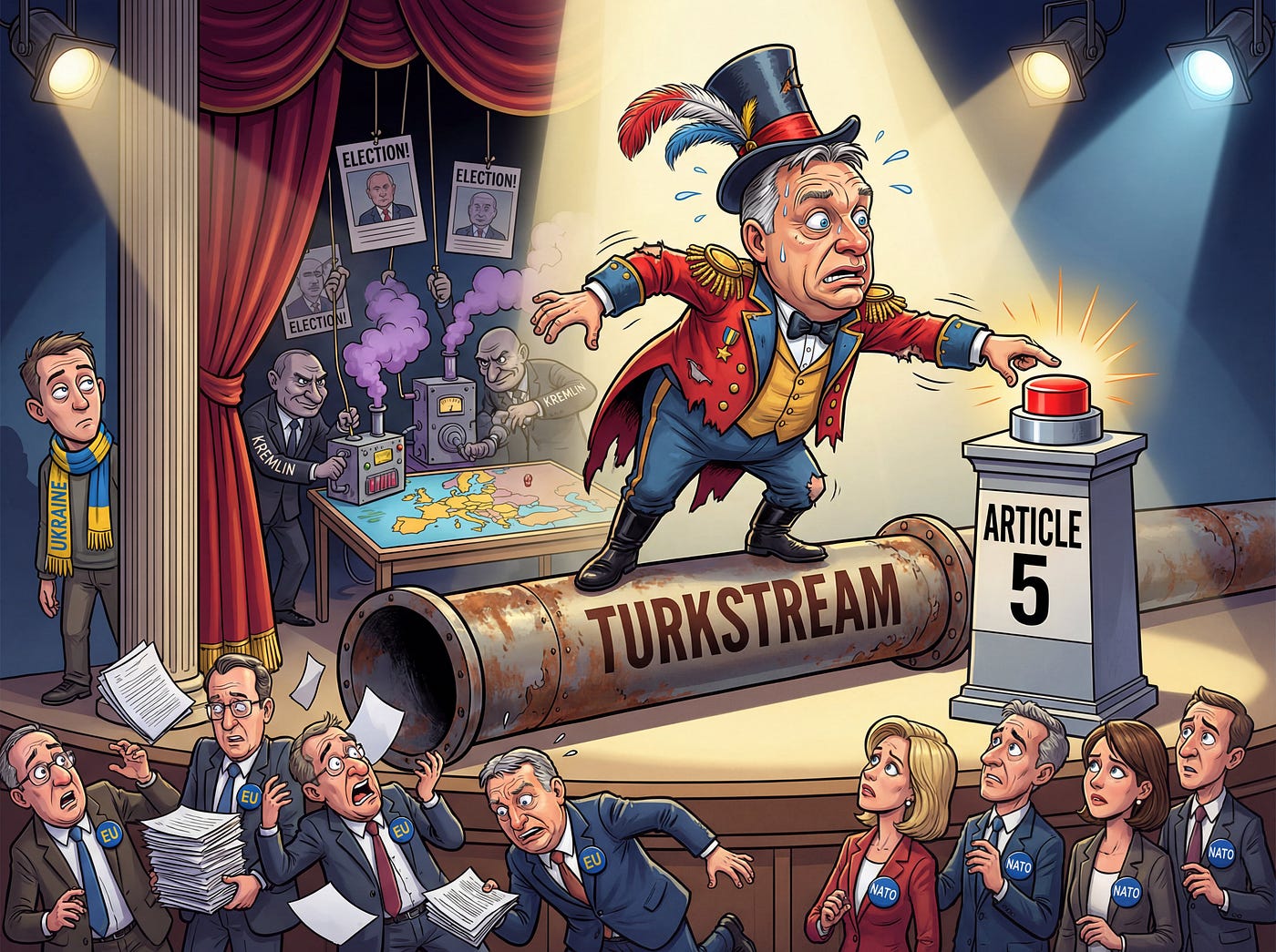
Trump also presents a uniquely attractive symbolic target. An attack against a senator would shock Washington, but an attack against the president could change the course of history, provoke war, fracture financial markets, and turn Iranian revenge into the defining geopolitical event of a generation.
Iran may understand that such an operation could invite devastating retaliation, which is one reason deterrence exists. The danger arises when an attack is deniable.
An intermediary could act without a signed order. A criminal group could receive money without knowing the ultimate sponsor. An assassin could claim ideological inspiration rather than operational direction. Russia could circulate forged evidence pointing toward a rival faction.
The greatest danger is not simply that Trump could be targeted, but that an ambiguous attack could force him to choose between restraint and war before attribution is certain.
The Dead Man’s Switch in Congress
Graham may have left behind a political version of a dead man’s switch.
In espionage fiction, a dead man’s switch activates when its owner is killed or incapacitated. It releases documents, exposes secrets, or triggers retaliation.
Graham’s switch is legislative. His death may activate pressure for sanctions that had previously remained delayed. His colleagues may move the bill not because new economic arguments emerged, but because the emotional cost of inaction changed overnight.
This possibility creates another strategic twist because the bill could damage Russia immediately, while Graham’s long-term absence helps Russia politically.
In the short term, Congress may honor him by escalating sanctions. In the long term, the Republican Party may drift further toward isolationism because its most effective internal advocate for Ukraine is gone.
Moscow could therefore lose the first battle and win the larger war. Russia may face Graham’s sanctions after his death while benefiting from an American political system that gradually becomes less willing to defend Ukraine.
This is not a contradiction, but the difference between tactical and strategic time.
The Tehran–Moscow Double Game
Iran and Russia may benefit from opposite American reactions.
If Graham’s death encourages a more aggressive response, Washington may escalate sanctions, military deployments, and covert pressure. This could reinforce the Iranian and Russian narrative that both states face an existential Western campaign.
If his death accelerates isolationism instead, Ukraine and America’s Middle Eastern partners may receive less consistent support.
Either outcome can be exploited. Escalation helps Tehran and Moscow mobilize nationalism, while retreat gives them greater room to operate.
Their ideal objective may not be a particular American policy, but permanent American instability between overreaction and withdrawal.
Graham had helped contain that instability by connecting Trump’s instincts with the strategic concerns of allies and traditional national-security officials. Without him, the pendulum may swing more violently.
Was Lindsey Graham the First Target?
There is still no public evidence that Lindsey Graham was assassinated. The preliminary medical finding points to a natural cardiovascular death, and no toxicology report, intelligence assessment, or criminal investigation has linked Russia, Iran, or any foreign service to his death.
But modern gray-zone warfare does not always require proof, responsibility, or even an actual operation.
Russia specializes in corrupting certainty. Iran specializes in preserving revenge. One weakens trust in institutions, while the other turns retaliation into political doctrine. Together, they can create the impression of a hidden hand without ever leaving one set of fingerprints.
That may be the real threat to Trump.
Not a vial of Novichok. Not necessarily a trained assassin. Not even a coordinated plot.
The greater danger is an ambiguous event that arrives at the worst possible moment, surrounded by enough motive, propaganda, and geopolitical tension to make restraint look like weakness and retaliation look inevitable.
In that world, a natural death can become a strategic signal, a rumor can move armies, and uncertainty itself can function like a weapon.
Graham may not have been the first target.
He may have been the first demonstration that America no longer needs to be attacked directly to be pushed toward panic, division, and war.
메타데이터
- post_id
- 7fae32a96a06
- slug
- was-lindsey-graham-irans-first-target-7fae32a96a06
- url
- https://medium.com/@alexbuzunov/was-lindsey-graham-irans-first-target-7fae32a96a06
- canonical_url
- https://medium.com/@alexbuzunov/was-lindsey-graham-irans-first-target-7fae32a96a06
- author_url
- https://medium.com/@alexbuzunov
- status
- ok
- fetched_at
- 2026-07-13 17:23:08