The Web Has a Missing Layer. Nobody Is Talking About It.
Every platform category that matters has dedicated infrastructure behind it. Commerce has Shopify. Payments have Stripe. HR has Workday…
The Web Has a Missing Layer. Nobody Is Talking About It.

Every platform category that matters has dedicated infrastructure behind it. Commerce has Shopify. Payments have Stripe. HR has Workday. Learning has Canvas. But the layer that determines how every business actually shows up online, the designed and intentional experience layer, has no dedicated infrastructure. It gets bolted together from themes, plugins, and CMS platforms that were never designed to work together. That gap has a name now. And it has a solution.
Think about what Shopify actually did.
Before Shopify, building an online store meant hiring a developer, cobbling together an ecommerce platform, designing something from scratch, configuring payments, managing hosting, and hoping it all held together under real traffic. Every merchant was solving the same foundational problem. Every merchant was reinventing the same wheel. The cost and complexity kept most small businesses offline or dependent on platforms they did not control.
Shopify did not invent ecommerce. It built the infrastructure that made ecommerce accessible, scalable, and consistent. The foundation layer that every merchant could build on without rebuilding from scratch. The merchant still gets to define their products, their brand, their story. But the infrastructure underneath is solved, maintained, and continuously improved by Shopify.
That is what a platform does. It solves the foundational layer once, at a level of quality that no individual business could justify building alone, so the businesses built on top of it can focus on what makes them distinct.
Now ask yourself: what is the equivalent infrastructure for experience?
The Gap Nobody Has Named
Every serious business invests in its digital presence. Websites, apps, content, brand. The decisions made at that layer determine how customers perceive the business, whether they trust it, whether they come back.
But almost no business has a real foundation under that layer.
What most businesses have is a theme. Someone else’s design decisions applied to their content. A WordPress template purchased or customized to approximate what the business wants to look like. A set of plugins assembled over time to add the functionality the theme did not include. A CMS that was designed around the platform’s logic rather than the business’s logic.
The DXP market in 2026 is less about assembling the right stack and more about mastering orchestration at scale, with content and governance becoming the gating factors. That is the enterprise version of the problem. But the same problem exists for every business that is not enterprise scale. They just have fewer resources to throw at it and fewer options when it breaks.
And it always breaks.
WordPress updates and the theme stops working. A plugin gets deprecated and takes three features with it. The business adds a new service line and discovers that the content architecture was never designed to accommodate it. Someone new joins the team and cannot figure out how to update the site without breaking something. The developer who built it is no longer available. The business is trapped inside someone else’s decisions.
This is not a WordPress problem specifically. It is an infrastructure problem. The experience layer, the designed, intentional, scalable foundation that connects a brand to its audience, does not have dedicated infrastructure built for it the way commerce, payments, and HR do.
That is the missing layer.
What Experience Infrastructure Actually Is
When I say experience infrastructure, I do not mean a better theme. I do not mean a fancier CMS. I mean three things working together as a unified foundation.
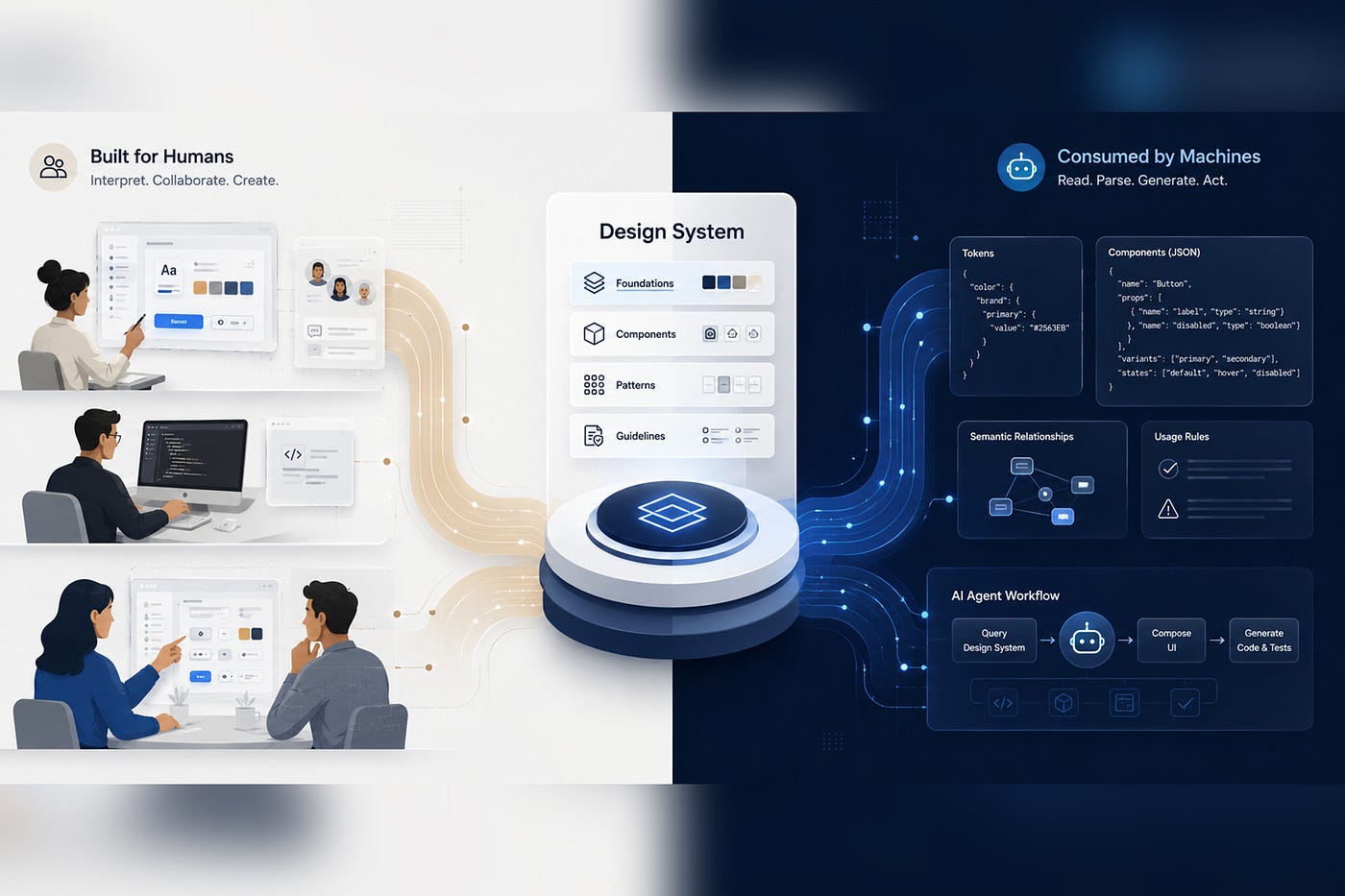
The first is a design system built for the business. Not a collection of generic components. A system of design decisions, tokens, patterns, components, and guidelines, that encodes what this business looks like, how it communicates, and what its standards are. A system that travels across every surface the business touches and ensures that every new page, every new feature, every new campaign starts from the same foundation rather than reinventing it.
The second is a content architecture that reflects how the business actually thinks. Not the architecture the platform imposes. The architecture that maps to how a contractor thinks about projects, how a studio thinks about work, how a service business categorizes its offerings. When the content architecture is right, the CMS feels like it was built for this business specifically, because it was. Clients understand it on first use. It does not require relearning every time the platform updates.
The third is a platform layer that scales. Infrastructure that gets better with every engagement, not just with every update cycle. New features added to the platform benefit every business built on it. New patterns raise the quality floor for everyone. The foundation is maintained, improved, and continuously developed, not abandoned after the project closes.
That combination, design system plus content architecture plus scalable platform, is what I mean by the Experience Platform. And it is what is missing from almost every small and mid-size business’s digital foundation right now.
Why This Matters More in 2026
The timing of this gap has never been more consequential.
AI is generating content and UI at a speed that was not possible two years ago. Businesses can now produce more digital output faster than ever before. But faster output without a real foundation does not produce a better experience. It produces more inconsistency, more quickly.
AI can generate a webpage. It cannot generate an experience. It can produce content that fills a template. It cannot produce content that reflects a coherent brand identity, a meaningful content architecture, and a design system that holds across every surface.
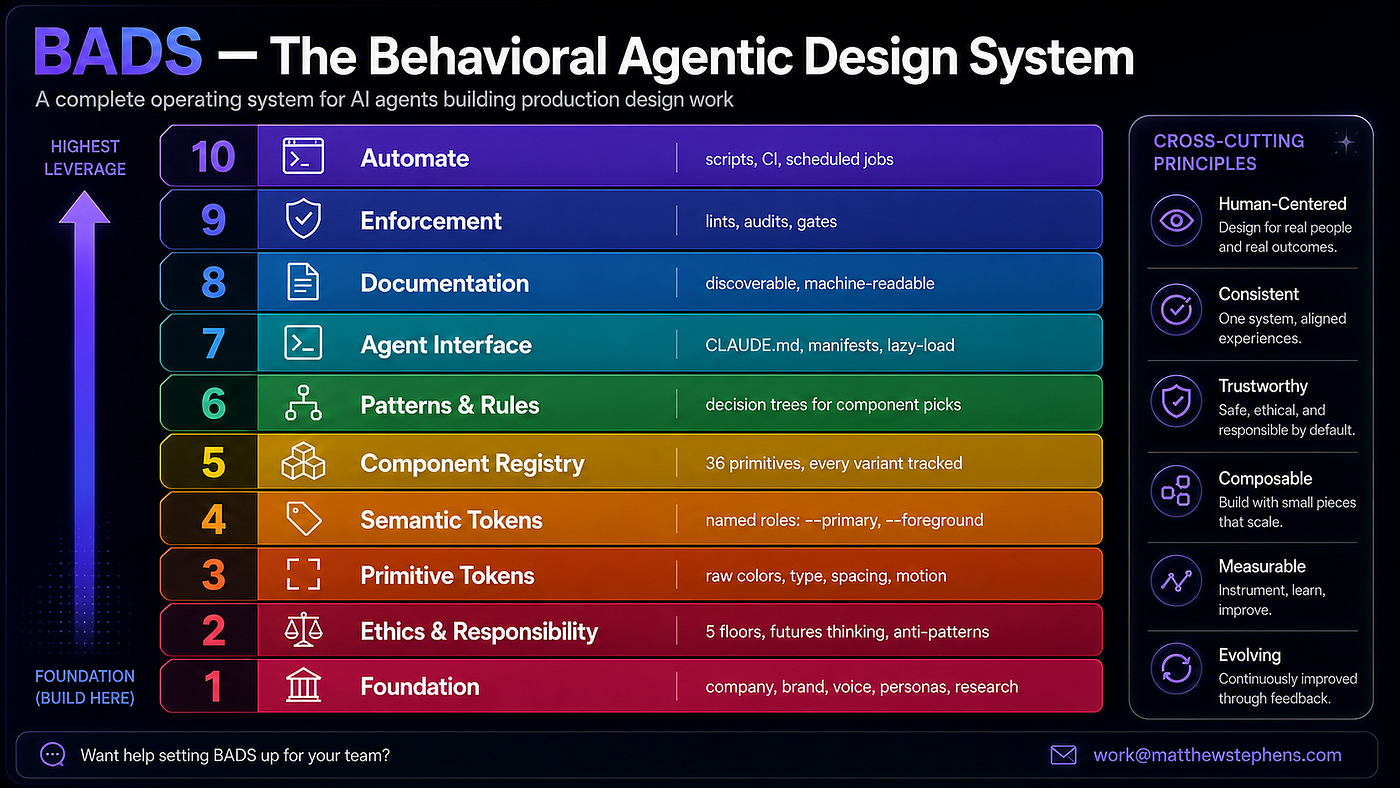
The Experience Platform is what makes AI output trustworthy rather than plausible. It is the foundation that gives AI something real to work from and something real to be validated against. Without it, every AI-generated page is a gamble. With it, every AI-generated page is a starting point the team can actually build on.
The Digital Experience Platform market reached $17.82 billion in 2026, driven by enterprises shifting from monolithic content systems to modular, API-first stacks. The enterprise market has been building toward this for years. The same shift is coming for every business, and the businesses that build the right foundation now will be the ones that can move with it rather than scrambling to catch up.
What Comes Next
Over the next three weeks, this series will make the full case for what the Experience Platform actually is and what it takes to build one that lasts.
Next week: why a theme is not a design system, and why that distinction compounds over time in ways most businesses do not see until it is too late.
The week after: what content architecture actually means, why most businesses get it wrong, and what it looks like when it is done right.
The final week: why a platform investment compounds in ways a project never can, and how to know if you are building one or just doing website work.
The missing layer has a name. The conversation about it starts here.
Eddie Lou is a UX and Design Engineering leader with 30+ years of experience at Cisco, PayPal, Apple, Visa, BigCommerce, and Indeed. He is the author of the Design Engineering Handbook (InVision / Design Better) and the founder of EFX Design, a design and development studio specializing in experience platforms, design systems, and custom product development.
Interested in evolving your design system? Let’s talk.
메타데이터
- post_id
- 7fae76fbdbd5
- slug
- the-web-has-a-missing-layer-nobody-is-talking-about-it-7fae76fbdbd5
- url
- https://www.designsystemscollective.com/the-web-has-a-missing-layer-nobody-is-talking-about-it-7fae76fbdbd5
- canonical_url
- https://www.designsystemscollective.com/the-web-has-a-missing-layer-nobody-is-talking-about-it-7fae76fbdbd5
- author_url
- https://medium.com/@ed-lou
- status
- ok
- fetched_at
- 2026-06-09 15:37:30