Eight RAG Patterns I Would Actually Consider in Production
Last week someone asked me which “new RAG architecture” they should adopt. My honest answer was: probably none yet. Not because the…
Eight RAG Patterns I Would Actually Consider in Production
Last week someone asked me which “new RAG architecture” they should adopt. My honest answer was: probably none yet. Not because the research is useless, but because most production teams still need to match the pattern to the failure mode they actually have.
Basic retrieval augmented generation is still the right starting point for many systems: embed documents, retrieve relevant chunks, pass context to a model, generate an answer. The newer variants are interesting when that baseline breaks in a specific way.
Here is how I think about eight newer RAG patterns without turning them into a shopping list.
1. DeepRAG: When Retrieval Should Be A Decision
DeepRAG treats retrieval as part of a reasoning process instead of a fixed pre-step. The model can decide when it needs external information and when it can continue reasoning from what it already has.
I would consider this for legal, medical, or research workflows where the question unfolds over multiple steps. I would not start here for a basic customer support bot. The system complexity is higher, and you need evaluations that measure whether retrieval decisions are improving answers rather than just adding latency.
2. RealRAG: When Freshness Matters More Than Elegance
RealRAG focuses on real-time or near-real-time retrieval. Think monitoring, news, market updates, incident response, or social streams. The challenge is not just retrieval quality. It is freshness, ingestion lag, and consistency.
The production tradeoff is obvious: fresher data usually means more pressure on indexing and caching. If your pipeline takes 20 minutes to embed and index new documents, you do not have RealRAG no matter what the architecture diagram says.
3. CoRAG: When One Search Is Not Enough
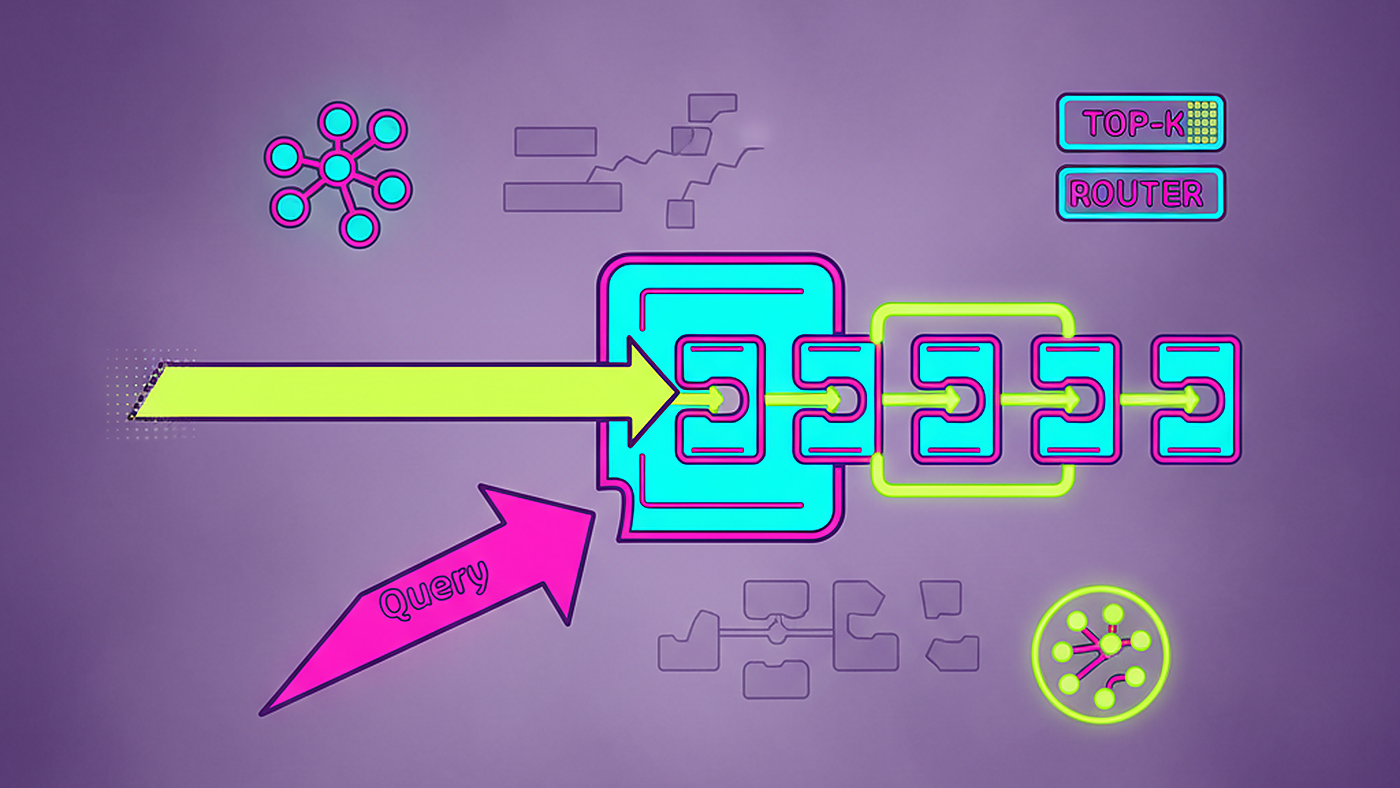
CoRAG, or chain-of-retrieval augmented generation, breaks retrieval into multiple steps. The model retrieves, reasons, identifies what is missing, retrieves again, and continues.
I like this for troubleshooting flows. A user asks why deployment failed. The system retrieves the error guide, then needs the Kubernetes event, then needs a recent config change. A single top-k search probably will not gather all of that.
The risk is runaway retrieval. I always set a step budget and log each retrieval call.
def chain_retrieve(question, max_steps=3):
    context = []
    query = question

    for _ in range(max_steps):
        docs = retrieve(query, top_k=3)
        context.extend(docs)
        decision = plan_next_step(question, context)
        if decision["done"]:
            break
        query = decision["next_query"]

    return dedupe_context(context)
This works only if the planner is constrained. Otherwise it can keep searching because searching feels safer than answering.
4. VideoRAG: When The Source Is Not Text
VideoRAG retrieves from video by using transcripts, frames, scene summaries, and sometimes multimodal embeddings. I would use it for lectures, product demos, training videos, or surveillance review.
The hard part is granularity. A 45-minute video is not one document. You need timestamps, scene boundaries, transcript segments, and probably frame-level metadata. Retrieval should return a moment in the video, not just the video title.
This is one of the few cases where Multimodal RAG is not optional. Text-only summaries can miss visual evidence.
5. CFT-RAG: When You Need Fast Rejection
CFT-RAG uses a Cuckoo Filter Tree style structure to filter candidates efficiently, often across text and image data. I think of this as useful when the search space is large and many candidates can be rejected cheaply before expensive retrieval.
Fraud detection is a good mental model. Most events are irrelevant. You want to narrow the space quickly, then spend expensive model calls only on the suspicious subset.
The tradeoff is implementation complexity. Filters are great when the reject logic is reliable. They are dangerous when false negatives hide the one item the model needed.
6. CG-RAG: When Relationships Matter
Contextualized Graph RAG adds graph structure around retrieved information. This helps when the answer depends on relationships: citations, dependencies, ownership, lineage, or entity connections.
I would use it for academic research assistants, compliance systems, and technical dependency analysis. A vector search can find semantically similar passages, but it does not naturally explain how one document depends on another.
The cost is data modeling. If your graph is stale or badly constructed, the system can look sophisticated while reasoning over bad relationships.
7. GFM-RAG: When The Graph Itself Needs Learning
Graph Foundation Model RAG goes further by using graph learning to reason over connections. This is interesting for patent analysis, drug discovery, knowledge graphs, or domains with rich entity relationships.
I would be careful here. It is powerful, but it adds a second modeling problem on top of the language model problem. You need graph quality, graph updates, and graph evaluation. For most product teams, this is not a first-year architecture.
8. URAG: When One Interface Must Handle Many Modalities
Unified RAG tries to support text, image, audio, and other inputs through one retrieval framework. Educational assistants are a natural example: a student may ask about a paragraph, a diagram, and a recorded lecture in one session.
The advantage is user experience. The risk is operational. Each modality has its own embedding model, chunking strategy, storage format, and evaluation method. A unified API should not hide those differences from the engineering team.
My Selection Rule
I choose the RAG pattern based on the failure mode:
• stale answers: RealRAG
• multi-step investigation: CoRAG
• visual or video evidence: VideoRAG
• relationship-heavy answers: CG-RAG
• high candidate volume: CFT-RAG
• multi-modal product UX: URAG
• complex reasoning with retrieval decisions: DeepRAG
I also check cost. A nice architecture that triples retrieval calls may be unacceptable if the product has low latency targets or high traffic. I use the RAG Cost Calculator early, not after launch.
Production Notes
Whatever pattern you choose, instrument it. Track retrieval count, retrieved token count, answer latency, grounding failure rate, and user correction rate. The architecture name matters less than whether the system produces better answers under real constraints.
My default is still simple RAG with strong chunking, good evals, and careful context budgeting. I reach for advanced patterns only when I can name the specific failure they solve.
A Message from AI Mind
Thanks for being a part of our community! Before you go:
- 👏 Clap for the story and follow the author 👉
- 📰 View more content in the AI Mind Publication
- 🧠 Improve your AI prompts effortlessly and FREE
- 🧰 Discover Intuitive AI Tools
메타데이터
- post_id
- 7fc8dc0892f1
- slug
- eight-rag-patterns-i-would-actually-consider-in-production-7fc8dc0892f1
- url
- https://pub.aimind.so/eight-rag-patterns-i-would-actually-consider-in-production-7fc8dc0892f1
- canonical_url
- https://pub.aimind.so/eight-rag-patterns-i-would-actually-consider-in-production-7fc8dc0892f1
- author_url
- https://medium.com/@PriyaSingh325
- status
- ok
- fetched_at
- 2026-06-17 14:59:50