Improving Image Retrieval for Visual Place Recognition through Seamless Adaptation of Pre-trained…
A practical and intuitive explanation of modern image retrieval techniques using pre-trained vision models.
Improving Image Retrieval for Visual Place Recognition through Seamless Adaptation of Pre-trained Models
A practical and intuitive explanation of modern image retrieval techniques using pre-trained vision models.
In this article you’ll learn:
- Why image retrieval remains challenging in Visual Place Recognition
- Why pre-trained models struggle without adaptation
- How global + local features work together
- Why geometry-free re-ranking can outperform RANSAC
Visual Place Recognition as an Image Retrieval Problem
At its core, Visual Place Recognition (VPR) is an image retrieval problem that asks a deceptively simple question:
Have I been here before?
Given a single image, the task is to search through a large database and find images that depict the same physical location.
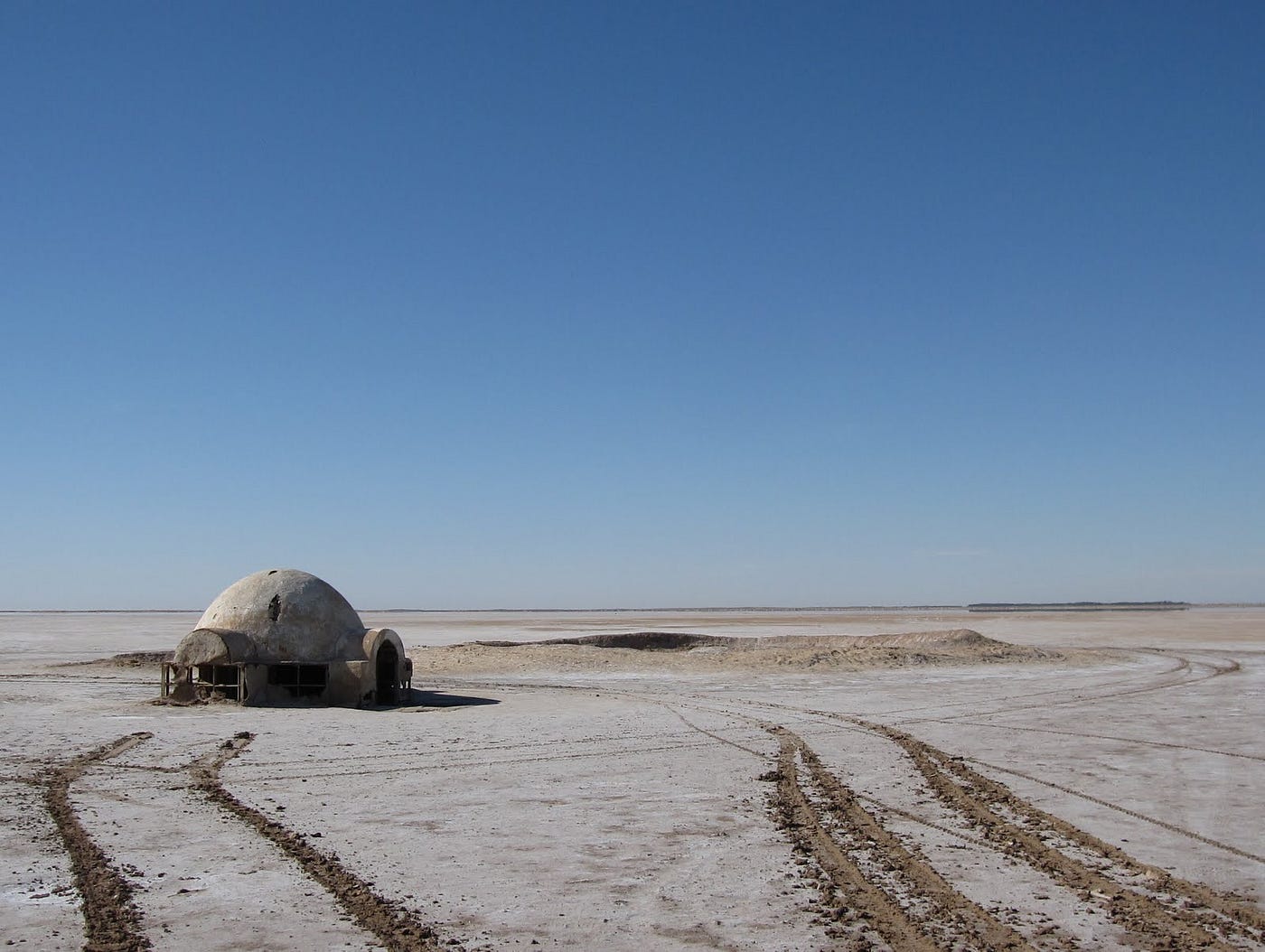
In theory, this is just image retrieval. In practice, it feels more like recognizing a planet in Star Wars after it has been terraformed, invaded, and shot under a completely different sun.
The problem is that places change their appearance constantly.
A street at noon looks nothing like the same street at night. Seasons, weather, viewpoints, and moving objects continuously reshape the scene. People and cars come and go like passing starships, while the structures that truly define a place remain in the background.
For an image retrieval system, the real challenge is learning to ignore the noise and focus on the elements that persist.
Pre-trained vision models seem like the obvious heroes of the story. Trained on massive datasets, they learn powerful and transferable visual representations that perform well across many tasks. However, when deployed directly in Visual Place Recognition, they often turn out to be looking in the wrong places.
Their training objectives favor visually and semantically salient objects — the equivalent of focusing on droids and stormtroopers — rather than the stable environmental structures that actually define a location.
This paper takes a different approach.
Instead of retraining these models from scratch, it proposes a seamless adaptation strategy that subtly redirects their attention. By introducing lightweight adaptation modules, the model learns to extract global representations for fast large-scale retrieval and dense local features for accurate re-ranking. All of this is achieved without relying on expensive geometric verification.
The result is an image retrieval system that is both efficient and precise, allowing pre-trained vision models to finally use the Force where it really matters.
Challenges of Image Retrieval in Visual Place Recognition
Why does the same place look completely different?
One of the main difficulties of Visual Place Recognition is that places rarely look the same twice.
A location can appear completely different depending on the time of day, the weather, the season, or the viewing angle.
From an image retrieval perspective, this is like trying to recognize a planet that keeps changing its atmosphere and lighting — Tatooine at dawn does not look like Tatooine at sunset.
On top of that, dynamic objects such as people, cars, or temporary structures constantly enter and leave the scene. These elements act as visual distractions, drawing attention away from the stable structures that truly define a place.
For a retrieval system, the real challenge is learning to ignore these passing characters and focus on the environment that remains, no matter how the scene changes.
Why do traditional two-stage pipelines struggle to scale?
Traditional Visual Place Recognition pipelines typically follow a two-stage retrieval process.
First, a global descriptor is used to retrieve candidate images. Then, local feature matching and geometric verification methods — often based on hand-crafted keypoints and algorithms like RANSAC — are applied to refine the results. While this approach can be effective, it comes at a significant computational cost.
In practice, this setup resembles assembling a team of specialists who do not always communicate well with each other.
Global and local components are often designed and optimized independently, making it difficult to fully exploit the capabilities of modern pre-trained vision models.
As a result, these systems are frequently forced to choose between accuracy and efficiency, achieving robust results at the expense of speed, or fast retrieval with reduced reliability.
Pre-trained Vision Models for Image Retrieval
Pre-trained vision models are often seen as the Jedi Masters of modern computer vision.
Trained on massive and diverse datasets, they develop a deep understanding of visual patterns and semantics, making them highly effective across a wide range of tasks.
From object recognition to general image retrieval, these models provide rich and transferable representations that have become the foundation of many state-of-the-art systems.
However, when it comes to Visual Place Recognition, these models are not always using their powers wisely.
Their training objectives are largely object-centric, encouraging them to focus on visually prominent elements such as people, vehicles, or signs.
In the context of place recognition, these elements are unreliable — more like background characters than defining features. The structures that truly characterize a location, such as buildings or spatial layouts, often receive less attention.
This mismatch limits the effectiveness of pre-trained models for place-level image retrieval. Recognizing a place requires robustness to appearance changes and an emphasis on persistent environmental structures, rather than transient objects.
Without adaptation, even the most powerful pre-trained models can struggle to answer the simple but crucial question: is this the same place?
Seamless Adaptation of Pre-trained Models
Motivation and Design Principles
If pre-trained vision models are powerful Jedi, adapting them for Visual Place Recognition is not about sending them back to the academy. Fully retraining these large backbones is costly, inefficient, and often unnecessary — like trying to rebuild a lightsaber every time the mission changes. Worse, excessive fine-tuning can cause the model to forget the general visual knowledge it has already mastered.
At the same time, deploying a pre-trained model without adaptation is like sending a Jedi into battle without explaining the rules of engagement. The model brings immense power, but it does not always know where to focus.
The goal of seamless adaptation is to guide that power with minimal intervention, preserving what the model already knows while subtly aligning it with the specific demands of image retrieval in Visual Place Recognition.
Lightweight Adaptation without Backbone Fine-Tuning
To achieve this balance, the approach introduces lightweight adaptation modules while keeping the backbone frozen.
These modules act like small adjustments to the Force: they do not change the Jedi’s abilities, but they influence how those abilities are applied.
By training only these lightweight components, the model learns global and local representations better suited for recognizing places, without sacrificing robustness or scalability.
The result is an efficient adaptation strategy that enhances performance while keeping the core strengths of the pre-trained vision model fully intact.
Global Feature Adaptation for Place-Level Retrieval
Why Use Vision Transformer Backbones for Place-Level Retrieval?
The proposed approach builds on Vision Transformer backbones pre-trained on large-scale visual datasets.
Compared to convolutional architectures, Vision Transformers provide a global receptive field and produce patch-based representations that capture long-range contextual information. This property makes them particularly well suited for place-level image retrieval, where global spatial structure is more informative than local object details.
By keeping the backbone frozen and adapting its representations through lightweight modules, the model preserves the general visual understanding learned during pre-training while shifting its focus toward place-discriminative cues.
Why Use GeM Pooling for Global Descriptor Extraction?
To obtain a compact global representation, the method aggregates patch-level features using Generalized Mean (GeM) pooling.
Unlike relying on a single classification token, GeM pooling combines information from all patch tokens and provides a more robust descriptor for retrieval.
This aggregation strategy produces discriminative global descriptors that support efficient similarity search and serve as the first stage of the retrieval pipeline, enabling scalable and accurate place-level image retrieval.
Efficient Re-ranking via Mutual Nearest Neighbor Matching
Avoiding Geometric Verification
Traditional image retrieval systems often rely on geometric verification techniques such as RANSAC to validate matches during re-ranking.
While reliable, these methods are computationally expensive and do not scale well. In many cases, they feel like deploying heavy machinery to solve a problem that no longer requires it.
The approach presented in this paper takes a lighter path. By relying on high-quality dense local features learned during adaptation, it removes the need for explicit geometric checks. Instead of enforcing rigid spatial constraints, the model trusts the consistency of its learned representations — less Death Star engineering, more precision strikes.
Mutual Nearest Neighbor Similarity Scoring
Re-ranking is achieved using a mutual nearest neighbor strategy. Local features from a query image and a candidate image are compared in feature space, and matches are kept only when two features select each other as their closest counterpart.
This mutual agreement acts as a simple but effective filter against noisy correspondences.
The final similarity score is based on how many of these mutual matches exist between two images. The more agreements found, the more likely the images depict the same place.
This strategy enables efficient and reliable re-ranking, delivering strong performance without the computational cost of traditional geometric verification.
Training Objectives for Retrieval-Oriented Adaptation
How Does Triplet Loss Learn Global Similarity Between Places?
To learn meaningful global representations, the model is trained using a triplet loss. At each step, it compares three images: a reference image, another image of the same place, and a third image from a different location.
The objective is simple — images of the same place should end up closer in the embedding space than images from different places.
This is like teaching Luke to recognize allies and enemies. Leia Organa should always feel closer to Luke than a random stormtrooper.
Over time, this objective structures the global feature space so that similar places naturally group together, enabling effective large-scale image retrieval.
How Does Mutual Nearest Neighbor Loss Improve Local Feature Learning?
While global features handle the big picture, local features need finer guidance. To achieve this, the model is trained with a loss based on mutual nearest neighbor matching.
This objective encourages local features from images of the same place to find and agree with each other, while discouraging matches with unrelated images.
Continuing the analogy, it is not enough for Luke to recognize Leia from afar; their signals must align when they meet face to face.
By reinforcing these mutual local correspondences, the model learns dense local features that support accurate and efficient re-ranking — without relying on geometric verification.
Evaluation Methodology
Datasets and Experimental Setup
The proposed method is evaluated on several standard benchmarks for Visual Place Recognition, covering a wide range of environments and appearance conditions.
These datasets include urban scenes with significant viewpoint and illumination changes, as well as large-scale benchmarks designed to evaluate retrieval performance and generalization.
Just as the Jedi Council evaluates a Padawan under different scenarios before granting the rank of Jedi Knight, the model is tested across diverse datasets to ensure that its performance is not tied to a single environment or condition. Each query image is matched against a reference database following standard retrieval protocols, enabling a fair comparison with existing methods.
Recall@K as the Primary Retrieval Metric
Retrieval performance is measured using Recall@K, the standard metric in Visual Place Recognition.
Recall@K measures the percentage of queries for which the correct location appears among the top K retrieved results.
Rather than judging how perfectly all possibilities are ranked, Recall@K focuses on whether the correct answer is found quickly. In that sense, it reflects a core Jedi principle: knowing the right path matters more than knowing every possible path.
This makes Recall@K particularly well suited for large-scale image retrieval, where efficiency and correctness outweigh exhaustive ranking.
Experimental Results
Does the Proposed Method Improve Retrieval Performance?
Experimental results show that the proposed approach consistently outperforms existing state-of-the-art methods across multiple Visual Place Recognition benchmarks.
By jointly adapting global and local representations, the model achieves higher Recall@K scores, indicating more reliable retrieval under challenging appearance variations.
This is not about raw power, but about control. The model does not simply retrieve more images — it retrieves the right ones, even when conditions change and visual cues become unreliable.
How Efficient Is the Retrieval Pipeline in Practice?
Beyond accuracy, the method delivers significant efficiency gains. By replacing geometric verification with mutual nearest neighbor matching, the re-ranking stage requires only a small fraction of the computation time of traditional two-stage pipelines.
This design reflects a familiar principle in the Star Wars universe: efficiency beats brute force. Instead of relying on heavy verification machinery, the model leverages learned representations to achieve faster and more scalable retrieval, making it well suited for large-scale and real-world applications.
Discussion
Key Insights and Contributions
This work shows that adapting pre-trained vision models for image retrieval in Visual Place Recognition does not require full fine-tuning.
By introducing lightweight adaptation and jointly learning global and local representations, the approach achieves strong retrieval performance while keeping computational costs under control.
The key insight is not about adding more complexity, but about alignment. When the model’s learned representations are properly guided toward place recognition, existing pre-trained knowledge becomes far more effective — much like focusing the Force rather than amplifying it.
Limitations and Open Challenges
Despite its strengths, the approach is not without limitations. In highly repetitive environments, where different places share very similar visual patterns, semantic similarity alone may not be sufficient for reliable discrimination.
In addition, the re-ranking stage still depends on the quality of the initial global retrieval, which can affect performance in particularly ambiguous scenarios.
These challenges point toward future directions, where improved robustness and complementary signals may be needed to handle the most extreme and uncertain cases — situations where even the Force has its limits.
Conclusion
Summary of Findings
This article explored how pre-trained vision models can be effectively repurposed for image retrieval in Visual Place Recognition through seamless adaptation.
Instead of relying on costly full fine-tuning or heavy geometric verification, the proposed approach introduces lightweight adaptation modules and combines global retrieval with efficient local re-ranking.
The result is a system that achieves state-of-the-art performance while significantly reducing both training and inference costs.
At its core, the key contribution lies in alignment rather than scale: guiding powerful pre-trained representations toward the specific signals that define places, rather than objects.
When global context and local detail are learned together, retrieval becomes both more accurate and more efficient.
Implications for Image Retrieval Systems
While the discussion focuses on Visual Place Recognition, the ideas presented extend far beyond this domain.
The same principles apply to many image retrieval problems where scalability, robustness, and efficiency are critical.
Lightweight adaptation, dense local reasoning, and geometry-free re-ranking offer a practical alternative to traditional pipelines that depend on expensive verification stages.
This work is a reminder that progress does not always come from building a bigger Death Star. Sometimes, the smarter path is learning how to use the Force more precisely.
As image retrieval systems continue to scale, approaches that favor adaptation over brute force are likely to define the next generation of practical and deployable solutions.
Note: This article is based on the paper “Seamless Adaptation of Pre-trained Models for Visual Place Recognition”. If you want to dive into the full technical details, you can find the original paper here: 👉 https://openreview.net/pdf?id=TVg6hlfsKa
That´s all for today! I hope you find this article interesting. See you in the next one. Feel free to clap, bookmark, and/or share the article if you think it’s valuable for others. Your support helps me create more content.
메타데이터
- post_id
- 7fdc24dada9b
- slug
- improving-image-retrieval-for-visual-place-recognition-through-seamless-adaptation-of-pre-trained-7fdc24dada9b
- url
- https://medium.com/@beonthecode/improving-image-retrieval-for-visual-place-recognition-through-seamless-adaptation-of-pre-trained-7fdc24dada9b
- canonical_url
- https://medium.com/@beonthecode/improving-image-retrieval-for-visual-place-recognition-through-seamless-adaptation-of-pre-trained-7fdc24dada9b
- author_url
- https://medium.com/@beonthecode
- status
- ok
- fetched_at
- 2026-07-13 18:49:59




