The Many Faces of Sherlock Holmes
…and why we can’t stop rebooting the Great Detective.
The Many Faces of Sherlock Holmes
…and why we can’t stop rebooting the Great Detective.
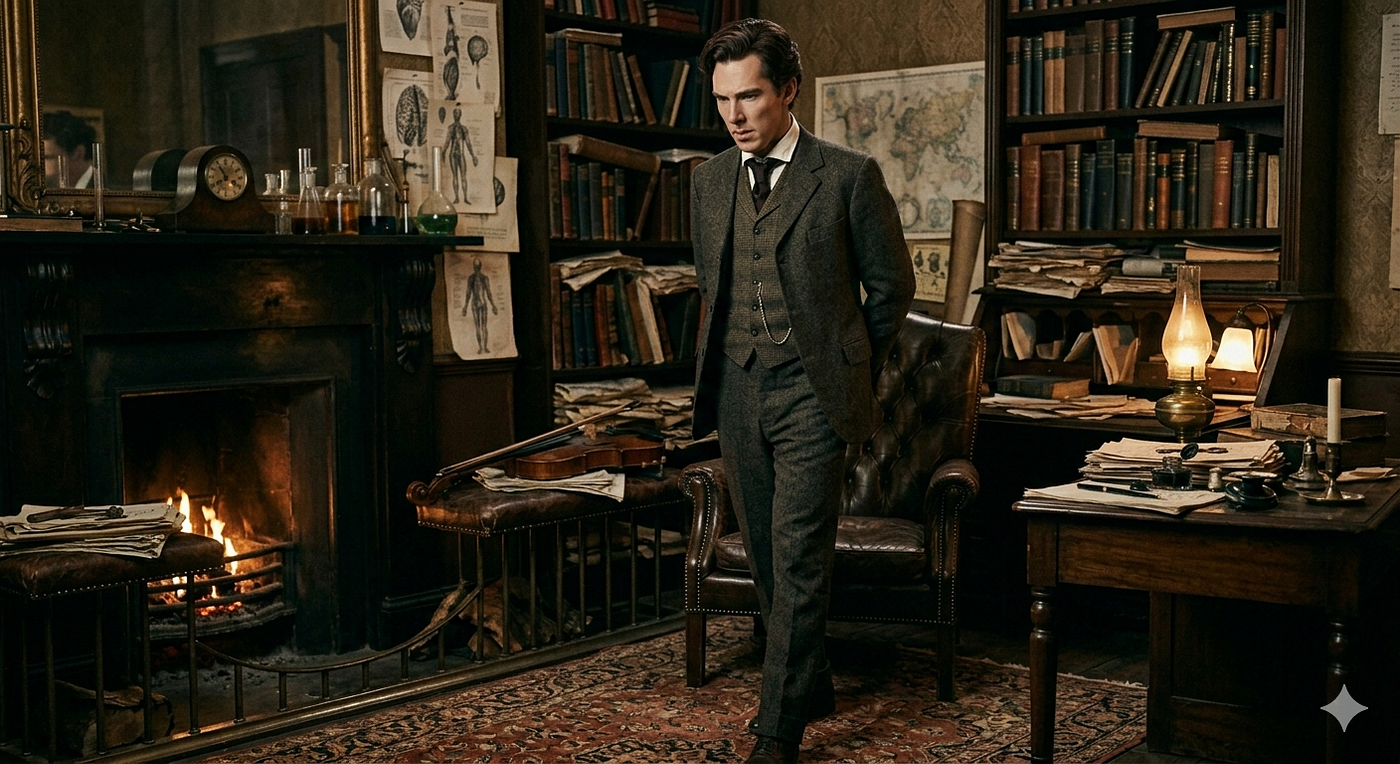
Sherlock Holmes, a fictional character by Sir Arthur Conan Doyle | Image Source: AI-generated
The deerstalker hat and the pipe are iconic, but at this point, Sherlock Holmes is less of a character and more of a Rorschach test for every generation of filmmakers. He’s been around for over 130 years, and ever since, directors have been treating him like a Lego set, tearing him apart and rebuilding him to fit whatever story they want to tell.
Purists prefer to look away. But if you like seeing the Great Detective stretched, skewed, and occasionally humbled, here are the many faces of Sherlock Holmes that push the boundaries of 221B Baker Street:
The Patient in The Seven-Per-Cent Solution (1976)
Before modern cinema got obsessed with Sherlock’s mental health, this 1976 film and the book it’s based on went there. In this movie, Holmes is a man losing his grip on reality.

Sherlock Holmes (Nicol Williamson) in The Seven-Per-Cent Solution (1976) | Image Source: Rotten Tomatoes
His obsession with Professor Moriarty isn’t a battle of wits; it’s a drug-induced paranoid delusion. Dr. Watson kidnaps him and takes him to Vienna to be treated by Sigmund Freud. It turns the Great Detective into a psychiatric patient, exploring the childhood trauma that made him so cold and clinical in the first place.
The Broody Big Brother in Enola Holmes (2020, 2022, 2026)
While the 70s focused on the internal breakdown of his mind, the 2020s turned the camera outward, examining his failure as a family man. In the Enola Holmes films, Henry Cavill gives us a Sherlock that is — dare I say it — distractingly buff and surprisingly empathetic. He isn’t the protagonist here; he’s the benchmark. He’s the supportive but traditional older brother.
Sherlock Holmes (Henry Cavill) in Enola Holmes (2020, 2022, 2026) | Image Source: Netflix
For once, Sherlock isn’t the smartest person in the room. Or at least, he’s not the one the story cares about. He plays a supporting role, acting as a mentor who has to learn that his little sister doesn’t need his protection as much as she needs his respect. It’s a softer, more domestic Holmes than we’re used to.
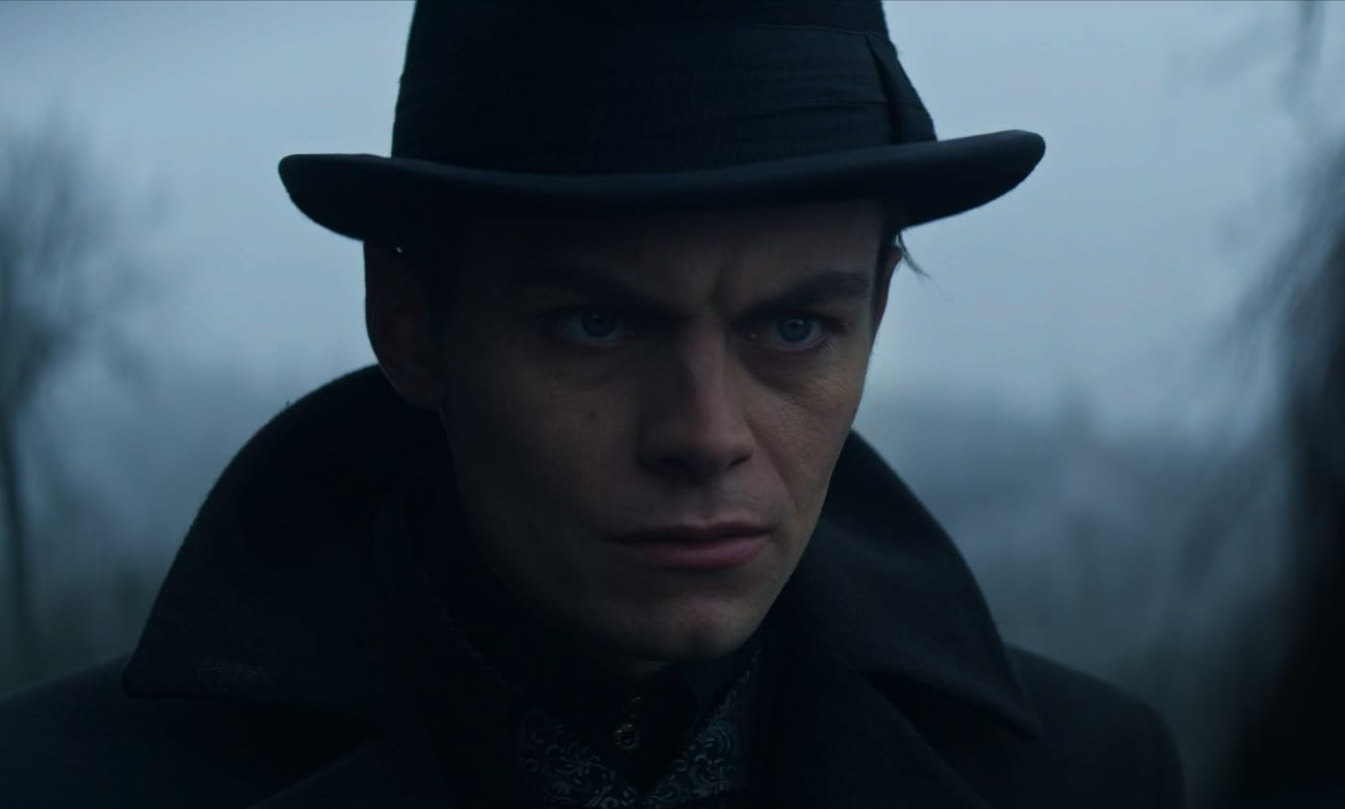
The Ghost of a Father in The Irregulars (2021)
Netflix’s The Irregulars took a hard left turn into the supernatural, and their version of Sherlock played by Henry Lloyd-Hughes is… well, he’s a mess. He is a broken, grieving addict who is falling apart, but still manages to play the violin.

Sherlock Holmes (Henry Lloyd-Hughes) in The Irregulars (2021) | Image Source: IMDB
Instead of the untouchable genius, he’s portrayed as a man haunted by a past love and a complicated connection to the show’s lead, Jessie. Here, Sherlock is the lover and father, but he’s failing at both. He’s a cautionary tale about what happens when a mind palace becomes a prison of regret.
The High-Functioning Action Star in Guy Ritchie’s Sherlock Holmes (2009)
Before Robert Downey Jr. was Iron Man, he was a Sherlock who looked like he hadn’t showered in three weeks and enjoyed a good bare-knuckle brawl. Guy Ritchie’s Sherlock Holmes is a Bohemian action hero.

Sherlock Holmes (Robert Downey Jr.) in Guy Ritchie’s Sherlock Holmes (2009) | Image Source: IMDB
Ritchie leaned into the Baritsu (the martial arts Doyle mentioned) and turned Holmes into a gritty, visceral fighter. This Sherlock doesn’t just deduce; he calculates the exact physics of a punch to the jaw. It’s Holmes as a messy, hyperactive genius who is physically incapable of being normal.
The Modern Sociopath in the BBC’s Sherlock (2010–2017)
We can’t talk about Holmes without Benedict Cumberbatch. This is the version that launched a thousand Tumblr blogs. In this TV series, Sherlock is an arrogant tech-wizard. He calls himself a high-functioning sociopath, though any actual psychologist would tell you he’s just a jerk with a high IQ.

Sherlock Holmes (Benedict Cumberbatch) in BBC’s Sherlock (2010–2017) | Image Source: Rotten Tomatoes
By moving him to 21st-century London, the show highlighted how his antisocial behavior would actually look today. If the 19th-century Holmes was a reaction to the industrial revolution, Benedict Cumberbatch’s version is a reaction to the information age. He uses iPhones instead of magnifying glasses, and his deductions look like floating text overlays. He is the ultimate Main Character Energy — someone so brilliant he’s borderline insufferable to everyone except Dr. Watson.
The Fragile Old Man in Mr. Holmes (2015)
If you want your heart broken, watch Ian McKellen play a 93-year-old Sherlock. He is a legend in his twilight.

Sherlock Holmes (Ian McKellen) in Mr. Holmes (2015) | Image Source: IMDB
He’s retired, keeping bees in Sussex, and he’s losing his mind to dementia. He is trying to solve one last case from his past, but his greatest tool — his brain — is betraying him. It’s a deeply human look at a character who is usually treated like a machine.
The Blueprint in House, M.D. (2004–2012)
I know, I know, he’s not named Sherlock in this one, but Gregory House is more Holmes than most actors who wear the hat. The Sherlock-like character is depicted as a grumpy medical genius.

Sherlock Holmes (Hugh Laurie) in House, M.D. (2004–2012) | Image Source: IMDB
You can call him a Medical Sherlock. He has a drug addiction (Vicodin instead of c*caine), he plays an instrument to think (piano/guitar instead of violin), and he lives at apartment 221B. The show treats medicine like a crime scene, proving that the Holmes archetype works even without a magnifying glass.
The Addict in Recovery in Elementary (2012–2019)
While the BBC was making Sherlock a high-functioning sociopath, CBS gave us Jonny Lee Miller’s version in Elementary. Mr. Holmes is fragile, tattooed, and deeply human in this one.

Sherlock Holmes (Jonny Lee Miller) in Elementary (2012–2019) | Image Source: IMDB
This version is a recovering addict living in modern-day New York. The most radical change, though, isn’t the location; it’s Joan Watson (Lucy Liu). By making Watson his sober companion turned apprentice, the show shifts the dynamic from hero-and-sidekick to two equals who are genuinely trying to save each other’s lives.
The Insecure Teenager in Young Sherlock Holmes (1985)
Produced by Steven Spielberg in 1985, this movie imagined what would happen if Holmes and Watson met at boarding school. It’s more like Harry Potter meets Indiana Jones.

Sherlock Holmes (Nicholas Rowe) in Young Sherlock Holmes (1985) | Image Source: IMDB
It breaks the canon (in the books, they don’t meet until they’re adults), but it gives us a Sherlock who is still learning. He falls in love, he makes mistakes, and we see the origin of the deerstalker trope and the pipe. It’s less about a finished genius and more about the origin of a lonely boy turning into a cold machine.
The Disney Mouse in The Great Mouse Detective (1986)
If you grew up in the 80s or 90s, your first Sherlock might have been a rodent named Basil of Baker Street with a high-energy Victorian whimsy.

Sherlock Holmes (voiced by Basil Rathbone) in The Great Mouse Detective (1986) | Image Source: IMDB
It’s Sherlock Holmes, but as a mouse living in the floorboards of the actual Sherlock Holmes’ house. It’s a brilliant way to introduce the character’s logic and ego to kids, complete with a tiny mouse version of Moriarty (Ratigan) who is voiced by horror legend Vincent Price.
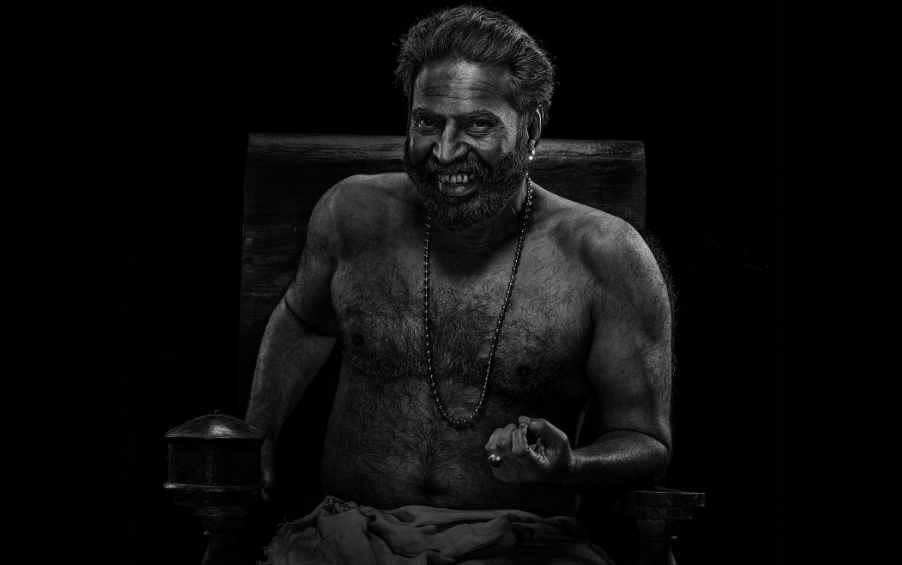
The Small-Town Eccentric In Shekhar Home (2024)
The character translates to the monsoon-soaked, nostalgic landscape of 1990s India in Shekhar Home. The series stars the legendary Kay Kay Menon, and it is a fascinating what-if for anyone who wondered how Sherlock would handle a world without high-speed internet or forensic labs.

Sherlock Holmes (Kay Kay Menon) in Shekhar Home (2024) | Image Source: IMDB
Forget the fog of London; this Holmes lives in a sleepy town called Lonpur in West Bengal. It’s all about 90s nostalgia: letters, landlines, and the kind of sharp observation that doesn’t rely on a database. Menon’s Shekhar is eccentric, but brilliant. He has this high-pitched giggle when he makes a breakthrough that makes him feel more like a quirky neighbor than a cold machine.
Honorable Mentions
- Without a Clue (1988): A comedy where Dr. Watson is the actual genius, and Sherlock Holmes is just a drunken, bumbling actor he hired to play the part so Watson could keep his medical reputation.
- The Adventure of Sherlock Holmes’ Smarter Brother (1975): Gene Wilder plays Sigerson Holmes, the jealous younger brother who tries to out-detect Sherlock.
- The Case of the Whitechapel Vampire (2002): A TV movie where Sherlock (played by Matt Frewer) has to drop the logic for a second and wonder if he’s actually hunting a supernatural bloodsucker.
Which Sherlock is the Best Sherlock?
Every movie, TV show, and series on this list will remind you that Sherlock Holmes doesn’t need a deerstalker to be Sherlock Holmes; he just needs a puzzle and a mind that won’t quit. I think we’ve reached a point where you can put any adjective in front of his name and someone, somewhere, has made a pilot for it.
Whether he’s a background mentor, a grieving father, or a teenager figuring things out, the character survives because he is infinitely adaptable. We don’t keep rebooting Sherlock Holmes because we’ve forgotten the stories; we reboot him because we’re trying to solve the one case he never could: ourselves.
That’s why he’s no longer just The Great Detective to filmmakers. He’s whoever they need him to be. And they don’t just want to show him solving crimes alone; they want to show him struggling with the same things we do: family, ageing, and finding a place in a world that doesn’t always make sense. But that’s the beauty of the character: he’s a hollow vessel we keep filling with our own modern anxieties.
Which version of the detective is your personal favorite, or do you think the original Doyle books still haven’t been topped?
메타데이터
- post_id
- 7fdd33ecf7e7
- slug
- the-many-faces-of-sherlock-holmes-7fdd33ecf7e7
- url
- https://medium.com/@chayad/the-many-faces-of-sherlock-holmes-7fdd33ecf7e7
- canonical_url
- https://medium.com/@chayad/the-many-faces-of-sherlock-holmes-7fdd33ecf7e7
- author_url
- https://medium.com/@chayad
- status
- ok
- fetched_at
- 2026-06-09 14:34:10