The Waqf Amendment Bill: A Harbinger of Modi’s Third-Term Political Strategy
Prime Minister Narendra Modi’s third term began under unique political circumstances, with the Bharatiya Janata Party (BJP) suffering a…
The Waqf Amendment Bill: A Harbinger of Modi’s Third-Term Political Strategy
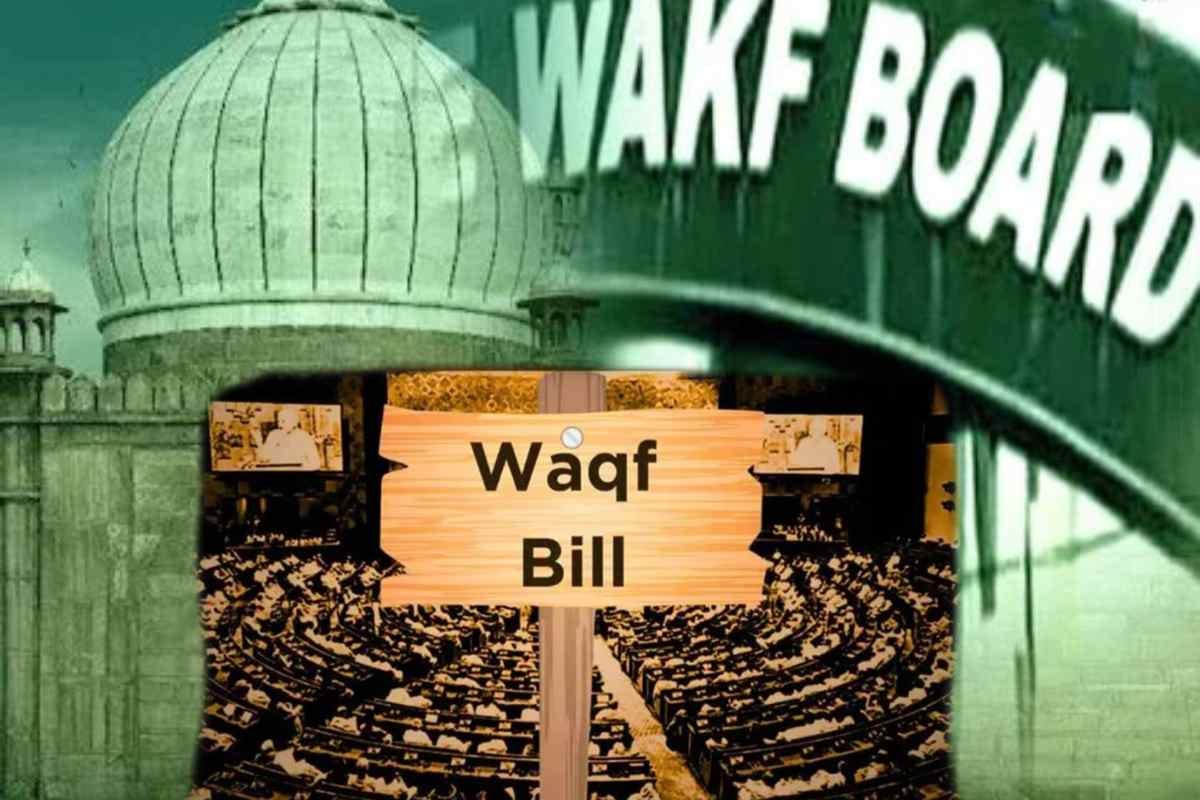
Prime Minister Narendra Modi’s third term began under unique political circumstances, with the Bharatiya Janata Party (BJP) suffering a significant setback in the 2024 Lok Sabha elections. The party’s seat tally dropped from a commanding majority to 240 seats, signaling the growing relevance of caste-based politics over Hindutva narratives. In response, the BJP has pivoted to recalibrate its political strategy, emphasizing issues such as “One Nation, One Election,” the Uniform Civil Code, and, notably, the Waqf (Amendment) Bill, 2024. Among these priorities, the Waqf Bill has emerged as a significant development, carrying far-reaching political implications.
The Genesis of the Waqf Controversy
The Waqf Amendment Bill has reignited national debates on minority rights, property laws, and the BJP’s longstanding criticism of “minority appeasement.” Introduced in the Lok Sabha on August 8, amid heated opposition, the bill seeks to amend existing laws governing the Waqf Board’s authority. Historically, the Waqf Board has had sweeping powers over properties designated as Waqf, leaving communities with little recourse against its claims. Critics argue that these powers often result in disputes and encroachments on Dalit muslims and non-Muslim properties, as exemplified by the ongoing controversies in Karnataka and Kerala.
In Karnataka’s Vijayapura district, the Waqf Board’s claim over 1,500 acres of agricultural land cultivated by the Pinjara community(A backward Caste Muslims) has become a flashpoint. The Pinjara farmers, who belong to backward caste groups, have tilled this land for generations. Their plight underscores the broader frustrations with the unchecked powers of Waqf Boards under existing laws. A similar situation in Kerala’s Kochi, where Latin Catholic families faced eviction due to Waqf property designations, has further fueled discontent.
BJP’s Strategic Repositioning
The Waqf issue is emblematic of the BJP’s strategy to shift the narrative from caste-based to religion-based polarization. By highlighting the grievances of non-Muslim and Lower Caste Muslims communities adversely affected by Waqf Board decisions, the BJP aims to project itself as a defender of “Hindu interests” against alleged minority overreach. This narrative serves a dual purpose: it consolidates Hindu votes across caste lines while portraying opposition parties, particularly the Congress, as proponents of minority appeasement.
In Karnataka, a Congress stronghold with a sizable Muslim population, the BJP has accused the ruling party of prioritizing Waqf board at the expense of marginalized lower caste muslim communities. This approach not only stokes resentment against the Congress but also provides the BJP with a platform to mobilize support among disillusioned sections of the electorate.
Polarization as a Political Tool
The BJP’s emphasis on the Waqf controversy aligns with its broader objective of achieving religion-based polarization. The party’s experience with contentious reforms, such as the Citizenship Amendment Act (CAA) and farm laws, has taught it valuable lessons in controlling narratives and managing public dissent. By framing the Waqf amendment as a necessary reform to curb minority appeasement, the BJP seeks to preemptively address opposition backlash while consolidating its base.
Unlike past controversies, the BJP appears more prepared to capitalize on the Waqf issue. Its calculated outreach to affected communities, such as the Pinjara farmers and Latin Catholic families, demonstrates a nuanced understanding of regional dynamics. Furthermore, the decision to refer the bill to a Joint Parliamentary Committee allows the party to present the legislation as a deliberative process, countering accusations of authoritarianism.
Implications for National Politics
The Waqf Amendment Bill is not just a regional issue but a microcosm of the BJP’s evolving political strategy. By amplifying localized grievances and positioning them within a national narrative, the party seeks to replicate its success with the Ram Janmabhoomi movement. Nevertheless, the BJP’s focus on the Waqf issue reflects its determination to retain relevance in a changing political landscape. As Mandal politics gain prominence, the BJP’s shift towards religion-based polarization indicates a long-term strategy to redefine societal divisions in its favor. This approach, while controversial, has the potential to yield significant political dividends, cementing the Waqf Amendment Bill as a defining development of Modi’s third term.
The Waqf controversy encapsulates the BJP’s response to the challenges of its third term. Faced with declining electoral dominance, the party has doubled down on its Hindutva agenda, leveraging issues like the Waqf Amendment Bill to galvanize support. While the long-term consequences of this strategy remain uncertain, its immediate impact on India’s political discourse is undeniable. By shifting the focus from caste to religion, the BJP is laying the groundwork for a new phase of its ideological project — one that will shape the contours of Indian politics for years to come.
메타데이터
- post_id
- 7fe0bbf2e816
- slug
- the-waqf-amendment-bill-a-harbinger-of-modis-third-term-political-strategy-7fe0bbf2e816
- url
- https://medium.com/@rk24440/the-waqf-amendment-bill-a-harbinger-of-modis-third-term-political-strategy-7fe0bbf2e816
- canonical_url
- https://medium.com/@rk24440/the-waqf-amendment-bill-a-harbinger-of-modis-third-term-political-strategy-7fe0bbf2e816
- author_url
- https://medium.com/@rk24440
- status
- ok
- fetched_at
- 2026-07-21 09:47:25