How Purification Systems Reduce Contamination in Pharma Production
A speck of dust or a single microbe can spoil an entire batch of product in the pharmaceutical manufacturing industry. It can result in…
How Purification Systems Reduce Contamination in Pharma Production

A speck of dust or a single microbe can spoil an entire batch of product in the pharmaceutical manufacturing industry. It can result in serious consequences for the patients and, at the same time, the pharmaceutical companies may lose millions of dollars.
As a result, pharmaceutical manufacturing prioritizes sanitation above everything else. The use of sophisticated purification systems is one of the main aspects of the pharmaceutical industry in providing safe products.
Let’s take a look at the working of these systems. We will see their importance in the field of contamination control and how they can help the pharmaceutical industries in India to stay safe and compliant.
Why Contamination Control Is Critical in Pharmaceutical Production
The pharmaceutical industry is patient safety-driven. Impurities in a drug can have harmful consequences. Contamination changes the activity or effectiveness of a drug, shortens the shelf life or results in a severe allergic reaction.
There are strict regulations for this industry. The regulatory authorities require complete compliance with good manufacturing practices (GMP). It will be in the best interests of any pharmaceutical company to comply with these practices for growth and sustainability.
In addition to safety, having a clean environment is cost-effective. Wasting time and valuable raw materials is a consequence of releasing a bad batch. Strong filtration systems ensure patient safety and help safeguard your business’s finances.
Common Sources of Contamination in Pharma Manufacturing
There are numerous sources of contamination in a production line. If we are aware of these, we can prevent them.
- Unwanted particles may be present in the Raw Materials: Water and active ingredients. Even if high-grade inputs are used in the manufacturing of API (Active Pharmaceutical Ingredients), there may be problems if they are not treated.
- The Environment: Dust, pollen and spores in the air. If the equipment is not properly air handled, these particles fall onto the equipment.
- Human Operators: Humans can be a significant source of microbes. Microbial contamination can be introduced by skin flakes, hair and breathing.
- Equipment Residue: Any chemicals or bacteria that have been left over from previous runs can spoil a new run. This is a major concern in downstream processing, in which products are subjected to a series of steps.
The Role of Purification Systems in Maintaining Pharmaceutical Product Quality
Purification systems are the first line of defense in a factory. They guarantee that each batch of drugs is safe and of high quality.
Ensure the integrity of the product.
Good setups ensure uniformity of pharmaceutical product quality. With the use of precise membrane filtration, you can be sure that every dose will have exactly the same purity. This uniformity helps ensure the safety and reliability of the medicine for the patients.
Preventing Microbe Growth
Bacteria grow best in wet areas. Biofilm is a problem that frequently occurs on water lines. A dependable ultrafiltration system will prevent the proliferation of these small dangers. It helps to maintain a biological hazard-free production line.
Moving forward in the field of Biologics and Vaccines.
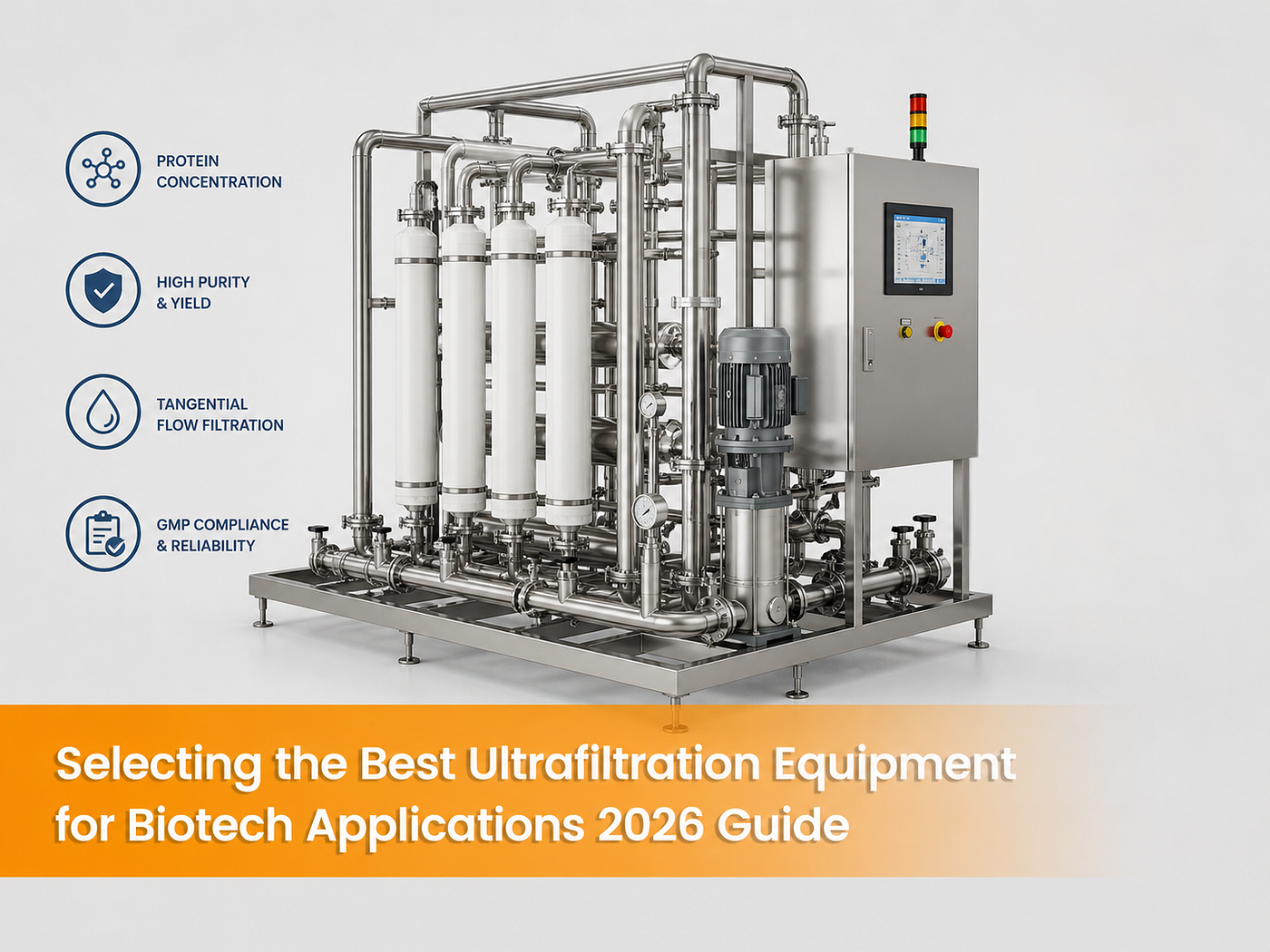
Some medicines, such as vaccines, must be handled with care. When purifying proteins from cells, it is important to isolate the target proteins without causing damage to the cells. Tangential flow filtration enables the liquid to move parallel to the filter surface. This feature not only reduces the damage to the cells but also helps in preserving the continuity of the process.
Key Considerations When Selecting Purification Systems
A decision on the set-up of your facility should be carefully considered. A “generic” option will not do.
Nature of the Fluid
Be mindful of the information you are screening. Does it have a consistency of thickness, heat or chemical aggressiveness? Microfiltration is most effective with coarse particles. Nanofiltration may be necessary for the separation of sugars or salts. Use the correct pore size for your filter for the desired molecule.
Scale of Production
Do you need to run small trials in your lab or large commercial runs? The required flow rates must be met without slowing production, and your equipment should be able to accommodate them. It should be able to ensure very good pharmaceutical quality control at any size.
Cleaning and Maintenance
Look for easy-to-clean systems as the machinery should have a possibility to do Clean-in-Place (CIP) cycles. This saves time as it eliminates manual disassembling and decreases the chances of human error.
Common Engineering Mistakes That Increase Contamination Risks
No matter how good the hardware is, if the system design is flawed, then it will fail. Steer clear of these pitfalls in engineering.
Dead Legs in Piping
A “dead leg” is a portion of a pipe where water comes to a halt. Poor water quality results in bacteria breeding. Engineers have to ensure that fluids flow continuously in piping loops.
Selecting an incorrect material
Low-grade steel may result in corrosion. Rough surfaces provide microbe hiding spots and growth. For all product contact surfaces, use high-quality polished stainless steel.
Overlooking Filter Life
Filters are not permanent. A clogged filter can be ripped if it’s forced to continue operating. This eliminates the need to use your sterile manufacturing process. Be sure to check for pressure drop to change filters in time.
Conclusion
Contamination control is a process that is not a matter of simply checking a box on a regulatory audit. It is the basis for producing safe drugs. All the processes involved in the manufacture of api to final packing must be absolutely clean.
A high-quality purification system is a worthwhile investment to ensure that your brand is preserved, that inspectors are met, and that lives are saved. Sanitech Engineers offers reliable, efficient filtration solutions for industrial applications in India. Contact experts, and work together towards pure, efficient, and fully compliant production lines.
This Blog is originally posted on Sanitech Engineers. Read the full Blog here: How Purification Systems Reduce Contamination in Pharma Production
메타데이터
- post_id
- 7fe207cd0c24
- slug
- how-purification-systems-reduce-contamination-in-pharma-production-7fe207cd0c24
- url
- https://medium.com/@sanitechengineersseo/how-purification-systems-reduce-contamination-in-pharma-production-7fe207cd0c24
- canonical_url
- https://medium.com/@sanitechengineersseo/how-purification-systems-reduce-contamination-in-pharma-production-7fe207cd0c24
- author_url
- https://medium.com/@sanitechengineersseo
- status
- ok
- fetched_at
- 2026-08-24 05:21:24