Mars Mission 2029: The 4 Engineering Problems SpaceX Must Solve First
SpaceX keeps moving the date. Here’s why the engineering — not the calendar — is what actually matters.
Mars Mission 2029: The 4 Engineering Problems SpaceX Must Solve First
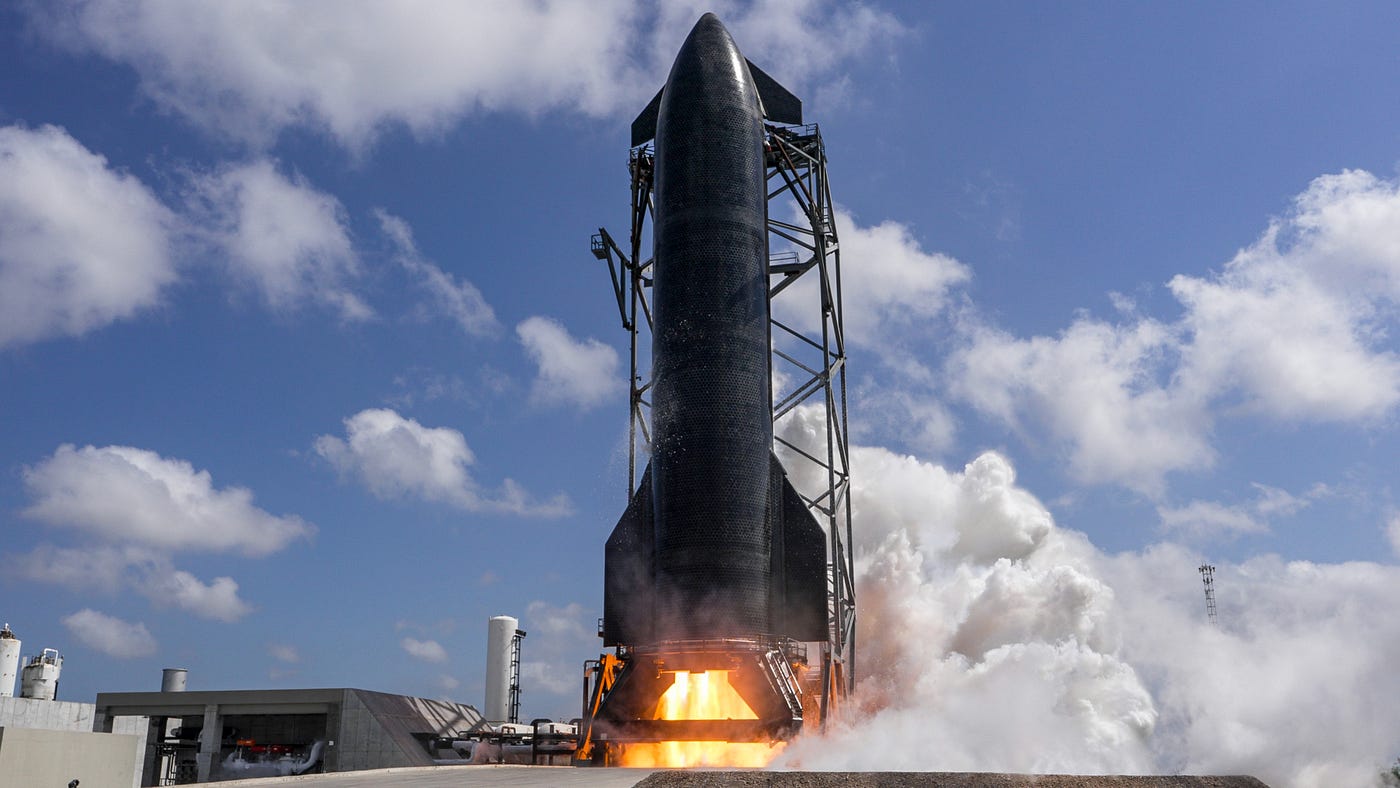
SpaceX keeps moving the date. Here’s why the engineering — not the calendar — is what actually matters.
Elon Musk’s target date for landing humans on Mars has already slipped twice. Originally 2024. Then 2026. Now the official projection sits at 2029. You could read that as a company failing to deliver. Or you could read it as a genuinely hard problem getting the honest timeline it deserves.
SpaceX has earned the right to be taken seriously. Routinely landing orbital boosters upright on drone ships, turning full rocket reuse into a profitable business model — these were problems the aerospace industry had quietly accepted as unsolvable. SpaceX solved them anyway.
But reaching low Earth orbit represents roughly 1% of the energy and complexity required to reach another planet. The remaining 99% runs straight into four engineering chokepoints that have never been cleared. Fail any single one, and the mission physically cannot happen.
[embed]
The Scale of What’s Actually Being Proposed
The plan isn’t one rocket. It’s a fleet of six Starships launching together — four carrying cargo, two carrying up to 200 passengers. That coordination alone would be historically unprecedented. And before any of those ships can leave Earth’s orbit, the first chokepoint hits immediately.
Chokepoint 1: Orbital Refueling
A Starship cannot carry enough propellant to reach Mars from launch. It has to top up in low Earth orbit, a process requiring 12 to 15 separate tanker flights to deliver the necessary fuel to a single outbound ship.
That means docking two separate vehicles and pumping roughly 100 tons of super-cooled liquid propellant between them in microgravity — a process never tested at anything close to this scale.
SpaceX made real progress in 2024, successfully transferring propellant between tanks inside a single Starship. That’s meaningful. But moving cryogenic fluids between two entirely separate docked spacecraft introduces a different class of problem: shifting pressures, sloshing liquids, and the need to maintain precise vehicle alignment throughout. The gap between “same vehicle” and “two docked vehicles” is not trivial.
Chokepoint 2: Deep Space Radiation
Once the fleet departs on a trans-Mars trajectory, the crew leaves the protective bubble of Earth’s magnetic field for six to nine months.
Two radiation environments make this dangerous:
- Galactic cosmic rays — high-energy particles streaming constantly from outside the solar system, causing cumulative cellular damage with no adequate shielding solution yet proven for long-duration spaceflight
- Solar particle events — sudden eruptions from the sun capable of delivering a lethal radiation dose within hours if the crew is unshielded
On the International Space Station, an emergency means astronauts are four hours from Earth. On a Mars transit, there is no rescue trajectory. No early return option. A minor systems failure can cascade into a fatal event with no intervention possible from the ground.
Chokepoint 3: Landing 200 Tons on Mars
Mars presents what engineers call an aerodynamic paradox. Its atmosphere is just 1% the density of Earth’s — too thin to rely on parachutes for deceleration, but dense enough to generate catastrophic heat on a fast-moving heavy object during entry.
The scale difference is stark. The heaviest object humanity has ever successfully landed on Mars is a one-ton rover. A fully loaded Starship weighs approximately 200 tons. That’s not an incremental engineering challenge. That’s a 200x leap with no intermediate test cases.
Entry, descent, and landing at this mass is genuinely unsolved territory.
Chokepoint 4: Manufacturing the Return Fuel on Mars
Here’s the one most people underestimate. It’s impossible to pack enough propellant on the outbound trip to fly back to Earth. The theoretical solution: build a fuel factory on Mars before the crew ever leaves.
The plan calls for an autonomous ISRU (in-situ resource utilization) reactor to:
- Mine local water ice from the Martian surface
- Extract carbon dioxide from the thin atmosphere
- Synthesize approximately 1,200 tons of liquid methane and oxygen for the return flight
This entire industrial plant must land on Mars, survive a brutal Martian winter, and operate flawlessly — without human oversight — before a single crewed ship is authorized to depart Earth.
“An entirely untested robotic industrial plant must land, survive, and manufacture a thousand tons of return fuel before the humans are even allowed to leave.”
That sentence should stop you. It’s not a futuristic challenge. It’s a prerequisite.
Why the Launch Windows Are Non-Negotiable
Earth and Mars align for an energy-efficient transfer window exactly once every 26 months. Miss a window and you don’t try again next season — you wait over two years.
The viable windows remaining this decade:
- 2026 — Robotic cargo only; tests whether a vehicle at this mass can survive Mars entry, descent, and landing
- 2028 — Potential for early ISRU equipment deployment; testing propellant production
- 2031 — The earliest credible date for a crewed mission, contingent on everything before it working
- 2033 — The realistic fallback if 2031 slips
SpaceX’s own current projection of 2029 doesn’t align with any launch window. 2031 is the earliest technically credible date, and only if the 2026 and 2028 windows produce flawless results.
What to Actually Watch For
Predictions are noise. Hardware is signal.
The 2026 window is the first real test. If a Starship-class vehicle successfully executes entry, descent, and landing on Mars at meaningful mass, that validates the single biggest unknown in the entire mission architecture. If it fails — or if the launch slips entirely — the 2031 timeline moves right with it.
Real progress on the Mars checklist isn’t measured in announcements. It’s measured in hardware that flies and tests that validate the math.
Watch 2026. What lands on the surface will tell you exactly where this mission actually stands.
If you found this useful, follow for more…
메타데이터
- post_id
- 7fe2c802501c
- slug
- mars-mission-2029-the-4-engineering-problems-spacex-must-solve-first-7fe2c802501c
- url
- https://medium.com/@blogpranshu/mars-mission-2029-the-4-engineering-problems-spacex-must-solve-first-7fe2c802501c
- canonical_url
- https://medium.com/@blogpranshu/mars-mission-2029-the-4-engineering-problems-spacex-must-solve-first-7fe2c802501c
- author_url
- https://medium.com/@blogpranshu
- status
- ok
- fetched_at
- 2026-06-09 15:37:30