Women’s Bodies Build Families. Men’s Names Still Own Them.
Pregnancy, birth, postpartum, and caregiving expose who actually carries the weight of parenthood.
Women’s Bodies Build Families. Men’s Names Still Own Them.
Pregnancy, birth, postpartum, and caregiving expose who actually carries the weight of parenthood.
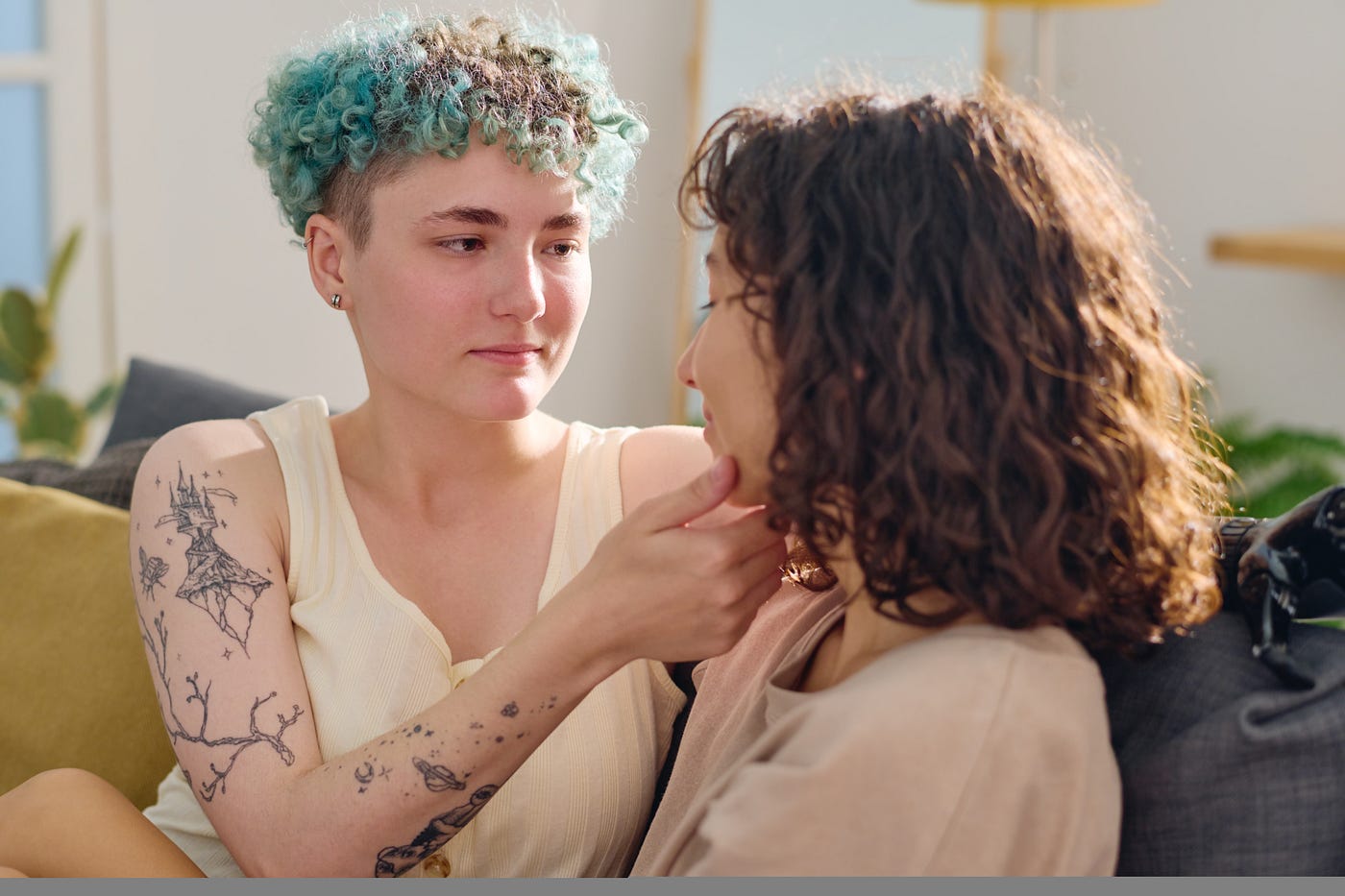
Photo by Isabela Martins on Unsplash
I was in a conversation with a woman I know — she is Nigerian, grew up in Lagos, has been in Europe for seven years — and she told me something that I have not stopped thinking about since.
Her cousin had just given birth to her second child. Three weeks after the birth, the husband left the house. Not for another woman. Not for a work emergency. He left, she told me, because he could not stand postpartum. Because the baby cried too much and the house was loud and his wife was not the version of herself he preferred — not cheerful, not accommodating, not easy. So he went somewhere quieter and sent money and called it providing.
When people asked where he was, the family gave vague answers. He needed space. He was working. He would be back soon.
When she finally asked him directly, he said — and she repeated this to me in a tone that had long since passed grief and arrived somewhere colder — he said he hated his wife when she was nursing their first child. He said she was always complaining. Always overwhelmed. Always disrupting his sleep.
He said it like an explanation. Not an apology.
And nobody challenged him. That is the part I keep returning to.
Not his mother. Not the family. Not the community that had gathered to celebrate the baby three weeks earlier with food and gifts and photographs. His absence was noted and then absorbed into the ordinary texture of how things are. His wife stayed behind with a newborn and a body that was not yet hers again and a silence where a partner was supposed to be.
And she survived it. Because women do. Because surviving is what women have been assigned in place of justice.
I want to talk about why.
Men don’t hate babies. They hate the version of women that postpartum produces.
Let me be precise about this, because imprecision is how the conversation gets lost.
Men, broadly, love babies. They love the announcement. The gender reveal. The naming ceremony. The photographs of themselves holding a small new life with an expression of wonder that the internet celebrates and the family frames.
What they cannot stand — what this husband named out loud in a moment of honesty that nobody was prepared to call what it was — is the woman behind the baby.
The woman who is bleeding while breastfeeding. Who cannot sit comfortably for six weeks. Whose body was split open or torn apart in order to produce the child they are photographed holding with such tenderness. Who is awake at 3am and 5am and 7am not because she is failing to sleep but because a human being requires feeding every two hours and she is the one with the body that does the feeding.
That woman — the real one, the one in the middle of something enormous, the one who is not cheerful or accommodating or sexually available or emotionally easy — is the one they leave.
Physically, like this husband. Or emotionally, which is more common and more deniable — the man who stays in the house and retreats into work, into silence, into sleep, into anything that allows him to be present on paper and absent in every way that counts.
“Postpartum is not romantic. It doesn’t perform gratitude. It doesn’t make him feel needed in the ways he prefers. It asks for patience instead of praise. And that is precisely where so many men go quiet.”
He cannot cook. He cannot clean. He has never had to. And this is not an accident.
The woman I was speaking with told me something else. She said that when her cousin’s husband was eventually pressed — by his own mother, who was one of the women holding the household together in his absence — he said he genuinely didn’t know what to do. He didn’t know how to help. He wasn’t sure what was needed.
I have heard this so many times, in so many forms, from so many women describing so many men, that I have stopped receiving it as information about individual men and started receiving it as information about a system.
Because here is what I know: the same man who cannot locate the nappies in his own home can locate the files he needs for a client presentation at 6am without assistance. The same man who does not know how to make a bottle in the night knows exactly how to operate every piece of equipment in his professional life. The same man who says I didn’t know what she needed has spent years successfully identifying and meeting the needs of colleagues, employers, clients.
He knows how to learn things. He has simply never been required to learn this.
The majority of men across cultures — and this is not an insult, it is a structural observation — are raised to receive domestic care, not to provide it. They are fed, their clothes are washed, their homes are maintained, frequently by mothers and later by wives, while they are pointed toward the world outside and told that is where their value lies.
This is why, in parts of the world, women are still called homemakers and men are called providers. Not because women are naturally better at these things. Because women were trained for them from childhood while men were exempted from that training and told the exemption was their birthright.
So when a baby arrives and the domestic labour triples overnight and the woman who has just undergone a physical event equivalent to major surgery is also expected to manage the household and the baby and her own recovery and her husband’s comfort — and when the husband says he didn’t know what to do — he is not lying.
He was never taught. He was never required to know. He was raised, very specifically, to be taken care of. And postpartum is where that architecture becomes impossible to ignore.
“A man who cannot boil water for his wife who just gave birth is not helpless. He is the product of a system that decided his helplessness was someone else’s problem to solve — and then handed that problem to women and called it love.”
And after all of that — The child still carries his name.
This is the part of the conversation that made me put down my coffee.
The woman I was speaking with said it almost as an aside. She said: and after everything — the pregnancy, the birth, the postpartum, the nights, all of it — the child still has his name. Always his name. In my culture, in many cultures, the child carries the father’s name regardless of what the father actually did or did not do.
She was not angry when she said it. She was something past anger. She said it the way you state a fact that has been a fact for so long that the outrage has worn smooth.
But I want to stay with it. Because it is not a small thing.
The woman’s body carries the pregnancy for nine months. Her organs rearrange themselves. Her ribcage expands. Her blood volume increases by almost fifty percent. She gives up sleep, comfort, her own physical autonomy. She endures the birth — which, without softening it, is one of the most physically extreme experiences a human body can undergo. She recovers. She feeds. She wakes in the night. She learns the specific cry that means hunger versus the cry that means pain. She becomes, through months of this sustained labour, the person who knows this child most completely.
And the child carries his name. Because he was there at the beginning and that was enough.
In a world that genuinely valued women’s labour — reproductive, domestic, emotional — the naming convention would look entirely different. The child would carry the name of the person whose body and mind and sleep and selfhood were most comprehensively given over to the project of their survival.
Instead we have a system that grants symbolic ownership to the person whose contribution, in cases like this husband’s, amounted to a photograph at the naming ceremony and a money transfer from a distance.
Where feminism has not gone far enough — And why postpartum Is the test it keeps failing.
I believe in feminism. I believe in it the way I believe in anything I arrived at not through ideology but through watching specific women in specific moments be failed by specific structures.
And I think feminism has a postpartum problem.
We have done extraordinary work. We have named the gender pay gap and the domestic labour gap and the ambition penalty and the motherhood penalty. We have named gaslighting and coercive control and the mental load. We have built frameworks and movements and language for things that previously had no name.
But somewhere in the work of celebrating women’s strength — women are resilient, women endure, women survive — we have allowed survival to become the standard instead of the floor.
When we tell a woman in postpartum that she is strong enough to get through this alone, we are not paying her a compliment. We are excusing the people who should be there.
When we celebrate her endurance, we are making his absence sustainable. We are telling him — not in words but in the cultural message underneath the words — that her strength means he doesn’t have to show up. That she will manage. That she always manages.
Strength without redistribution of labour is just a more poetic name for abandonment. And feminism, if it is serious about postpartum, needs to stop celebrating women’s ability to carry what men put down.
The redistribution looks specific. Not abstract. Not a conversation about values.
It looks like a man waking at 3am without being asked. It looks like a man learning — before the baby arrives, not improvising after — how to change a nappy, make a bottle, hold a baby who will not stop crying. It looks like a man understanding that his wife’s pain is not an inconvenience to be escaped but a reality to be accompanied.
It looks like equal parental leave that is actually used. It looks like a culture that does not praise a father for being present at his child’s birth the way it praises an athlete for finishing a race — as though showing up were an achievement rather than a baseline.
And it looks like feminist communities refusing to soften their critique of men who leave — physically or emotionally — during the period when their partner is most acutely vulnerable. Not because men are the enemy. Because what is not named cannot be changed.
What we permit, we perpetuate. And we have permitted this for a very long time.
I have been thinking about what made this husband’s departure possible. Not emotionally — I understand the selfishness, I have no patience for it. Structurally. What made it possible for a man to leave his wife three weeks after she gave birth and have the community around him absorb that departure without consequence.
The answer is permission. Layered, long-standing, multi-generational permission.
Permission granted when his mother did not require him to learn domestic labour growing up. Permission granted when his culture told him that providing financially was the extent of his obligation. Permission granted when the family gave vague answers to questions about his whereabouts rather than naming his absence for what it was. Permission granted when his wife, after he returned, said nothing — or said something and was told she was being difficult, she should be grateful, he came back.
The woman I was speaking with said something near the end of our conversation that I wrote down immediately.
She said: in my culture, a woman who complains about her husband during postpartum is told she is not yet a real woman. She has not yet learned to endure. Endurance is the graduation. The women who endure alone become the ones who raise the next generation of boys who will also leave.
The cycle has a teacher. The teacher is silence. And silence is taught to women from the moment they are old enough to watch their mothers manage alone.
This is not a Nigerian problem. I want to be clear about that, because the instinct when hearing a story from a specific cultural context is to locate the problem there and feel safely distant from it. The husband who retreats emotionally while remaining physically present is not a figure unique to Lagos. He is in Munich. He is in London. He is in every city where women are still doing the majority of domestic and emotional labour while simultaneously being told they have been liberated.
The form changes. The structure does not.
What postpartum actually requires — And why it is not a woman’s question.
The woman’s cousin is three weeks postpartum. She is bleeding. She is breastfeeding, which means her nipples are cracked in the specific way that makes every feed feel like a small act of endurance. She is waking every two hours. Her body is not yet hers. Her identity is reorganising itself around a new human being who requires everything and can acknowledge nothing.
This is not a crisis. This is postpartum. This is what it is.
What it requires is not a woman strong enough to manage it alone. What it requires is a partner present enough to share it. Not as help — I want to be precise about the language here, because calling it help implies that the labour is fundamentally hers and he is doing her a favour by participating. It is not her labour. It is their child. It is shared responsibility. He does not help with the night feeds. He does the night feeds. He does not help with the nappies. He changes the nappies. He does not support her through postpartum. He shows up for it alongside her.
- He wakes at 3am without being asked — not because she cannot wake, but because she has been awake since 1am and the decision to ask for help should not be an additional task she has to manage.
- He learns the baby before the baby arrives — not improvises afterward, not learns only what she teaches him, but takes his own responsibility for knowing his own child.
- He protects her sleep — one full uninterrupted sleep per day, minimum, is not a luxury in postpartum recovery. It is medical. It is his to give.
- He cooks — not because cooking is women’s work that he is generously performing, but because a woman who has just given birth should not be standing at a stove.
- He sits with her in the hard moments — not to fix them, not to solve them, not to tell her it will get easier. To be present. To bear witness. That is the whole of it.
None of this is exceptional. None of this deserves celebration. It is the floor. It is what the word partner means when tested by the hardest thing two people can go through together.
The bar is not on the floor because men cannot clear it. The bar is on the floor because we have not required them to.
Survival is not the standard. It never should have been.
The woman’s cousin is surviving. That is what she told me. She said: she is surviving, like we all do.
And something in that sentence — the resignation of it, the generations of women compressed into that like we all do — made me want to put something on record.
Surviving is not the standard we should be setting for women in postpartum. Surviving means she is managing what should have been shared. Surviving means the system worked exactly as designed — she absorbed what he put down, she continued, she did not break, and the world called that strength instead of what it actually is.
Injustice, quietly endured, until endurance becomes the expectation and the injustice becomes invisible.
I think about the child. Three weeks old. Carried in a woman’s body for nine months, brought into the world through that body, fed by that body, held through the nights by that body’s tired arms. And in years to come that child will carry the name of the man who could not stand to be in the same house as the reality of what it cost.
What are we teaching that child about whose sacrifice counts?
What are we teaching every child raised in a house where the mother managed and the father was absent and nobody named that as a failure — what are we teaching them about what love looks like? About what men owe? About what women deserve?
We are teaching them what we were taught. And what we were taught is that women endure and men leave and the community makes excuses and the cycle continues.
The woman I was speaking with asked me, near the end of our conversation, what I thought would actually change things. Not policies — she was past asking for policies. She meant in practice. In the daily structure of how families work.
I said: I think it starts with refusing to absorb the absence. With naming it instead. With a community that does not give vague answers when a man is not there — that says, plainly, without drama, without cruelty: he is not here, and that is a failure, and we are not going to call it anything else.
It starts with raising boys who know how to cook, who know how to clean, who have never been permitted to believe that their comfort is someone else’s responsibility. Who arrive at fatherhood already knowing that love is not a feeling performed in photographs. It is labour, shared, in the middle of the night, when nobody is watching and nobody will praise you for it.
It starts with women — and I include myself — refusing to call survival strength when what we mean is: she did it alone and she should not have had to.
She survived. Her cousin survived. Millions of women in postpartum right now are surviving something that was never meant to be survived alone. That is not a testament to women’s strength. That is an indictment of everything we have decided to call normal. And normal can be changed. It just requires us to stop calling it inevitable first.
메타데이터
- post_id
- 7fe2ee07175f
- slug
- womens-bodies-build-families-men-s-names-still-own-them-7fe2ee07175f
- url
- https://medium.com/bitchy/womens-bodies-build-families-men-s-names-still-own-them-7fe2ee07175f
- canonical_url
- https://medium.com/bitchy/womens-bodies-build-families-men-s-names-still-own-them-7fe2ee07175f
- author_url
- https://medium.com/@GiselaKoch
- status
- ok
- fetched_at
- 2026-06-22 07:15:07