Why Are Disney IPs Exceptionally Expensive?
There is a question that frequently echoes across the IP (Intellectual Property) industry:
Why Are Disney IPs Exceptionally Expensive?
There is a question that frequently echoes across the IP (Intellectual Property) industry:
“Why are Disney’s royalty rates so high?”
In the global character licensing market, Disney often demands financial terms that are significantly higher than those of competing IPs. In some categories, the cost gap between Disney and newer, fast-growing IPs can be more than double.
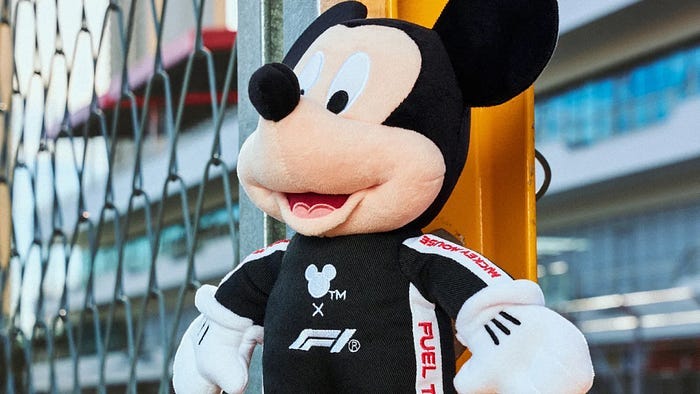
Yet, countless companies still queue up to collaborate with Disney.
Why is that?
Ultimately, it brings us back to a fundamental question:
Why is that?
Ultimately, it brings us back to a fundamental question:
How is the value of an IP determined?
To be fair, there is no absolute answer or standardized formula within the industry. No rigid matrix exists to measure an IP’s exact worth.
However, observing various IPs from the front lines of the business reveals a clear reality: the market is unequivocally willing to pay a premium for certain IPs.
And that price premium cannot be explained by mere “brand awareness” alone.
Popular IPs vs. Valuable IPs

Many people mistake high trendiness or viral buzz for high IP value.
While awareness and buzz are undoubtedly important, they do not tell the whole story.
Some IPs excel at generating massive virality on social media. They capture explosive attention over a short period, even sparking a frenzy in secondary resale markets. Yet, more often than not, consumer interest cools down just as quickly as it ignited.
Conversely, there are IPs that may not experience explosive, viral moments every year, but maintain steady, long-term consumption in the market.
In that sense, the true value of an IP lies less in transient hype and more in its sustainability of consumption.
1. Market Size is the Most Intuitive Metric
When assessing IP value, the first and most visible indicator is market size.
Disney commands an overwhelming scale in the global licensing market. Calling it merely “famous” is an understatement; Disney has successfully operated a multi-billion-dollar licensing business for decades.

This carries a meaning far beyond just gross revenue numbers.
Ultimately, market size is the cumulative result of how consistently consumers, retailers, and licensees around the world have invested their capital into that specific IP.
A strong IP is one that has already been validated by actual market sales.
In contrast, late-comer IPs often propose lower royalty terms to penetrate the market. This is because the market has not yet fully validated the long-term sustainability of those IPs.
In the end, royalty pricing functions as a “price of trust” verified by the market.
2. Strong IPs Dominate Core Consumers
Another critical factor in IP valuation is looking at who is spending the money.
Interestingly, not every famous IP possesses strong purchasing power. There is a distinct gap between characters that everyone recognizes and characters that consumers repeatedly open their wallets for.
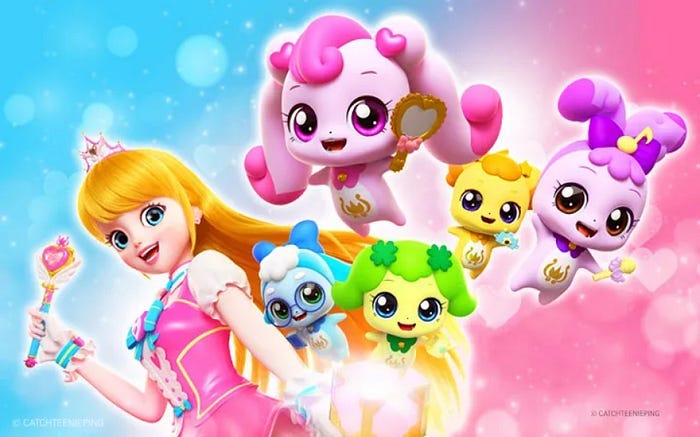
For instance, in the character merchandise market, women in their 20s and 30s represent one of the most powerful consumer demographics. Meanwhile, certain IPs cater primarily to the kids’ market, while others find their core anchor in the 30s-40s male collector market.
The key is not just how many people know the character, but how deeply the IP dominates the core consumer base of that specific segment.
Sanrio boasts fierce brand loyalty among female consumers, while Pokémon has built a multi-generational fandom structure. Gundam has firmly held its ground in the adult male collector market for decades.
Ultimately, a truly powerful IP is not defined by superficial awareness, but by its ability to drive repeat purchases within a targeted consumer base. It is this predictability and repetition that build long-term IP value.
3. True Power Means Never Having to Lower the Price
Why do certain IPs continue to be chosen even under more demanding financial terms?
It comes down to Pricing Power.
Even within the exact same product category, the moment a Disney IP is applied, higher royalties and stricter financial commitments are attached.
Nevertheless, the market continues to choose Disney.
They do so because consumers themselves attribute a higher premium to that IP.
In a way, this mirrors Apple’s strategy. Apple does not hold the highest market share in terms of raw unit sales volume globally, but it maintains the strongest premium pricing structure in the tech industry.
The IP business works the same way. A truly powerful IP is not simply one that sells in high volumes, but one that the market actively selects even at a premium price point.
4. Ultimately, It Is All About Sustainability
The final, and most crucial, element is sustainability.
Many IPs that once captured the world’s attention disappear rapidly over time. Conversely, a select few survive for 10, 20, or even 50+ years.


This divergence is rooted entirely in the structure of the fandom.
A sustainable IP is not a passing fad; it is anchored by a solid, core fandom. This fandom repeatedly consumes content, purchases merchandise, and eventually passes the affinity down to the next generation.
At its core, the value of an IP stems from the collective belief that it will continue to be consumed in the future.
This is why stronger IPs inherently possess the ability to:
Transfer across generations seamlessly,
Expand naturally into diverse product categories,
Earn preferential selection by major retailers, and
Re-invent themselves into entirely new experiential formats.
In many ways, the IP industry is not a business of selling “current popularity,” but rather a business of trading the probability of future consumption.
True IP Value Lives in Repetition
In conclusion, the true value of an IP cannot be measured by simple view counts, impressions, or temporary buzz.
The real questions are: How long, how repeatedly, and how willingly are consumers ready to spend their money?
That repetition eventually scales into market size, translates into royalty power, and crystallizes into a brand premium.
And a truly powerful IP never has to lower its price over time — because the market has already universally agreed on its worth.
메타데이터
- post_id
- 7fe66ebfe3ef
- slug
- why-are-disney-ips-exceptionally-expensive-7fe66ebfe3ef
- url
- https://medium.com/@swonchung77/why-are-disney-ips-exceptionally-expensive-7fe66ebfe3ef
- canonical_url
- https://medium.com/@swonchung77/why-are-disney-ips-exceptionally-expensive-7fe66ebfe3ef
- author_url
- https://medium.com/@swonchung77
- status
- ok
- fetched_at
- 2026-06-09 15:37:30