The real reason corporate profits are soaring while workers fall behind
New data shows corporate profits have grown 50% faster than the overall economy since 2000, a trend turbocharged by tax avoidance and weak…
The real reason corporate profits are soaring while workers fall behind

New data shows corporate profits have grown 50% faster than the overall economy since 2000, a trend turbocharged by tax avoidance and weak antitrust enforcement.
A Tweet and a Telling Comparison
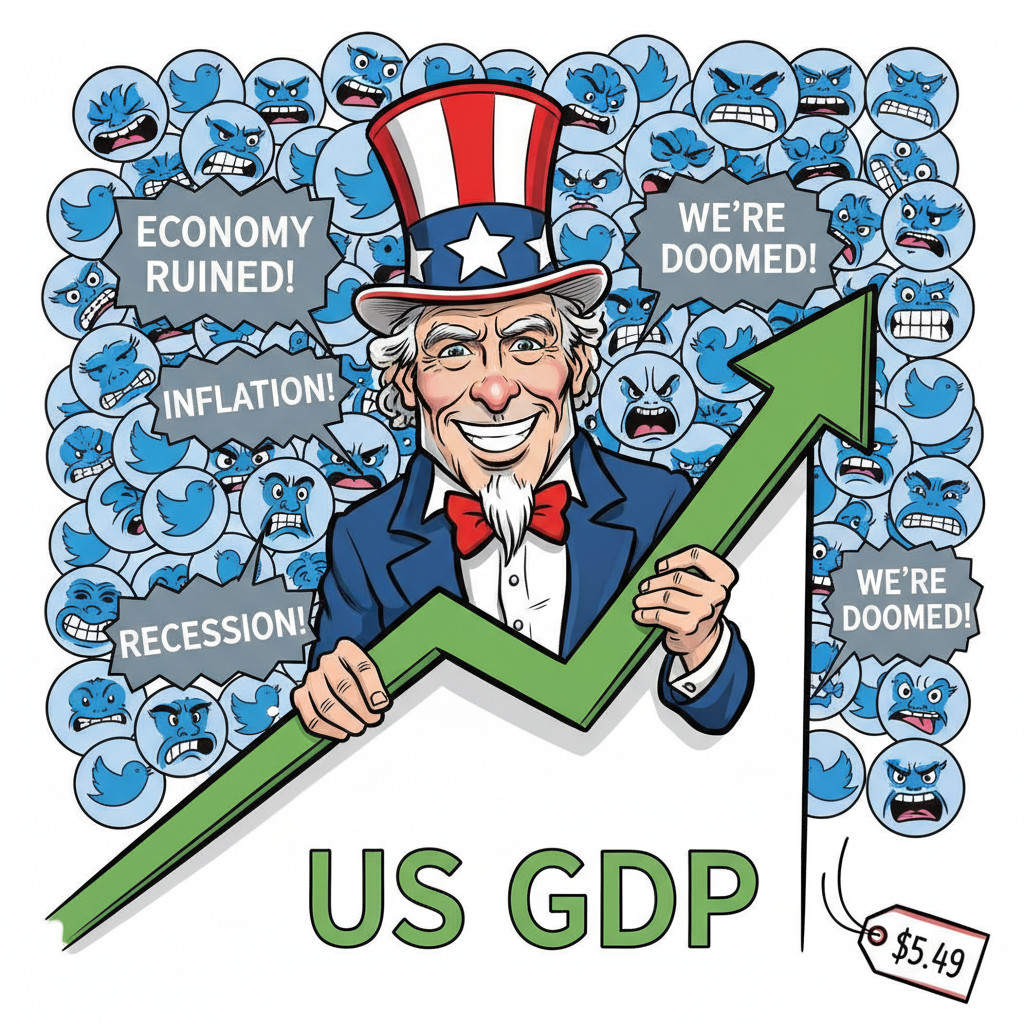
So I saw a post on X the other day that’s been making the rounds. Some investor marvels at the raw size of the U.S. economy: about 340 million people producing nearly $29 trillion in GDP. He compares it to India, with over 1.4 billion people but an economy less than an eighth the size. “What is the reason??” he asks. It’s a decent question about productivity and capital, but it’s looking at the wrong scale. The more urgent, corrosive question isn’t about gross national totals. It’s about who, precisely, is capturing the fruits of all that immense American productivity. For that, you need to look at a different set of numbers, the ones that show a economic engine increasingly rigged to funnel wealth upward.
Take the data highlighted by analyst Jessica Rabe at DataTrek. The relationship between U.S. corporate profits and the size of the domestic economy isn’t just high. It’s at or near record highs. Since the year 2000, corporate profits have grown roughly 50% faster than GDP itself. Let that sink in. The overall economic pie has expanded, but the slice claimed by corporate owners has been growing much, much faster. The worker’s share of national income? It’s been in persistent decline over that same period. This isn’t a minor statistical blip. It’s the central story of the 21st-century American economy: decoupling corporate success from broad-based prosperity.
The MAGA Tax-Dodging Playbook
How does this happen? Well, part of the answer landed in my inbox via a report from the Institute on Taxation and Economic Policy. It’s a doozy. The study looked at four famously pro-Trump tech titans: Meta, Tesla, Alphabet (Google), and Amazon. From 2020 to 2023, these companies reported a combined $769 billion in U.S. profits. Their combined federal income tax bill on those profits? A staggering 0.0%. That’s not a typo. They paid an effective tax rate of zero percent.
They achieved this through the usual tricks: massive stock-based compensation deductions, accelerated depreciation on equipment, and of course, parking profits in overseas subsidiaries. Amazon, for instance, reported $90 billion in U.S. income over those four years and claimed tax rebates totaling $398 million. Tesla’s effective tax rate was negative 2.7%. These aren’t struggling startups. These are among the most valuable, profitable companies on planet Earth. Their business model relies on U.S. infrastructure, educated workers, legal protections, and consumer markets. And their contribution to the treasury that funds all that is, functionally, zilch.
This is the quiet part said out loud. The conservative economic project has never truly been about “free markets.” It’s been about designing a system where capital wins and labor loses. Slashing corporate tax rates, tolerating aggressive avoidance, and defunding the IRS so it can’t chase the big fish aren’t accidents. They’re policy choices. They directly fuel that chart showing profits soaring away from GDP.
The Illusion of a Turnaround
Now, you might hear counter-narratives. A friend of a guy on Twitter, Jason Bugra, reports that mid-sized trucking company owners he knows have gone from “hating the economy” and firing drivers to suddenly wanting to double their operations. “Is the US tariff fear over?” he wonders. This kind of anecdote gets amplified as proof of a booming “MAGA economy.”
But look closer. What likely changed? Perhaps the chaotic tariff threats from the Trump administration against China and others have momentarily stabilized, letting businesses breathe. Maybe it’s a short-term logistics bottleneck creating a spike in demand for trucking. The anecdote is a weather vane spinning in a temporary breeze, not evidence of a climate shift. The underlying structure—where corporate profits capture growth and workers get scraps—remains untouched. A few trucking companies hiring back drivers doesn’t reverse a 25-year trend. It just means the engine of extraction is humming along nicely for owners.
Meanwhile, the other big policy lever—antitrust—has been left to rust. The relentless consolidation across industries, from airlines to hospitals to agriculture, gives surviving corporations immense power to raise prices and suppress wages. That shows up as higher profits on their balance sheets and higher costs for everyone else. It’s a direct transfer.
The Bill Comes Due, For Someone Else
We’re told we can’t afford to fix this. We can’t afford to make corporations pay their share, can’t afford to strengthen unions, can’t afford to enforce antitrust laws. But we could afford, as another tweet from user Apeiron bitterly notes, to “print out probably 80 x the amount of money that was being circulated” during the pandemic crisis. A lot of that money was necessary to prevent total collapse. But a scandalous amount was also funneled, with laughably weak oversight, to fraudsters and politically connected firms. The money exists. The question is always: who is it for?
The result of this decades-long project is an economy that looks mighty on a global spreadsheet next to India’s, but feels increasingly brittle and unfair at home. Productivity is high. Corporate balance sheets are bursting. Stock markets hit new peaks. But the foundation—a secure, thriving middle class—is being hollowed out. The money that should be funding public investment, raising wages, and building a buffer against the next crisis is instead piling up in the accounts of shareholders and CEOs, many of whom have perfected the art of contributing nothing to the public till.
So what’s the reason for America’s huge GDP? Hard work, innovation, and a deep capital stock. What’s the reason so few are benefitting from it? That’s no mystery. It’s policy. Deliberate, sustained, and devastatingly effective policy.
메타데이터
- post_id
- 7fe73e82ca0e
- slug
- the-real-reason-corporate-profits-are-soaring-while-workers-fall-behind-7fe73e82ca0e
- url
- https://medium.com/@dipduckdivedodge/the-real-reason-corporate-profits-are-soaring-while-workers-fall-behind-7fe73e82ca0e
- canonical_url
- https://medium.com/@dipduckdivedodge/the-real-reason-corporate-profits-are-soaring-while-workers-fall-behind-7fe73e82ca0e
- author_url
- https://medium.com/@dipduckdivedodge
- status
- ok
- fetched_at
- 2026-07-17 00:53:25