The Technological Takeover in Writing Instruction: If You Can’t Beat It, Join It?
Reflections on AI, teaching, and the writing process
The Technological Takeover in Writing Instruction: If You Can’t Beat It, Join It?
Reflections on AI, teaching, and the writing process
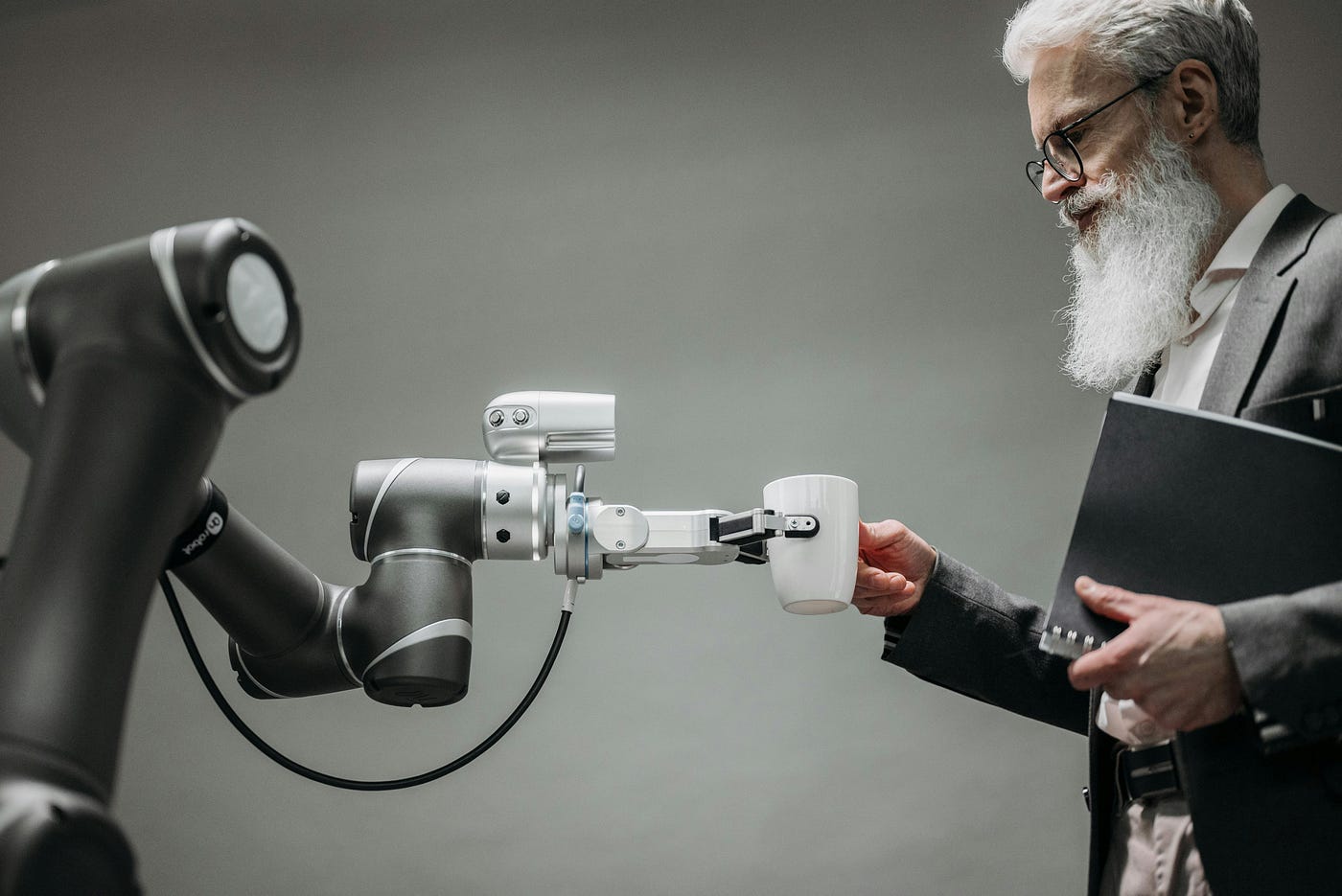
Photo by Pavel Danilyuk on Pexels
When I first started teaching in the pre-AI days, discussions about pedagogy and technology mostly centered on the role of smart phones in the classroom and the benefits of online versus in-person learning. It was a simpler time.
Back then, I found myself going against the grain, arguing for smart phones to be banned in the classroom (because they’re distracting) and questioning the effectiveness of Zoom classes (because they’re distracting — or at least the other tabs in students’ browsers are). Not many people in my graduate program agreed with me. They thought I was being unrealistic, and I guess they had a point.
Even so, I stubbornly held onto my views. In my composition classes, I assigned my students to read an article on the benefits of writing notes by hand as opposed to typing them. The article described research demonstrating that students who wrote by hand had improved retention and deeper understanding of the material they were learning. Few of my students stopped bringing their laptops to class, though.
At some point, I realized I was fighting a losing battle. Though I still hold to my view that digital technologies fragment attention and lend themselves to shallow comprehension, I have since allowed smart phones to be used in the classroom, taught several courses on Zoom, and helped revise curricula to incorporate more multimodal composition projects involving the use of digital technologies. Why? Because the battle I was fighting wasn’t merely pedagogical, but social, cultural, and political — and frankly, I didn’t stand a chance of winning. As the philosopher and sociologist Jacques Ellul eloquently expressed, technological advancement often reveals itself at once destroyer and creator, and no one is able to master it.
When I incorporated more technology in the classroom, however, there were real benefits. Student engagement notably increased. Activities felt more contemporary and less 20th century. My classroom was like a microcosm of the culture as a whole, which is becoming increasingly digitized in every facet of life.
One assignment that stands out in memory is when I replaced the traditional narrative paper with a multimodal photo essay in my writing course for multilingual students. They told stories about their immigration experiences not just through text, but with accompanying photos, video clips, and background music, which were presented to the class as TikTok style short form videos. This enriched the narratives by allowing the audience to literally see what they saw: pictures of their families and pets back home, clips of the plane ride to America, snapshots of new foods they tried when they arrived. It allowed the class to be moved by the combination of imagery and sound in a way that text alone cannot achieve, and it felt less like an academic exercise than an authentic sharing of meaningful experiences. They weren’t just practicing language skills, but sharing stories that genuinely mattered to them.
Deep down, I thought the traditional essay assignment would do more to strengthen their development as writers, since the video format necessitates simplification of the text. Yet I also acknowledged that there is more than one way to tell a story — and this was the contemporary way, and it had its merits. Though the final product may not have been as textually dense as a traditional narrative, my students were still engaging in the writing process: prewriting, drafting, revising, editing, and publishing. Bringing in multimodal elements enhanced the storytelling in certain ways — and besides, I could always assign traditional essays as well. By then, I was warming up to high tech teaching.
But in late 2022, once again I found myself going against the grain after the release of ChatGPT and other generative AI tools. Surely, I thought, this is where educators would draw the line. Yet the overwhelming message of most research reports, conference presentations, and pedagogical literature on generative AI in writing instruction focused on how to strategically implement it in the classroom. While this isn’t necessarily a bad thing, I noticed that important questions about AI’s impact on critical thinking, creativity, and cognitive offloading tended to be met with brief acknowledgement, followed by what I call the inevitability argument — resigned statements about how AI is going to take over everything anyway, including writing instruction, so we might as well go along with it.
This time I moved forward with cautious optimism, allowing students to use AI tools in limited ways for their writing assignments. At first, this was optional; some of my students were wary of AI, just like I was. For those who wanted to experiment, I advised them to use it as a supplement to their writing rather than a substitute. Since AI policies didn’t exist yet, I invented my own: using ChatGPT and other large language models for research, grammar support, and — I guess — brainstorming is fine; using LLMs to draft entire papers, obviously, is not. And if you use it, cite it. Within a few months, even the most hesitant students wanted to give it a try, and by the end of the academic year the entire class was using it regularly.
Again, there were real benefits: ChatGPT helped students find sources for their research projects, rephrase awkward sentences, and learn new vocabulary. It provided low-stakes feedback on their drafts, similar to what an experienced writing tutor might do. Students also enjoyed engaging with this new tool that had so much hype and controversy surrounding it; it was like opening Pandora’s box, which is admittedly a lot more exciting than writing essays by hand in a notebook.
When LLMs first emerged on the scene, I feared that education was dead, and we had killed it. After all, what busy, stressed-out student would choose to spend hours drafting a paper when ChatGPT can generate one in seconds? Back in my high school days, at least, I know what I would have done.
But my students were highly motivated, advanced language learners, not rebellious teenagers like I used to be. They wanted to learn, and they didn’t want to outsource their minds to AI. ChatGPT may have facilitated their learning processes in some ways, but as far as I could tell, it wasn’t replacing genuine effort. I decided to continue experimenting with AI in the classroom and allowing my students to critically engage with it.
For some assignments, AI became central. As a final project in my grammar class, students created an illustrated children’s book translated from a fairytale in their native language. The problem was that no one knew how to draw — but even if they did, two weeks wasn’t enough time to do a good job. The obvious solution was AI: input prompts and generate “original” images within mere minutes. This necessitated a foray into prompt engineering, as students discovered that generating the types of images they wanted required inputting words and phrases that produced those particular results.
The illustrations looked pretty good, and it gave students more time to focus on the translation portion of the assignment, which was the most essential part. For another assignment that involved creating a historical timeline infographic, I allowed students to construct the basic outline using ChatGPT. That streamlined the project and saved them from having to dig through a myriad of sources before even getting started.
Yet I still struggled with a nagging internal tension. These assignments were fun, but in many cases, AI felt too much like a shortcut. Yes, students were engaged, but was I conflating engagement with deep learning? The more that I allowed AI into the drafting process, the more I observed students spending at least as much time interacting with it as they spent writing independently. They would have ChatGPT open in a separate window, constantly switching back and forth between it and their projects. I wondered where AI assistance fit into the writing process, and whether it potentially disrupted students’ thinking. When they used ChatGPT to generate outlines instead of constructing their own, could that still be considered prewriting? When they paused in the middle of drafting to ask ChatGPT for feedback, did it interrupt the flow of their ideas? Something seemed off. My mind acknowledged the veracity of the inevitability argument, but my heart rejected it. Meanwhile, the AI craze was in full force, and it seemed like everyone was using it for everything. It had already become part of life, like smart phones and social media.
I had one international student who was applying to nursing school. She was bright and diligent, but like many multilingual students, she struggled with grammar errors in her writing. She asked me to look over her application materials, and proceeded to show me a flawless cover letter with nary a comma or verb tense out of place.
She had used ChatGPT. I knew she did; she knew she did. But —
“It looks great,” I said. And it was true. I didn’t know what else to say — rewrite and revise it until it looks something like…well, this? Part of me felt uneasy, but another part of me didn’t want to put her on the spot. After all, I couldn’t prove that she had used AI, and I wanted her to get into the nursing school. Also, I understood something about what she was up against — the institutional standards that would judge her competence as a future nurse by the accuracy of her grammar. In that moment, my beliefs about writing instruction collided with my desire to see this student succeed, and I stayed silent.
Once more, I found myself wrestling with my positionality as a writing instructor in a society that is rapidly transitioning from a text-based culture to a software-based one. The foundation of my teaching philosophy draws upon process writing, which defines composition as a series of recursive steps — prewriting, drafting, revision, editing, and publishing — as writers express, develop, and refine their ideas. I believe that wrestling with language, finding the right words to express half-formed ideas, experiencing the struggle of constructing a coherent argument, is precisely what allows students to grow as writers.
AI, however, has introduced a new variable. It may assist students during the writing process, but it can also enable them to bypass it. Perhaps even more concerning is that students like mine, who are motivated to learn and who aren’t seeking shortcuts, could be inadvertently offloading a significant amount of cognitive effort by using these tools regularly. Now that writing has become automated, how do I convince students that taking the time to go through the writing process independently is still valuable? Will it fall on deaf ears, like when I encouraged them to write their notes by hand? Should I continue to “strategically implement” a technology in the classroom that — let’s face it — may supersede the development of authentic writing skills?
Yet though my heart may protest, I still allow my students to use AI as a writing assistant if they choose to. My AI policy in the classroom has remained largely the same: students may use it during the prewriting and editing stages of the writing process. Drafting remains a protected zone, because I feel that’s where most offloading takes place. Revision is a grey area — at this point, I allow students to ask AI for feedback and suggestions without having it rewrite entire sections of their papers for them.
To keep an eye on students’ writing processes, I allow plenty of time in class for drafting. I warn them about the potential drawbacks of AI overreliance, such as reduced critical thinking, which has been reported in recent research. I tell them to cite ChatGPT if they decide to use it. But I’m not a police officer. Ultimately, I believe students need the freedom to take ownership of their own writing practices.
In a perfect world, I would wish for students to boycott AI and write independently from start to finish, preferably by hand. I believe they would develop stronger writing skills that way. Though I suppose I could construct and enforce that perfect world within the confines of my classroom, I also value student autonomy. In the long run, am I helping or hindering them as writers and thinkers by allowing them that freedom? I still don’t know — maybe I should ask ChatGPT.
메타데이터
- post_id
- 7fe898d112a0
- slug
- the-technological-takeover-in-writing-instruction-if-you-cant-beat-it-join-it-7fe898d112a0
- url
- https://medium.com/positionality-stories/the-technological-takeover-in-writing-instruction-if-you-cant-beat-it-join-it-7fe898d112a0
- canonical_url
- https://medium.com/positionality-stories/the-technological-takeover-in-writing-instruction-if-you-cant-beat-it-join-it-7fe898d112a0
- author_url
- https://medium.com/@sophisticatedinnocence
- status
- ok
- fetched_at
- 2026-08-19 17:24:44