How the Portuguese hijacked the spice trade
Nutmeg, Islam, and the end of the first global economy
How the Portuguese hijacked the spice trade
Nutmeg, Islam, and the end of the first global economy
19 January 2026
In 1511, when Afonso de Albuquerque sailed into the Straits of Malacca and battered the great Muslim port-city into submission, he was not discovering a new world. He was dismantling an old one.
Long before the caravels of Prince Henry crept down the African coast, long before Vasco da Gama rounded the Cape of Good Hope, and long before Nathaniel Courthope died on a volcanic speck called Run, a global economy already existed. It was not European. It was Islamic.
The Islamic world-system before the Portuguese takeover
From Cairo to Calicut, from Aden to Aceh, from Gujarat to the Banda Islands, a web of Muslim merchants, jurists, pilots and scholars had built the first truly integrated world system. Nutmeg, cloves and pepper did not drift into Europe by accident. They travelled along a clock‑like monsoon network governed by law, trust, credit and reputation — and Islam was the operating system. The Portuguese age of discovery was not an innocent burst of curiosity. It was a hostile takeover.
By the tenth century, Muslim merchants dominated the Indian Ocean. Using the predictable rhythm of the monsoon winds, they stitched together three continents into a single commercial circuit.
China and Southeast Asia supplied porcelain, silk, cloves and nutmeg. India supplied cotton textiles, indigo and credit networks. Arabia and Persia supplied ships, navigators, scholars and commercial law. Egypt and the Ottoman world funnelled goods into the Mediterranean. Venice acted as Europe’s downstream broker.
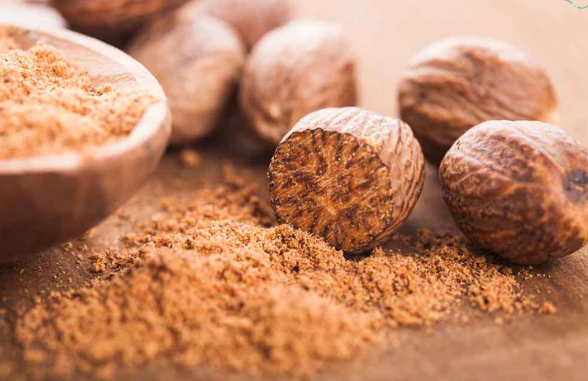
Nutmeg was already legendary. Known in Arabic as jawzat al‑ṭīb, it was used in medicine, perfume and cuisine, and believed to ward off plague. But Europeans did not know where it grew. They bought it in Alexandria and Constantinople, paying whatever price the system demanded.
The Malay world sat at the centre of this system. When Islam reached Southeast Asia between the ninth and thirteenth centuries, it did not arrive by sword but by sail. Muslim traders from Gujarat, Yemen and Persia converted port‑cities one by one, creating a chain of Islamic sultanates that functioned as civilisational interfaces: Samudra‑Pasai and Aceh in Sumatra; Malacca on the Malay Peninsula; Demak on Java; Brunei on Borneo; and Ternate and Tidore in the Moluccas
Malacca, founded around 1400 and Islamised under Sultan Iskandar Shah, became the switchboard of the global economy. Every monsoon season, hundreds of ships converged there. Cloves from Ternate, nutmeg from Banda, cotton from India, silk from China, horses from Arabia, books from Cairo — all passed through Muslim hands.
This was not a primitive world waiting for Europe. It was a mature, legally ordered, globalised civilisation.
Why Portugal went looking for the spice route
By the fifteenth century, Portugal faced strategic humiliation. The Reconquista had expelled Islam from Iberia, but the Muslim world still controlled the arteries of global trade. Gold from West Africa, spices from Asia, and luxury goods from China all reached Europe through Muslim intermediaries and Venetian brokers.
Prince Henry the Navigator’s voyages were not romantic exploration. They were reconnaissance. The Portuguese state set out to do three things. First, break the Islamic monopoly over gold by reaching West Africa by sea. Second, break the Islamic monopoly over spices by reaching India by sea. And third, outflank Islam geopolitically by encircling its world-system. Every cape mapped and every river mouth sounded was part of a single project: dismantling a rival civilisation’s supply chain.
When Bartolomeu Dias rounded the Cape of Good Hope in 1488, the Islamic world lost its strategic depth. When Vasco da Gama reached Calicut in 1498, the economic war began. The Portuguese did not ask politely to join the spice trade. They arrived with cannon.
Malacca: the keystone of the global economy
The capture of Malacca in 1511 was the most important event of the age of discovery. Afonso de Albuquerque understood exactly what he was doing. He wrote that whoever held Malacca “had Venice by the throat.” He meant that by seizing this Muslim port, Portugal would strangle the entire Islamic‑Venetian trading system upstream and downstream.
Malacca was not just a city. It was a logistics engine. Muslim pilots carried navigational knowledge. Islamic law governed contracts and credit. Merchant diasporas moved goods across oceans without a central state. When the Portuguese stormed the city, they did not discover the spice trade. They hijacked it.
Interrogating Muslim merchants, they learned the most valuable secret of the entire system: the source of nutmeg. Nutmeg was among the most expensive commodities by weight in medieval Europe. By the early seventeenth century, ten pounds of nutmeg cost one penny in the East Indies yet sold in London for fifty shillings, representing a markup of roughly 60,000% — an almost unimaginable ratio in any era. As late as 1665, Samuel Pepys records a clandestine meeting with some sailors “at a blind alehouse at the further end of town” where he exchanged a sackful of gold for a small quantity of nutmeg and cloves.
In late medieval and early modern Europe, nutmeg was not a culinary garnish. It was a status symbol for Europe’s elite. It was reputed to cure the plague. Apothecaries sold nutmeg pomanders as life-saving devices, which made demand effectively unlimited. But nobody knew where it came from — only that it came from “the Indies”.
The Portuguese were determined to find the source, so they followed the existing trade networks backwards — step by step — until they found it. After capturing Malacca in 1511, they questioned the merchants there about where spices came from. In 1512–1513, Portuguese ships sailed east from Malacca following local pilots and traders’ directions and reached the Banda Islands.
From Islamic commerce to gothic capitalism
What shocked the Portuguese was how small and concentrated the source was: nutmeg grew only on a handful of volcanic islands — and nowhere else on earth.
Today, these islands are largely forgotten — remote and fractured specks of rock in the backwaters of the East Indies, separated from their nearest land mass, Australia, by more than six hundred miles of ocean. They are places of such insignificance that they sometimes fail even to make it onto the map. The island of Run, for example, is absent from the Times Atlas of the World, and the cartographers of Macmillan’s Atlas of South East Asia have reduced it to a mere footnote.
It is all a far cry from the fateful arrival of the Portuguese in 1512–1513. This event transformed nutmeg from a mysterious luxury into a controllable global monopoly. And once the Portuguese had learned where it came from, it was not long before the Dutch and English found out too.
The “discovery” of nutmeg’s source was not a flash of genius. It was all about intelligence-gathering, interrogation, and imperial logistics — the first corporate supply-chain audit in history. A global monopoly could now be enforced by force of arms. What had once been a distributed, trust‑based trading network became a militarised choke‑point.
The Dutch would later perfect this system, turning it into a corporate empire built on massacre, deportation and engineered scarcity. But the original sin was Portuguese. They had shown Europe how to weaponise a supply chain.
This is the hinge on which modern history turns. Before 1511, the Indian Ocean was governed by merchants, law and reputation. After 1511, it was governed by fortresses, monopolies and cannon. The Portuguese did not create globalisation. They simply militarised it. And in doing so they shattered the Islamic world-system that had quietly built the first global economy.
By the time Nathaniel Courthope stood starving on Run a century later, defending a nutmeg sapling for King James, he was fighting inside the ruins of that older world. The Malay sultanates that had once mediated between China, India and Arabia were now pawns in a European corporate war.
Nutmeg — once a gift of the monsoon — had become an instrument of empire.

The Banda Islands
메타데이터
- post_id
- 7fe932b37d41
- slug
- how-the-portuguese-hijacked-the-spice-trade-7fe932b37d41
- url
- https://medium.com/@evansd66/how-the-portuguese-hijacked-the-spice-trade-7fe932b37d41
- canonical_url
- https://medium.com/@evansd66/how-the-portuguese-hijacked-the-spice-trade-7fe932b37d41
- author_url
- https://medium.com/@evansd66
- status
- ok
- fetched_at
- 2026-07-13 07:37:18