Platelets as a Service
The next platelet-infrastructure company may start by owning collection, not selling software
Platelets as a Service
The next platelet-infrastructure company may start by owning collection, not selling software
Most investors will look at platelet donation and see a nonprofit workflow, a regulated niche, or a category too operationally messy to matter. We think that is the wrong read.
Platelets are one of the clearest examples of weird infrastructure hiding in plain sight: a critical healthcare input with recurring demand, scarce supply, short-dated inventory, and a donor experience that still feels more civic than modern. In 2023, U.S. blood centers distributed about 2.62 million platelet units, hospitals transfused about 2.22 million, and more than 98% of the distributed platelet units came from apheresis collection rather than simpler whole-blood pathways. Hospitals also transfuse more than 6,000 platelet units per day. This is not a side market. It is a real clinical supply chain with real constraints.
The default venture answer has been to look for software opportunities around the edges: donor CRM, scheduling, routing, inventory planning, procurement intelligence. Those are real. But they may not be the best wedge. Our view is that the more interesting company starts one layer deeper: own the point of donation and collection first, make it meaningfully better for the donor, and then build software and data products on top of that owned workflow.
That matters because platelet donation is not a one-time act. It is a repeat behavior from a narrow, valuable, and operationally constrained donor base. The donors that matter most are not just eligible on paper. They are healthy, proximate to apheresis sites, willing to sit for longer sessions, able to come back often, and likely to become habit-forming participants in a system that badly needs recurrence. That starts to look less like episodic charity and more like a membership business embedded inside a regulated biologics infrastructure.
Why platelets are the best wedge
Platelets are the highest-friction and highest-value mainstream component in transfusion medicine. Red cells matter more by volume, but platelets are where economics and operational pain meet. Mean 2023 hospital acquisition pricing was roughly $638 for conventional apheresis platelets and $701 for pathogen-reduced apheresis platelets, versus about $234 for leukoreduced red blood cells. That spread exists for a reason: platelets are harder to collect, more perishable, and more safety-sensitive.
They are also operationally fixed in a way that makes infrastructure ownership more valuable. Red Cross states that platelet donations are collected at donation centers only, not at blood drives, and platelet donors typically spend around three hours in the chair. Donation can occur every seven days, up to 24 times per year, which means platelet supply is structurally dependent on repeat donor behavior in a fixed-site environment. That is exactly the kind of workflow where experience design, retention mechanics, staffing quality, and network density can compound into a moat.
Software can help this. But software alone does not change the donor’s lived experience. If the scarce input is a healthy repeat human showing up in person, then the point of collection is not just an operational node. It is the core asset.
The real donor pool is much narrower than it looks
At the top of funnel, the U.S. donor base looks large. America’s Blood Centers says about 62% of the U.S. population, or roughly 212 million people, is eligible to donate blood, but only about 3% do so each year. That sounds like a giant untapped market. It is not the right way to think about platelets.
The platelet TAM is a funnel inside a funnel.
At a basic level, Red Cross says platelet donors generally must be in good health, at least 17 years old in most states, and weigh at least 110 pounds. But practical platelet eligibility is much narrower. Donors need to avoid certain platelet-impairing medications, including aspirin, which requires a two full-day wait before donation. They also need to pass screening and collection-suitability thresholds repeatedly over time. America’s Blood Centers reports a 14.2% total donor deferral rate in 2023, with low hemoglobin or hematocrit the most common overall reason for deferral, and platelet collection adds its own suitability constraints.
There is also a system-value dimension. Red Cross notes that all blood types except O negative and B negative are encouraged to try platelet donation, because some blood types are more valuable elsewhere in the system, especially for emergency red-cell use. So the most valuable platelet donor is not simply “someone healthy.” It is someone whose physiology, blood type, medication profile, location, and behavior fit the economics of repeat apheresis collection.
That is why this market is investable. Scarcity is not driven by broad awareness alone. It is driven by the small subset of people who are eligible, convenient, and recurring.
Why the donor experience matters more than people think
Legacy platelet centers work because the mission is strong, not because the product is delightful. The experience is often functional, clinical, and optimized around institutional throughput. That is fine for a civic system. It may be suboptimal for a venture-scale company trying to maximize repeat donation from a narrow donor cohort.
We think there is room to reframe platelet collection as a modern recurring consumer health experience: something closer to a medspa, premium recovery studio, or luxury-athletic wellness environment than a legacy donation center. Not because this should become frivolous, but because the behavior itself already has the shape of a premium routine. The donor books ahead, shows up in person, spends a meaningful amount of time in the chair, returns on a cadence, and often identifies with the behavior. That looks much closer to membership and ritual than most healthcare investors want to admit.
This is where the opportunity stops looking like donation software and starts looking like owned infrastructure. The winning company may be the one that builds the best platelet experience in the market: beautiful environments, frictionless booking, better hospitality, superior staff training, loyalty loops, intelligent cadence management, and a brand that sits at the intersection of altruism, health, and high-agency identity.
That matters because recurring donor behavior is the scarce resource. In a market like that, experience is not branding overhead. It is upstream supply creation.
Why now
Several threads are converging.
First, the platelet category itself is large and operationally stressed. Distributed volume rose to 2.618 million units in 2023, with apheresis dominating the category, and hospitals continue to absorb high-priced platelet supply every day.
Second, the consumer has changed. There is now a much larger cohort that engages with health as a recurring identity rather than a reactive task. Oura said in September 2025 that it had sold more than 5.5 million rings and doubled revenue for the second year in a row. That does not prove demand for platelet donation. But it is a useful signal that more consumers now live inside routines built around measurement, recovery, sleep, readiness, GLP-1 and peptides usage, and proactive health behavior. Our read is that this expands the addressable donor mindset, even if it does not automatically convert into donation.
Third, the logistics stack is still underbuilt. Platelets are room-temperature products with a maximal U.S. dating period of up to seven days in cleared storage systems, depending on bacterial-risk control strategy. FDA’s guidance is explicit that platelet inventory requires active bacterial-risk controls and traceability. This short shelf life means routing, transfers, outdates, and local supply-demand mismatch all matter disproportionately. Better storage methods and better routing software will not eliminate the need for fixed-site collection, but they can increase the viable service radius around existing collection nodes and make the economics of expansion better over time.
The company we would want to back
The best platelet company may not start life as a software company. It may start as a collection network.
Phase one is physical and operational: open premium platelet collection sites in dense markets, optimize the donor journey, recruit the highest-value repeat cohorts, and prove that a better experience changes frequency, conversion, and retention. The early moat is not code. It is trust, environment, workflow quality, and habit formation.
Phase two is data. Once the company owns collection, it begins to accumulate something more defensible than a donor app: first-party operational data on cadence, donor quality, no-show behavior, medication-related deferrals, blood-type utility, staff productivity, chair utilization, and local supply patterns. This is where ownership matters. Before controlling the workflow, software is just tooling. After controlling the workflow, software becomes a compounding advantage.
Phase three is expansion into the broader stack: donor segmentation, eligibility automation, staffing optimization, routing, inventory forecasting, hospital matching, specialty donor programs, and eventually, software sold outward. The sequence matters. In our view, the software gets more valuable after the company owns the point of collection because the data is proprietary and the workflow is native.
The adjacency that makes this bigger than donation
There is a second-order reason this category matters: platelet centers are one of the few recurring, trusted, physically verified touchpoints with relatively healthy ambulatory adults. That creates optionality.
The point of donation is also a point of screening, questionnaire completion, vitals, medication review, and repeat contact. Over time, that could support higher-value specialty donation programs, better donor stratification, and research-adjacent pathways where compliant and consented. Red Cross already operates a Specialized Donor Program that compensates participants for certain cell-therapy-related collections, which is an important proof point that donor relationships can extend beyond standard blood infrastructure into more premium biologic workflows.
We would be careful not to overstate this. Blood-donation eligibility is not the same thing as clinical-trial qualification. But strategically, the logic is attractive: the company that owns a recurring base of healthy, qualified platelet donors may also own a valuable top-of-funnel for adjacent biologic and research workflows.
What we would underwrite
We would not underwrite this as “consumer wellness meets blood donation.” That would be too shallow. We would underwrite it as infrastructure.
The wedge is a consumerized collection, but the real business is a new platform for scarce biologic supply: better donor acquisition, better retention, better throughput, better data, better routing, and eventually better network economics. In that framing, the medspa-like experience is not the end state. It is the unlocking mechanism.
That is what makes the thesis interesting. Most investors will either see a healthcare-services business and pass, or see workflow software and aim too low. We think the better answer sits in between. The next durable company in this category may look like a premium health brand on the surface. Underneath, it is building the connective tissue for one of the most constrained recurring supply chains in healthcare.
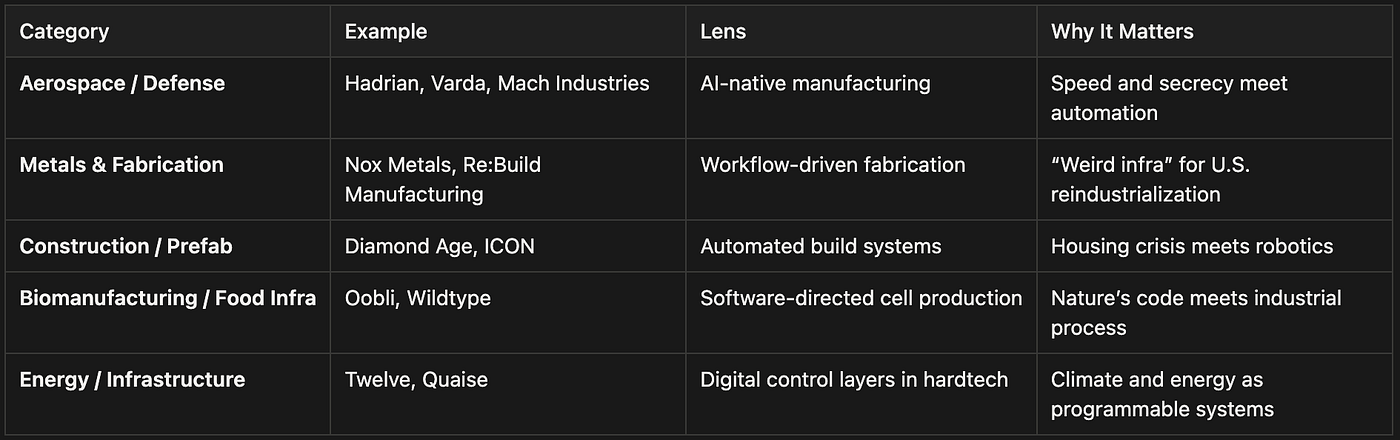
And that is usually where the best weird infrastructure companies begin.
메타데이터
- post_id
- 7ff0c2b1a0c3
- slug
- platelets-as-a-service-7ff0c2b1a0c3
- url
- https://medium.com/@ventreet/platelets-as-a-service-7ff0c2b1a0c3
- canonical_url
- https://medium.com/@ventreet/platelets-as-a-service-7ff0c2b1a0c3
- author_url
- https://medium.com/@ventreet
- status
- ok
- fetched_at
- 2026-07-11 18:55:18