From Dream to Debris: The B‑52 Crash, Boeing’s Strain, and Flight’s Unintended Legacy
A serialised reflection on the Edwards crash, aviation’s paradox, and the fragile empire of machines
From Dream to Debris: The B‑52 Crash, Boeing’s Strain, and Flight’s Unintended Legacy
A serialised reflection on the Edwards crash, aviation’s paradox, and the fragile empire of machines
The June 2026 B‑52 crash at Edwards AFB killed eight and exposed aviation’s paradox: machines born of wonder turned into weapons of destruction. This essay traces the bomber’s legacy, its staggering costs, Boeing’s fragile finances, global sympathy divides, and the myth of invincibility — asking what was achieved, and where the money went.
A U.S. Air Force B‑52 Stratofortress in flight — a symbol of endurance and engineering spanning seven decades.. Photo by Carrie Borden on Unsplash
The Crash That Shook the Mojave
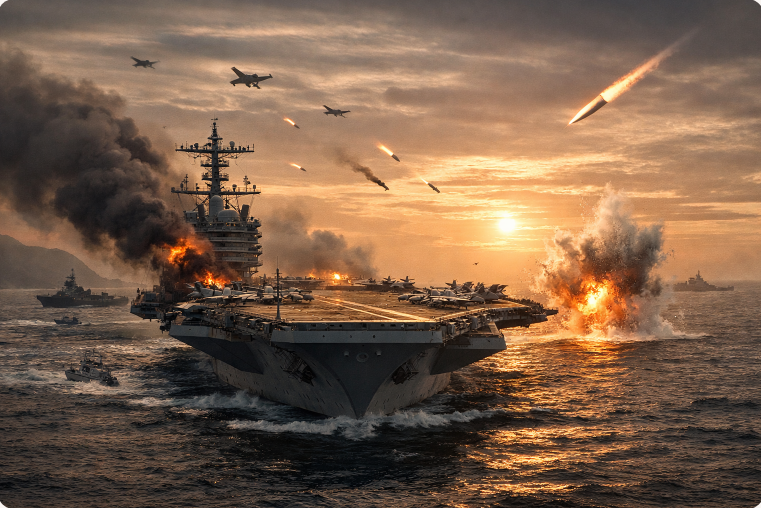
On June 15, 2026, a U.S. Air Force B‑52 Stratofortress crashed at Edwards Air Force Base, California. Eight lives — Air Force personnel, civilians, and Boeing engineers — were lost in seconds. Black smoke rose over the desert, and the wreckage of a machine that had symbolised American power for seven decades lay in ruins.
The mission was a radar modernisation test flight, not a combat mission. Yet the purpose was unmistakable: to prepare the bomber for sharper strikes, deeper penetration, and more efficient devastation.
A Prophetic Reflection
Months earlier, I had written *From Dream to Reality: The Pioneering Journey of Flight and Its Unexpected Legacy*. That essay celebrated the inventors’ passion — the Wright brothers, Lilienthal, and others who studied birds and insects out of sheer curiosity.
They never imagined their creations would become bombers. The Edwards crash made my earlier words prophetic: the dream of flight, born of wonder, had become entangled with destruction.
The Bomber’s Record
The B‑52’s combat record is staggering:
- Vietnam War: 126,615 sorties; 20,000 tonnes of bombs in Linebacker II alone.
- Desert Storm: 1,741 sorties; 24,500 tonnes of munitions dropped.
- Afghanistan & Iraq: Precision strikes, 100 cruise missiles in a single night.
- Counter‑ISIS: ~1,800 sorties.
- Operation Epic Fury (2026): 6,000 targets hit in 13 days.
Impressive in tonnage, but unimpressive in outcomes. Cities destroyed, regimes shaken, but no lasting peace. For a tax‑paying citizen, the question is simple: What was achieved? Where is the money?
The Economics of Destruction
- Unit cost: ~$84 million per aircraft.
- Maintenance & modernisation: $11.9 billion allocated; $48 billion program to extend service into the 2060s.
- Ammo costs:
- GBU‑28 bunker‑buster: ~$3.5 million each.
- Cruise missiles: $1–2 million apiece.
- A single mission can expend tens of millions.
Unlike infrastructure or education, this spending yields no civilian dividends. It buys deterrence, destruction, and fleeting geopolitical leverage.
Boeing’s Fragile Empire
The company behind the B‑52 mirrors the bomber’s paradox:
- Revenue (Q1 2026): $22.2 billion.
- Losses: Negative free cash flow ($1.5 billion).
- Debt: $47.2 billion.
- Backlog: $695 billion, over 6,100 aeroplanes.
Boeing survives through modernisation and government contracts. Yet critics argue it is “waiting for a bailout,” its financial position precarious despite its scale. Like the B‑52 itself, Boeing is resilient but fragile.
Sympathy Divided
In the U.S., officials and military families mourned. Edwards AFB, Speaker Mike Johnson, and California’s governor called it a tragedy.
Globally, sympathy was muted. In Vietnam, Iraq, Afghanistan, Syria, Libya, and Iran, the crash was seen as karmic justice. Citizens remembered bombings, not nobility.
Neighbours of victims’ families may assure them, “they died on duty.” But for civilians bombed since 1965, peace is elusive. Thousands of souls — crew and civilians alike — rest uneasily in the shadow of destruction.
The Myth of Invincibility
The B‑52 is not invincible.
- Direct shoot‑down: Its radar cross‑section is massive; modern systems like the S‑500 can track and destroy it.
- Indirect neutralisation: Destroying refuellers, AWACS, hangars, or staff quarters cripples the bomber without engaging it in combat.
- Iran 2026 war: Iran targeted support systems rather than bombers. The U.S. claimed Iran’s air force was destroyed, but ended up agreeing to pay billions in settlement — a tacit admission of failure.
Invincibility is a myth. Machines collapse when their support chains are severed.
⚔️ The 109‑Day Iran War
- Claimed U.S. achievements: Iran’s air force “destroyed,” thousands of targets hit.
- Reality: Iran never had a conventional air force to lose; its strength lay in drones, missiles, and underground assets.
- Outcome: Despite deploying B‑52s, F‑35s, and the full USAF arsenal, the U.S. ended up agreeing to pay billions of dollars to Iran in settlement — a tacit admission of strategic failure.
- Lesson: Invincibility is a myth; even advanced platforms collapse when their support chains are severed.
Lessons & Reflections
- War Machines are not noble; their missions reflect human choices.
- Machines are vulnerable: Stealth coatings, radar upgrades, and payloads cannot protect against systemic strikes.
- Adversaries adapt: Iran showed that targeting logistics is more effective than chasing aircraft.
- Deterrence vs destruction: The B‑52’s record is impressive in tonnage dropped, but unimpressive in lasting outcomes.
- Cycle of collapse: 75 years of service is remarkable, but fatigue in both airframes and strategy is inevitable.
- Expenditure without return is unsustainable — bombs do not build schools, nor do sorties pave roads.
- Sympathy is relative: In the U.S., the crash is a tragedy; abroad, it is justice.
- Legacy is paradoxical: Flight was born of wonder, but its unintended legacy is destruction.
Closing
The Edwards crash is not just a tragedy of eight lives. It is a mirror held up to society: billions spent on machines of destruction, justified as deterrence, but yielding little for the citizen who pays the bill.
My earlier essay celebrated the dream of flight. This follow‑up confronts its unintended legacy: a cycle of cost, destruction, sympathy divides, and collapse. The B‑52 embodies both human ingenuity and human contradiction — a marvel of engineering used for deterrence and destruction, now undone by its own fragility.
메타데이터
- post_id
- 802bf0961dcb
- slug
- from-dream-to-debris-the-b-52-crash-boeings-strain-and-flight-s-unintended-legacy-802bf0961dcb
- url
- https://medium.com/readers-club/from-dream-to-debris-the-b-52-crash-boeings-strain-and-flight-s-unintended-legacy-802bf0961dcb
- canonical_url
- https://medium.com/readers-club/from-dream-to-debris-the-b-52-crash-boeings-strain-and-flight-s-unintended-legacy-802bf0961dcb
- author_url
- https://medium.com/@airwaysnc
- status
- ok
- fetched_at
- 2026-06-18 00:10:23