SWEAT Sauna Sweat Lodge and Banya
The right way to sweat.
SWEAT — Sauna, Sweat Lodge, Banya
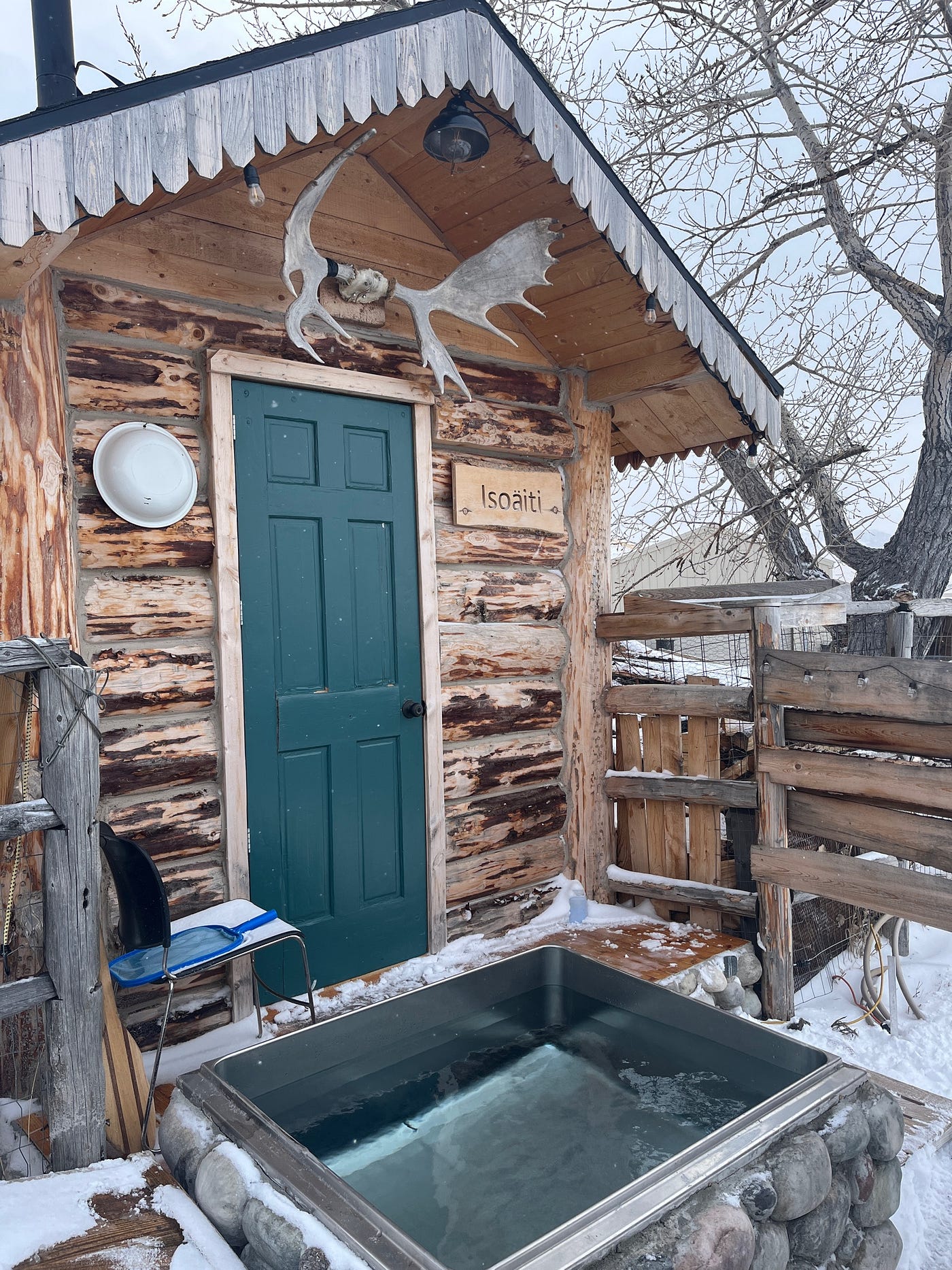
Sweat, as discussed in this article, means wood-fired Finish Sauna, Native American Sweat-lodge, or Russian Banya. For this discussion, they are “Sweat Normally, Sweat has a companion called an ice or cold water bath.
This is a discussion on the critical aspects of sweat to maximize bather comfort and health.
Structure:
The building for sweat starts with an insulated structure. It has a door completely sealed to the outside.
On one wall of the structure is a wood stove.
Heater:
This wood stove heats the structure and vents all the stale air outside by way of combustion air.
Air dam:
There is an air dam surrounding the stove with a hole that lets in combustion air for the stove. It is 20% of the floor-to-ceiling height. Fresh outside air is brought in behind the air dam.
Rocks:
Rocks fill the void between the air dam and the stove. They cover the stove completely. The stove pipe is surrounded by rocks to within 20% of the height of the ceiling, down by a round metal mesh holding them in place. Covering the stove and pipe in rock balances the overpowering radiant heat, creating fully balanced heat.
Heat:
When heated, the Sweat should be from 155°F — 185°F. When sitting on a bench in the Sweat with eyes closed, it should be difficult to know the location of the stove. The walls and benches are all hot. The wood is cut slightly larger than kindling, all the same. The stove has no damper, only an inert air control normally wide open. The fire heats the stove and rocks well over 400°F.
Ventilation:
Fresh air enters the building behind the stove under the rocks inside the air dam. If more fresh air is desired, it can be pushed in by a fan. As air is pushed in, more air is forced through the combustion air in the stove. The fire will burn hotter as a result. The stove is designed for this. Not all stoves are so be careful. If the fan is not used, the stove itself draws air in via the process of combustion. The fresh air is superheated and is the only air that rises into the face of the bathers.
Exhaust:
When the bathers breathe, they expel CO2. The CO2 falls to the floor because its temperature is below the temperature of the air in the bather's face. This stale CO2-containing air is pulled out by entering the stove and leaving via the flue.
Convection heat:
This form of ventilation and Exhaust creates convection heating. Convection heating lowers the thermal-clines in the building. This process makes the heat more balanced and drives it hotter closer to the floor. This keeps the feet of the bathers warmer as compared to the upper body. Not only is the heat balanced from one of the three types of heat overpowering one of the other types it is also more balanced from head to foot.
Air dam Notes:
The air dam is 20% the height of the ceiling. Giving an ample area for stale air to collect. The air dam keeps the stale CO2 air from mixing with the fresh air and being recirculated. It prevents any air in the area around the stove from mixing and being reheated. The air-dam around the stove has no ceiling and allows cold air to be superheated, so it will rise. This is the hottest air and rises the highest, filling the upper chamber — the upper 80% of the room with fresh air.
Stale air movement:
Stale air continues to cool as long as it is insulated away from the stove. Cooling keeps the stale air on the floor, so the stove combustion air can pull it into the stove and out through the stovepipe.
The Fresh Air Sweat:
As a result, the bathers are constantly breathing fresh, heated outside air.
Steam:
When water is thrown on the rocks, the superheated steam acts identically to the way the heated fresh air acts. It rises straight up to the ceiling as it starts to cool, and it falls slowly, covering the bathers in the same way the fresh superheated air does. You can feel exactly how the ventilation works when steam or loyly is made by cold water thrown on the rocks.
Periods:
Normally, the bathers will enjoy a period from 7 to 15 minutes in the heat. Loyly is done sooner rather than later to optimize it.
Vasta or Sweat whisk:
Often, bathers use a Sweat whisk made of birch leaves or sagebrush to gently beat the bodies of the other bathers to get the circulation going.
Traditions:
It is considered rude to open the door right after loyly.
Always bring a towel to place on the bench.
Spiritual to some, the event is spiritual- respect that.
Nude is the norm, don’t stare or be weird.
When using the Sweat whisk or broom, or vasta, be considerate.
Cooldown:
When leaving the Sweat, people often jump into the sea, a pond, a lake, a tub, or a shower of cold water. lounging around in the cold until they feel like going inside again.
Physics:
When a bather enters the heated Sauna, they are the coldest thing in the room at 98°F. When they exhale, the air falls to the floor as it is colder than the air in the building.
The ancient Native Americans and Finns understood these details. When I studied the ancient ways of Sweat, I applied them to the new technology of stoves. My Sweat works identically to a native American or ancient Finnish sweat lodge. For thousands of years before the steel stove was implemented, the ancient people knew the rules of thermodynamics and followed them even though they didn’t perhaps know why.
You may disagree with me, and that is ok, but then you don’t know what you are missing either.
I prefer not to deviate from the spirit of Sweat, so I stick to the ancient learnings of Sweat.
For more details, see Fire and Ice on Amazon.com by Jimmy Creel.
~JCP©️
메타데이터
- post_id
- 805a883384be
- slug
- sweat-sauna-sweat-lodge-and-banya-805a883384be
- url
- https://medium.com/sweat-culture/sweat-sauna-sweat-lodge-and-banya-805a883384be
- canonical_url
- https://medium.com/sweat-culture/sweat-sauna-sweat-lodge-and-banya-805a883384be
- author_url
- https://medium.com/@wildideaswyoming
- status
- ok
- fetched_at
- 2026-06-12 10:20:10