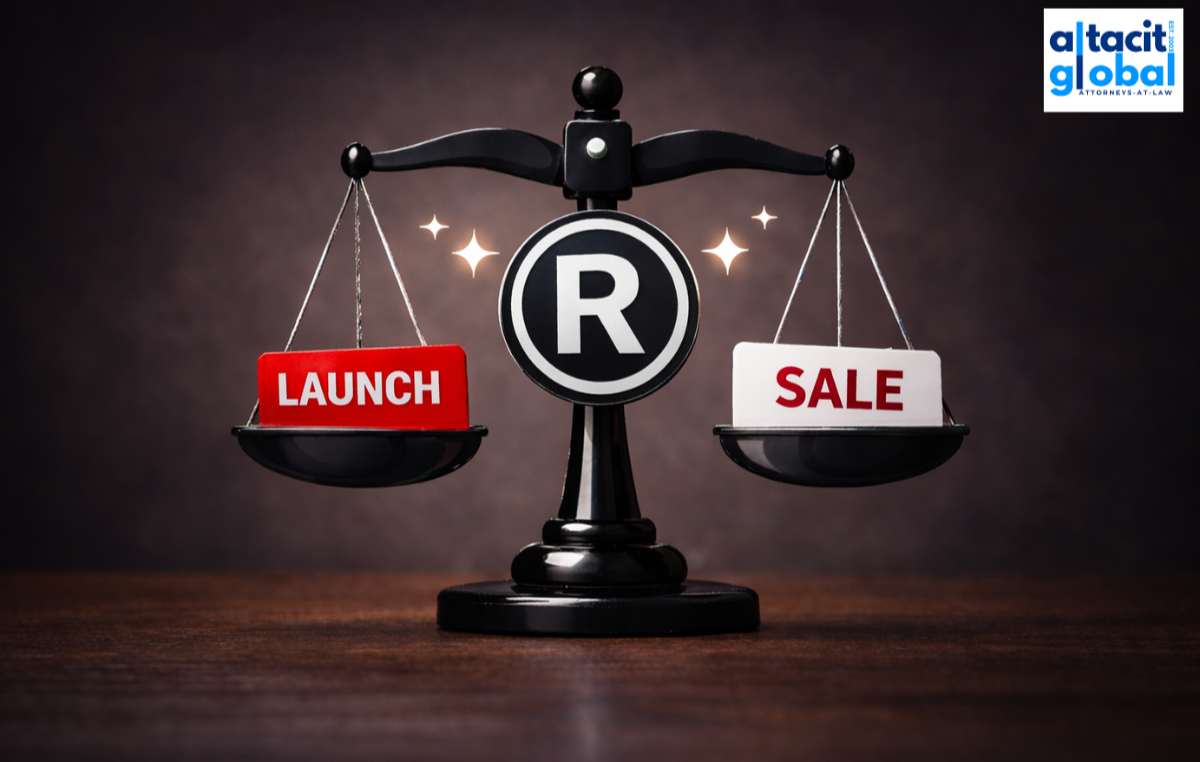
First Use of a Trademark- at Launch or at Sale?
A concise overview of when trademark rights truly begin in India — only with real sales or services, not just a brand launch.
First Use of a Trademark- at Launch or at Sale?
A concise overview of when trademark rights truly begin in India — only with real sales or services, not just a brand launch.
By Mrudula Manappatt
If a brand is launched in 2024 but only sells in 2025, which year should be considered when registering for a trademark? Under Indian trademark law, the applicable year is determined by whether the claim is based on prior use or on a proposed-to-be-used basis. The year of “use” is 2025, which is the year of real commercial sale. A 2024 launch that doesn’t result in sales isn’t always considered trademark usage. Much like a child who gains social recognition when they begin to communicate meaningfully, a trademark acquires legal recognition only when it is used in the course of trade.
User claims derive statutory importance from Section 18 of the Trade Marks Act, 1999, which regulates applications for trademark registration, and Section 34, which safeguards the rights of a prior user even against a registered owner. Section 34 of the Trademark Act serves as an exception to the exclusive rights conferred by Section 28, emphasising prior continuous use over subsequent registration for identical or similar marks and products or services. The Supreme Court of India has affirmed that trademark rights are founded on actual use rather than mere registration, as seen in cases emphasizing bona fide market presence over token use. In the case of S. Syed Mohideen v. P. Sulochana Bai, (2016) 2 SCC 683, the Court held that prior use prevails over prior registration, reiterating that registration does not confer better rights than those of a genuine prior user.
Prior users may assert their common law rights grounded in honest, continuous use prior to the filing date of the conflicting mark, thereby superseding Section 11 objections during examination or opposition. This arises from the idea that usage establishes property rights that are superior to later uses, as upheld by legal precedents such as the Supreme Court’s emphasis on past acceptance and market use. To determine priority within the Act’s framework, tribunals evaluate evidence of past usage, including sales records, invoices, and advertisements. If the prior use is demonstrated to be continuous and territorial, they may permit registration in spite of Section 11 prohibitions. In addition, Section 34 reinforces usage as the cornerstone above the filing sequence alone by prohibiting infringement lawsuits against such earlier users after registration.
Courts have created a few exceptions to the general rule that trademark usage necessitates commercial sale. Even in the absence of significant transactions, the actual provision of services may qualify as usage for service marks. In a similar vein, when they represent legitimate business activity, paid trials, advance orders, contractual agreements, or functioning digital services may establish usage. Rarely, well-known brands may depend on their reputation abroad in the absence of home sales. However, these exclusions are interpreted narrowly, and promotional or publicity efforts by themselves are insufficient. Service marks provide a significant exemption to Indian trademark law: actual service delivery, even on a pilot size, counts as usage via real consumer contacts, unlike commodities that need to be sold. While the Bombay High Court acknowledged pre-large-scale media service usage in Eros International Media Ltd. v. Telemax Links India Pvt. Ltd., the Delhi High Court maintained this without requiring mass sales in Bikanervala Foods Pvt. Ltd. v. New Bikanerwala. Promotions by themselves are not eligible. In Midas Hygiene Industries (P) Ltd. v. Sudhir Bhatia, the Supreme Court upheld the validity of pre-commercial activities such as paid advance orders, confirmed bookings, or pilot projects. However, free trials that don’t require payment are insufficient.
Conclusion
Indian trademark law links “first use” to actual commercial sales or qualifying service delivery in 2025, not just publicity, even though a brand launch in 2024 creates buzz. This is similar to how a trademark only truly comes to life through trade, not announcements. Sections 18, 34, and Supreme Court rulings such as S. Syed Mohideen v. P. Sulochana Bai support prior use claims, which supersede registration alone but require substantial proof of ongoing, genuine activity rather than token efforts. Although there are specific exceptions for pilots, paid trials, and trans-border reputation, courts closely examine cases; if there is no actual commercial value, stick to “proposed to be used” to avoid pitfalls.
메타데이터
- post_id
- 808aeeeeb859
- slug
- first-use-of-a-trademark-at-launch-or-at-sale-808aeeeeb859
- url
- https://medium.com/@AltacitGlobal/first-use-of-a-trademark-at-launch-or-at-sale-808aeeeeb859
- canonical_url
- https://medium.com/@AltacitGlobal/first-use-of-a-trademark-at-launch-or-at-sale-808aeeeeb859
- author_url
- https://medium.com/@AltacitGlobal
- status
- ok
- fetched_at
- 2026-07-18 11:07:01