Comparison of the Unified Theory of Psychiatry with DSM-5, ICD-11, and Anti-Psychiatric Movements
Unified Theory of Psychiatry vs. DSM-5 and ICD-11
Comparison of the Unified Theory of Psychiatry with DSM-5, ICD-11, and Anti-Psychiatric Movements
Unified Theory of Psychiatry vs. DSM-5 and ICD-11

Conceptual Framework
Unified Theory of Psychiatry (UTOP)
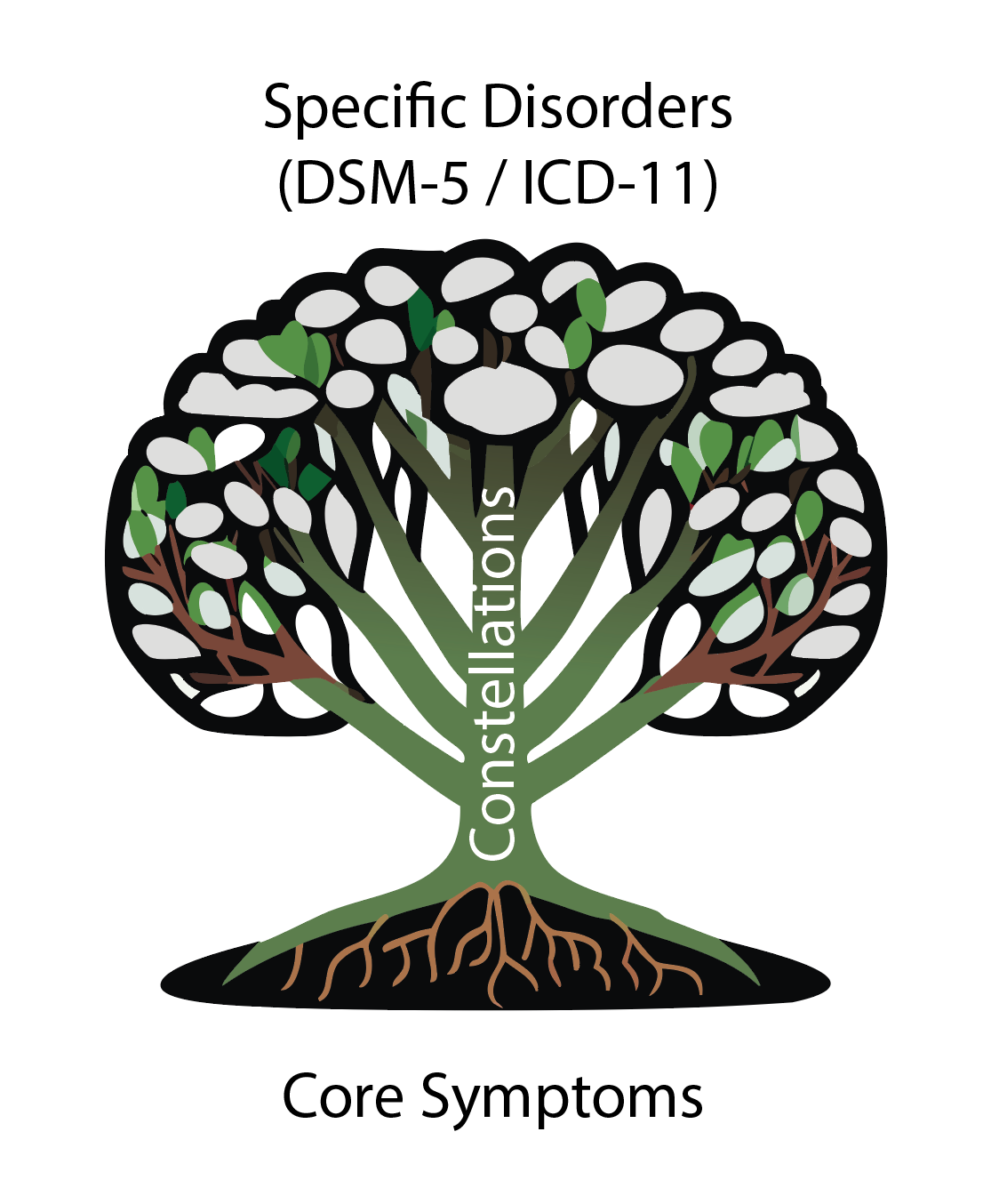
- Interconnected Constellations: Emphasizes the interconnectedness of psychiatric disorders, viewing them as part of a hierarchical tree with shared roots and branching syndromes.
- Core Symptoms: Focuses on core symptoms (e.g., mood dysregulation, cognitive impairment) that underpin multiple disorders.
- Diagnostic Flexibility: Encourages a more holistic and flexible diagnostic approach, reducing rigid boundaries between disorders.
- DSM-5 and ICD-11:
- Categorical Approach: Both frameworks categorize mental disorders into discrete, distinct conditions based on symptom clusters.
- Symptom Criteria: Relies on specific criteria and thresholds for diagnosing each disorder.
- Diagnostic Specificity: Aims for precise, standardized diagnoses to facilitate treatment and research.
More …
The Tree
Diagnosis and Treatment
- Unified Theory of Psychiatry:
- Overlapping Diagnoses: Recognizes significant overlap in symptoms, promoting treatment plans targeting shared core symptoms across multiple disorders.
- Personalized Medicine: Supports personalized treatment approaches based on individual symptom profiles.
- DSM-5 and ICD-11:
- Discrete Diagnoses: Uses specific diagnostic criteria to distinguish between disorders, facilitating targeted treatments for each condition.
- Standardization: Ensures consistency in diagnosis and treatment across practitioners and settings.
Strengths and Weaknesses
- Unified Theory of Psychiatry:
- Strengths: Provides a comprehensive, interconnected view of mental disorders; encourages interdisciplinary research and integration of neuroscience; promotes personalized treatment.
- Weaknesses: Complexity in diagnosis and treatment planning; potential lack of specificity; requires extensive empirical validation.
- DSM-5 and ICD-11:
- Strengths: High specificity and standardization; facilitates research and clinical communication; well-validated and widely accepted.
- Weaknesses: Rigid boundaries may overlook symptom overlap; may not fully capture the complexity of mental disorders; risk of over-reliance on categorical diagnoses.
Comparison with Anti-Psychiatric Movements
Philosophical Approach
Unified Theory of Psychiatry:
- Holistic View: Recognizes the interconnectedness of mental disorders, similar to the ecological perspective in anti-psychiatric movements.
- Core Symptoms: Focuses on core symptoms, aligning with the anti-psychiatric critique of rigid diagnostic categories.
Thomas Szasz:
- Myth of Mental Illness: Szasz argued that mental illness is a social construct rather than a medical condition, opposing the medicalization of psychiatry.
- Critique of Coercion: Emphasized the ethical implications of involuntary treatment and the potential misuse of psychiatric diagnoses for social control.
R.D. Laing:
- Existential Perspective: Viewed mental disorders as meaningful responses to social and existential challenges rather than pathological conditions.
- Critique of Treatment: Criticized traditional psychiatric treatments as dehumanizing and advocated for understanding patients’ subjective experiences.
Scientology:
- Rejection of Psychiatry: Opposes psychiatric practices and treatments, viewing them as harmful and unscientific.
- Alternative Approaches: Promotes its own mental health practices, often in opposition to mainstream psychiatry.
Diagnostic and Treatment Paradigms
Unified Theory of Psychiatry:
- Diagnostic Flexibility: Aligns with anti-psychiatric critiques by promoting flexible, individualized diagnoses.
- Holistic Treatment: Encourages treatment approaches targeting core symptoms across disorders, which may resonate with the more holistic views of anti-psychiatric movements.
- Anti-Psychiatric Movements:
- Critique of Diagnostic Systems: Argue that diagnostic systems like DSM and ICD pathologize normal human experiences and impose harmful labels.
- Alternative Treatments: Advocate for less medicalized and more person-centered approaches, emphasizing understanding and supporting individuals’ subjective experiences.
Integration and Divergence
Integration:
- Unified Theory of Psychiatry and Anti-Psychiatric Movements share a common critique of rigid diagnostic categories and emphasize the complexity and interconnectedness of mental health conditions.
- Both advocate for more flexible, individualized approaches to diagnosis and treatment, recognizing the limitations of categorical systems like DSM-5 and ICD-11.
Divergence:
- Unified Theory of Psychiatry maintains a medical framework, seeking to refine and expand current diagnostic models rather than rejecting them entirely, as seen in some anti-psychiatric perspectives.
- Anti-psychiatric movements often fundamentally oppose the medicalization of mental health and psychiatric treatments, advocating for radical changes or alternative approaches outside the medical model.
Conclusion
The Unified Theory of Psychiatry proposes a paradigm shift by conceptualizing psychiatric disorders as interconnected constellations within a hierarchical tree structure, offering a more nuanced and flexible approach to mental health care. While it shares some philosophical ground with anti-psychiatric movements, it remains within the medical framework, seeking to refine rather than replace existing diagnostic systems like DSM-5 and ICD-11. This theory aims to integrate the strengths of current frameworks with a more holistic and individualized understanding of mental health, acknowledging both its potential and the challenges it faces in transforming psychiatric practice.
A Parable on Unified Theory of Psychiatry and Diagnostic Systems
The Garden of Minds
In a faraway land, there was a grand Garden of Minds, tended by two groups of gardeners who cared deeply about the health of the garden’s diverse and vibrant flora. This garden was unique, filled with an array of plants that represented the minds of the people who visited and lived within its boundaries.
The Conventional Gardeners
The first group of gardeners, known as the Conventional Gardeners, adhered to strict rules about how each plant should be categorized and treated. They used a set of detailed manuals, known as the DSM and ICD, which provided precise instructions on how to identify and care for each plant species. The Conventional Gardeners believed that by following these manuals, they could ensure the garden remained orderly and that each plant received the right treatment.
These manuals, however, had their limitations. The strict categories sometimes failed to capture the true nature of the plants, and the rigid boundaries between species often overlooked the fact that some plants exhibited characteristics of multiple categories. As a result, some plants did not thrive as they should have, and the gardeners found themselves struggling with plants that didn’t fit neatly into any one category.
The Unified Gardeners
The second group, called the Unified Gardeners, approached the garden with a different philosophy. They saw the plants not as isolated species but as interconnected constellations within a vast, complex ecosystem. They believed that understanding the core symptoms shared by many plants could lead to more effective care. Instead of rigid categories, they used a holistic approach, viewing the garden as a hierarchical tree with shared roots and branching syndromes.
The Unified Gardeners emphasized diagnostic flexibility, encouraging a more personalized and interconnected approach to plant care. They focused on core symptoms such as leaf discoloration or stem brittleness that could affect many different plants. This approach allowed them to tailor their care strategies to the individual needs of each plant, promoting overall garden health and harmony.
The Anti-Gardeners
Outside the garden, there were also the Anti-Gardeners, who believed that the very act of categorizing and diagnosing plants was inherently flawed. Influenced by thinkers like Thomas Szasz and R.D. Laing, they argued that the garden’s problems were not due to the plants themselves but to the artificial constraints imposed by the gardening manuals. They viewed plants’ struggles as meaningful responses to their environment and opposed any form of coercive treatment, advocating instead for understanding and respecting each plant’s unique experience.
A New Approach
The Unified Gardeners found themselves in a unique position. They shared some common ground with the Anti-Gardeners in their critique of rigid diagnostic categories and in emphasizing the interconnectedness and complexity of the garden. However, unlike the Anti-Gardeners, the Unified Gardeners did not reject the manuals entirely. Instead, they sought to refine and expand them, integrating the strengths of the Conventional Gardeners’ approach with their own holistic understanding.
One day, a particular plant in the garden, known as Dr. Nick, struggled with symptoms that did not fit neatly into any category. Dr. Nick exhibited signs of both flourishing growth and wilting leaves, a mixed state that puzzled the Conventional Gardeners. The plant also had trouble resting at night and had developed restless roots, which caused it to seek solace in unhelpful habits like overconsuming sunlight.
A Solution: The Olanzapine-Fluoxetine Combination
The Unified Gardeners proposed a new treatment approach for Dr. Nick, combining elements known to help both growth and relaxation: Olanzapine and Fluoxetine. This combination, they believed, would target the core symptoms of both overgrowth and wilting, while also addressing the restless roots without causing further distress.
This treatment, known in the garden as Symbyax, was supported by evidence from studies in other gardens. Researchers like Tohen et al. and Sachs et al. had shown that combining these elements effectively managed mixed states and reduced the risk of overgrowth without causing additional wilting. Moreover, the treatment had a lower chance of causing restlessness in the roots, helping plants like Dr. Nick reduce their reliance on unhelpful coping mechanisms.
Conclusion
The Garden of Minds continued to flourish under the care of both the Conventional and Unified Gardeners. By embracing a more nuanced and flexible approach, the Unified Gardeners demonstrated that it was possible to integrate the strengths of traditional methods with a more holistic understanding of the garden’s complex ecosystem. Their approach acknowledged the interconnectedness of the plants, promoting personalized care and overall garden health. In doing so, they showed that it was possible to refine and improve existing frameworks, paving the way for a more harmonious and thriving garden.
And thus, the Garden of Minds became a place where each plant, whether it fit neatly into a category or not, could receive the care it needed to grow and flourish.
Scholarly Articles
Kupfer, D. J., & Regier, D. A. (2009). DSM-5: The future arrived. JAMA, 301(24), 2721–2722. Discusses the development and goals of the DSM-5, highlighting its strengths and limitations.
First, M. B. (2009). Harmonisation of ICD-11 and DSM-V: Opportunities and challenges. British Journal of Psychiatry, 195(5), 382–390. Examines the efforts and challenges in harmonizing the ICD-11 and DSM-5, providing context for the Unified Theory’s potential integration.
McGorry, P., & van Os, J. (2013). Redeeming diagnosis in psychiatry: Timing versus specificity. The Lancet, 381(9863), 343–345. Critiques the categorical nature of current diagnostic systems and discusses the benefits of more flexible, dimensional approaches.
Bracken, P., Thomas, P., & Timimi, S. (2012). Psychiatry beyond the current paradigm. British Journal of Psychiatry, 201(6), 430–434. Explores alternative models to traditional psychiatric diagnosis, resonating with anti-psychiatric critiques.
Szasz, T. S. (1960). The myth of mental illness. American Psychologist, 15(2), 113–118. A foundational text critiquing the medical model of psychiatry, influential in anti-psychiatric movements.
International Guidelines
World Health Organization. (2019). International Classification of Diseases, 11th Revision (ICD-11). The ICD-11 provides the latest international standards for diagnosing mental health disorders, relevant for comparing with the Unified Theory.
American Psychiatric Association. (2013). Diagnostic and Statistical Manual of Mental Disorders (5th ed.). The DSM-5 is a critical reference for understanding the current categorical approach to psychiatric diagnosis.
National Institute for Health and Care Excellence (NICE). (2011). Common mental health problems: Identification and pathways to care. Clinical guideline [CG123]. Offers guidelines for managing common mental health problems, relevant for understanding the application of diagnostic systems.
National Institute for Health and Care Excellence (NICE). (2018). Post-traumatic stress disorder. Clinical guideline [NG116]. Provides evidence-based guidelines for PTSD, illustrating the application of DSM-5 and ICD-11 diagnostic criteria.
Suggested Further Reading
Kendler, K. S. (2016). The dappled nature of causes of psychiatric illness: Replacing the organic-functional/hardware-software dichotomy with empirically based pluralism. Molecular Psychiatry, 21(10), 1333–1339. Advocates for a pluralistic approach to understanding psychiatric illness, supporting the conceptual flexibility of the Unified Theory.
Moncrieff, J. (2013). The Bitterest Pills: The Troubling Story of Antipsychotic Drugs. Palgrave Macmillan. Critically examines the use of antipsychotic drugs, reflecting anti-psychiatric sentiments and questioning traditional psychiatric treatments.
Boyle, M. (2002). Schizophrenia: A Scientific Delusion? Routledge. Challenges traditional understandings of schizophrenia, resonating with anti-psychiatric critiques.
Hyman, S. E. (2010). The diagnosis of mental disorders: The problem of reification. Annual Review of Clinical Psychology, 6, 155–179. Critiques the reification of mental disorder diagnoses and supports more flexible, dimensional approaches.
Laing, R. D. (1960). The Divided Self: An Existential Study in Sanity and Madness. Penguin Books. Explores existential perspectives on mental health, influential in anti-psychiatric movements and relevant for understanding the philosophical underpinnings of the Unified Theory.
These resources provide a comprehensive foundation for comparing the Unified Theory of Psychiatry with DSM-5, ICD-11, and anti-psychiatric movements, highlighting the strengths and weaknesses of each approach.
메타데이터
- post_id
- 80a344511a7d
- slug
- comparison-of-the-unified-theory-of-psychiatry-with-dsm-5-icd-11-and-anti-psychiatric-movements-80a344511a7d
- url
- https://medium.com/@eyeofheaven/comparison-of-the-unified-theory-of-psychiatry-with-dsm-5-icd-11-and-anti-psychiatric-movements-80a344511a7d
- canonical_url
- https://medium.com/@eyeofheaven/comparison-of-the-unified-theory-of-psychiatry-with-dsm-5-icd-11-and-anti-psychiatric-movements-80a344511a7d
- author_url
- https://medium.com/@eyeofheaven
- status
- ok
- fetched_at
- 2026-06-27 18:20:27