How to Select CPLD Devices?
Selecting the right CPLD (Complex Programmable Logic Device) for your project involves evaluating several factors, including logic…
Wiki topics:
🥊 · Combat Sports
How to Select CPLD Devices?
Selecting the right **CPLD (Complex Programmable Logic Device)** for your project involves evaluating several factors, including logic capacity, I/O requirements, power consumption, speed, and development tools. Here’s a step-by-step guide to help you choose the best CPLD device:
1. Define Your Project Requirements
- Logic Capacity: Determine the number of logic gates or macrocells required for your design. CPLDs typically range from 32 to 512 macrocells.
- I/O Pins: Count the number of input/output pins needed to interface with external components.
- Speed: Consider the maximum operating frequency and propagation delay required for your application.
- Power Consumption: Evaluate the power budget, especially for battery-powered or low-power applications.
- Package Type: Choose a package that fits your PCB design (e.g., QFP, BGA, TQFP).
2. Understand CPLD Architecture
- Macrocells: These are the basic building blocks of a CPLD. Each macrocell typically includes a flip-flop, logic gates, and programmable interconnects.
- Interconnect Resources: Ensure the CPLD has sufficient routing resources to implement your design without congestion.
- Clock Management: Check for features like clock dividers, PLLs (Phase-Locked Loops), or global clock networks if your design requires precise timing.
3. Evaluate Key Specifications
- Logic Density: Choose a CPLD with enough macrocells to accommodate your design. Add a margin for future updates.
- I/O Standards: Ensure the CPLD supports the required voltage levels and standards (e.g., LVCMOS, LVDS, PCI).
- Speed Grade: Select a device with a speed grade that meets your timing requirements.
- Power Supply: Verify the operating voltage (e.g., 3.3V, 2.5V, 1.8V) and power consumption.
4. Consider Development Tools and Ecosystem
- Software Tools: Check if the vendor provides user-friendly development tools (e.g., Xilinx ISE, Intel Quartus, Lattice Diamond).
- Debugging Features: Look for built-in debugging capabilities like JTAG or boundary scan.
- Community and Support: A strong user community and vendor support can simplify development and troubleshooting.
5. Compare Popular CPLD Families
Here are some widely used CPLD families from major vendors:

6. Prototype and Test
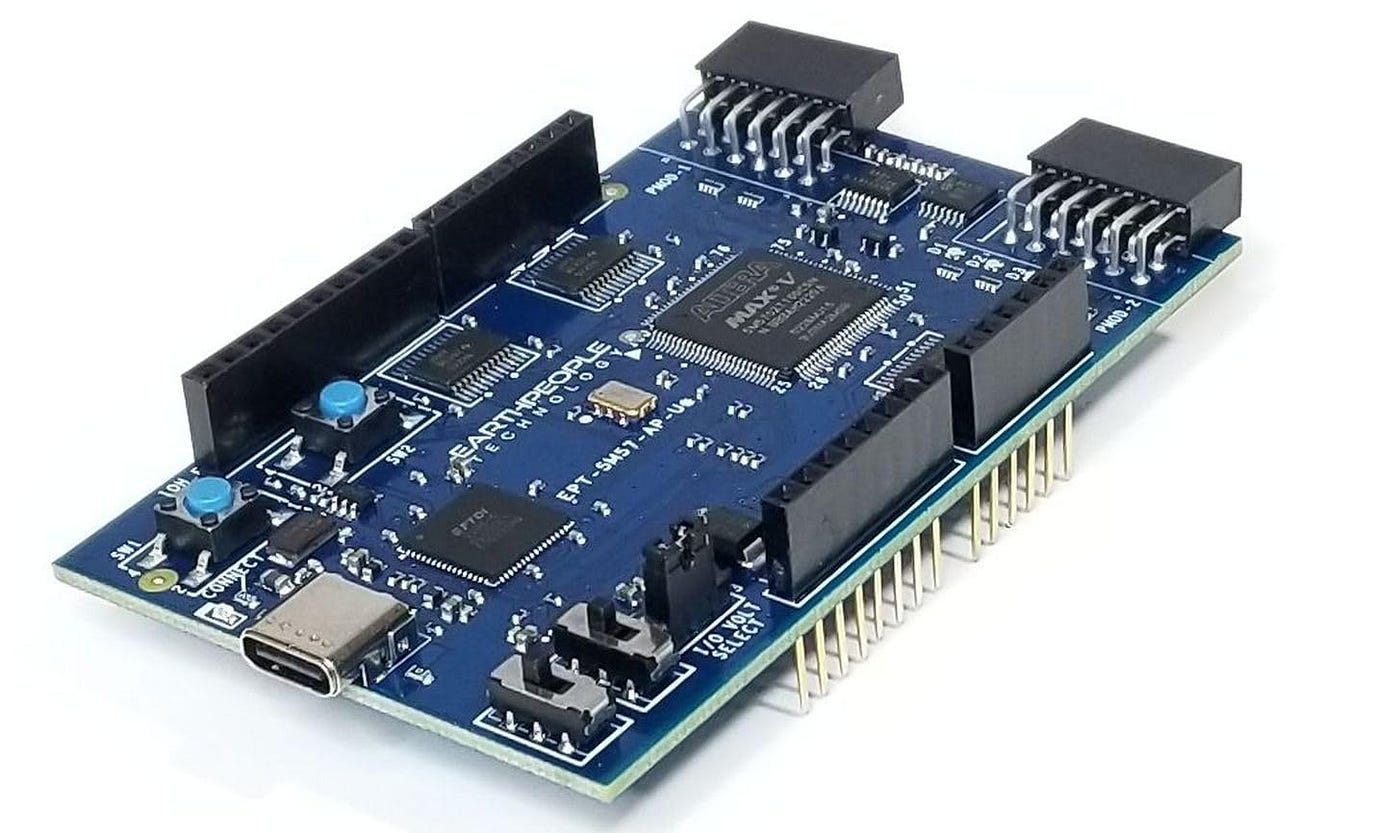
- Start with a development board or evaluation kit to prototype your design.
- Test the CPLD’s performance, power consumption, and compatibility with your system.
7. Cost and Availability
- Compare the cost of the CPLD and associated development tools.
- Ensure the device is readily available and has a stable supply chain.
Example Selection Process:
- Project: Design a simple state machine for a home automation system.
- Requirements:
- 64 macrocells.
- 20 I/O pins.
- 3.3V operation.
- Low power consumption.
3. Options:
- Xilinx CoolRunner II (64 macrocells, low power).
- Lattice MachXO2 (256 LEs, low power, small form factor).
4. Decision: Choose Lattice MachXO2 for its modern architecture and additional features.
Summary:
To select the right CPLD:
- Define your project requirements.
- Understand CPLD architecture and specifications.
- Evaluate development tools and ecosystem.
- Compare popular CPLD families.
- Prototype and test your design.
- Consider cost and availability.
By following these steps, you can choose a CPLD that meets your design needs and ensures a successful implementation.
메타데이터
- post_id
- 80dd9daa72d2
- slug
- how-to-select-cpld-devices-80dd9daa72d2
- url
- https://medium.com/@pqshedy33/how-to-select-cpld-devices-80dd9daa72d2
- canonical_url
- https://medium.com/@pqshedy33/how-to-select-cpld-devices-80dd9daa72d2
- author_url
- https://medium.com/@pqshedy33
- status
- ok
- fetched_at
- 2026-07-20 18:57:43