How Targeted Rollouts Deliver Parametric Crop Insurance for Smallholder Farmers in Ivory Coast
Access to precise, hyperlocal weather data has become essential for infrastructure planning, public safety, tourism, insurance ,…
How Targeted Rollouts Deliver Parametric Crop Insurance for Smallholder Farmers in Ivory Coast
Access to precise, hyperlocal weather data has become essential for infrastructure planning, public safety, tourism, insurance, and agriculture as climatic instability increases globally.
However, there is a lack of high-resolution hyper local weather data in many areas, especially in emerging markets and rural agricultural settings. Without it, insurers cannot set risk prices, farmers cannot safeguard their crops, and cities cannot become ready for disasters.

How Targeted Rollouts fit into the DePIN landscape
The DePIN ecosystem is often spoken about as if every network operates the same way, but that’s not true in practice. Some decentralised infrastructure networks are designed so that hardware locations are largely irrelevant.
Compute clusters, GPU networks, and certain satellite correction networks can provide value from almost anywhere. In these models, the node’s physical placement does not meaningfully influence the utility it provides. The network functions whether the device is placed in Lisbon, Lagos, or Los Angeles.
WeatherXM belongs to a very different category, one where location is everything. In networks focused on environmental sensing, connectivity, or air-quality measurement, data only carries value when it accurately reflects the conditions of a specific place.
A weather station installed five kilometres from a farm, vineyard, coastline, or energy site is effectively the wrong data. It cannot inform crop irrigation plans, insurance pricing, operational safety, or flood preparedness. The data must originate exactly where decisions are being made.
Such information is why WeatherXM cannot grow by random, opportunistic, or purely organic deployments. To produce meaningful climate intelligence and to support real-world services, stations must be placed with intention, precision, and purpose. In WeatherXM, the location is the product, and that is the foundation of targeted rollouts.

Why Targeted Rollouts Exist
Because the value of weather intelligence depends entirely on where data is collected, WeatherXM cannot expand through random or interest-driven deployments. A station placed in the wrong location may produce perfectly good data, but data that cannot be used to price insurance, guide irrigation, monitor flood risk, or support operational planning.
Real-world utility requires stations to be deployed in the places where weather conditions directly influence economic outcomes: agricultural regions, flood-prone coastlines, mining sites, remote energy infrastructure, and destinations where climate affects travel and hospitality.
This is the purpose of Targeted Rollouts. We scale the network intentionally, placing stations only where they unlock measurable value. Each deployment supports a concrete use case. Each use case enables a real service, whether it is climate intelligence, risk monitoring, or parametric insurance. And each of those services generates revenue that is returned back into the network itself.
This is not subsidy-based growth, nor is it a speculative “node-mining” model. It is applied climate infrastructure with feedback loops that are economic, not hypothetical. The network grows where it matters, and the value it creates flows back to the community that makes it possible.
How Value Flows Back to the Network
Targeted Rollouts are designed to create value where stations are deployed and return a portion of that value to the WeatherXM community. Every deployment supports a real service such as climate intelligence or parametric insurance, that generates revenue.
A portion of that revenue is used for structured WXM token buybacks, with a share of the purchased tokens distributed pro-rata to Targeted Rollouts supporters. At the same time, hyperlocal weather data improves outcomes on the ground: lowering insurance premiums, supporting agricultural productivity, and strengthening climate resilience.
Because each station directly contributes to real usage, every deployment increases the revenue-per-station metric, allowing the network to scale sustainably while maintaining controlled token inflation. In short: more stations only make sense when they create more value — Targeted Rollouts ensure they do.
A significant share of that revenue contributes directly back to the WeatherXM ecosystem:
Real-world adoption fuels genuine economic alignment between the network and its contributors.
Every Targeted Rollout deployment supports a real climate service that generates revenue, whether through parametric insurance, climate intelligence platforms, or data services. A significant share of that revenue flows directly back into the WeatherXM ecosystem through structured WXM buybacks, typically representing 30–50% of revenue from each use case.
From those buybacks, 30% of the acquired WXM is then distributed pro rata to Targeted Rollout supporters. As a simplified example: from every $100 in revenue, approximately $40 may be used for WXM buybacks, returning 30%, which equates to $12, that is returned directly to supporters in a revenue sharing model. value directly to supporters.
This model aligns real-world adoption with economic participation: hyperlocal stations create tangible value on the ground, while the network and its contributors benefit from sustainable, service-driven demand rather than speculation.

Parametric Crop Insurance for Smallholder Farmers in Ivory Coast
Problem
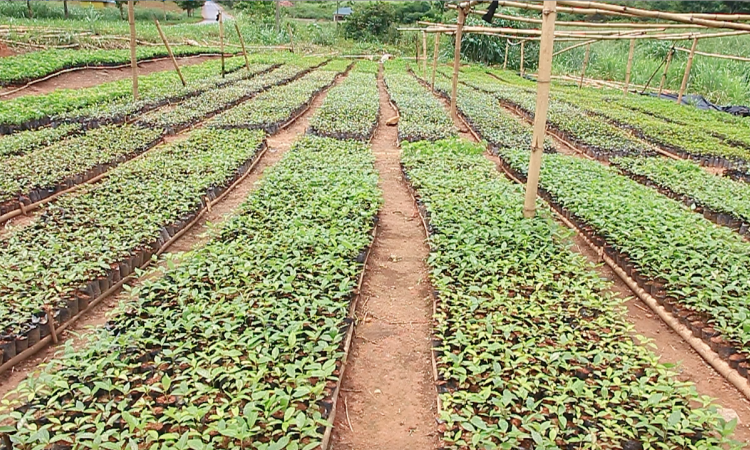
Ivory Coast’s smallholder cocoa and maize farmers work in one of the most climate-sensitive agricultural regions on earth. All seasons are at risk from drought, flooding, and shifting rainfall patterns. But because insurers lack local climatic data to appropriately assess risk, insurance products are uncommon and frequently prohibitively expensive.
Deployment Strategy
Working together with local farming cooperatives and regional insurance partners, WeatherXM will deploy 57 weather stations across key crop-growing areas.
These stations will:
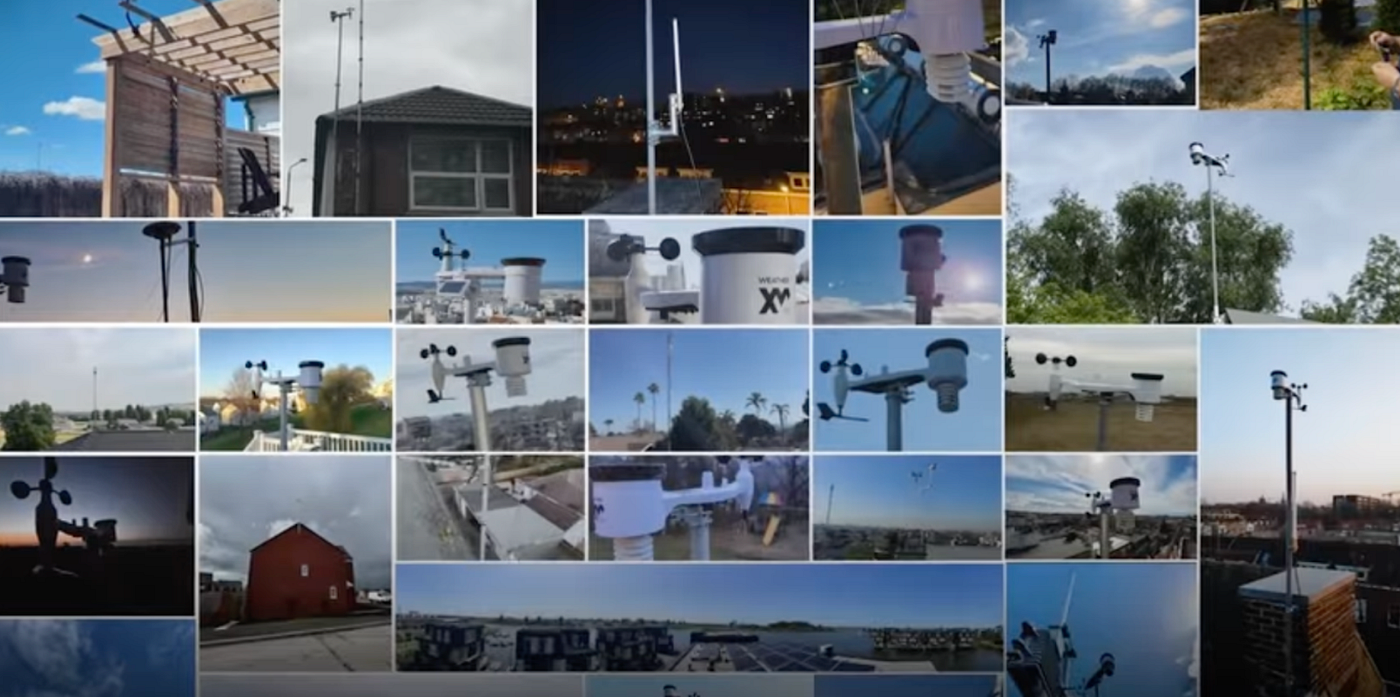
- Measure real on-farm weather conditions like rain, temperature, humidity, and wind not estimates from far-away airports.
- Help set fair insurance pricing, because the risk can now be calculated using real local data.
- Serve as the automatic trigger for payouts, ensuring compensation happens objectively, based on the actual conditions experienced in the fields.
- In simple terms: Farmers get insurance that is clearer, fairer, and faster backed by accurate weather data from their own land.
Timeline for Launch
Deployment: January through February of 2026. Parametric Services Launch: March 2026, prior to the primary growing season.
Estimated Reach
About 15,000 smallholder farmers through a network of connected ag-insurtech partners.
Impact
- Reduced insurance costs resulted in a greater uptake of the product.
- Quicker, automated claims payments, stability in finances.
- Weather intelligence leads to improved agricultural management, irrigation, and planting choices.
How Value Flows Back Into the Network Component Mechanism: Who Benefits?
WeatherXM stations generate valuable climate and insurance data for communities, farmers, organizations, and companies, powering revenue from climate platforms, risk products, and insurance services within the WeatherXM ecosystem. The network’s economic loop is designed to reward participation and strengthen long-term growth:
- 30–50% of service revenue is used to repurchase WXM tokens from the market.
- 30% of those repurchased tokens are distributed to Rollouts Supporters and participants in Targeted Rollouts.
As deployments expand, data quality improves, services grow, and value flows back into the community that powers the network. This model represents a new form of decentralized climate infrastructure, where hardware is community-owned, data meets real economic needs, and revenue supports the network’s contributors.
Join the next Targeted Rollouts and become part of building the future of decentralized climate intelligence.
메타데이터
- post_id
- 8112fddc4ac7
- slug
- how-targeted-rollouts-deliver-parametric-crop-insurance-for-smallholder-farmers-in-ivory-coast-8112fddc4ac7
- url
- https://blog.weatherxm.com/how-targeted-rollouts-deliver-parametric-crop-insurance-for-smallholder-farmers-in-ivory-coast-8112fddc4ac7
- canonical_url
- https://blog.weatherxm.com/how-targeted-rollouts-deliver-parametric-crop-insurance-for-smallholder-farmers-in-ivory-coast-8112fddc4ac7
- author_url
- https://medium.com/@andriyuh
- status
- ok
- fetched_at
- 2026-06-10 18:55:46