AI does not fail. But your foundation does.
A practitioner’s take on three days at Gartner Data & Analytics Summit 2026 in London
AI does not fail. But your foundation does.
A practitioner’s take on three days at Gartner Data & Analytics Summit 2026 in London
A few weeks have passed since I spent three days at the Gartner Data & Analytics Summit 2026 in London. Enough time to let noise settle. What stuck was this: AI does not fail. Foundations do. So do the right business incentives.
The paradox of AI use
Condensing three full days and over many keynotes into a single review is a challenge in itself. One thing kept surfacing across sessions, conversations and hallways in London: organisations are spending more on digital ambitions than ever, and the returns remain largely out of reach.
Board-level appetite for AI investment in particular is still high on the agenda, 63% of boards still rank technology and innovation as a top strategic priority according to Gartner. Yet CFOs report that only 11% of AI value is tangible and measurable. Which is a remarkable gap.
Gartner distinguishes three archetypes along the AI journey: AI-Cautious, AI-Opportunistic and AI-First. The foundation problem does not disappear as you move along that spectrum. An AI Cautious organisation with a weak foundation wastes a pilot budget. An AI First organisation with the same weak foundation scales mistakes. Thus , this review covers three things that kept coming back across those days :
-
why most organisations are measuring AI returns incorrectly,
-
what a deliberate enterprise foundation actually requires,
-
and why the question behind all of it is architectural before it is technological.
The AI ROI illusion
Not all returns are equal. AI has moved to mainstream adoption, most organizations have something running. What has it returned? Gartner makes a useful distinction: blue money versus green money.
Blue money is productivity and efficiency. E.g. Copilot adoption, faster reporting, less manual effort. These are real improvements. However, they do not flow directly to the profit & loss statement (P&L). Green money is different — it comes from critical business changes. What is a critical business change? A digital transformation can be one of them, but the common denominator is when it fundamentally changes how value is created and delivered. Green money shows up in sales conversion rates, total units sold, marginal cost per transaction, compliance rates. It is recognizable on a cost- or a revenue line.
Gartner frames business cases across three archetypes.
- Defend positions generate marginal gains of 5 to 15 percent through competitive parity and microinnovation.
- Upend positions — think Uber-level disruption that reshapes entire markets — also sit at 5 to 15 percent, but represent return on the future rather than the present.
- The middle ground is extend: competitive advantage through growth in market size, reach, revenue or profitability. according to Gartner, the extend zone represents the largest share of realistic AI value creation. Gartner puts this at roughly 80% of realistic AI value creation.
The reason comes back to what it takes to fulfil those incentives. Green money requires process change, which could be more challenging to budget for and harder to attribute. Not only that, Gartner does not mention the corporate politics — which is understandable — so everyone has a different agenda where restructuring the foundation is not a high priority. So, organisations default to what they can show quickly. The result is a lot of blue money activity disguised as AI transformation.
I design organisations from the outside in. Business processes are the translation layer between strategy and technology. They are where value chains translate customer needs into actual products and services. For example, a strategy built on operational excellence demands processes that are lean, standardised and measurable. When you then deploy AI on a process that was never standardised to begin with, you are not executing that strategy but automating the deviation from it. How can you be so sure you are actually transforming it? You are automating existing logic, mistakes included. Organisations that take the time to redesign their processes with AI-ready data in place consistently see stronger returns — according to Gartner. This is also something I have written about with Dux Group on AI readiness, the pattern repeats itself.
Only 4% of companies take a focused, deep approach to transformation in a few priority areas — but those that do achieve twice the ROI over time, according to a 2024 BCG survey cited in Harvard Business Review [1]
Lastly, what Gartner did not mention is that different use cases can have different ROI timelines and magnitudes. Chasing only quick wins causes potential misses of transformative opportunities with longer horizons — a dynamic that Harvard Business Review has covered extensively. This applies to any sustaining or disruptive technology, not just AI. The message remains the same. Thus, the higher your transformation ambition, the more fundamental the process change required to realise it. See figure 1, where I mapped Gartner’s three business case archetypes onto the Innovation Ambition Matrix.
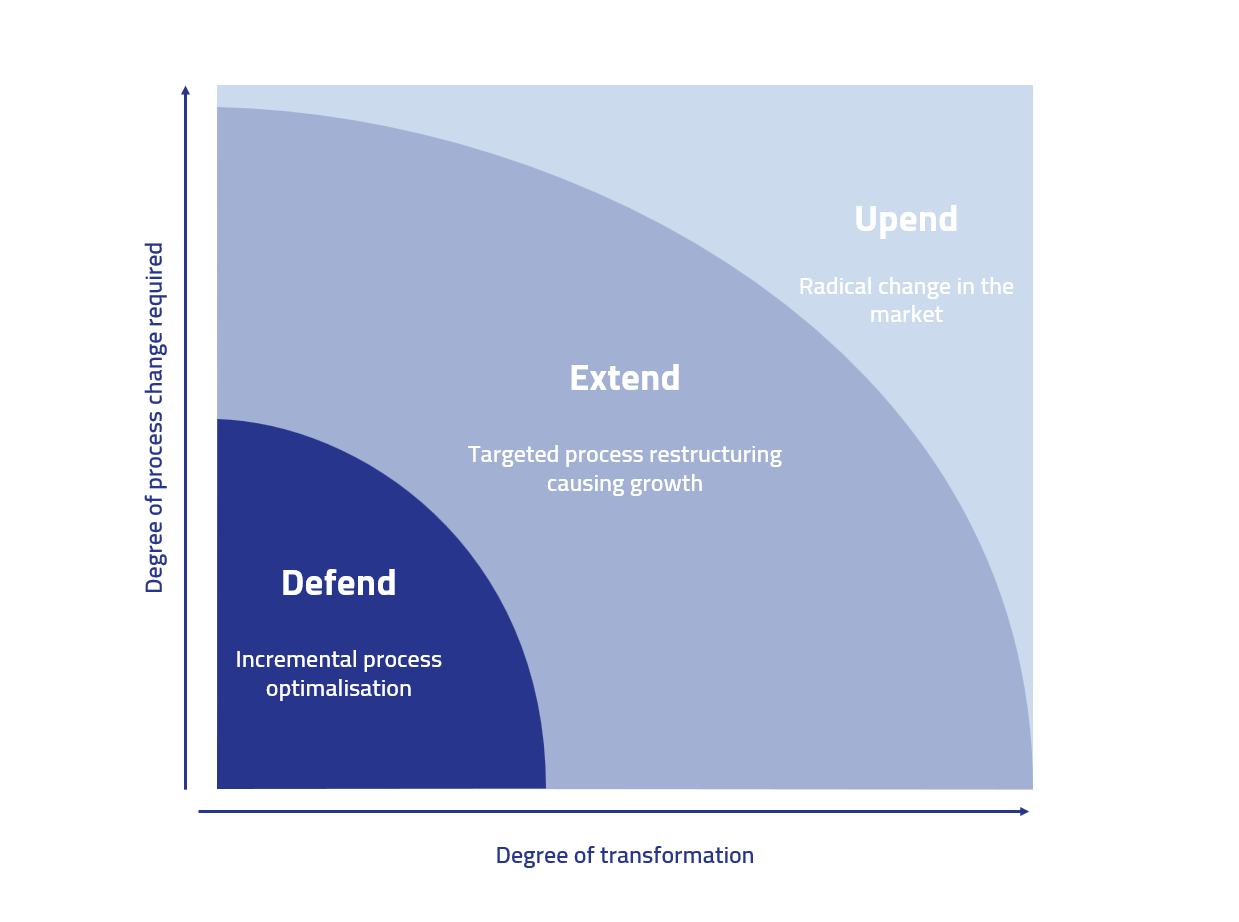
Figure 1 — (AI) Business case archetypes mapped to degree of process change
The enterprise foundation gap
According to Gartner’s Chief Data and Analytics Officer Agenda Survey 2026, 85% of data and analytics practices are not architected for scale. The question is why.
My answer, and I think Gartner broadly agrees, is that most organisations have not made deliberate choices about their enterprise foundation. Matter of fact, I cannot blame them. Opportunity costs; it is a trade-off between defence and aggression in terms of digital capabilities. Three insights that Gartner mentioned very often: operating models, context and trust (governance).
Operating model first
Without a conscious operating model choice, you are building on shifting ground. The argument for a “foundation for execution” is more relevant now than it was then. Jeanne W. Ross, Peter Weill and David Robertson, made this case in 2006 in Enterprise Architecture as Strategy. The debate about centralised versus decentralised, federated versus unified, is important but the crucial question that precedes it: what does this organisation need to be capable of in order to create value? Strategy and capabilities drive the operating model.
Gartner discusses AI organisation design in terms of maturity and purpose, which I broadly agree with, though one thing gets underemphasised. That is the importance of a concrete strategy as a prerequisite. A strategy that gives the operating model something to orient around. However, there is an interesting flipside to consider: if your long-term strategy is currently a moving target, is focusing on the operating model first a way to prepare your AI and data landscape for scale? Every organisation already has an operating model, the question is whether it was consciously designed or inherited. Without a clear strategy, you cannot make a deliberate choice. And an inherited operating model that was never designed for scale will resist every digital ambition you layer on top of it. Strategy without operating model is wishful thinking. Operating model without strategy is organised activity without direction.
On a final note about operating models, people are essential. Is your organization moving along with your digital ambitions? The operating model needs to work across three dimensions simultaneously: people, process, and technology. Asymmetric investments in technology compared to process and people is where it often fails and where change management costs twice the implementation effort — as Gartner confirmed at the summit.
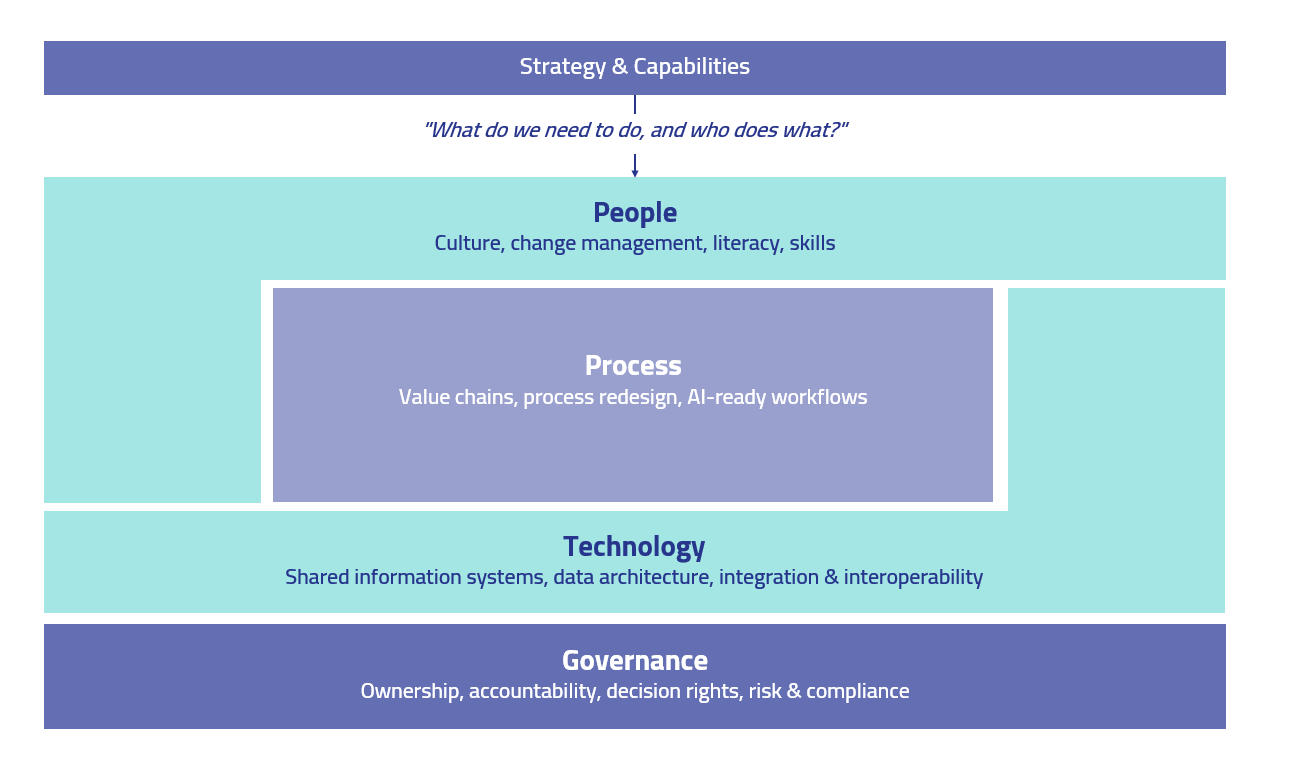
Figure 2 — What drives your operating model?
Context is critical
Organisations are data-rich and context-poor. According to Gartner, AI agent accuracy and cost are 75% determined by context and only 25% by data.
Does your AI agent know that ‘revenue’ means something different across systems? Without that context, the agent makes confident decisions on incomplete understanding. And unlike a human who might catch the inconsistency, an agent acts on it consistently. One wrong definition causes a ripple effect across every decision that follows.
Definitions, semantic layers, business logic, and ontologies make up the context that determines whether an AI-agent makes the right call or the wrong one, at scale and autonomously. Gartner frames this explicitly as a board-level investment decision, not only a D&A-team concern. More European D&A leaders are beginning to implement semantic layers according to Gartner’s 2026 research, but the gap between recognition and implementation remains significant.
Trust as the new currency
Governance is shifting from documentation and compliance driven to an enabler. AI governance asks: should we even use AI for this? Organisations that actively involve their AI governance team in delivering AI-ready data are three times more likely to achieve high business outcomes, according to Gartner’s Evolution of D&A Governance for AI Survey 2025.
The level of trust in your data directly determines how much governance is required before you can act on it. Just enough governance is therefore not a fixed amount. It depends on how much trust you have already established.

Figure 3 — Trust and governance trade-off
In practice, I believe in starting with use cases and applying just enough governance to make them trustworthy, then building outward from demonstrated success rather than inward from policy frameworks. I wrote about this approach with my co-worker in the context of pragmatic data governance and quality (Dutch article). Because without trust, there is no sound decision making [2]. The organisations that sustain their governance investments are the ones that anchor them in business impact from the start.
Trust drives two outcomes. Sustained adoption of AI and the ability to manage an expanding risk landscape. Organizations that treat trust as a business capability are better positioned to realise the full value of their AI investments. [3]
Depending on your AI-ambition or journey (cautious, opportunistic or first), it determines how you design your must haves. Regardless of which of the three, the essence of the operating model, context and just-as-enough governance are crucial.
The question behind the question
So how much of your AI investment is generating green money, and how do you actually know? Are your business processes being redesigned around AI, or is AI being layered on top of processes that were not built for it? Can the people responsible for your data governance explain what they govern, and why it matters to the ‘business’?
Three days in London confirmed what I already believed. The organisations closing the gap between digital investments and tangible returns are the ones that asked the question first: what kind of enterprise do we need to be for any of this to actually work? This question is architectural before it is technological.
References
[1] Challagalla, G., & Khan, M. B. (2025). Stop Running So Many AI Pilots. Harvard Business Review.
[2] Dux Group. (2026, May). Slechte datakwaliteit begint niet bij data. LinkedIn. Retrieved from https://www.linkedin.com/posts/damonfer_datakwaliteit-datagovernance-datamanagement-ugcPost-7459714618719047680-OWN8/?utm_source=share&utm_medium=member_desktop&rcm=ACoAABpoGs0B1F6ysDWm0xllvEOGlB3WC7uZdYo
[3] McKinsey & Company. (2026, March 26). State of AI trust in 2026: Shifting to the agentic era. Retrieved from https://www.mckinsey.com/capabilities/tech-and-ai/our-insights/tech-forward/state-of-ai-trust-in-2026-shifting-to-the-agentic-era
메타데이터
- post_id
- 817e22acfc44
- slug
- ai-does-not-fail-but-your-foundation-does-817e22acfc44
- url
- https://medium.com/@djotaroenomorgan/ai-does-not-fail-but-your-foundation-does-817e22acfc44
- canonical_url
- https://medium.com/@djotaroenomorgan/ai-does-not-fail-but-your-foundation-does-817e22acfc44
- author_url
- https://medium.com/@djotaroenomorgan
- status
- ok
- fetched_at
- 2026-06-21 07:44:09




