“Become hard!” Fascism and the cult of hyper-masculinity, then and now?
“This new tablet, O my brothers, I place over you: Become hard!” Friedrich Nietzsche, Twilight of the Idol (“The Hammer Speaks”)
“Become hard!” Fascism and the cult of hyper-masculinity, then and now?
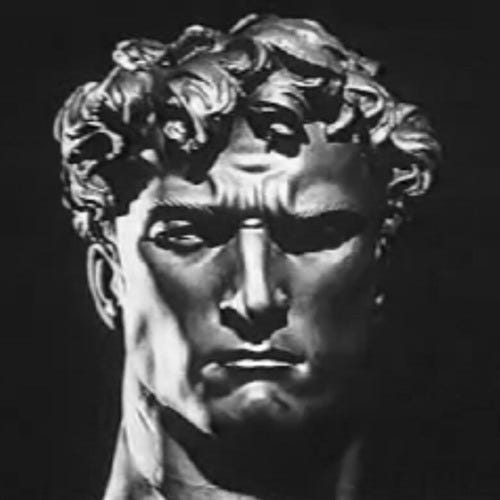
Image: Sculpture by Arno Breker wikimedia
“This new tablet, O my brothers, I place over you: Become hard!” Friedrich Nietzsche, Twilight of the Idol (“The Hammer Speaks”)
There’s been alot of talk recently, finally, about the “manosphere”: that collection of internetic subcommunities and “influencers” led by such figures as Andrew Tate who rail against feminism and demonise women as soulless “foids” (female-humanoids).
There are different components to the manosphere: on the sadder end of the scale are men who describe themselves as “involuntary celibates” (incels), or men’s right’s activists, who contest the legal advances of women, including in divorce and family law; on the other are self-proclaiming “alphas” and “pickup artists” (PUAs) who boast about their “body counts”, or how they have “hacked” “the matrix” and become fabulously rich — which you can too, if you follower their “life hacks” and “subscribe.”
It is easy to not take the manosphere seriously. Or, we can treat it as solely a cultural phenomenon, without wider social or political importance. Yet, as the US 2024 election highlighted, with “brocasters” supporting Mr Trump, this material has won a following of millions of mostly young men, including many adolescents.
And, starting with “incel” mass shootings, the effects of the manosphere’s brew of quasi-biologically claimed “red pill” “truths” about masculinity are increasingly been felt in schools and homes globally.
Is this an unprecedented phenomenon, this kind of mass male protest against the perceived and real social advances of women in modern societies? The answer is “no”. Such a widespread male protest was at the heart of interwar fascisms, many of whose ideals — notably, the narcissistic valorisation of the muscled-up male body — are presently being rekitted for the internet age.
Paxton’s definition of fascism — and one thing it misses (the compensatory cult of masculinity)
Defining “fascism” has become its own academic field. The term has become a semantically unstable polemical weapon. I am going to work here with what I would argue is the best definition of fascism, namely, Robert O. Paxton’s:
“Fascism may be defined as a form of political behaviour marked by obsessive preoccupation with community decline, humiliation, or victimhood and by compensatory cults of unity, energy, and purity, in which a mass-based party of committed nationalist militants, working in uneasy, but effective collaboration with traditional beliefs, abandons democratic liberties and pursues with redemptive violence and without ethical or legal constraints goals of internal cleansing and external expansion.”
Arguably the only thing missing from Paxton’s definition, to be placed alongside the compensatory cults of “unity, energy, and purity”, is fascism’s distinctive sexual politics and dream of a “new man”.
The new fascist man
One reason why we are again arguably facing fascism’s contemporary metastases (usually denied even by proponents, in what is called “cryptofascism”) is that critics consistently under-rate fascism’s depth and sources of appeal.
Far from being only a political party in the liberal-democratic sense, the interwar fascist “movements” (Hitler’s term) conceived themselves as nothing less than sources of “spiritual renewal” for threatened, victimised “peoples”. In this spiritual-metaphysical Weltanschauung, liberals, socialists, and feminists are not simply politically mistaken adversaries. They are the products and profiteers of widespread “modern” “liberal” “degeneration” or “decadence,” which affects every area of “the people”’s life: nefarious inner enemies to be ruthlessly crushed.
Women’s emancipation in particular is positioned by fascists at once as one feature of modern degeneracy; but also, alongside “Judaization” in Nazism, this progress is assigned a deeper, synecdochic (part for whole), as well as causal significance. The fascists’ hostility to the modern democratic “masses,” for instance, famously examined in Klaus Theweleit’s Male Fantasies, involved the ideological gendering of “the masses” as feminine: that is, fluid, chaotic, and in need of authoritarian control; a “red flood”, noting the reference here both to menstruation and to communism or “Judeo-bolshevism”. (Cf. Landa, Fascism and the Masses)
Interwar fascisms’ compensatory cults of national regeneration each therefore turned centrally upon a rejuvenated hyper-masculinity, primed for war and for regaining domination over emasculated mass society. As in their extolling of “will” and “life”, fascist ideologues hearkened back in this sexual program to Nietzsche’s histrionic praise for the “warrior” in Thus Spake Zarathrustra (I, ¶10: “My brothers in war”), and his acerbic anti-feminism, as in Beyond Good and Evil ¶¶231–238:
To address the fundamental problem of ‘man and woman’ in the wrong way, either by denying a most profound antagonism and the need for an eternal-hostile alertness, or by dreaming perhaps of equal rights, equal education, equal ambitions and obligations: that is a typical sign of shallowness, and any thinker who has demonstrated that he is shallow (shallow in his instinct!) in this dangerous area may generally be considered not only suspicious, but also revealed exposed […] A deep man, on the other hand, deep both in spirit and in desire […], can think about women only like an Oriental: he has to conceive of woman as a possession, as securable property, as something predetermined for service and completed in it. He has to rely on the tremendous reason of Asia. (Nietzsche, Beyond Good & Evil, ¶238)[1]
Fascist warrior masculinity
The “new man” of these interwar Far Right regimes was to be educated from earliest life to be a “citizen-soldier” or “warrior-producer” (Mussolini).
The totalitarian cultural revolution at stake in fascism involved what one scholar has called (speaking of Mussolini’s fascism) “the most important experiment in mass political pedagogy that has ever been attempted in Italian national history.” But the thought can be generalised to all of the interwar, “first gen” fascisms.
The new fascist man’s spiritual education, beginning as soon as possible in childhood, would involve a rigorous physical, as well as moral and ideological, component. This included hikes, camps, military training, and sports. (Hitler, like British interwar fascists, favoured boxing as an especially masculine pursuit).
This whole person agogê (training, education) was to steel the boy into a “hardness” which would make him battle-ready; but also contribute to strengthening and beautifying the people or Volk.
As Emile Gentile explains in Fascismo, the new fascist man is:
a believer and combatant for the religion of the fatherland, wholly devoted to fascism, body and soul, champion of virile virtues, young bold, courageous, full of life and enthusiasm, healthy in his instincts and his feelings, ready for violence. (Gentile, at Borri, 2023: 87)
Adolf Hitler, again, would tell the 1935 Nuremberg Party Rally that:
In our eyes, the German youth of the future must be slender and supple, swift as greyhounds, tough as leather, and hard as Krupp steel. We must cultivate a new man in order to prevent the ruin of our Volk by the degeneration manifested in our age.
The “spiritual” or “populist” renewal interwar fascism sought, we see, was pre-eminently also about a revirilization of modern man. Fascists’ invariant language of effusive “vitality” notwithstanding, it does not strain credulity to see in interwar fascists’ paeans to warrior masculinity a compensatory, defensive response to the advances made by women entering the modern workforce and achieving political voice.
It is a bitter historical irony that these historical advances were in no small measure secured in Europe due to the same Great War, whose martial heroism and soldierly comradery fascist propaganda lauded, as the model for the coming, revirilized communities.
French fascist Drieu La Rochelle extolled fascism for offering “a new, vigorous, brutal explanation of the world, of the kind men have always needed and will always need.” The coming fascist man, like the heroized warriors of the Great War, was to be unafraid of death, resolutely welcoming the prospect of sacrifice for the fatherland.
He would combine the most merciless ruthlessness in the face of foes with the most unconditional obedience to the Leader and his deputies. Far from shrinking from pain or hardship, life as such is struggle or war (Kampf) for this futural fascist man, and peace only a means to new wars, as Nietzsche’s Zarathustra enjoined (TSZ I, ¶10).
His ego ideal in these virile achievements was of course the salvific Leader Himself. Mussolini for this reason shaved his head (to prevent grey hairs showing) and suppressed news of his birthdays, whilst taking care that his romantic affairs were publicly known, to advertise his machismo. Propaganda often depicted Il Duce (like Mr Putin in Russia) as engaged in manly pursuits like harvesting, exercising, riding a horse, or driving an engine. (Mosse 1996, 168)
Fascist masculinity as compensatory protest formation
Again and again in fascist writings and speeches about the “new man”, we therefore find the same adjectives monotonously martialled and combined:
youthful, energetic, hard, proud, realist, dynamic, fearless, primed for action, strong, scornful of weakness, impervious to any tender affect; iron-willed, resolute, like steel, like stone, manly, forceful, faithful, fearless, heroic, virile; and: brutal, ruthless, violent, pitiless, barbaric (with these last terms coded positively).
First generation fascist masculinity, all in all, we can say was a reactive construction, shaped along two oppositional axes:
- the first: opposition to “rootless” (in Nazism, “Judaized”) liberal, urbanised, cosmopolitan pre-fascist modern “last men” (Landa, 2019), with their effete over-intellectuality and their office jobs, their timid longings for “peace” and “security”, their emasculating idealism (alongside their spiritless “materialism”), and their meek acceptance of lifeless compromise;
- the second: opposition to all things coded feminine, including the democratic “masses”, refined urban life, welfare, socialism, pity, intellectuality, liberalism, communism, homosexuality, etc., and opposition to women themselves, as in any way more than wives and “breeders” of the next generations of youthful male warriors.
Hard males bodies
A final thing to add about interwar fascism’s cults of warrior virility is that these were not limited to the levels of soul or spirit. The interwar fascisms were no less obsessed with “the body” than some strands of critical theory have since become; as the material bearer of the “race soul” (Rosenberg), the “blood” and/or the “historical mission” of the people or race.
The Forum of Mussolini in Rome, the main sports stadium, was surrounded by stylised sculptures of athletic male nudes: thirty-seven in all, one from each Italian province. Hitler’s favourite sculptor, Arno Breker, is renowned for his gigantine male nudes, including at the entrance of the Reich Chancellery.
The German Führer himself, in Mein Kampf, had declared the Greek ideal of male beauty eternally valid. (Mosse 1996, 161) In the words of doyen of fascism studies, George L. Mosse, “[t]he male body has never before been elevated so self-consciously into a central political symbol” as in the interwar fascist movements. (Mosse, 1996: 170)
The mirroring between the hardened, almost ludicrously hardened bodies of leading manosphere influencers are not exactly of the kind someone like Hitler valorised. There is a good deal of our culture of hyper-narcissism in the manosphere, which sits uneasily with the historical fascisms’ calls for young male bodies to be a beautiful sacrifice on the altar of national greatness.
No fascist would ever prescribe “looksmaxxing”, and the manosphere is more obsessed with sex, ***ing, as a sign of manliness than the fascists were — for them, sex was a means to engender children, and new warrior-workers for the national community.
Yet, we are living through another period of masculine protest, facilitated by the new tech, and its algorithms favoring sensational, engaging content, in ways that were unthinkable even two decades ago. And in the area of masculinity, as in others, the historical parallels are unsettling.
Concluding remarks
Most young men who get trapped into the tendrils of the manosphere, who get “red pilled,” clearly start off their journey as more or less apolitical. They want help with women, or with overcoming low self esteem, or to make missing human connections.
God knows our societies, with their idiotic, hybristic rush to AGI, provide many reasons for young people to be concerned, and to wonder what kind of a future our governing elites are setting us all up for, with what kinds of jobs (if any), and what kinds of prospects for people to live flourishing lives.
Most therefore will have no idea as to what exactly they are getting into, as the “influencers” deal out the “hard truth” that liberal society has emasculated men, and become a soulless gynocracy (“misandry bubble”) in which they can only hope to succeed by internalising a fierce Male Superego, and competing with others about looks, physique, sex, money, status, luxury items — anything under the sun.
They will have no idea of the historical echoes in many of the ideas, whose hard authenticity they find appealing to their wounded selves. Yet the crossover between these virulently antifeminist and antiegalitarian ideologies with forms of antiliberla Far Right ideologies are very clear.
Democratic societies, or their policy-shaping elites, need to start taking the manosphere very seriously, whatever the impulses to mockery or scorn towards it they may feel. Derision is not an argument, and it is not going to reach the adolescent boys who are drawn to the fabulous promises of sexual and financial plenty promised by infuencers like Tate, and the sense of virtual community that comes from participating in the chatrooms, and sharing grievances about the usual suspects: feminists, liberals, wokeism, multiculturalism, elites, etc.
Such elite derision can be easily pointed to, with some justice, as evidence of elites who no longer care for people who are doing it hard in their communities. Instead, new models of masculinity, and new models of social and political development that promise livelihoods, careers, and levels of material security to all members of our societies, need to be promoted.
Otherwise the great wells of anger and alienation that are fueling the manosphere will continue to spilleth over into forms of ever harder core political reaction that the last decades have seen.
Notes
*[1] We could return to this “reason of Asia”, which is now echoed in calls for “white Shariah” in parts of the manosphere: referring to a reinstatement of unchallenged male patriarchal rule. Most people on the far right hate Islam in the West; yet many also envy it for its perceived sexual politics, and for its perceived macho and martial mindset, in contrast to Western liberal effeteness and wokeism, etc.*
메타데이터
- post_id
- 8182dfcd0bab
- slug
- become-hard-fascism-and-the-cult-of-hyper-masculinity-then-and-now-8182dfcd0bab
- url
- https://medium.com/@bringingthemtheplague/become-hard-fascism-and-the-cult-of-hyper-masculinity-then-and-now-8182dfcd0bab
- canonical_url
- https://medium.com/@bringingthemtheplague/become-hard-fascism-and-the-cult-of-hyper-masculinity-then-and-now-8182dfcd0bab
- author_url
- https://medium.com/@bringingthemtheplague
- status
- ok
- fetched_at
- 2026-06-09 15:37:30





