Optimizing Airflow Efficiency: A Comprehensive Guide to Centrifugal Fan Simulation
In industries where precise airflow is vital, centrifugal fans are essential components. From HVAC systems to industrial ventilation…
Optimizing Airflow Efficiency: A Comprehensive Guide to Centrifugal Fan Simulation
In industries where precise airflow is vital, centrifugal fans are essential components. From HVAC systems to industrial ventilation, centrifugal fans play a critical role in maintaining proper air pressure and circulation. However, designing an efficient centrifugal fan requires more than just intuition — it requires data-driven insights into how air flows through the system. This is where **centrifugal fan simulation** becomes an invaluable tool. By using simulation techniques, engineers can optimize fan designs for maximum efficiency, improve performance, and reduce energy consumption. In this guide, we’ll explore how centrifugal fan simulation can revolutionize fan design and improve airflow efficiency.

Understanding Centrifugal Fans
A centrifugal fan works by drawing air into the fan housing and expelling it through a series of spinning blades. Unlike axial fans, which move air along the fan’s axis, centrifugal fans force air outward, increasing both pressure and airflow. These fans are commonly used in systems that require high-pressure airflow, such as HVAC systems, exhaust applications, and industrial processes.
However, designing a centrifugal fan that operates efficiently requires careful attention to factors such as blade geometry, airflow patterns, and pressure distribution. Without optimization, fans can suffer from inefficiencies such as turbulence, excessive noise, or energy loss.
The Role of Simulation in Fan Design
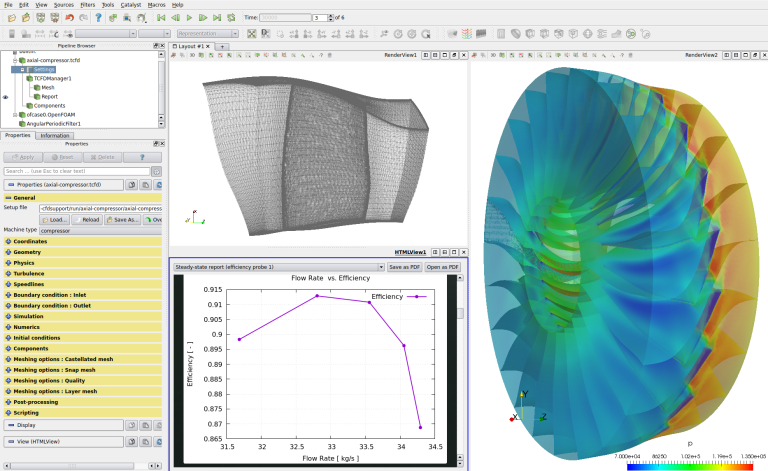
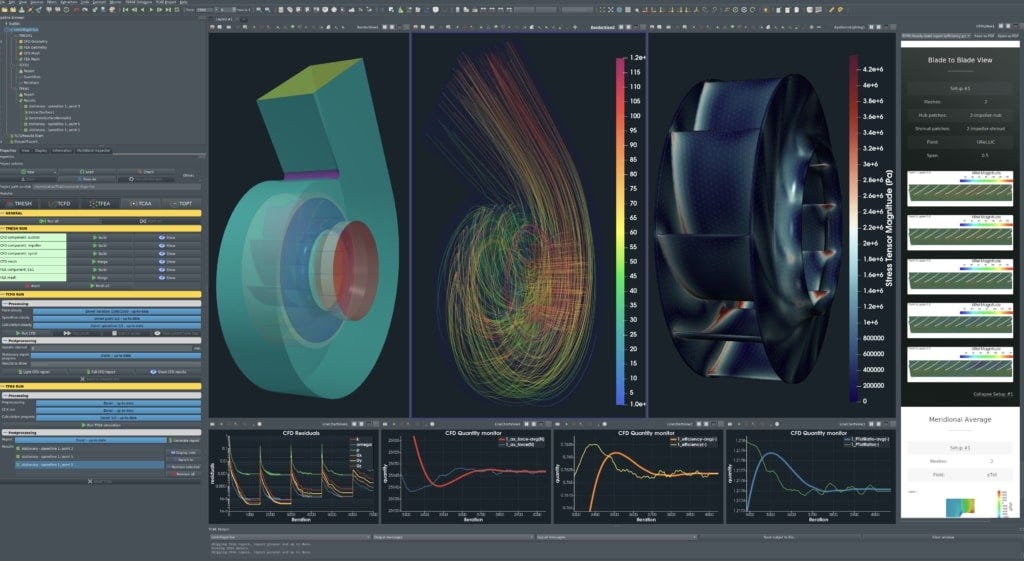
Centrifugal fan simulation allows engineers to visualize and analyze how air moves through the fan’s blades and housing. By leveraging Computational Fluid Dynamics (CFD) software, it is possible to simulate real-world conditions and predict how a fan will perform under various operational scenarios. This eliminates the need for trial-and-error approaches to design, saving both time and resources.
Through simulation, engineers can identify key areas for improvement, such as:
- Turbulence reduction: Turbulence can create inefficiencies by disrupting smooth airflow. Simulation helps engineers design blades that reduce turbulence and promote smoother airflow.
- Pressure optimization: Even pressure distribution across the fan blades ensures the fan operates efficiently and reduces wear and tear.
- Blade geometry: The shape, size, and angle of the blades impact how efficiently the fan moves air. CFD simulations allow engineers to test different blade configurations to find the most efficient design.
Key Parameters to Consider in Fan Simulation
To maximize the benefits of centrifugal fan simulation, engineers must focus on several critical parameters:
- Airflow Rate: This is the volume of air the fan can move within a specific time frame, typically measured in cubic feet per minute (CFM). Accurate simulation helps optimize the airflow rate for specific applications.
- Fan Speed: The speed of the fan directly impacts its efficiency. Simulation can help determine the optimal speed that balances airflow with energy consumption.
- Pressure Distribution: Ensuring that pressure is distributed evenly across the fan helps prevent energy loss and mechanical wear, extending the fan’s life.
- Turbulence and Recirculation: These are common inefficiencies in fan design. Simulation allows engineers to visualize and reduce turbulence, resulting in more efficient airflow.
- Energy Efficiency: With rising energy costs, optimizing fans for minimal energy consumption is more important than ever. Simulation tools provide insights into how to reduce power requirements without sacrificing performance.
Benefits of Centrifugal Fan Simulation
Centrifugal fan simulation offers a wide range of benefits for both engineers and businesses:
- Improved Energy Efficiency: Fans designed through simulation tend to operate more efficiently, consuming less energy and reducing operational costs.
- Reduced Development Costs: Simulation allows for testing and refinement in the virtual environment, reducing the need for costly prototypes and physical testing.
- Enhanced Performance: Fans optimized through simulation tend to have better airflow control, reduced noise levels, and increased durability, improving overall performance.
- Faster Time to Market: By refining fan designs through simulation, companies can reduce the time spent on testing and manufacturing, bringing their products to market more quickly
Conclusion
Optimizing airflow efficiency in centrifugal fans is no longer a guessing game. With the help of CFD simulations, engineers can accurately model airflow, pressure, and turbulence, allowing for smarter design choices. Centrifugal fan simulation not only improves efficiency but also saves time, reduces costs, and enhances overall performance. In today’s competitive market, adopting simulation-driven design for centrifugal fans is a smart choice for businesses looking to stay ahead in the game.
By investing in centrifugal fan simulation, industries can achieve optimal airflow efficiency, ensuring that their fans meet the demands of high-performance applications while maintaining energy and cost-effectiveness.
Visit us to Know More Website:https://www.cfdsupport.com/ Location:CFD support, s.r.o., Sokolovská 270/201, 19000 Praha 9, Czech Republic.
Contact Us:+420 212 243 883 Email:info@cfdsupport.com
메타데이터
- post_id
- 81ce9910461e
- slug
- optimizing-airflow-efficiency-a-comprehensive-guide-to-centrifugal-fan-simulation-81ce9910461e
- url
- https://medium.com/@cfds106/optimizing-airflow-efficiency-a-comprehensive-guide-to-centrifugal-fan-simulation-81ce9910461e
- canonical_url
- https://medium.com/@cfds106/optimizing-airflow-efficiency-a-comprehensive-guide-to-centrifugal-fan-simulation-81ce9910461e
- author_url
- https://medium.com/@cfds106
- status
- ok
- fetched_at
- 2026-06-13 07:35:29