Why OMT Could Surpass NDI — If We Build It Together
https://sebiulabs.co.uk/
Why OMT Could Surpass NDI — If We Build It Together
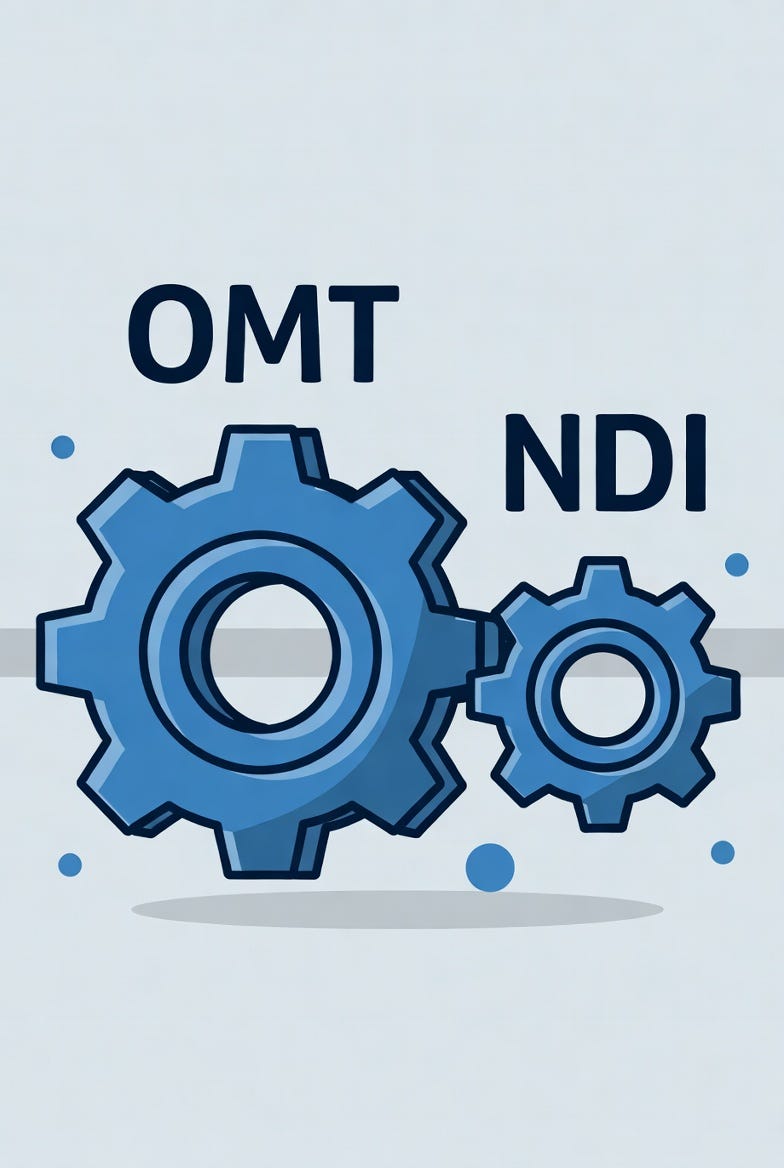
NDI has dominated IP video transport for nearly a decade, but its closed, proprietary nature has always been its Achilles’ heel. Open Media Transport doesn’t just offer a free alternative — it offers a fundamentally better model. But only if the open-source community commits to making it real.
The Licensing Problem Isn’t Just About Cost
NDI’s licensing doesn’t just cost money — it creates dependency. Every product built on NDI exists at the mercy of Vizrt’s business decisions. They can change terms, restrict use cases, or sunset features at will. OMT, with no licensing whatsoever, removes that lever entirely. Nobody can pull the rug out from under you because nobody owns the rug.
Technical Freedom Unlocks Innovation
With NDI, you work within boundaries someone else defined. You can’t inspect the protocol, modify discovery, or optimise the codec pipeline for your use case. OMT being fully open means a broadcast engineer in Bristol and a developer in Seoul can independently solve problems Vizrt hasn’t prioritised — or hasn’t noticed. The broadcast industry is full of niche workflows a single company will never address, but a distributed community absolutely can.
Interoperability Without Permission
NDI’s “ecosystem” is a walled garden with a welcome mat. Want to bridge it to something unusual? You need their SDK, their approval, their timeline. OMT can be bridged, extended, and embedded into anything — hardware encoders, mobile apps, browser tools, embedded systems — without asking permission. That’s the difference between innovation happening in weeks versus quarters.
Hardware Vendors Want an Alternative
Depending on a single company’s proprietary protocol for a core product feature is uncomfortable. OMT gives manufacturers a standard they can implement without commercial agreements, royalty negotiations, or the risk that a competitor gets preferential treatment from the protocol owner.
Transparency Equals Trust
In broadcast, reliability isn’t negotiable. NDI is a black box — when something breaks, you depend on Vizrt’s support pipeline. With OMT, the entire protocol is auditable. When a frame drops or latency spikes, the community can trace it to the exact line of code. That transparency builds the deep trust broadcast engineers need before putting something on air.
The Hard Truth: Standardisation Hurdles
The fundamentals are strong. But let’s be honest about what stands between OMT today and OMT as a genuine industry standard.
No hardware ecosystem — yet. This is the elephant in the room. NDI is baked into cameras from PTZOptics, BirdDog, Panasonic, and others. It’s in hardware vision mixers, converters, and monitoring devices. OMT has none of that. Right now, if you want OMT on a camera, you’re bolting a Raspberry Pi to it. The Raspberry Pi 5 encoder and case designs on the GitHub are a smart starting point, but there’s a vast gap between a DIY encoder and a camera manufacturer shipping OMT natively. Until producers can buy cameras and switchers with OMT built in — not strapped on — adoption in professional environments will be limited. This is the single biggest chicken-and-egg problem the project faces: manufacturers won’t invest until there’s demand, and demand won’t build until there’s hardware.
The contributor base is thin. The GitHub organisation has 197 followers and 12 repos, with the OBS plugin at 39 stars. NDI’s ecosystem was built by a company with full-time engineers and marketing budget. OMT needs equivalent momentum from volunteers, and that’s harder. It hasn’t yet crossed the threshold where contributions become self-sustaining.
The library ecosystem is narrow. The core libraries are .NET and C/C++, with no Python, Rust, or WebAssembly bindings. For the codec this is partly justified — SIMD performance matters there. But most OMT development never touches the codec. More importantly, broadcast engineers integrate through frameworks like GStreamer, FFmpeg, OBS, Unreal Engine. Every missing integration is a workflow that stays on NDI by default
Governance isn’t defined. Who decides what enters the spec? Who arbitrates disagreements? Without a transparent RFC process, versioning commitments, and community input mechanisms, OMT risks stagnation or fragmentation.
No conformance testing. If a manufacturer stamps “OMT Compatible” on a box, what does that guarantee? Without a test suite, compatibility claims become meaningless — exactly the kind of trust erosion that kills open standards.
Broadcast moves slowly. Nobody swaps a working NDI pipeline because the licence is better. They swap when OMT is proven in enough real deployments. The project needs documented success stories from working professionals, not just developers.
Documentation needs to scale. The GitHub README works for getting started. Standardisation demands formal protocol specs an independent developer could implement without reading source code, plus architecture decision records explaining design choices like TCP over UDP.
The vMix question. OMT’s origins are closely tied to vMix. The MIT licence makes the legal situation clear, but perception matters. The project needs to demonstrate broad ownership — multiple maintainers from different organisations, governance that doesn’t concentrate decision-making. Perception problems kill adoption just as effectively as technical ones.
None of This Matters Without the Community
Right now, NDI works. It’s battle-tested with years of production use. OMT’s advantages mean nothing without people writing code, testing edge cases, and deploying in real workflows.
The open-source world has outperformed proprietary alternatives before — Linux, FFmpeg, OBS, Blender. Every one succeeded because a critical mass of contributors decided the problem was worth solving properly. OMT doesn’t need to be perfect on day one. It needs to be good enough that early adopters gain real value, and open enough that their contributions improve it for everyone who follows.
The question isn’t whether open beats closed — history has answered that. The question is whether enough of us show up to do the work.
메타데이터
- post_id
- 81e35fcb264a
- slug
- why-omt-could-surpass-ndi-if-we-build-it-together-81e35fcb264a
- url
- https://medium.com/@contact_45426/why-omt-could-surpass-ndi-if-we-build-it-together-81e35fcb264a
- canonical_url
- https://medium.com/@contact_45426/why-omt-could-surpass-ndi-if-we-build-it-together-81e35fcb264a
- author_url
- https://medium.com/@contact_45426
- status
- ok
- fetched_at
- 2026-06-12 18:14:10