Your desk job is quietly inhibiting the muscles you’re trying to train.
Why training harder is making your back worse and what’s actually going on.
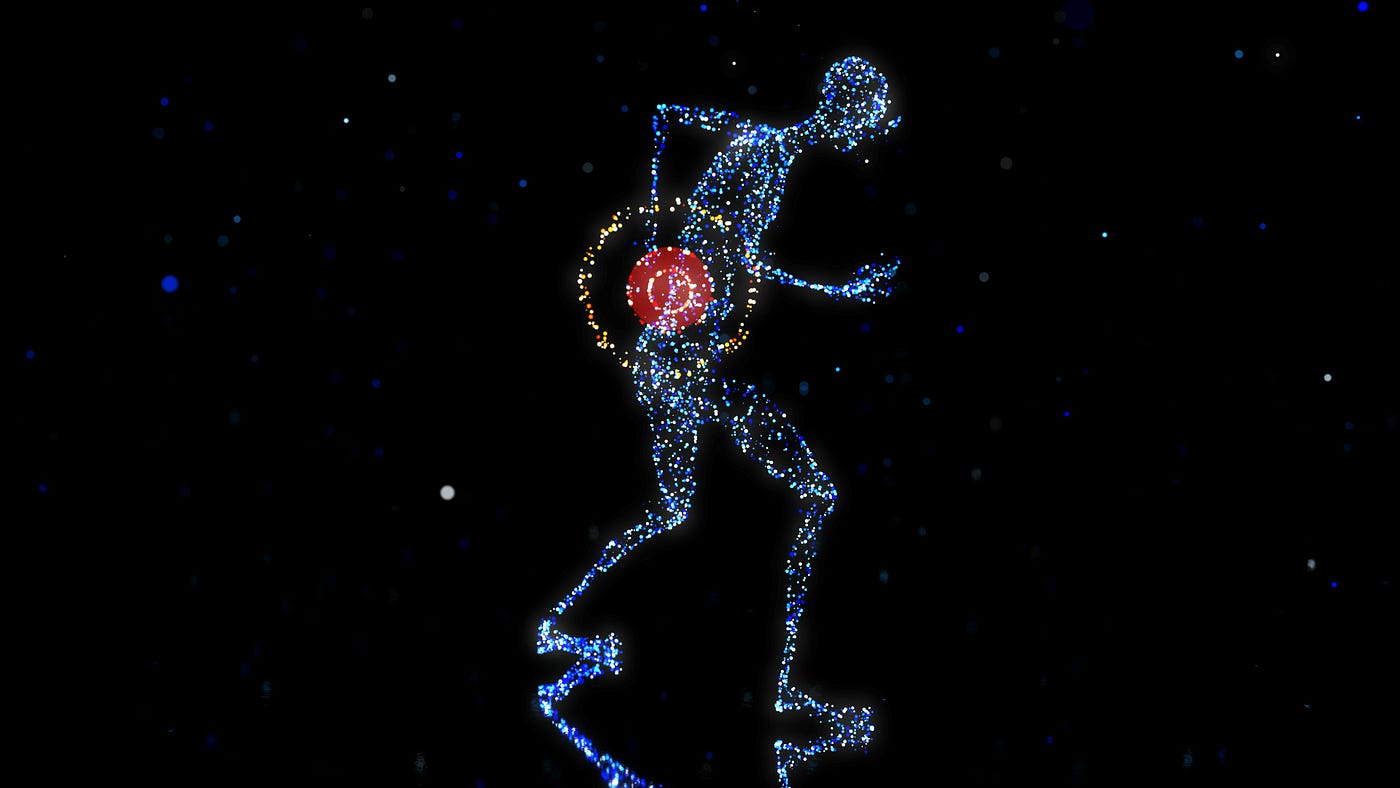
Your desk job is quietly inhibiting the muscles you’re trying to train.
Why training harder is making your back worse and what’s actually going on.
By Giacomo Di Mauro — MSc Exercise Science | BSc Sport & Exercuse Science | MNU Level 5 Advanced Nutritional Sciences | Personal Trainer & Nutritionist
I want to tell you the story of one of my many clients I see and train on a daily basis.
Mark had been training consistently for over a year.
Deadlifts, squats, Romanian deadlifts he wasn’t skipping the work. He was following the plan, he was tackling the main lifts right. By most measures, he was doing everything right.
But his back kept breaking down.
There was a persistent, creeping soreness that lived in his lower back after every session and refused to leave. The harder he trained, the worse it got.
He came to me thinking the problem was his technique. Maybe his form had a flaw. Maybe he needed to go heavier, or lighter, or change the exercise entirely. He’d read the articles. He’d watched the videos. He’d tried the cues.
Nothing stuck.
The problem wasn’t weakness or wrong form. His brain had simply stopped using his glutes.
And no amount of deadlifting was going to fix that.
The obvious answer and why it’s not enough
Ask any trainer what to do when your glutes aren’t working and you’ll get a version of the same answer.
You know the drill. Mini band clamshells. Walking like you’ve got a chain between your ankles. Or just “squeeze harder” repeated until something’s supposed to click. It honestly make me feel sick anytime I see it by now.
It’s more complex than that. And most advice never gets anywhere near the actual issue.
Because there’s a difference between a muscle that’s weak and a muscle that your nervous system has learned to ignore. You can load the first one and get results. Loading the second one just teaches the body to compensate harder.
That’s what happens when people spend months deadlifting and hip thrusting their way to a worse back. They’re not doing the wrong exercises. They’re skipping a step that most programmes never account for and that most coaches never test for.
The glutes aren’t absent because they need more work.
They’re absent because the brain stopped trusting them.
What’s actually happening
Your body is not broken. It’s adapting.
The average desk-based adult spends 6–10 hours a day sitting. Hips fixed in flexion, glutes lengthened, doing nothing. And the nervous system — which is always watching, always optimising — draws a simple conclusion:
These muscles aren’t needed here.
This isn’t weakness in the traditional sense. The glutes aren’t wasting away. They’re being deprioritised. The brain is redistributing motor resources toward muscles that are actually being used — your hip flexors, your lower back, your hamstrings. The muscles that keep you upright in a chair all day.
Do that for months. Years. And the nervous system stops treating the glutes as a primary mover. They become background noise.
This is called learned inhibition. And it means that when you walk into the gym and load a barbell, your body doesn’t suddenly remember how to use them. It does what it always does — it routes around them. Lower back, hamstrings, whatever’s available. The glutes are there. They’re capable. The brain just isn’t sending the signal.
Here’s where it gets specific.
The glutes don’t just extend the hip. They also control how the femur (your thigh bone) rotates during movement. And this matters more than most people realise, because powerful hip extension requires a sequence:
Hip flexion → the femur internally rotates slightly → the glute fires to drive extension.
Think of it like a coiled spring. The internal rotation is the coil. Without it, the glute can’t load properly and can’t release force efficiently. You get extension, but it’s coming from somewhere else. Usually your lower back.
Now add sitting into the equation. Hours of hip flexion, day after day, gradually reduces your capacity for that internal rotation. The joint stiffens. The sequence breaks. And the glutes already deprioritised by the nervous system lose the mechanical conditions they need to work.
So when Mark loaded a deadlift, his body wasn’t cheating. It was doing exactly what it had been trained to do for years outside the gym.
His lower back wasn’t the problem. It was the solution his nervous system had already decided on.
The diagnostic shift
The answer, more often than not, isn’t found in what your favourite influencer is doing.
It’s in slowing down long enough to learn how to actually move your body.
With Mark, that meant stripping everything back. No barbell. No chasing load. Because loading a broken movement pattern doesn’t fix it… it just makes the compensation stronger. Every heavy deadlift was reinforcing exactly what we were trying to undo.
The first question wasn’t “how do we make his glutes stronger?” It was simpler than that: can he move his hip without his spine following?
He couldn’t. Every time he tried to hinge or extend, his lumbar spine came along for the ride. They moved as one unit. His back was doing the job his hip was supposed to do and his nervous system had never learned the difference.
So that’s where we started. Not with glute exercises. With that.
From there unilateral work, so each hip had to function without the stronger side hiding the problem. Hip mobility in multiple planes, not just stretching, but teaching the joint to move the way it’s designed to. Soft tissue work on everything restricting that range. And only then, loading gradually, with exercises that demanded hip function rather than just tolerating it.
Within a few weeks Mark was feeling his glutes work for the first time.
Not because they’d gotten stronger. Because we’d finally given them the conditions to do their job.
Three things to check before training harder
Before you add another set, another exercise, or another cue to your training check these three things first.
1. Can your hip internally rotate?
Stand up. Feet hip width apart. Without moving your foot, try to roll your knee inward like you’re trying to point it toward the other leg.
Most people get very little. Some get none.
If your hip can’t internally rotate, the glute can’t load the way it’s designed to. The spring can’t coil. You’ve probably seen this already without knowing what you were looking at — it’s the knee that caves inward at the bottom of a squat. Your body trying to create the rotation the hip can’t produce. Borrowing it from the knee instead.
2. Can your pelvis move independently of your spine?
Stand tall. Now try to tilt your pelvis forward and backward without your ribcage moving with it.
If your whole trunk moves as one block, that’s the problem.
And you’ll recognise it from your training: it’s the lower back that rounds within the first few inches of any hinge movement. The pelvis can’t move independently, so the whole spine flexes instead. The back isn’t failing. It’s filling in for a hip that doesn’t know how to move on its own.
3. Can you hinge without your lower back doing the work?
Push your hips back toward a wall behind you — just the hips, not your whole body. Keep your chest up, spine neutral.
If you feel your lower back rounding immediately, your body hasn’t learned to hinge yet.
You’ll know this one too, it’s the RDL that turns into a spinal flexion exercise within the first few inches. The hip isn’t moving. The spine is doing the work instead.
These aren’t party tricks. They’re the foundations the glutes need to function.
If any of these felt unfamiliar or if you tried them and couldn’t quite tell whether you were doing them right: that’s not a failure. Treat it as information. It means the issue isn’t your training programme.
It means you’re working on top of a foundation that isn’t there yet.
And that’s not something more volume will fix.
The real problem was never your glutes
Mark didn’t need a better programme. He didn’t need more volume, a different exercise selection, or a stricter coach telling him to squeeze harder.
He needed his brain to rediscover a muscle it had spent years ignoring.
That’s the part nobody talks about. The fitness industry is built around the idea that the answer is always more: more effort, more load, more exercises.
And when that doesn’t work, the assumption is that you’re not doing enough, not trying hard enough, not consistent enough.
But some problems don’t respond to more. They respond to different.
Your glutes aren’t weak. They’re waiting for the right conditions to work.
And until the hip can rotate, the pelvis can move independently, and the body knows how to hinge, those conditions don’t exist. No matter how many sets you add. How many bands you add. How many banded clamshells you do.
This is what separates training that builds you from training that just accumulates fatigue. Not the exercises. Not the programme. The foundation underneath it.
If your back keeps breaking down every time you try to get stronger -stop blaming your form. Stop blaming your programme. Start asking whether your body actually knows how to use its hips yet.
That’s the question worth answering.
If this changed how you think about your training, follow along — this is what I write about. The mechanisms underneath the movement, not just the movements themselves.
메타데이터
- post_id
- 81f013b85fbf
- slug
- your-desk-job-is-quietly-inhibiting-the-muscles-youre-trying-to-train-81f013b85fbf
- url
- https://medium.com/@giacomo.dimauro95/your-desk-job-is-quietly-inhibiting-the-muscles-youre-trying-to-train-81f013b85fbf
- canonical_url
- https://medium.com/@giacomo.dimauro95/your-desk-job-is-quietly-inhibiting-the-muscles-youre-trying-to-train-81f013b85fbf
- author_url
- https://medium.com/@giacomo.dimauro95
- status
- ok
- fetched_at
- 2026-07-09 23:49:47