Navigating The Stormy Waters Of Unemployment And The Introduction Of Indentured Servitude, Again
In the shadow of Sir Andrew Witty’s untimely departure from UnitedHealth amidst their plummeting stock, this piece feels especially…
Navigating The Stormy Waters Of Unemployment And The Introduction Of Indentured Servitude, Again
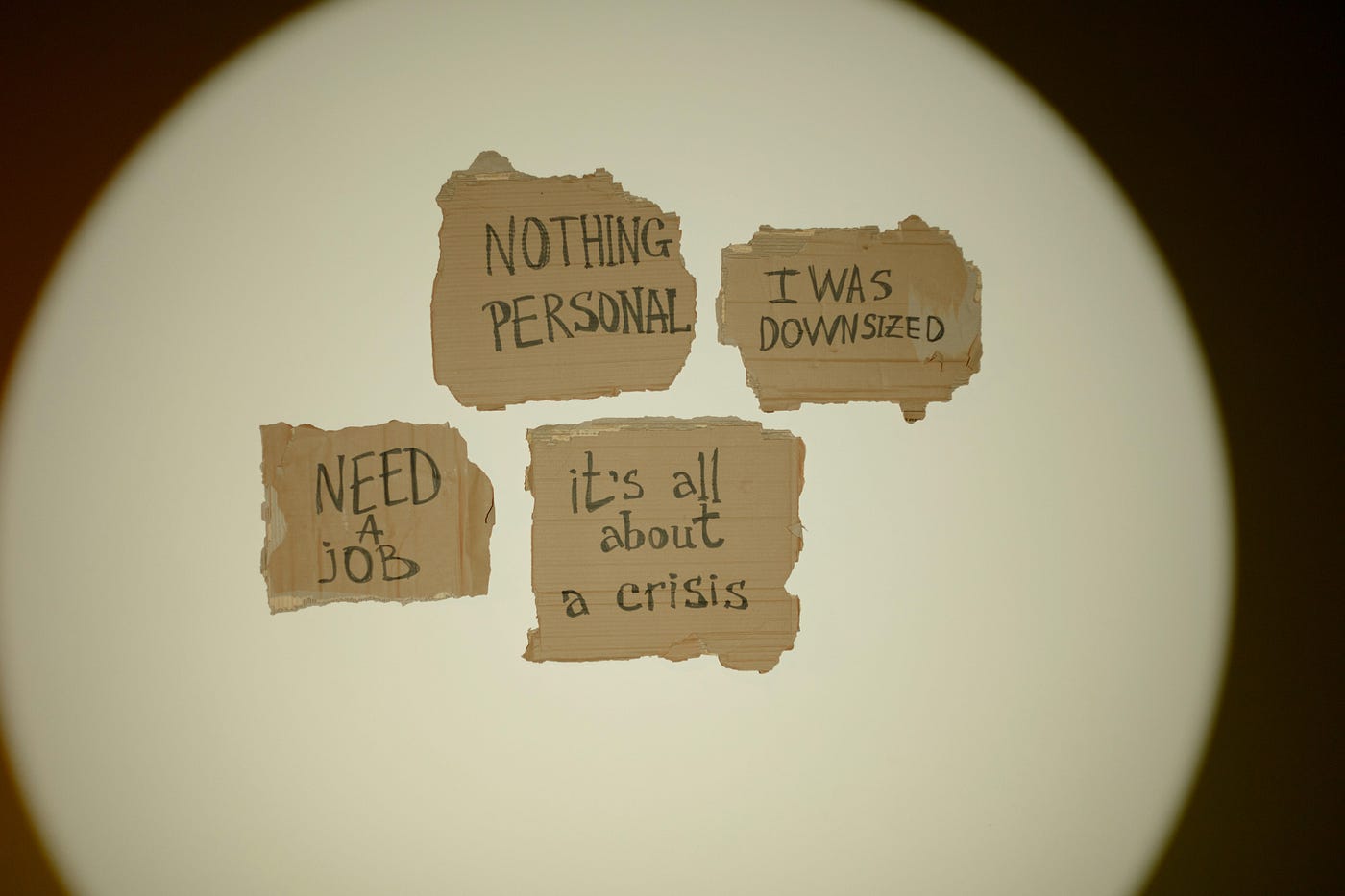
In the shadow of Sir Andrew Witty’s untimely departure from UnitedHealth amidst their plummeting stock, this piece feels especially poignant. Although I don’t refer to my husband’s past employer by name, preferring instead to just refer to it as “Big O” or “Big U”, the elimination of his department was a tell-tale sign of what’s to come. Now that Sir Witty has stepped down and long term executive Phil Hemsley has stepped in, things will change incrementally in the corporation and not for the good. It was Witty, Hemsley and the now-assassinated Thompson (the story is that he was gunned down by Mangione in NYC last year) that were embroiled in multiple lawsuits, anti-trust violations and were under investigation by the government and various oversight agencies. Obviously, with Thompson and now Witty out of the way, Hemsley has probably struck a deal and I guarantee the only people that will pay the price for UHG’s fraudulent activity will be the staff.
I could feel his animosity ripple out of him then radiate across the table. I was seated across from him, with my husband sitting next to me.
“How do you like working at Big O?” I asked him politely, in between bites of our appetizers.
I expected the usual polite response from a man when meeting a colleague’s wife for the first time.
“I really like the people I work with.”
Or
“The projects are challenging and taking longer than expected to complete but in the end everyone should be satisfied with the result.”
Or
“I like my boss. He’s great.”
Instead, his response to me was caked with bitterness and venom.
“I’d wish they’d hurry up and convert me.”
He practically shouted it across the table at me and I recoiled a little, moving slightly closer to my husband on the bench we were sitting that faced his colleague and his colleague’s wife at the small, noisy trendy restaurant where we were having dinner.
I almost responded by telling him that I had discovered why he wasn’t converted yet, but decided against it. He was already angry enough.
My husband was also brought in as a contractor a little after his colleague was brought in and after a year, he too still hadn’t been converted. This was unusual so I did a little research and armchair investigation into current trends and discovered that after about two or three years companies were not only not converting their valued contractors into permanent positions, but they were letting them go. What I’ve learned is that companies have shied away from converting temporary employees, or “contractors” or “gig workers” as they’re called now.
The only sector, as far as I can tell, that doesn’t eliminate contractor employees after three years is the Government, specifically, Big Military. There are contractors who have been able to sustain decades at the same contract position without ever being converted full-time in their role within these government agencies. But, in the corporate sector, especially over the last decade or so, contract employees do have an expiration date which usually comes around the three year mark.
So, as much as we never really talked about it, there was an uneasy, unspoken understanding that the writing was on the wall. I would often ask him over the course of his contract with “Big O”, “Any news on conversion or is your current role as a contractor still safe?”
He would say, “Yes I seem to be fine. No talk of conversion to full-time, but I was just extended for another 6 months.”
Remember that scene in The Princess Bride when Wesley discloses to Buttercup that he actually had not abandoned her for all these years when he disappeared, but in fact was kidnapped by the Dread Pirate Roberts?
In the scene, he explains that Dread Pirate Roberts had kidnapped Wesley and brought him on the pirate ship to be a slave.
Wesley told Buttercup, “Every morning Roberts would tell me to swab the deck and clean the ship. And every evening he would say, ‘Well done Wesley. Get a good night’s sleep for I will most likely kill you in the morning.’ Well, Buttercup, this went on for years. Until finally Dread Pirate Roberts decided to retire and I was named the new Dread Pirate Roberts.”
So, being a contractor is kind of like that but without the pay-off of being converted or even promoted with the benefit of earning a higher salary. So every time my husband told me his contract was extended I would respond half-jokingly,
“Well done darling. Get a good night’s sleep because they will most likely kill you in the morning.”
Despite this nagging feeling that there really was no permanent future with “Big O”, I took those weekly paychecks and threw as much as I could into paying down our new mortgage, our new car and our monthly expenses while attempting to save as much as I could.
Saving money was difficult because for an entire year I had to travel back and forth every six weeks to another state for four days to follow up on an ongoing orthodontic issue. The cost of airfare, hotel costs and the dental cost itself (not covered by insurance), basically wiped out any possibility to save money.
During the two and a half years of his contract employment at “Big O”, my husband never received a pay raise, never was formally reviewed on his performance, never was paid for sick pay (thankfully he rarely gets sick), never received paid vacations and every time he spoke to his agency about where they were with conversations around converting him to a full-time employee at “Big O”, he was always given a non-committal canned response and told they were “looking into it.”
It was clear the Agency who recruited him into his contract position at “Big O” had no desire to convert him. He was a cash-cow for them, so why would they? After over a year of this, it was getting increasingly frustrating.
Despite never receiving any of the benefits or rewards that full-time employees received, and the feeling this was more and more akin to indentured servitude to placate debt, rather than a place to carve out a career based on his talent, my husband masked his frustration and behaved as if he were a full time employee anyway. This won him great favor with all the different directors and Vice Presidents and a host of lateral staffers who he was friendly with. He was greatly respected and some of his work was even incorporated into their permanent in-house library system for any employee, contract or permanent, to utilize as they saw fit. He had favor with his boss who recognized his talent and who was one of the most compassionate directors my husband ever worked under, at this point in his long career in his particular field. However, despite all this, he was never officially compensated or recognized within the company.
Not long after that initial dinner with my husband’s colleague and his wife, the colleague was let go. This set all the contractors on edge and the director did a good job at easing their anxiety. My husband remained in his role for at least another year and a half.
After the colleague was let go, we had dinner with him again. We were also having dinner with another colleague who lives a few states over but was vacationing near where we live so we all decided to meet up in the town where the former colleague lives. We didn’t invite him to dinner, thinking it would be awkward, but the other colleague who was on vacation did invite him so we did the best we could. It was clear from the beginning that the now unemployed colleague came to dinner in the hopes that we would be able to somehow get him his job back, although it wasn’t said out loud. His rage and frustration at being unemployed was palpable. He was sullen, irritable and difficult to be around. After dinner my husband and I were walking slowly, hand in hand, considering getting a scoop of ice cream before driving home. He was walking with us and I could again feel his animosity radiating out of him.
All this said, though, he was one of the lucky ones. Right after he was released from his contract at “Big O”, from what I understand he was able to leverage his local friendship with a regional manager of a fast food corporation and with very little effort was given a position as a manager of one of the local franchises immediately after he was fired from “Big O”.
He was also able to pick up extra money as a food delivery driver for that same franchise. So, even though his salary was less than his contract pay at “Big O”, he was more fortunate than many of the hundreds of thousands of corporate earners who found themselves unceremoniously fired from their jobs and haven’t been able to find work for months or even years in any field, let alone their own field of expertise, since being fired. This colleague who we had dinner with never experienced unemployment in any real sense, was immediately handed a management position at a popular fast food franchise and was able to make extra money on the side through tips by picking up shifts as a delivery driver. At best he was under-employed.
His situation is wholly unique and not the norm. What I am seeing now with the hordes of workers that are experiencing long-term or even permanent unemployment now, in 2025, mirrors our own experience in 2016.
My husband had been let go of his permanent position at “Big M” around 2014. He was the Assistant Director for his department, working out of their San Francisco office. He was the only person in San Francisco with the rest of the staff working in New York. While employed he would travel back and forth to New York from San Francisco on a regular basis. Eventually “Big M” closed down the San Francisco office and his position went with it.
The current spike in unemployment mirrors his personal 2014 experience as these chilling memories haunt us even now. After not being able to secure another full-time position after his position was dissolved in 2014 at “Big M”, he reluctantly entered the gig economy and became what we refer to as the “C” word: a Contractor. After two years of steady contract work, it too came to an end. And, just like what’s happening today, it too came on the heels of a highly contentious election.
Although we don’t subscribe to any political party and don’t consider ourselves political people at all, we do recognize the trends and behaviors of corporate capitalism during election cycles. And just like the spike in unemployment during the 2016 election, we see the same outcome in 2025. In fact, it’s the same Commander-in-Chief that was elected into office in 2025 that was installed in 2016. And just like then, today the markets are also seizing and sputtering to a halt, corporations are also getting nervous, the Stock Exchange is again bipolar and the unemployment rates have again spiked.
And, just like what we experienced in 2016, we are hearing the same exact stories today. Although in 2025 they seem to be much more vocal. The unemployed masses today are very open about their personal plight as is often the case when desperate people feel their backs are pushed up against the wall.
The statements made in 2016 are also being made today in 2025:
Unemployment benefits have been exhausted and they can’t find another job; if anyone was lucky enough to receive a severance package it too was exhausted; 401K’s or retirement income was exhausted and the unemployed masses now, just like then, are facing a very dark future, staring into the abyss of eternal debt; possibly having to sign up for Section 8 housing, or the alternative: move in with parents at an older age and make huge life adjustments they never thought they would have to make.
Just like in 2016, the professionals who are unemployed today are unable to secure any employment for the first time in their careers and are baffled as to why this is happening and where this will lead our economy in general.
After all, we know that it’s these middle income earners that keep economies running. Without them, prices for everything inflate because suddenly these earners don’t have the income stream to contribute to the economy anymore. They can’t buy the groceries at Whole Foods, they can’t put gas in their cars, they can’t spend Sunday brunch with their friends or family members anymore, they can’t shop at the local stores. In fact, they are actively going out of their way not to contribute to local economies on purpose because they are in survival mode and their debt is mounting. Plus, the increase of homes and buildings now for sale remain empty for long stretches of time with a gradual decline in their value, forcing the owners to greatly reduce their price to meet these downward spiraling market trends.
After a little under two years at a gig economy in that first-tier City in California mentioned above, my husband’s last contract gig ended around the 2016 election just as he had completed a project for a major investment firm. And, just like the stories we are hearing today he couldn’t even find contract or gig work, or even a temporary assignment. He was forced in to the low-paying less than part-time service industry: he was an usher at a stage theater, he was a temporary field manager for a local campaign and he picked up odd jobs here and there as much as he could in order to sustain a life for us in that first-tier City in California.
It was when we were cobbling together credit cards to attempt to pay our $2,200.00 rent the next month that we realized we needed to make a change and that change came in the form of sacrificing his retirement income.
This is where so many unemployed are today. They’ve exhausted their 401K’s or retirement income to pay their mortgage or pay down credit card debt or even just pay their kid’s tuitions or put food on the table. They don’t have retirements now as a result of being unemployed, and because we had to sacrifice my husband’s retirement almost ten years ago, we too don’t have a retirement anymore either.
After his permanent full-time job with benefits was eliminated in 2014, and being forced into what amounted to thankless Contract work resembling indentured servitude, then being forced into something that resembled minimum wage wage-slavery two years later in 2016, we realized it was simply unsustainable.
So, we emptied his retirement account and used it to buy a house with cash on the outskirts of a third-tier City (that likes to think of itself as first-tier) near the East Coast. The house was roughly the cost of a used Toyota.
This City has two renowned academic institutions and an all-encompassing medical system that surely would have provided him a job in his field. After two months of not being able to find work in his field or any work at all, and now living in a small run-down town 15 minutes outside of this City (by bus), we started to suspect it was our Zip Code that was keeping him from getting employed. The run-down town that we bought our house in has been pegged one of the most dangerous areas in the state or even the country, but that’s just not true. In fact, Damar Hamlin is from this town. After being rebuffed for jobs he was practically made for too many times to count, he had to take the only job he could find: he worked for about 2 years as a school bus driver.
But it wasn’t one of those big fancy yellow school buses. It was a broken down van that should have never been allowed to carry small children to and from their charter schools. Every day that my husband would ride his bike to the depot to pick up the van to drive the kids to school, I said a silent prayer that he wouldn’t die in what I affectionately referred to as The Death Mobile. This particular company that ran this school bus/van service were pinching pennies at every corner of their business, which was why they never invested in safer vans or buses.
At this job, my husband would have to punch a clock to start work. If he was one second under his start time, he would get reprimanded and docked a nickel. He had to be at a specific stop everyday at the exact same time, and if he wasn’t he would get scolded and docked. There was a monitoring system installed in this piece of shit van that didn’t allow for traffic jams or any type of roadway construction which may put him behind his designated target pick up time. Working at this job was the most demoralizing, dehumanizing experience he had ever had. He saw the very worst of humanity working at this job. His co-workers were the kind of people that gave up on life and stopped caring. If anyone else was in his van prior to his shift, he would have to disinfect it in order to get their body odor and smell out of the van.
During this time, which was the lowest point of our lives, he was keeping up with his field. He studied the latest technology, he ordered books, he read blog posts and stayed focused.
When the entire operation of shuttling kids to and from school was shut down because of Covid in 2020, and he couldn’t drive the kids to school anymore because of Covid he decided to try one last time to apply for a job in his field, as a remote contract worker.
This was in 2021.
He remained gainfully employed as a remote contractor for “Big R” until that assignment ended in the spring of 2022. We knew at the end of this assignment that the market had turned and we had a sense he could find another contract gig pretty quickly, which he did.
When he was offered his contract at “Big O” in the summer of 2022, he was there for about a year when we decided it was time to say goodbye to the house we purchased in 2018 and start a new life in a better town, in a culture and climate that better suited us.
We sold the house in the run-down town, paid some debts and picked up a mortgage in our new town in 2023.
We knew the contract position at “Big O” would be ending soon because something extraordinary but horrible happened that’s never occurred before. It affected the entire global industry. The company that “Big O” had just purchased suffered a major ransomware attack that severely disrupted its operations and led to a significant data breach. The entire industry across the world went into meltdown mode.
Also, as a side note, when this smaller company was absorbed by “Big O” and prior to their ransomware attack, my husband talked about how many managers and department heads and directors seemed to stroll in and dictate how things were going to be run from this point forward. This seemed odd because usually when a company is absorbed by a big behemoth such as “Big O” it’s the absorbed company that must adhere to the demands and internal procedures of the company that just bought them, not the other way around. When this didn’t happen, it was a red flag to us.
After the ransomware attack occurred, the entire industry was changed and put on its head. Many employees in this industry in general found themselves unsure of their own future and new security rules and mechanisms were installed. Demands were made for hundreds of professionals to hand over their laptops as if they had committed some sort of act of treason against the company. They were scolded and reprimanded and treated like criminals and accused of somehow allowing this ransomware attack. New emergency protocols were immediately put in place.
Think of it sort of like The TSA, an unofficial “temporary fix” launched by the Department of Homeland Security after the 9/11 attacks. The entire industry my husband works in was experiencing these same types of changes and policies and procedures based on a panic-inducing event in the same way the airline industry experienced changes after 9/11. This too was a red flag to us.
After the ransomeware attack nothing was really the same and we knew his days would be numbered, especially when it was discovered that despite this ransomware attack, the stocks of “Big O”’s parent company, “Big U.” had skyrocketed. This didn’t pass the sniff test.
First, the reports coming out that the employees themselves were to blame were circulating widely and when that happens, investors lose faith in the company and the company’s ratings typically plummet. Second, when an industry shows a vulnerability in their system and a ransomware attack occurs, exposing their client’s data, social security numbers and bank account numbers and all private information, stocks plummet because the economy loses faith in the industry, not the other way around. Like I said, when “Big U”’s stocks skyrocketed in the market after this vulnerability was made public, it didn’t pass the sniff test. We’re pretty sure at this point the ransomware attack was the equivalent of “the call is coming from inside the house,” if you catch my meaning.
Blaming the employees for the ransomware attack was something that had never been experienced before and it left the entire industry and all organizations within the “Big O” or “Big U” family and all organizations that were its competitors, feeling vulnerable and uncertain about their future. This meant hundreds of thousands of employees were no longer confident in themselves, their future with their companies or even their current job status. Old managers and directors were cast aside or abruptly fired and a new crew of hard-boiled, suspicious managers and directors who offered no leverage to employees was brought in. Many employees couldn’t handle the feeling of being scapegoated and made to feel like they were criminals, and left their positions willingly. This was done by design of course: to intimidate hard working ethical professionals into leaving their jobs. This had a ripple effect across the entire country and thus began the surge of unemployment, in quantities we’d never seen before.
No, it wasn’t “quiet quitting.” It was either employees were being set up to fail or were being scapegoated and harassed until they quit outright because the abuse was too much to take.
In the same year the ransomware attack occurred (2024), another extraordinary controversial event took place which absolutely assured my husband and me that his days as a contractor with “Big O” were numbered. A CEO of the insurance division of “Big O”’s parent company, “Big U”, was assassinated by a lone gunman in a first-tier City on the East Coast. This too didn’t pass the sniff test, since this CEO, “Mr. T” and other C-Suite executives were named in many years-long lawsuits embroiled with fraud and corruption from within the “Big U” conglomerate. Now that “Mr. T” is gone, these stacks of lawsuits that prove “Big U”’s involvement with anti-trust violations and fraud, lawsuits worth billions of dollars suddenly vanish?
Just a few months after this second catastrophic headline-grabbing event, my husband’s entire department was eliminated and everything we experienced in 2016 happened again. He received notice that the department he had been contracting for at “Big O” was being dissolved. His kind and compassionate boss who I mention above was also being let go, all the contractors were being let go and only a skeleton crew of full-time employees would remain employed.
After nearly three years of being gainfully employed as a contractor in his field at “Big O”, we were once again facing a dark outcome for our financial stability. Saddled with a new mortgage and a new car loan, we immediately set to finding work for him, again, in his career. We had no choice. We didn’t have a retirement income to fall back on this time. With a mortgage, we simply couldn’t afford to work in the minimum wage sector again. And even if we could afford it, we tried anyway and guess what? Those jobs aren’t hiring either.
Unlike the past, where the market was saturated with contract gigs for professionals, 2025 was different. It was as if his entire field of industry was closed off or shut down.
Recruiting agencies, or temp agencies as they used to be called, were posting jobs in his field with abysmally low pay and these jobs were advertised as only 3–6 month assignments. When he would apply for these jobs or any job he was more than qualified to fill, he would get an automated response from the agency that said “You are one of 2500 candidates. Good luck!” This too had never happened before. This was a red flag that there was now competition in the market we’d never seen before and we’d have a rough road ahead of us.
Something else he had never seen before was equally unsettling. Many of the jobs advertised, especially through LinkedIn, were “ghost jobs.” They simply didn’t exist. It was as if LinkedIn was making money from companies who paid them to defraud the unemployed masses that applied through the “Quick Apply” option on the LinkedIn site. These thousands of applications went nowhere. I’m guessing the applicant’s information on these resumes and portfolios were sold to advertisers, banks, credit card companies and any other debt-based industry who then would pummel these applicants with ads and correspondence to sign up for new credit cards or open new bank accounts with low interest rates. It’s just a guess.
Plus, many jobs that were advertised on company websites may have been real, but after going through a grueling time-consuming application process on the company’s website, there would be no response. We discovered it takes about one to two months to even hear back from these companies and they were always via an email, never a phone call, and they were always the same response,
“The job has been eliminated. It may re-post in the future. Try again,”
Or,
“You are not qualified.”
Or,
“The job has been filled.”
Over the span of two months that my husband was unemployed he received hundreds of these responses, and he wasn’t alone. More and more of his connections on LinkedIn were complaining about the same issue. We started to suspect that companies were posting ghost jobs on their own websites. But why? Who benefits by doing this?
Even more unsettling was the level of sophistication in what is now commonly known as the Unemployment Scam Job Offer.
For instance, there was one job that advertised on LinkedIn for a software company out of New Jersey. My husband checked the company’s website and sure enough, they were advertising their need for his field of expertise right on their careers page on their website, so it seemed to check out.
He applied for the job online and the next day he received an excited email from someone claiming to be their in-house recruiter. His next step would be to answer a series of invasive and difficult questions and scenarios. This was all uncharted territory for him but he spent the next two days drafting exceptional responses. The day after he emailed the responses, he received an email offering him the job. The salary, benefits, start date and everything you would expect to find in a job offer were listed in the email. We were ecstatic.
It then dawned on us the next day that it was a scam. Nowhere in the history of job offers has an applicant ever been offered a job without some sort of face-to-face interaction. We both had a sinking feeling intuitively even though we were at separate appointments that day. My husband ended up contacting the company that the scammers were using to pretend there was a job offer and they thanked my husband for his candor and interviewed him. His conversation with the CEO of the company didn’t go as well as it should have and he didn’t get the job. When my husband pressed the CEO about how they were currently filling their need the CEO replied in an embarrassed tone, “Offshore…”
This is another roadblock to applicants that had never been an issue before: offshore remote workers were saturating the market. Cheaper talent out of India or other countries were producing sub-par outcomes for an industry that desperately needs quality control. But, as usual, the bottom line isn’t quality but rather, how to save the most money and one of the reasons so many qualified professionals are stunned at how long they’ve been unemployed is because their jobs have been absorbed out of the country.
Incidentally, it turns out the job my husband didn’t get is actually still open and listed on the company’s website, at least it was when we checked a month ago. Based on a conversation my husband had with their actual in-house recruiter, it seems as if they’re not really hiring and yet they too were just a victim of an outside scam.
But, he intuited they were appeasing their recent investors by putting the job on their careers page on their site as if they needed to hire someone, in order to qualify for more funding from their investors.
We understood pretty quickly, after fielding even more scam job offers and even more scam interviews that the job market, and the unemployment industry itself had gone through a radical shift since he started looking for work in his field again in 2021. In four years, it became completely unrecognizable. It seemed as if the entire Job Seeking Industry was based on fraud.
Recruiters were busy trying to make their numbers, and chicanery was afoot. They were doing whatever they could to pad their accounts with bullshit interviews, leading contractors astray all the while making it look like they (recruiters) were making their numbers.
In one case, a recruiter reached out to my husband to set him up with an interview. This conversation with a department head of a global corporation based out of Seattle went spectacularly well. He spent days prepping for this interview, which took place on Microsoft Teams, and it paid off.
Typically when these types of interviews take place, the recruiter connects the client to the talent and then signs off, reminding the talent to do an immediate follow-up after the interview. None of that happened and for the first time in his 20-plus year career and many years as a contractor working with recruiting agencies, he felt he’d been played yet again.
After the interview, the recruiter ghosted him.
When the day of the interview came, she ghosted him in that she never made the formal introduction to begin the interview and even the client was a little put off by this. She never followed up with him to hear his feedback about the job or how the conversation went with the client. When the interview with the client was over, the client had to stop herself from offering my husband the job on the spot. Their connection was strong and he had all the qualifications she needed for the role.
Because the recruiter never followed up, failed miserably at communicating with both the client and the talent (my husband), he lost out on the job and never heard from the client again. He imagined she too was put off by the fact that the recruiter never followed up with her. He was furious. It felt like he’d been defrauded yet again.
While all this perpy behavior is happening to applicants in the midst of their job search, there is a trending narrative on sites like LinkedIn that has also never been seen before.
Long posts are written out by “job coaches” or recruiters or “experts” that if an applicant is unemployed longer than six months then it must be their fault. Their resume is probably not professional enough, or their demeanor isn’t professional or friendly enough or their cover letters don’t say the right thing. There’s a long list of issues these alleged experts are highlighting that the applicants must fix in order to obtain solid employment again. Most of these posts on LinkedIn provide a link for a service, with a fee, to help the applicant and sadly, many applicants are so desperate to find work they’re putting money towards these services, services which seem to be nothing more than an opportunity to remind applicants of their failures and demoralize them into spending money they don’t have.
When an applicant is unemployed he typically signs up for unemployment benefits through his state right away. This experience is quite different now than what it was in the past. The state not only has specific, circuitous confusing criteria never seen before in order to qualify for benefits, but they openly sell your information to lending agencies.
During the time of my husband’s unemployment, and even after he was hired at his current job, we received at least dozens of offers per week to consolidate our debt through loans; we received offers from banks for low interest loans. Each of these loans began with language that began something like,
“We know it’s rough out there looking for work”
Or,
“Times are tough. Consolidate your high interest credit card debt into a low interest one-time payment per month.”
The marketing materials that went to hundreds of thousands of unemployed people across the country enticing them to take low interest loans seemed to be the only industry communicating the truth. Yes, times are tough. Yes, unemployment is an at all time high. No, jobs are not available. Yet, the media is doing everything in its power to deflect and distract from the number one issue that plummets our country straight into what is amounting to nothing more than debt feudalism.
It’s not the on-again-off-again bullshit narrative about tariffs. It’s not the immigrants or undocumented workers crossing our borders. It’s not one political party, or the other and their accusations of “wasteful spending” in the government. It’s not the devaluation of the dollar. It’s not technology or AI replacing jobs or even offshore, more affordable talent replacing jobs.
It’s debt.
And, it’s what amounts to punishment for being in debt. The conversation around debt sounds a lot like neo-feudalism and no one is talking about the dangers this poses to our way of life as a result of the staggering rise in unemployment.
We need to look at how thousands of employees were scapegoated and accused of being so incompetent that what amounts to domestic terrorism and a violation of privacy is somehow put squarely on their shoulders during that ransomware attack I talked about earlier in this piece. These employees were blamed for something that wasn’t even their fault, just like brown people with box cutters were blamed for something on 9/11 which caused a ripple of hatred for a community of people who were also scapegoated.
We need to take a look at the simmering rage and frustration that has come about as these once-employable professionals are forced to leverage their entire lives and turn to debt peonage in order to survive.
If you have ever heard the term “going postal”, you’ll remember that it originates from the story of a series of violent incidents at U.S. Postal Service facilities in the 1980’s and 1990’s. The story we are told is that these incidents, involving employees who became extremely violent, resulted in mass shootings which led to the phrase becoming a slang term for uncontrollably angry and violent employees in a workplace setting.
Remember how I conveyed the very palpable rage and animosity I felt coming from my husband’s former colleague? And he was one of the lucky ones, never actually experiencing unemployment the way the majority of the country is facing right now.
I’m not saying these individuals are going to go postal and start acting violently. What I am saying though is that the unemployment situation, and the debt peonage they find themselves in is setting up a narrative to convince authorities that they will go postal. I imagine we might even start seeing stories float out there in the media of angry violent unemployed workers as a threat to our peaceful way of life. Or, we might see more stories about how their incompetence is a threat to our peaceful way of life.
We’ve seen this movie before. We know how it ends. And, with the language filtering out there about suspending habeas corpus, we need to start examining the stage and how it’s being set and who is being targeted.
I recently met an 80 something year old man whose career was once in social services. He was able to retire nicely and has never really felt the sting of unemployment. Despite his background in social services, he advocated for bringing back work-houses in response to the rising homeless population. This incoherent attitude riddled with human rights violations, in response to a modern day crisis is so far out of the spectrum of what could be considered any kind of solution, it leaves one speechless. The homeless aren’t homeless by choice. But they are ironically the one sector of society that actually don’t live in debt peonage, but the price they pay for this is high. They are prey to some of the worst atrocities of human life, left open to trafficking, drug addiction and assault.
The stark reality that the unemployed professionals and now unemployable professionals face is galling. Imagine having to navigate the waters of unemployment only to face debt peonage or the possibility of homelessness with all the potential dangers that involves.
This eerily reflects the stories of those early settlers who arrived on ships in this country as indentured servants. After fleeing unlivable conditions then surviving months of life threatening illnesses on the ships that carried them across choppy seas, they arrive only to fulfill the contract they agreed to as payment for their passage. This is how many of our ancestors arrived in this country.
This is what the unemployed masses may be facing, only modernized. In a way, (I would argue that contractors are modern day indentured servants), the real debt peonage occurs when these unemployed masses find themselves leaning into their debt, choosing it over homelessness. We were unemployed for two months and it’s going to take us six months to recover from those two months with no real income. Imagine those that have been unemployed for years and have children to support. They may never recover.
This idea of modern day indentured servitude, or even the existence of workhouses to pay off a debt, or the idea of contracting out your services without pay in order to pay back a loan and never seeing the benefit of your own labor or your own talent, is a sort of return to feudalism, or neo-feudalism.
Feudalism, sadly, was how the United States was shaped and the foundation by which it planted the idea of freedom, then eventually the ruse of democracy. It was shaped by the whispers of a Promised Land only to arrive indentured or enslaved to someone else’s idea of utopia or freedom.
Are we returning to those early ideas? Are the United States public and private industries reshaping how we normalize debt peonage? What will this do to our culture? Our landscape? Our ideas? Our vision of freedom or autonomy? Will modernization go by way of the dinosaur and will we return to something ignoble only to be told it has honor to do so?
The incremental steps toward fascism we’ve seen for years, then openly initiated since the instrument of 9/11 was used to bludgeon our idea of freedom of movement are in lockstep with the reshaping of what it means to be a member of this society. Are we as free as we think we are when this rise of unemployment has now clutched a massive group of people who followed all the rules in order to obtain the now elusive American Dream?
It feels as if those unemployed masses are in the plot of Music of Chance, an absurdist novel by Paul Auster. Two drifters lose everything in a poker game and are forced into a life of pain and indentured servitude to pay off their debt to the master players who conned them into trading their life of freedom, for the build-out of their own prison.
메타데이터
- post_id
- 81f4b9e7ad2e
- slug
- navigating-the-stormy-waters-of-unemployment-and-the-introduction-of-indentured-servitude-again-81f4b9e7ad2e
- url
- https://medium.com/@juliecollins70/navigating-the-stormy-waters-of-unemployment-and-the-introduction-of-indentured-servitude-again-81f4b9e7ad2e
- canonical_url
- https://medium.com/@juliecollins70/navigating-the-stormy-waters-of-unemployment-and-the-introduction-of-indentured-servitude-again-81f4b9e7ad2e
- author_url
- https://medium.com/@juliecollins70
- status
- ok
- fetched_at
- 2026-07-23 20:36:08

