5 Things That Break in Multi-Agent AI Systems (That Nobody Warns You About)
This is Part 2 of 4 in the Enterprise AI Orchestration series by Prasanna Vaidya, Co-founder & CEO, Gyde.
5 Things That Break in Multi-Agent AI Systems (That Nobody Warns You About)
This is Part 2 of 4 in the Enterprise AI Orchestration series by Prasanna Vaidya, Co-founder & CEO, Gyde.

Enterprise AI pilots have a flattering quality: they’re designed to succeed.
Inputs are clean. Volumes are controlled. The team running the pilot knows every edge case, because they built the system and can intervene when something looks wrong. The results come back strong. The demo looks sharp.
Then the system goes to production. And everything changes.
Data arrives incomplete. Volumes spike. Edge cases appear that nobody anticipated. The team that built the system isn’t watching every output anymore. And somewhere in that shift, five specific problems surface (almost every time).
I’ve seen each of these derail deployments that looked completely solid in their pilot phase. None of them is an obscure engineering problem. They’re architectural decisions that didn’t get made early enough, usually because pilots don’t surface them at the rate production does.
Here’s what they are, and what they actually cost.
1. Context Continuity: Agents Operating on Assumptions
When a coordinator passes a task to a sub-agent, how much context does that agent actually receive?
This sounds like a technical question. It’s really an operational one.
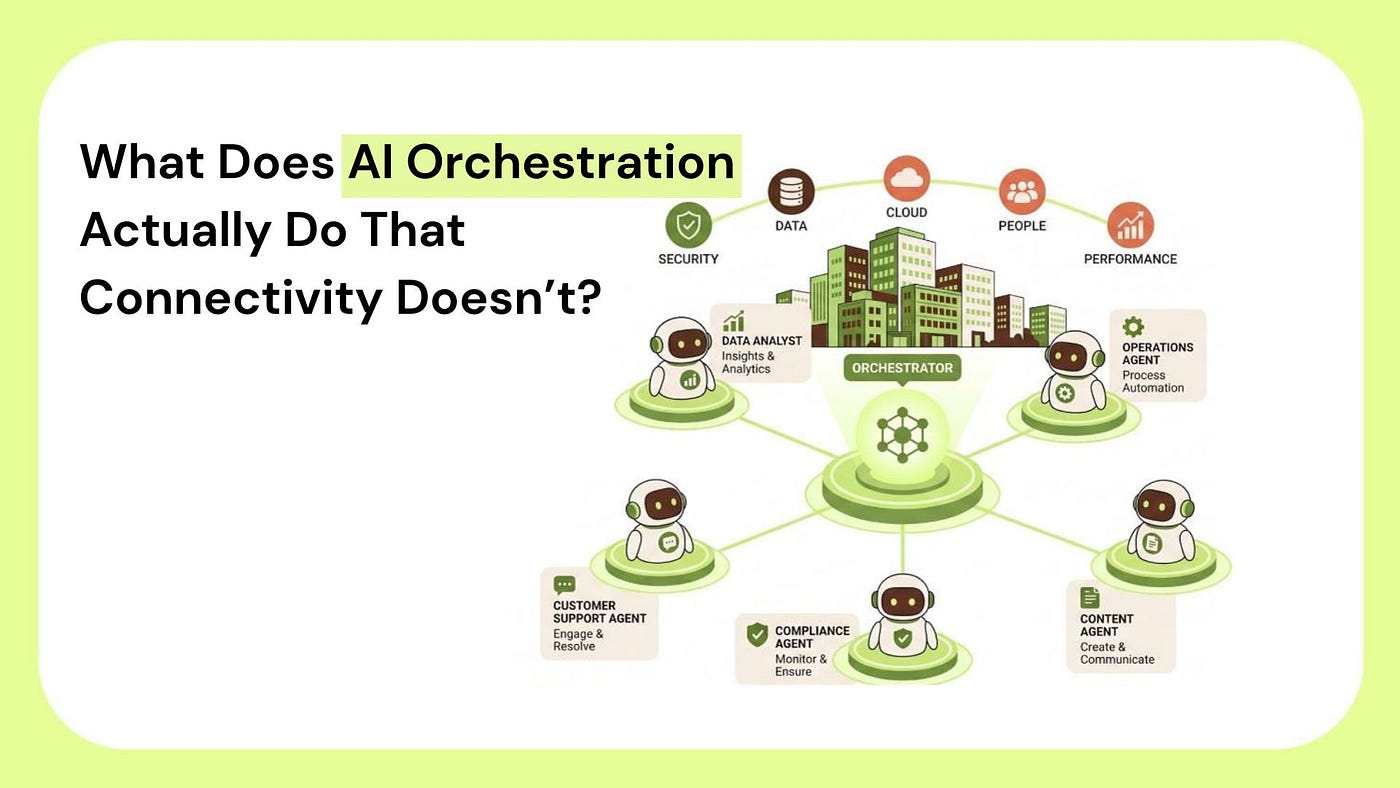
Take the loan underwriting example from Part 1. If the document parsing agent doesn’t know that the application fetch agent flagged a potentially incomplete file, it processes the document as routine. It has no reason to look more carefully, flag uncertainty, or hold output for review. It does exactly what it was designed to do and that’s the problem.
Without proper context transfer between agents, each one operates in a kind of tunnel. It knows its task. It doesn’t know what happened upstream, what the coordinator observed, or why this particular input might be higher risk than usual.
In a single-agent system, context is centralized. One agent, one context window, one place to manage what’s known and what isn’t. In a multi-agent system, context has to be actively managed at every transition. It doesn’t travel automatically.
What this costs in production: decisions made downstream from an incomplete upstream context. Systems that produce plausible-looking outputs are built on assumptions that were never validated. And when something goes wrong, an audit trail that can’t explain why the system did what it did, because the relevant context was never passed.
2. Task Decomposition: The Coordinator’s Job Is Harder Than It Looks
The coordinator’s ability to break down a goal into well-scoped sub-tasks determines the reliability of the entire system. This is less appreciated than it should be.
It seems straightforward: take the overall workflow, divide it into logical pieces, and assign each piece to the right agent. But the decomposition decisions are where many production failures originate.
Here’s a real pattern I’ve seen: a coordinator receives “evaluate creditworthiness” as a goal and assigns it as a single task to one agent. That agent ends up doing data validation and risk scoring together. Two genuinely different reasoning tasks, both probabilistic, are handled by a single agent, making judgment calls about where one ends and the other begins.
The result is a system that’s mediocre at both because neither task was given the right constraints, data, or scope. Errors in data validation become invisible inputs to risk scoring. The compounding occurs within the agent before the coordinator ever sees it.
Good decomposition means: each sub-task is a single, focused responsibility with a clear input contract and a clear output contract. “Validate that the income document is complete” is one task. “Calculate debt-to-income ratio based on validated income data” is another. Combining them introduces ambiguity at the worst possible place.
What this costs in production: the decomposition problem eventually becomes a reliability problem. Not obviously, not all at once. It surfaces as inconsistent outputs on inputs that look similar, edge cases the system handles erratically, and failure patterns that are hard to reproduce because they depend on where the agent drew an arbitrary internal line.
3. Error Propagation: Confident and Wrong Is Worse Than Obviously Wrong
This is the one that surprises people most, even when they intellectually understand probabilistic AI systems.
In sequential multi-agent workflows, one agent’s output becomes the next agent’s input. That’s the design. It’s also the risk vector.
An obvious error stops things. A plausible-looking wrong answer doesn’t. It moves forward. It gets processed by the next agent as if it were correct. It earns confidence ratings. It gets packaged into an output that reads as authoritative. And somewhere down the chain, a human reviewer or a downstream system acts on it.
The specific failure mode to watch for: not the error that surfaces clearly, but the output that is technically within expected parameters while being substantively wrong. The income field shows a value, just not the complete one. The risk score that’s plausible given the data it received, just not the data the system should have had.
Multi-agent systems need fail-safes at every handoff, not just at the outer boundary. Checking the final output before it reaches a user is necessary but not sufficient. By the time an error has propagated through three or four agents, it’s been amplified and obscured. Catching it at the end means untangling a chain of downstream processing to find the original problem.
What this costs in production: in low-stakes workflows, plausible-but-wrong outputs create rework and efficiency losses. In regulated environments (financial services, healthcare, insurance) they create compliance exposure and decisions that affect real people in ways that are difficult to reverse. The loan was approved or declined based on incomplete income data. The claim was processed on the wrong policy terms.
4. Compliance and Auditing: The Audit Trail Has to Span Every Agent
In regulated industries, auditability isn’t a feature. It’s a prerequisite. And multi-agent systems make it structurally harder.
In a single-agent system, the audit trail is relatively centralized. One model, one context, one log file. When a regulator asks, “Why did the system produce this output?” the answer lives in one place.
In a multi-agent system, the audit trail must be reconstructed across multiple agents and decision layers. Which agent retrieved the data? What did the coordinator decide to pass downstream? What triggered the risk score? What information was available to the memo-writing agent, and what wasn’t?
If the system wasn’t designed to log each of those decisions in a format that can be reconstructed later (not just logged for debugging, but explainable to a compliance team or a regulator) then the audit capability doesn’t actually exist. You have logs. You don’t have an audit trail.
The difference matters. Logs tell you what happened. An audit trail explains why each decision was made and what information was available at the time. Regulated environments require the latter.
What this costs in production: the compliance gap usually doesn’t surface until it matters most. An audit, an incident review, a regulator inquiry. At that point, having logs that don’t reconstruct into an explainable narrative is functionally the same as having no trail at all. The architectural decision to build proper audit capability must be made before deployment, not after.
5. Latency and Cost: These Are Architecture Decisions, Not Optimization Problems
More agents mean more model calls. More model calls mean higher latency and higher operational cost. That’s arithmetic, not a surprise.
What is a surprise (and shouldn’t be) is how quickly the numbers get operationally significant. A single-agent workflow might complete in two to four seconds per transaction. A multi-agent workflow that handles the same task through a coordinator, three or four sub-agents, and a synthesis step might run for eight to fifteen seconds per transaction. At low volumes, that’s acceptable. At the production scale, it can make the system impractical.
Cost follows the same curve. Individual model calls are inexpensive. At the volumes at which enterprise workflows run (hundreds or thousands of transactions per day) the per-transaction cost difference between a single-agent and a multi-agent approach can become a meaningful line item.
The point isn’t that multi-agent is too expensive. In many cases, the specialization it enables is worth the cost. The point is that latency and cost need to be designed up front, not treated as optimization problems to be solved after deployment. Architecture decisions made during the pilot (how many agents, what model sizes, how to structure parallel versus sequential flows) have direct cost and latency implications that are much harder to restructure at production scale.
What this costs in production: at best, performance that falls below expectations. At worst, a system that works technically but fails operationally is nothing but too slow for the business process it’s meant to improve & too expensive to run at the volume the use case actually requires.

What These Five Have in Common
Context continuity, task decomposition, error propagation, auditing, latency, and cost. They look like different problems. They have the same root.
All five are architecture decisions that production surfaces, but pilots obscure. In a controlled pilot, context problems get manually corrected. Decomposition issues don’t compound because volume is low. Error propagation is caught because someone’s watching. Audit requirements aren’t enforced yet. Cost and latency look fine because the pipeline runs a few hundred times, not a few hundred thousand.
Production removes every one of those buffers. The architecture is what remains.
Multi-agent orchestration is worth the complexity when the use case genuinely requires it. But the complexity has to be designed for — not discovered after deployment.
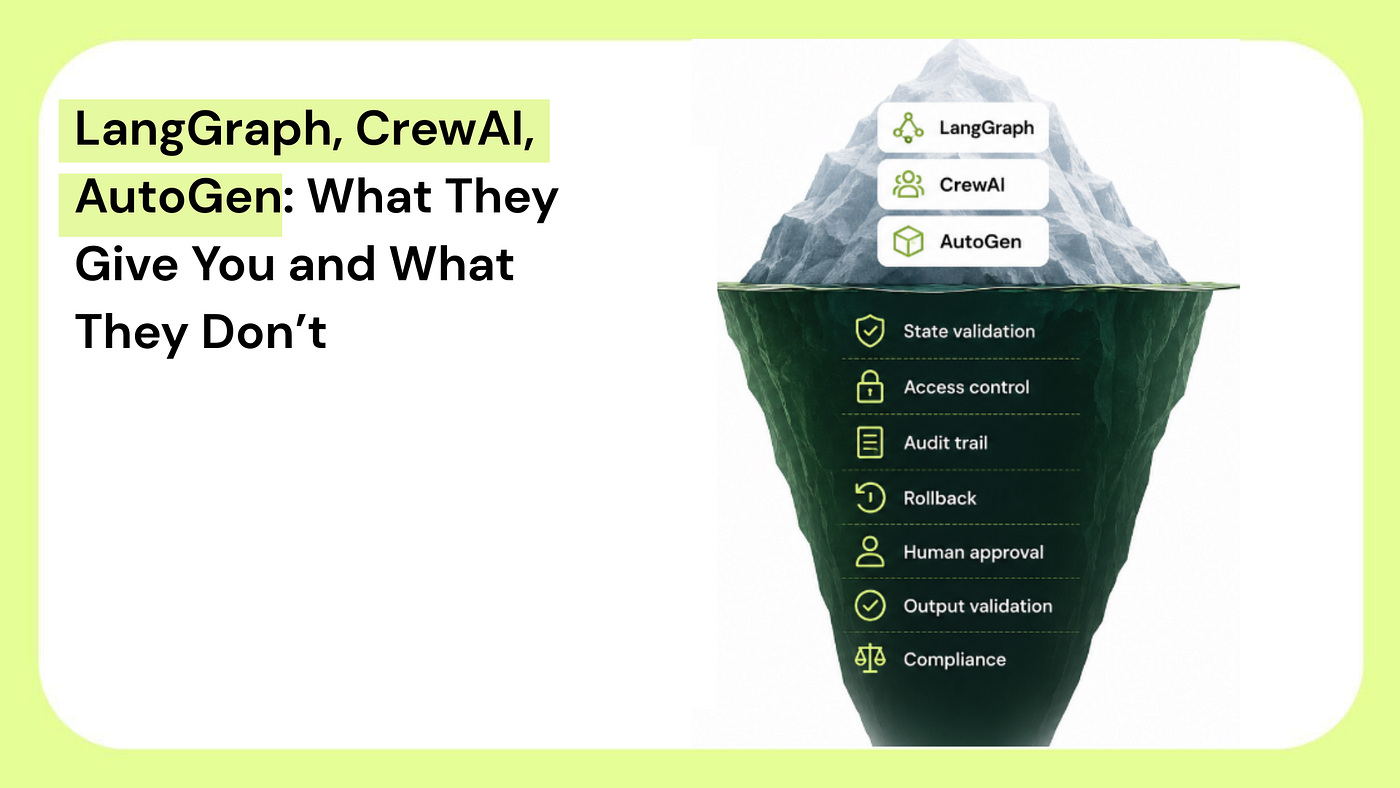
In Part 3, we’ll look at the frameworks that structure multi-agent flows, what they actually provide, and the critical gap between “framework-ready” and “production-ready.”
Disclaimer: This is Part 2 of an ongoing series on enterprise AI orchestration. The original, comprehensive guide (including an interactive comparison table and the full framework analysis) is published on the Gyde blog.
메타데이터
- post_id
- 81f4df82d210
- slug
- 5-things-that-break-in-multi-agent-ai-systems-that-nobody-warns-you-about-81f4df82d210
- url
- https://medium.com/@prasannavaidya/5-things-that-break-in-multi-agent-ai-systems-that-nobody-warns-you-about-81f4df82d210
- canonical_url
- https://medium.com/@prasannavaidya/5-things-that-break-in-multi-agent-ai-systems-that-nobody-warns-you-about-81f4df82d210
- author_url
- https://medium.com/@prasannavaidya
- status
- ok
- fetched_at
- 2026-08-01 10:20:08