Dangers of Potassium Cyanide
The dangers of potassium cyanide (KCN) are extremely serious and fatal. This substance is one of the most toxic chemical compounds known…
Dangers of Potassium Cyanide
Dangers of Potassium Cyanide
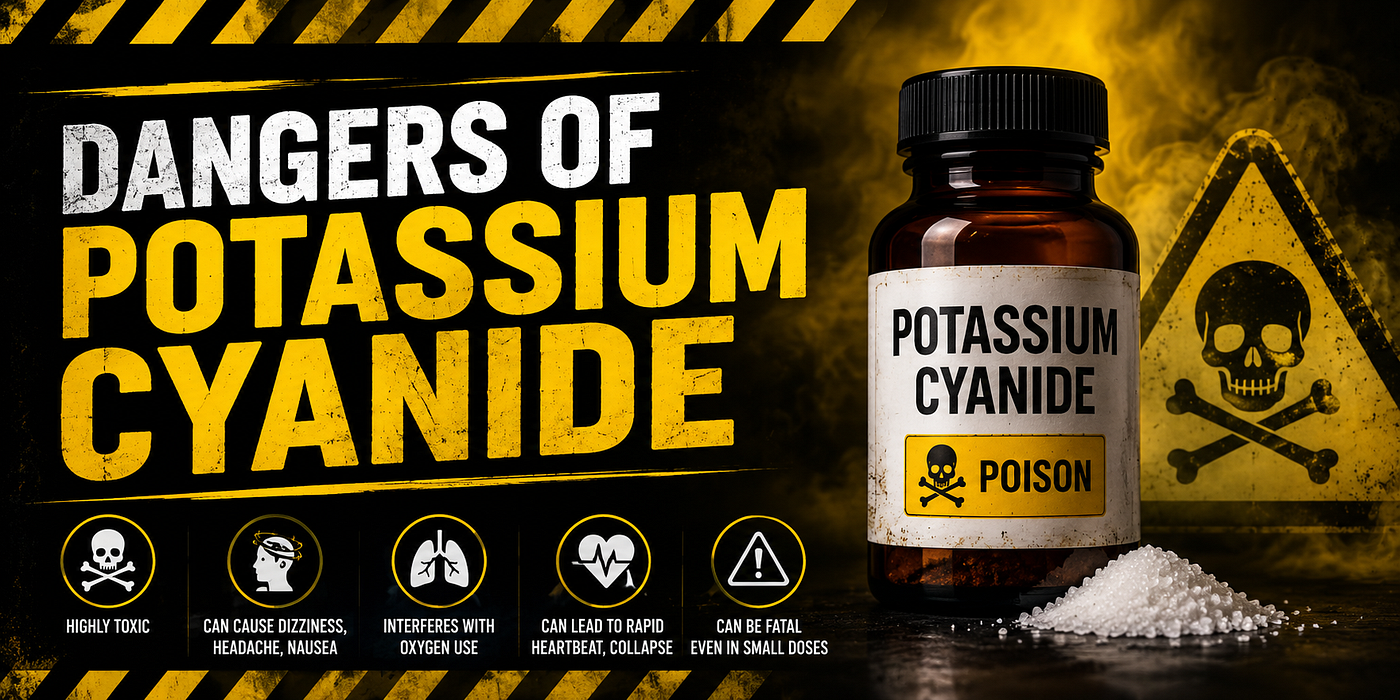
The **dangers of potassium cyanide* (KCN*) are extremely serious and fatal. This substance is one of the most toxic chemical compounds known, and contact with or inhalation of a very small amount can cause death within a short time. The main hazards are comprehensively outlined below:
1. Toxic Hazards
Highly toxic by skin contact, ingestion, or inhalation. A very small amount (about 200–300 mg) is lethal to humans. Inside the body, it releases hydrogen cyanide (HCN) gas, which prevents cells from using oxygen and causes internal suffocation (hypoxia).
2. Chemical Hazards
In contact with acids or even moisture in the air, it releases hydrogen cyanide gas, which is highly toxic and flammable. It reacts with oxidizing agents and chlorine, forming unstable and explosive compounds. At high temperatures, it decomposes and produces toxic fumes.
3. Fire and Explosion Hazards
Potassium cyanide itself is non-flammable, but in a fire or upon contact with acids, it releases toxic HCN gas. Using water to extinguish a fire involving it can be dangerous, as it causes the release of cyanide gas.
4. Health Effects
Symptoms of poisoning: dizziness, nausea, shortness of breath, convulsions, loss of consciousness, and rapid death. Skin contact or inhalation of vapor can lead to respiratory or cardiac arrest within minutes. Eye contact causes severe corneal damage and eye irritation.
5. Environmental Hazards
It is very toxic to aquatic life and the aquatic environment. Even a small amount can severely contaminate aquatic ecosystems.
📌 Important safety note: Potassium cyanide (**سیانور پتاسیم**) should only be used in industrial and laboratory settings with adequate ventilation and by trained personnel. It must be stored in tightly closed containers, away from moisture, acids, and heat sources. In the event of a spill or exposure, specialized antidotes such as hydroxocobalamin or sodium thiosulfate must be used immediately.
메타데이터
- post_id
- 820d0b80b15c
- slug
- dangers-of-potassium-cyanide-820d0b80b15c
- url
- https://medium.com/@amirkiyankiyanpak1396/dangers-of-potassium-cyanide-820d0b80b15c
- canonical_url
- https://medium.com/@amirkiyankiyanpak1396/dangers-of-potassium-cyanide-820d0b80b15c
- author_url
- https://medium.com/@amirkiyankiyanpak1396
- status
- ok
- fetched_at
- 2026-07-09 21:48:21