A $120 Match? Why World Cup Betting Bots Need Hourly API Subscriptions
On the pitches of the FIFA World Cup 2026, whistles blow and footballs fly at breakneck speeds.
A $120 Match? Why World Cup Betting Bots Need Hourly API Subscriptions
On the pitches of the FIFA World Cup 2026, whistles blow and footballs fly at breakneck speeds.
Yet in the digital space surrounding the stadiums, an even faster war is raging. Within the order books of prediction markets like Polymarket and global sportsbooks, pools of capital fluctuate and odds shift in milliseconds.
If you analyze the transaction feeds of these markets, a striking shift becomes obvious: the forces driving these pools and moving millions of dollars are no longer sleep-deprived human traders. They are 24/7 autonomous AI trading agents and prediction bots.
To survive, these AI assistants require one primary fuel: real-time, high-frequency data. But when they try to purchase it, they crash into a structural wall — legacy monthly Stripe subscriptions on one side, and high-fee blockchain micropayments on the other.
Our Thesis: Whether performing algorithmic prediction or professional betting, what AI agents really need during the World Cup is a data subscription service billed by the hour.
In this article, we’ll look at why legacy SaaS billing models crumble in the face of the Machine Economy (Agentic Economy), how x402’s hourly subscription pattern offers an elegant escape hatch, and how to design a tournament-ready sports data API.
The $120 Match: Why the Math Doesn’t Add Up
Let’s look at a concrete trading scenario.
Suppose you deploy an AI prediction bot on the Solana blockchain. Tonight is the highly anticipated Argentina vs. France clash, and you want your bot to run cross-platform arbitrage during the 2-hour match window.
To front-run the market and catch pricing gaps, your bot must poll data at an intense frequency:
- Live Betting Odds: Once every 5 seconds (720 requests/hour)
- Sentiment & Injury Feeds: Once every 10 seconds (360 requests/hour)
- Ticket Resale Spikes: Once every 30 seconds (120 requests/hour)
This amounts to 2,400 API requests over the course of the match. Let’s see how traditional and web3 payment rails handle this workload:
Option A: Legacy Monthly SaaS (Stripe + API Key)
- The Plan: A premium sports data plan for $150/month.
- The Reality: Your bot only needs data for exactly 2 hours. Once the match finishes, the subscription goes to waste for the remaining 29 days — a 99% capital inefficiency. Worse, AI agents don’t have credit cards. They cannot fill out Stripe billing forms, and they cannot bypass mobile 2FA verification.
- The Outcome: The bot is locked out before it even takes its first breath.
Option B: Per-Call Micropayments (x402 exact per-call)
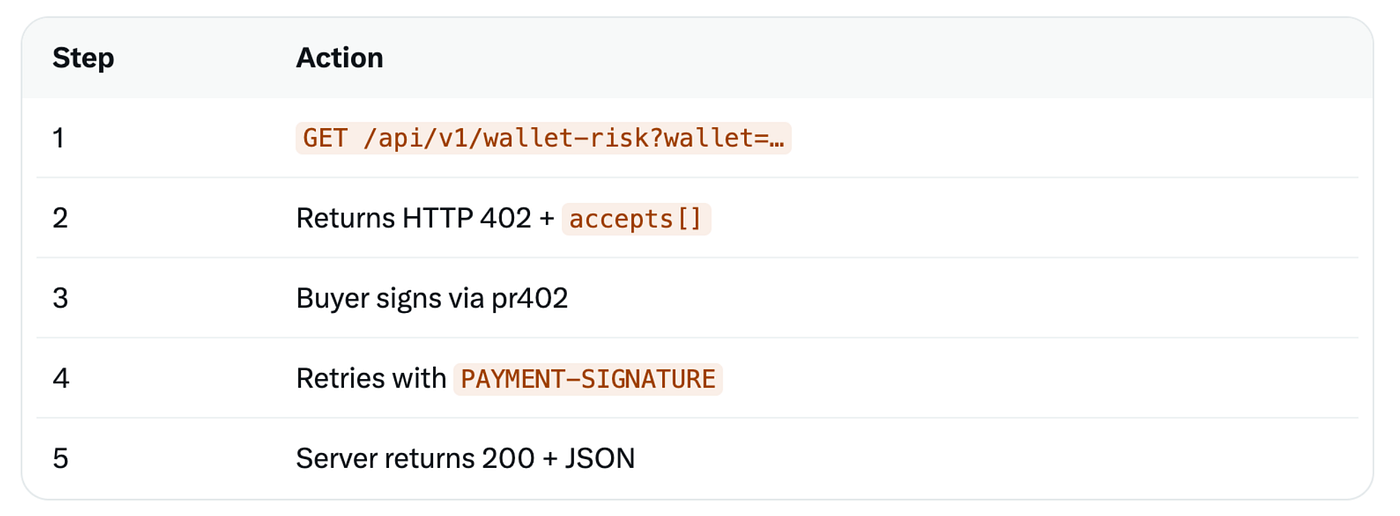
- The Plan: Pay $0.05 USDC per query via Solana (referencing standard micro-API models like solrisk).
- The Reality: 2,400 requests × $0.05 USDC = $120 USDC. Running a single bot for a single match costs triple digits in data alone. Furthermore, signing a transaction or verifying a signature per HTTP request adds latency that defeats high-frequency execution.
- The Outcome: The bot wins the arbitrage but goes bankrupt paying the API bill.
Option C: The x402 Hourly Subscription
- The Plan: The data provider lists an
hourlytier for $0.20 USDC on their/subscriberoute. - The Reality: Before kickoff, the bot executes a single 0.20 USDC Solana payment via the
pr402Facilitator. The server verifies it and issues a signed, cryptographically secure JWT. For the next hour, the bot queries the data routes withAuthorization: Bearer <JWT>at sub-millisecond speeds, bounded only by a fair-use limit (e.g., 60 requests/minute). - Total Cost: Exactly $0.40 USDC for the 2-hour game.
- The Outcome: A 99.6% cost reduction compared to micropayments — fully autonomous, wallet-native, and zero latency.
Designing a Machine-Native Sports Data API
Under the x402 subscription framework, how should a sports data provider structure its endpoints to appeal to AI trading agents? To give prediction bots a comprehensive view, an ideal API design offers three primary data services:
Data Service
API Route
Value in the Agentic Economy
Live Betting Odds
POST /api/v1/odds
Aggregates real-time odds across sportsbooks and Polymarket. Allows bots to detect lagging bookmaker lines and execute risk-free cross-market arbitrage.
Sentiment & News Filter
POST /api/v1/news
Aggregates and filters social sentiment and breaking reports. If a star player gets injured during warm-ups, bots can read the shift and front-run the market before odds adjust.
Ticket Resale Tracker
POST /api/v1/tickets
Tracks secondary ticket pricing and volume. Since advancement directly impacts ticket demand (e.g., Argentina entering the finals), bots can exploit resale margin arbitrage.
Mapping the pr402 Gateway to Real-World Needs
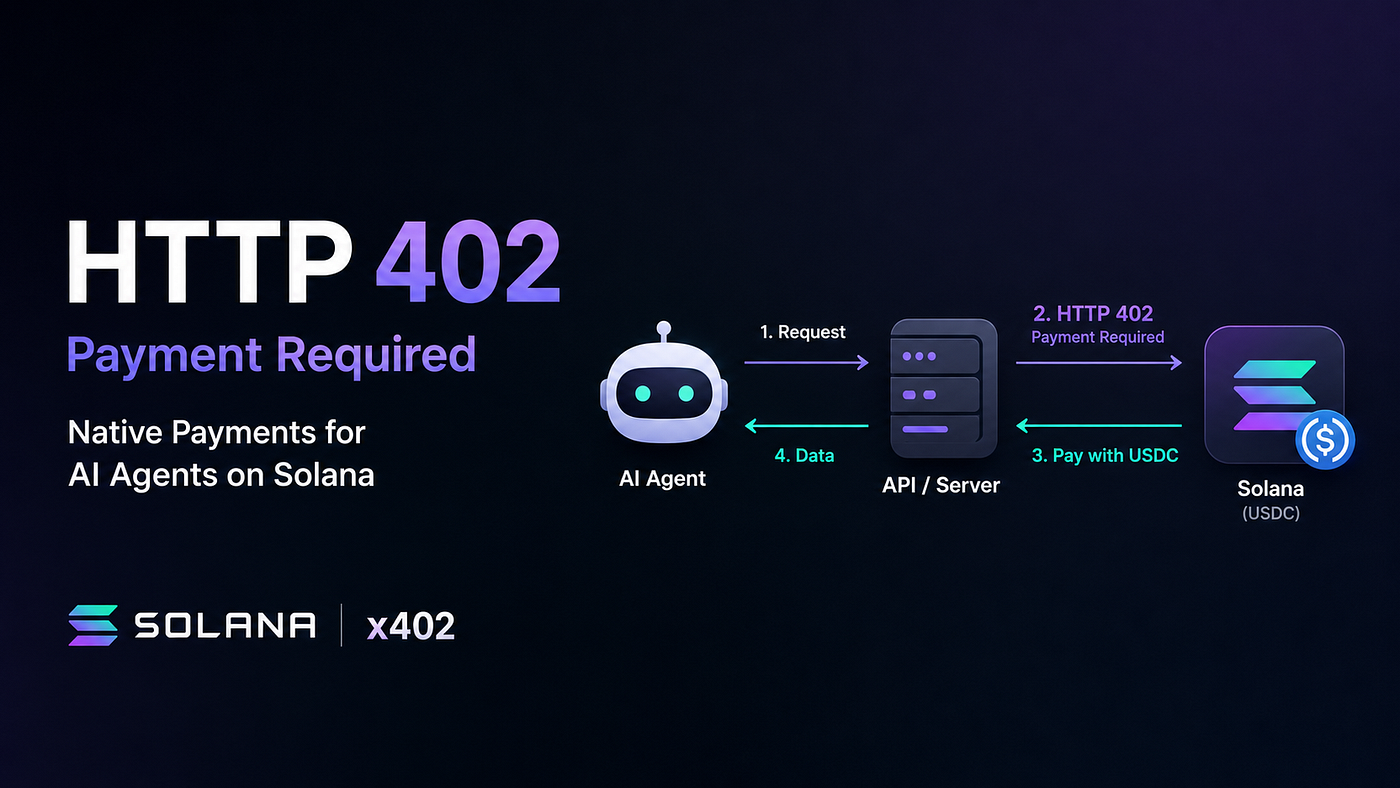
The engineering elegance of the pr402 gateway on Solana lies in its three specialized financial rails. They align perfectly with the different security and speed requirements of a World Cup ecosystem:
【Check a Score】 ───► exact (per-call) ──► Pay-per-query, stateless (e.g., 0.05 USDC for risk score)
  【Poll the Stream】 ──► exact (subscription) ──► Pay once, query with JWT (e.g., 0.20 USDC for 1 hour of odds)
【Buy a Ticket】 ────► sla-escrow ─────► On-chain escrow, oracle verification (e.g., ticket resale escrow)**exactPer-Call**: Best for stateless, occasional queries. Equivalent to a human fan checking a single historical stat.**exactSubscription (This Article's Focus)**: Equivalent to tuning into a live broadcast. The bot needs uninterrupted high-frequency data for a specific time window, and paying per request is both economically and technically unviable.**sla-escrowEscrow**: Equivalent to buying a high-value physical ticket from a reseller. The buyer funds the escrow contract, and the funds are locked. The merchant must submit proof of ticket transfer, verified by a decentralized oracle, before the funds are released. This removes counterparty risk entirely.
Developer Integration: A 5-Minute Setup
Using the open-source x402-subscription-client, an autonomous agent can purchase, persist, and utilize hourly JWTs.
Note the retry loop: the client first attempts to load an existing token from the local filesystem (worldcup_token.json). If the token is valid, it proceeds with zero blockchain calls, protecting the agent from paying twice if the bot crashes and restarts.
import { X402SubscriptionClient } from 'x402-subscription-client';
import { Keypair } from '@solana/web3.js';

async function startArbitrageBot() {
  const payerKeypair = Keypair.fromSecretKey(/* Agent's Solana Wallet Keypair */);
  const client = new X402SubscriptionClient({
    payerKeypair,
    endpointBaseUrl: 'https://api.your-sports-data.com', // Conceptual World Cup data API
  });

  // 1. Try to load an unexpired token locally to prevent double spending on restart
  try {
    client.loadSubscriptionFromFile('./worldcup_token.json');
    console.log('Loaded active JWT from cache.');
  } catch {
    console.log('No active token found. Initiating Solana payment for hourly subscription...');
    // Pay 0.20 USDC via Solana for a 1-hour window
    await client.subscribe('hourly');
    client.saveSubscriptionToFile('./worldcup_token.json');
  }

  // 2. Poll data routes for arbitrage opportunities
  setInterval(async () => {
    try {
      const odds = await client.post('/api/v1/odds', { targetUrl: '...' });
      const news = await client.post('/api/v1/news', {});

      console.log(`[Odds Aggregator] Fetch success. Evaluating trade window...`, odds.data);
    } catch (err: any) {
      if (err.message === 'TOKEN_EXPIRED') {
        console.warn('⚠️ Token expired. Initiating auto-renewal on Solana...');
        try {
          await client.subscribe('hourly');
          client.saveSubscriptionToFile('./worldcup_token.json');
          console.log('✅ Auto-renewed successfully.');
        } catch (subErr: any) {
          console.error('❌ Auto-renewal failed (insufficient balance or RPC error):', subErr.message);
        }
      } else {
        console.error('Request failed:', err.message);
      }
    }
  }, 5000); // Poll every 5 seconds
}

startArbitrageBot();
Conclusion: Aligning Pricing with Machine Lifecycles
The core tenet of the Agentic Economy is that billing must adapt to the lifecycle of the machine’s task.
In the fast-moving arenas of World Cup betting and prediction markets, that unit of time is the hour. x402 bridges the gap, allowing data providers to serve autonomous bots with zero friction, sub-millisecond speeds, and native wallet settlements.
If you are a data vendor or API builder, stop letting credit card forms stand between you and your AI customers.
Fork the open-source x402-subscription-starter template, configure your SQLite pricing parameters, and start selling your APIs by the hour today.
Resources
- Seller Starter Template: x402-subscription-starter
- Buyer SDK: x402-subscription-client
- Gateway: pr402 Facilitator
- Protocol Specs: SUBSCRIPTION_PATTERN.md
메타데이터
- post_id
- 822a66424de7
- slug
- a-120-match-why-world-cup-betting-bots-need-hourly-api-subscriptions-822a66424de7
- url
- https://medium.com/@miraland.labs/a-120-match-why-world-cup-betting-bots-need-hourly-api-subscriptions-822a66424de7
- canonical_url
- https://medium.com/@miraland.labs/a-120-match-why-world-cup-betting-bots-need-hourly-api-subscriptions-822a66424de7
- author_url
- https://medium.com/@miraland.labs
- status
- ok
- fetched_at
- 2026-06-22 05:41:33