Innovative Citizen Participation Network Meeting of the OECD Working Party on Open Government
The 2026 Innovative Citizen Participation Network (ICPN) Meeting brought together over 150 participants, virtually and in person at the…
Innovative Citizen Participation Network Meeting of the OECD Working Party on Open Government
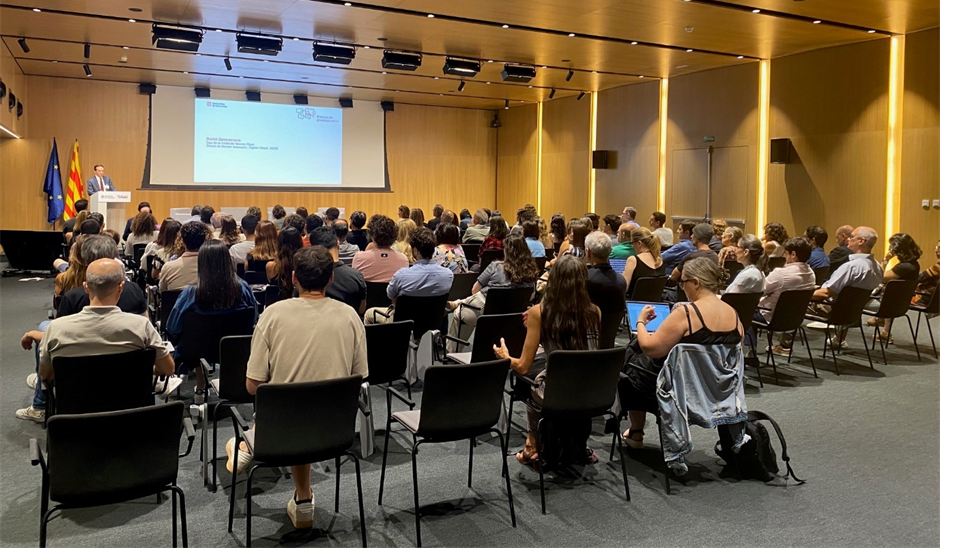
The 2026 Innovative Citizen Participation Network (ICPN) Meeting brought together over 150 participants, virtually and in person at the OECD on 19 February 2026. Participants included representatives from national and subnational-level government bodies in 22 OECD member countries. The event also brought together members of the ICPN community from across intergovernmental organisations, foundations, independent public organisations, academia, and non-governmental organisations working in the field of citizen participation and digital democracy.

David Goessmann, Head of the OECD Open Governance Unit, welcomed participants and provided an overview of the meeting. Gillian Dorner, Deputy Director of the Public Governance Directorate and Head of the OECD Innovative, Digital and Open Governments Division, delivered opening remarks. Jean Cardinal, Director of Open Government & Access to Information, Treasury Board of Canada Secretariat and Chair of the OECD Working Party on Open Government, provided an introductory statement on the current challenges to citizen participation, as well as its heightened importance to open and democratic governance.
Across three sessions, the ICPN members discussed how citizen participation can support governments in delivering effective policies that respond to today’s complex, systemic challenges, while building legitimacy and trust; explored ways to develop a more strategic approach to participation; and reflected on the OECD and ICPN’s present and future work, including papers on artificial intelligence and emerging technologies for stronger citizen participation and digital democracy, as well as updates to the OECD’s evidence base. The sessions enabled participants to share relevant updates, experiences, and offer feedback through roundtable presentations and informal discussion. The session concluded with closing remarks by David Goessmann, Head of the OECD Open Governance Unit.

Key Takeaways
Session 1: Participation for More Responsive and Agile Government Reforms

Raphael Pouyé, Policy Analyst and Lead on Citizen Participation and Digital Democracy at the OECD, framed the meeting by positioning citizen participation as a key lever to strengthening governments’ capacity to deliver reforms in an increasingly complex policy environment, situating the discussion within the broader PGC Government Unstuck Initiative. Governments today face a combination of pressures: declining trust in institutions, growing fiscal and political constraints, and a policy landscape defined by complex, systemic challenges. In this context, governments can appear “stuck”, needing to act decisively while also building legitimacy for difficult reforms. Low trust further limits political room for maneuver, increasing resistance and the risk that reforms stall or are reversed. To address these pressures, the OECD Public Governance Committee developed the Government Unstuck Initiative, which explores how governments can strengthen their ability to design, implement, and sustain reforms. The framework highlights the need to combine technical improvements in public administration with stronger human drivers of reform, such as communication and participation, alongside better use of evidence and measurement.
Within this framing, the OECD Secretariat presented how citizen participation can help unlock governments’ reform capacity. It highlighted a broader shift in public governance from efficiency-driven models, where citizens were primarily treated as service users, toward approaches that place people and their participation at the centre of democratic governance. The Secretariat stressed that participation should be treated as a strategic capability of government and embedded early in the policy cycle to build public understanding, generate momentum, and support implementation. Well-designed participation can help identify more robust and socially acceptable solutions, while poorly designed or tokenistic processes risk undermining trust. The presentation also noted how digital tools and AI are expanding opportunities to scale participation, while introducing new governance challenges that require careful management.
The OECD Secretariat presented recent and forthcoming OECD work illustrating how strategic participation can facilitate government reform. This included presentations from Ricardo Zapata, Policy Analyst, Digital Government Unit, who presented the OECD Governing with Artificial Intelligence report, which highlights the potential of AI for streamlining processes, improving service delivery, strengthening accountability, and sharpening forecasting. It also addresses implementation challenges, including skills gaps, limited guidance, and weak monitoring. Giulia Cibrario, Policy Analyst, Open Government Unit, presented a forthcoming OECD report, AI and the Future of Citizen Participation, which will introduce a typology to help officials navigate AI tools that can support participatory processes. The report Tackling Civic Participation Challenges with Emerging Technologies was also presented. This report examines how AI and technologies such as blockchain can help address common barriers to meaningful participation, including trust, accessibility, and process design.
Ollin Pérez-Raynaud, Policy Analyst, Open Government Unit and Catherine Burke, Intern in the same unit, presented updates from the Deliberative Democracy Database, which mapped nearly 170 new deliberative processes between September 2023 and January 2025, showing continued growth in their use, diversification of policy topics, and increased attention to monitoring, evaluation, and impact. In addition, Charlotte Denise-Adam, Policy Analyst, Open Government Unit, presented the OECD Open Government for Green Transition report, highlighting the importance of embedding participation within climate policymaking through integrated approaches combining open data, communication, consultation, and engagement.
Guest speakers complemented these insights with practical experiences: including Silke Toenshoff, Head of Events and Local Dialogues in the Committee of the Regions, who discussed leveraging AI to support participation at the local and regional level through training materials and reporting. Mayara Soares Faria, Head of the International Agenda, National Secretariat for Social Participation General Secretariat of the Presidency of the Republic of Brazil highlighted efforts to institutionalise participation within national strategies through digital and in-person mechanisms. Ewa Paderewska, Head of the Environmental Protection Unit at the Transport Analysis Department at Poland’s Centre for European Transport Projects in Poland described how citizen participation can strengthen infrastructure planning and implementation.
Following these presentations, participants engaged in open-floor discussions, covering the following topics:
- Linking local- and regional- level participation to decision making at national level. Participants discussed how citizen participation at the local and regional levels can be better integrated into national policy processes. Digital tools, including AI agents, were highlighted as potential enablers to scale local engagement and channel insights into higher-level decision making.
- Using participation to strengthen public services. Several interventions emphasised that citizen participation can improve the design and delivery of public services, particularly in vulnerable communities. Participants stressed the importance of placing citizens’ needs and well-being at the centre of project development, fostering communal ownership, and piloting initiatives with local actors. Many also noted that participation should become a core capability across government and civil society.
- Addressing consultation fatigue and improving quality of participation input. Participants raised concerns about “consultation fatigue” and questioned how to ensure meaningful and high-quality participatory contributions. This included discussions on developing clearer criteria to assess the impact and effectiveness of digital democracy platforms.
- Building trust in digital participation. Discussions highlighted broader trust-related issues linked to digital participation, including digital identity, data governance, and digital sovereignty, and how these factors influence citizens’ willingness to engage.
- Balancing opportunities and risks of AI. Participants reflected on the ethical risks and implementation challenges associated with AI and emerging technologies, particularly regarding transparency, accountability, and the protection of citizen data. At the same time, several noted the potential of AI to help overcome structural barriers to participation and expand the reach of democratic engagement.
Session 2: Towards a More Strategic Approach to Citizen Participation

Ollin-Pérez Raynaud, Policy Analyst, introduced Session 2 by discussing how, despite two decades of reforms promoting responsiveness and accountability, an “upstream gap” remains in citizen participation. While most countries have established laws and tools to support participation downstream via tools, guidelines and manuals, it is often fragmented, introduced too late in the policy cycle, and could be better aligned with decision-making processes. This gap matters for trust and reform capacity, as evidence shows a strong correlation between feeling heard and trusting government. Yet, most citizens do not believe they can meaningfully influence public decisions. Ollin’s presentation underscored the need to embed participation earlier and more strategically, encouraging senior officials to reflect on when, why, and how participation should be used. It highlighted the value of structured upstream guidance covering context, policy complexity, purpose, people, options, implementation, and evaluation, to complement existing downstream OECD tools (e.g., the OECD Guidelines for Citizen Participation).
Speakers provided perspectives on adopting strategic participation approaches in the face of mounting governance pressures. This included a presentation from Professor Oliver Escobar Chair of Public Policy and Democratic Innovation University of Edinburgh, who situated citizen participation within broader macro-trends (e.g., democratic backsliding, inequality, climate crisis, technological disruption and erosion of public goods) arguing that governments must adopt more deliberate, system-level approaches to avoid a “vicious circle” of declining trust and capacity. Jayne Foster, Principal Advisor, The Policy project, Department of the Prime Minister and Cabinet of New Zealand and Katju Holkeri Head of the Governance Policy Unit in the Public Governance Department Ministry of Finance in Finland underlined the importance of translating strategic participation goals into practice in New Zealand and Finland, highlighting key elements including clarifying mandates, strengthening ongoing relationships with the public, and developing practical tools to support policymakers to build capability for upstream, purposeful participation. Fiona Speirs Head of Academy, Government Communications Service in the UK discussed how strategic public communications can enhance participation quality, presenting a cross-government Toolkit For communicators supporting citizen participation developed with the OECD.
This was followed by an open discussion among participants, which highlighted:
- Clear endorsement of building upstream capacities for participation within the public sector. Participants agreed on the need to strengthen upstream approaches to participation and called for an ambitious, more strategic framing.
- From isolated exercises to strategic scaling. Participants emphasised that the challenge is not only to improve individual participatory processes, but to scale them more systematically across government. This requires institutional capacity, sustained political backing, and clearer links between participation and formal decision-making.
- Ensuring guidance is practical and usable to build capacity. There was broad agreement that tools and guidelines to build upstream capacities must be more actionable and concrete for policymakers and practitioners. Strengthening skills, aligning upstream and downstream communities, and lowering implementation barriers were also identified as priorities.
- Adapting the narrative to different audiences. Participants highlighted the importance of tailoring messages on the value and relevance of participation to senior leaders, politicians, line ministries, practitioners, and citizens. Contextualising participation for different stakeholders was seen as integral to advancing the upstream agenda.
- Demonstrating impact and reinforcing accountability. Improving communication on the impact of participation through faster and more strategic evaluation and clearer reporting was seen as key to building upstream capacities and buy-in. Positioning citizens as right-holders within democratic processes was also seen as key to sustaining democratic legitimacy.
Session 3: Shaping the Future Work of the OECD and the ICPN on Citizen Participation and Digital Democracy
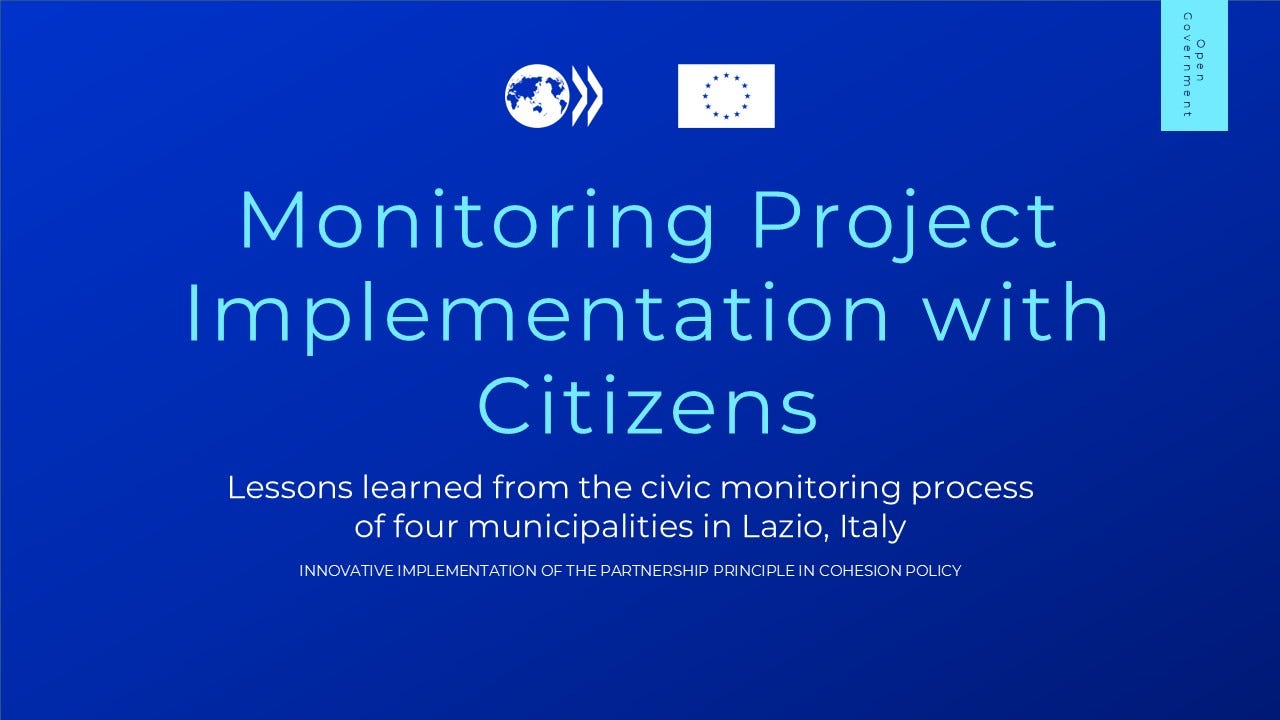
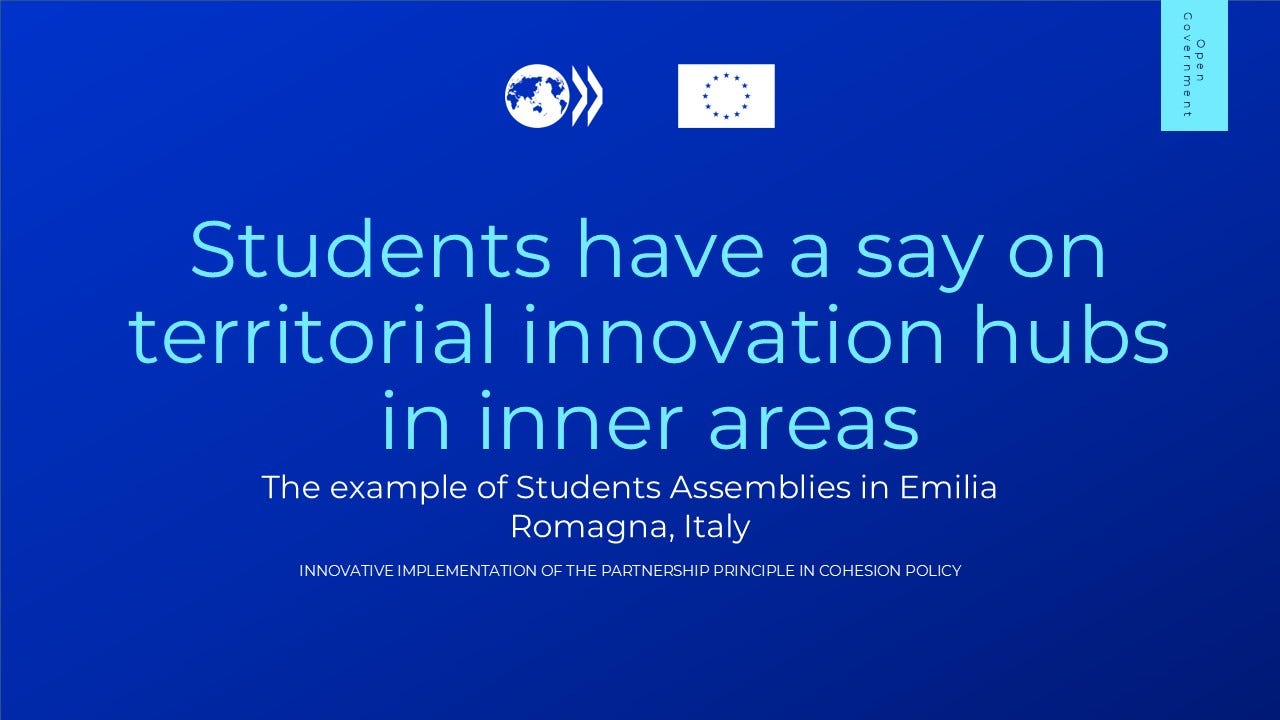
Giulia Cibrario, Policy Analyst, introduced a number of priorities of the OECD Secretariat’s 2026–2027 Programme of Work, which includes a focus on bringing closer together citizen participation, civic space, and public communications to address common challenges such as declining trust, implement complex reforms, and inform policy transition through participation. Key initiatives include the EEA Norway Grants project Protecting Civic Space to Foster More Meaningful Participation, supporting five Central and Eastern European countries to strengthen civic space protections, participation frameworks, public sector capacity, and monitoring systems. The Secretariat also highlighted continued collaboration with the European Commission and DG REGIO to embed participation in the next EU Cohesion Policy cycle, helping regional authorities and cities make public investment decisions more targeted through citizen participation. Updates were shared on the forthcoming Building Common Ground with Communication Handbook, supported by Ireland, which will help government communicators navigate divisive debates and better understand public opinion. Finally, the OECD will continue work with Bertelsmann Stiftung on civic tech and AI for participation, while strengthening its evidence base through the 2025/2026 Survey on Open Government, the Citizen Participation Barometer, and plans to establish an OECD Data Hub on Open and Participatory Governance.
Speakers emphasised the importance of framing citizen participation as a tool for stronger policymaking rather than an administrative burden. Dino Zorić, Ministry of Justice, Public Administration and Digital Transformation in Croatia highlighted ongoing efforts to strengthen participation and civic space through the country’s national strategy, with OECD support to expand civil society engagement and align Croatia’s National Development Strategy with the OECD Recommendation on Open Government. Klaudia Dywel, Administrative Capacity and Programme Implementation Unit of the European Commission DG REGIO, also underscored participation’s broader role in strengthening democratic resilience and rebuilding trust in institutions. Drawing on the European Commission DG REGIO–OECD collaboration, they noted that how public investments are managed is as important as their outcomes, particularly in a context of declining trust and democratic backsliding. Involving citizens in decisions such as the allocation of EU Cohesion funds was highlighted as a way to strengthen ownership and public engagement. Angela Jain, Senior Project Manager, and Dominik Hierlemann, Senior Advisor from Bertelsmann Stiftung reflected on the growing role of digital innovation in participation. While AI and civic tech offer opportunities to scale engagement, they stressed the importance of value-based approaches and careful management of ethical risks. Continued OECD collaboration with Bertelsmann Stiftung to develop guidance on the strategic use of AI and civic tech was highlighted. David Goessmann, Head of Unit, underscored the importance of continued exchange among ICPN members, highlighting the importance of dialogue and knowledge sharing to address common challenges.
메타데이터
- post_id
- 8259c2eb2cf0
- slug
- innovative-citizen-participation-network-meeting-of-the-oecd-working-party-on-open-government-8259c2eb2cf0
- url
- https://medium.com/participo/innovative-citizen-participation-network-meeting-of-the-oecd-working-party-on-open-government-8259c2eb2cf0
- canonical_url
- https://medium.com/participo/innovative-citizen-participation-network-meeting-of-the-oecd-working-party-on-open-government-8259c2eb2cf0
- author_url
- https://medium.com/@ollin.perezraynaud
- status
- ok
- fetched_at
- 2026-07-27 21:49:54