The Lineage of Somavanshi Pandavas
Descendants Of Pāndavās
The Lineage of Somavanshi Pandavas

Draupadi & Pancha Pandavas at Kedarnath
Historical records drawn from diverse traditions—Hindu Puranic literature, Buddhist and Jain canonical texts, and a variety of copper plate inscriptions issued for the endowment of land to temples and Brahmins—attest to two principal lineages descending from Arjuna, the illustrious hero of the Mahabharata. These lineages are:
-
The Arjunāyans or The Northern Branch of Kuru Lineage. Who ruler regions of Northern Uttar Pradesh, Delhi, Haryana & Uttarakhand.
-
The Somavanshis or The Southern Branch of Kuru Lineage, , who ruled the Vatsa Mahajanapada, with their capital located at Kaushambi, in present-day Uttar Pradesh.
Somavanshis of Vatsa — The Southern Branch of Kuru Lineage
The Somavanshis of Kaushambi are widely acknowledged in ancient Indian historiography as the most legitimate and continuous descendants of Arjuna. Their lineage is especially reinforced through references in classical Hindu, Buddhist & Jina literature, most notably in the accounts concerning King Udayana of Vatsa, who was a contemporary of Gautama Buddha. King Udayana’s reign and interactions with the Buddha are detailed in both Buddhist texts (such as the Udāna and Avadāna literature) , Hindu Mahā Purāṇas and Upa Purāṇas & Sanskrit dramatic compositions, reflecting his importance as a historical and cultural figure within the Somavanshi tradition. The legendary love story of King Udayana & Vasavadatta, princess of Avanti (Ujjaini) is still popular among the masses.

Udayana & Vasavadatta
Subsequent to their rule in Kaushambi, the Somavanshis appear to have relocated their seat of power to a nearby region now identified as Jhusi, situated east of Prayagraj (formerly Allahabad), on the banks of the Ganga River. Jhusi, over time, emerged as a significant administrative and military center and became a principal stronghold of the Somavanshi Kshatriyas. This city remained their dominant seat until the onset of Islamic invasions.
The political landscape of North India witnessed a profound transformation in the late 12th century with the campaigns of Muhammad Ghori, a ruler of the Ghurid dynasty. These invasions led to the subjugation and, in many cases, the decimation of several Rajput dynasties, including the Chauhāns, Gahadwālas (Gaharwārs), Bisens, Gautams, Bais, Parmāras, and the Somavanshis. The Ghurid conquests were marked by widespread violence, forced displacement, and the destruction of established Rajput polities.
As a consequence of these upheavals, the Somavanshis were compelled to abandon their ancestral capitals of Kaushambi and Jhusi. In pursuit of refuge and strategic regrouping, they migrated eastward and eventually established themselves in the region now known as Pratapgarh in eastern Uttar Pradesh. There, they founded the Pratapgarh State & later founded Maurha State, which would continue under the governance of the Somavanshi Rajput lineage until the political reorganization following the accession of princely states into the Republic of India in 1947.

Raja Ajit Pratap Singh ji of Pratapgarh
The Northern Branch: Arjunāyans — The Tomar Rājputs
The Tomar/ Tanwar Rājputs, also known as the Arjunāyans in ancient texts, form a prominent Kshatriya lineage in North India. Their legacy spans centuries, tracing a direct descent from Arjuna. This claim is is supported by inscriptions, traditional writings, historical chronicles, and accounts from both Indian and colonial-era scholars.

Flag of Tomar/Tanwar Rajputs
One of the earliest and most credible sources attesting to this lineage is Thakkura Pheru, also known as Jina Thakkura Pheru, a renowned mathematician, astronomer, and treasurer in the court of Sultan Ālā ud-Dīn Khaljī. Between 1291 and 1347 CE, he authored the book Dravyaparīkṣhā, which not only explored monetary systems but also recorded aspects of Delhi’s early history. In this work, Thakkura Pheru refers to the Tomars as Rājputs and traces their ancestry to none other than Arjuna, the Pāndava prince. This positions the Tomars as direct inheritors of the Kshatriya legacy of Mahābhārata.
Tomara/Tanwar are Rājputs, from Dravyapariksha
Further support comes from Major General Sir Alexander Cunningham, a British engineer turned archaeologist and the founder of the Archaeological Survey of India. During his study of the Iron Pillar in the Qutub Minar complex — also known as Śrī Viṣṇu Stambha — Cunningham analyzed ancient Sanskrit inscriptions dated to 1052 CE. One such verse reads:
“देशोऽस्ति हरियानाख्यो पॄथिव्यां स्वर्गसन्निभः ढिल्लिकाख्या पुरी तत्र तोमरैरस्ति निर्मिता”
“In a region called Hariyāna, which is like heaven on earth, a city named Dhillikā (Delhi) was built by the Tomars.”
This inscription explicitly attributes the founding of Dhillikā (modern-day Delhi) to the Tomar dynasty. More significantly, the same pillar refers to the Tomars as descendants of Pāndava Arjuna, and Anangpāl Singh Tomar is described as a successor of Samrāt Parīkṣit and Samrāt Janamejaya, Arjuna’s grandson and great-grandson respectively. This deeply intertwines the Tomar lineage with the ancient royal line of the Kurus.

Laal Kot, Delhi
Sir Alexander Cunningham further noted that the people of Delhi under the Tomars revered their rulers in a manner reminiscent of the citizens of ancient Indraprastha, the capital of the Pāndavas. It is no coincidence that the Tomars ruled the very land once held by the Arjunāyans, an ancient warrior tribe frequently mentioned in Sanskrit texts and inscriptions. Many such records equate the Tomars with the Arjunāyans, using identical epithets and royal titles, reinforcing the continuity between the two identities.
In the Rohtās Fort of Bihar, a 1630 CE inscription also boldly proclaims the Tomars — or Tanwars, as they are alternately known — as the descendants of Arjuna.
Additional confirmation comes from the Vīrasimhāvaloka, a text composed during the reign of Rājā Vīra Singh Tomar of Gwālior in 1395 CE. This work reaffirms the Arjuna lineage of the Tomars and celebrates their martial and dhārmic heritage. Khadagrai’s Gopachala-Akhyana, The tale of Gopalacha (Gwalior), A local forlklore of Gwalior too traces the ancestry of the Tomaras to Janmajeya, Parkshit, Abhimanyu, Arjuna, Pandu and then to Puru, Pururvasu, Buddha, Chandra, Atri & Bramha.
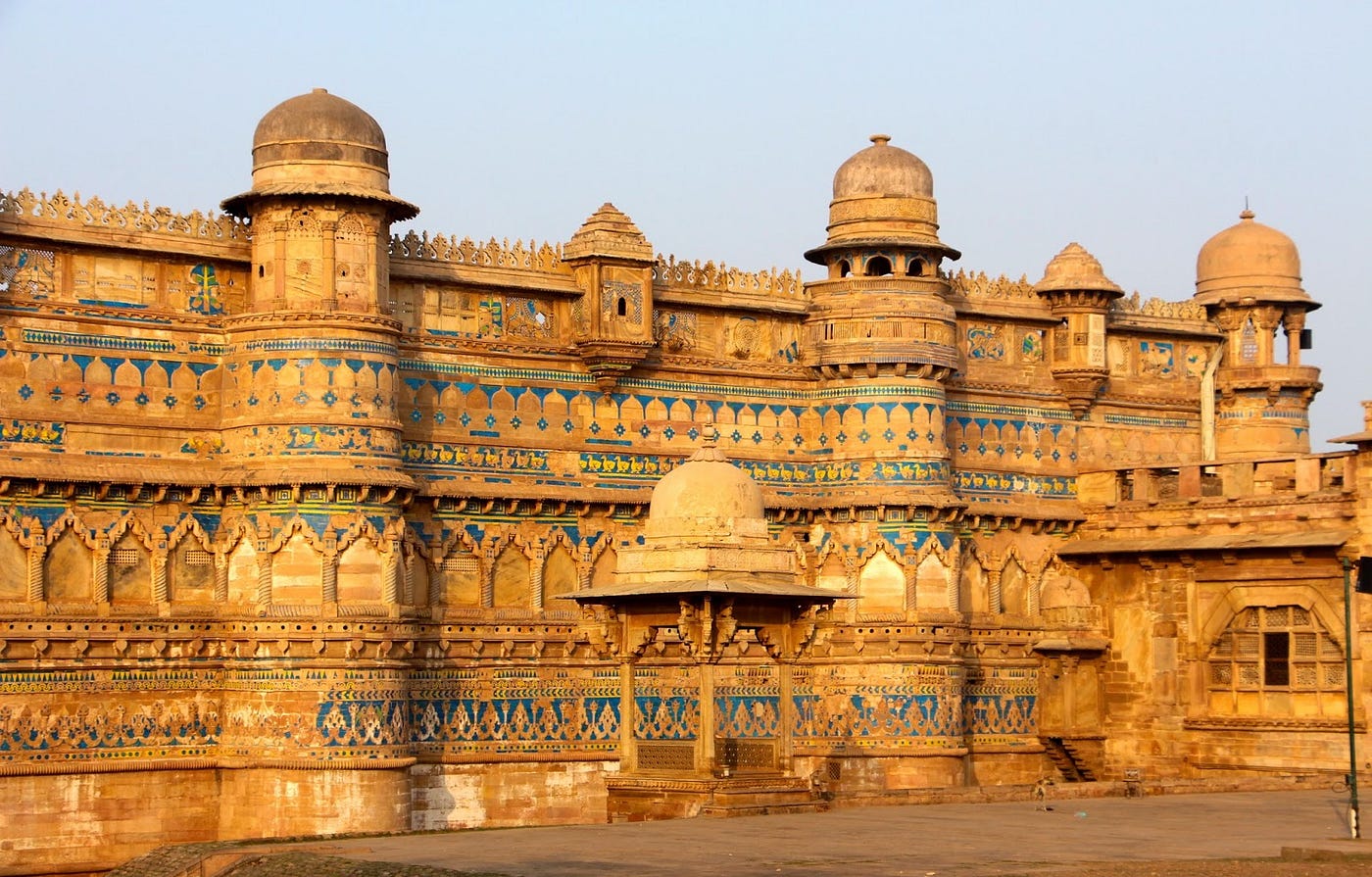
Gwalior Fort
Even the Pathania Rājputs of Himachal Pradesh, a well-known offshoot of the Tomar dynasty, preserve this tradition in their state documents and genealogical records. All the local traditions manuscripts called as Vanshavalli, suggest the same lineage of Tomars descending from Arjuna, The Pandava. The name Pathania, contrary to popular misconception, has no connection to Pathāns (Afghan Muslims). Rather, it refers to the Tomar Rājputs of the Himalayan region. Likewise, Pathankot, a city in Punjab, derives its name from “the residence of the Pathania”, not from any association with Pathans.
The Nurpur Kingdom in Himachal Pradesh, originally known as Dhameri (IAST: Dhamerī; देहमेरी / ਧਮੇਰੀ), was established in the mid-11th century CE by the Tomaras of Delhi. The kingdom was founded in 1064 CE by Rājā Jhetpāl Tomar, a younger brother of Anangpāl II Tomar, the ruler of Delhi and a prominent figure of the Tomara dynasty.

Raja Mandhata Singh Ji of Nurpur
Thus, through traditonal writings, inscriptions, literary records, royal documents, and scholarly observations, it becomes evident that the Tomar Rajputs of medieval India are none other than the Arjunāyans & both Tomar Rajputs & Somavanshi Rajputs are the descendants of the legendary hero Arjuna of Mahābhārata.
메타데이터
- post_id
- 8280b536eb8a
- slug
- the-lineage-of-somavanshi-pandavas-8280b536eb8a
- url
- https://medium.com/@VaidikThakurs/the-lineage-of-somavanshi-pandavas-8280b536eb8a
- canonical_url
- https://medium.com/@VaidikThakurs/the-lineage-of-somavanshi-pandavas-8280b536eb8a
- author_url
- https://medium.com/@VaidikThakurs
- status
- ok
- fetched_at
- 2026-09-12 06:17:24