Congress Hasn’t Passed a Single AI Law. Here’s What’s Actually Happening Instead.
The gap between how fast AI is moving and how slowly Washington is responding is not an accident.
Congress Hasn’t Passed a Single AI Law. Here’s What’s Actually Happening Instead.
The gap between how fast AI is moving and how slowly Washington is responding is not an accident.
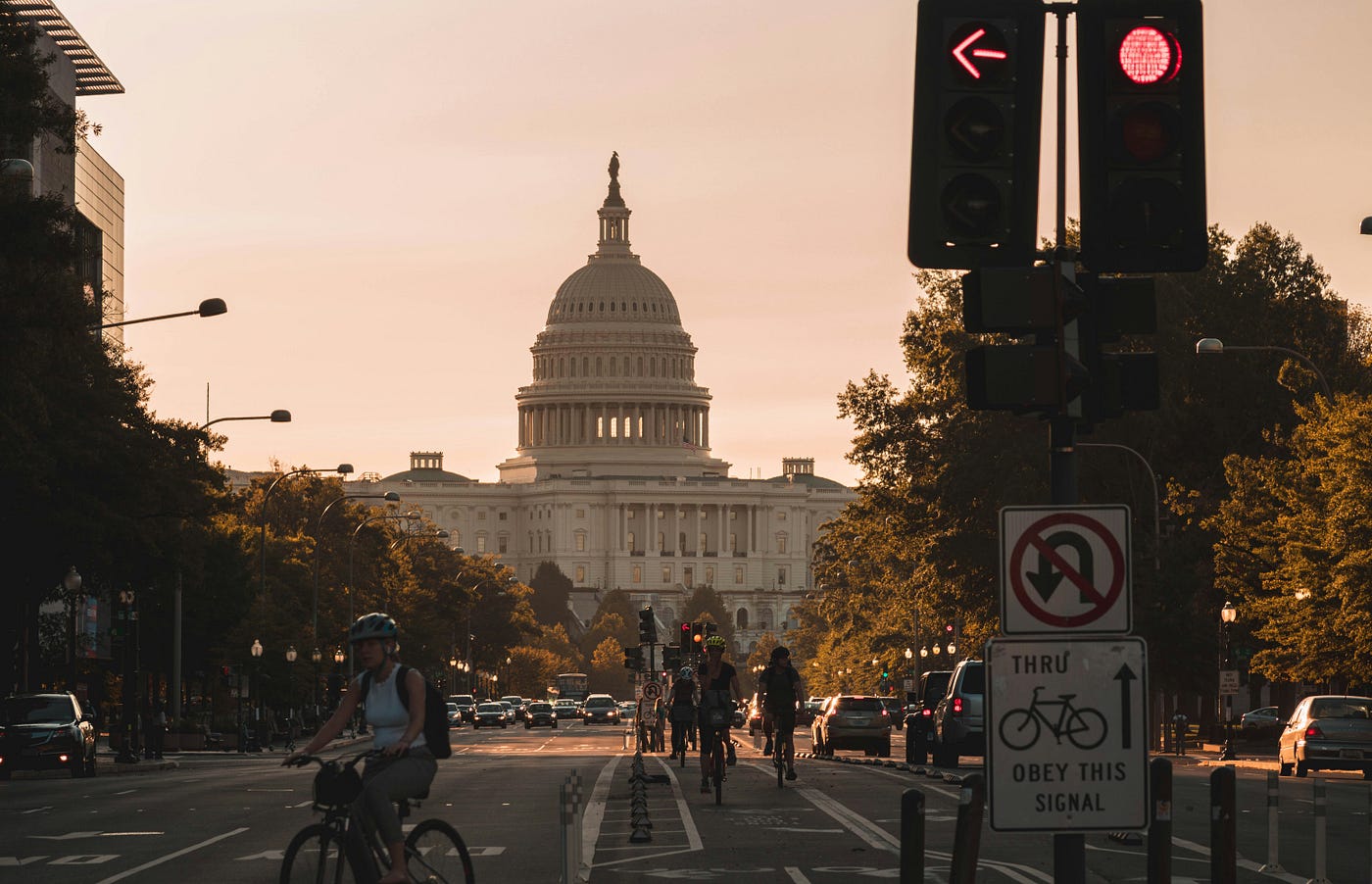
Photo by Andy Feliciotti on Unsplash
You have probably heard that AI needs regulation. You have probably also heard that Congress is working on it. As of June 2026, Congress has not passed a single comprehensive federal AI law. Everything you read about AI governance, every executive order, every state bill, every FTC enforcement action, is happening without a federal framework to anchor it.
That gap matters. Understanding it is the only way to understand why states are racing to pass their own rules, why companies are spending heavily to stop them and why the most consequential AI policy fights right now are happening in state capitols, rather than in Washington.
Before We Get to Now
The internet has operated under the same foundational law since 1996. Section 230 of the Communications Decency Act gave platforms broad immunity from liability for content their users posted, which let social media companies scale fast without accountability. It also became the reason Congress struggled to regulate tech at all. Every child safety bill, every content moderation fight and every AI governance debate since has run into Section 230 in some form.
Before 2023, the government’s AI agenda was about building capacity, not setting rules. The National AI Initiative Act passed in 2020, coordinating AI research efforts across federal agencies. The same year, the AI in Government Act required federal agencies to catalog their AI activity. Neither law regulated private companies. In 2022, the White House released the AI Bill of Rights, a non binding framework with five principles for “responsible AI”, including protections against algorithmic discrimination. But it had no enforcement mechanism, so companies ignored it.
That is the federal record on technology accountability. Twenty-five years of platform immunity, two years of research investment and one document with zero enforcement. When Biden signed his executive order in 2023, it felt significant precisely because nothing with real regulatory weight had come before it.
What the Federal Government Has and Hasn’t Done
In October 2023, President Biden signed an executive order on AI. It required companies developing the most advanced AI systems to share safety test results with the federal government before deployment, directed agencies to develop standards for detecting AI-generated content, and told federal contractors to be transparent about their AI use.
On his first day back in office, President Trump revoked it.
Trump’s January 2025 executive order reoriented federal AI policy around a single goal: American dominance. It scrapped Biden’s safety testing requirements and replaced them with a mandate for agencies to remove so called “barriers to AI leadership.” A month later, Vice President JD Vance told a summit in Paris that the AI future would not be won by “hand wringing about safety.”
That is what federal AI governance looked like through early 2025. Two executive orders pointing in opposite directions and no law from Congress to anchor either.
That changed slightly on June 2, 2026, when Trump signed a new executive order setting up a ‘voluntary framework’ for frontier AI models. The order gave the federal government something it had never had before: 30 days of access to the most advanced AI models before public release, framed as an early warning system for cybersecurity risks. It was a real step. However, it stopped at national security and said nothing about consumer protection, civil rights, or children’s safety.
Why Congress Hasn’t Acted
No single congressional committee owns AI. Depending on what the bill covers, it lands in a different jurisdiction entirely, hiring decisions go one place, national security goes another, children’s safety goes a third. Layer in partisan disagreement over whether regulation helps or hurts American competitiveness, and you get years of hearings with no floor votes.
The companies building AI are spending heavily to shape whatever eventually passes, because a patchwork of state laws is bad for business and a single federal standard they helped write is much better.
Even within parties, there’s no consensus. House Democrats are split between members willing to compromise on a bipartisan framework and those pushing for broader regulation. On the Republican side, Florida Governor Ron DeSantis called the White House preemption push “bad policy and even worse politics” on June 11, and Byron Donalds, the GOP frontrunner for Florida governor, also publicly disagrees with Trump on preemption. The fight is within the Republican party as much as across party lines.
How States Filled the Vacuum
States didn’t wait. In 2023, fewer than 200 AI bills were introduced across state legislatures. By 2024 that number jumped to over 600, with 99 enacted into law. In 2025 states introduced 1,200 bills with 145 enacted. As of March 2026, 45 states have already introduced 1,561 AI bills, surpassing the total from all of 2024.
The laws cover a wide range, from disclosure requirements when AI is used in hiring decisions, to bans on deepfake political ads within 90 days of an election, to mandates that AI companions identify themselves as non human. Texas passed the Texas Responsible AI Governance Act in June 2025, which took effect January 1, 2026. Colorado went further, becoming the first state to pass a comprehensive AI governance law in May 2024, requiring companies deploying high-risk AI systems to conduct risk assessments, disclose their AI use to consumers, and mitigate algorithmic discrimination. It takes effect June 30, 2026, two weeks from now. California enacted 18 AI laws across 2023 and 2024. Illinois sent five AI bills to the governor before adjourning this session.
Some states are moving faster than anything at the federal level. Vermont’s legislature passed a bill this session prohibiting licensed mental health professionals from using AI to make clinical diagnoses or treatment plans independently, with Governor Scott still deciding whether to sign it amid industry lobbying for a veto. Hawaii passed SB 3001, requiring AI companion operators to develop protocols for responding to users expressing suicidal ideation and establishing explicit protections for minors, and sent it to the governor for signature. Both address behavioral design harms that no federal law reaches, and both are moving while Congress stays stuck.
The Preemption Battle
In December 2025, Trump signed an executive order directing the Department of Justice to create an AI Litigation Task Force with the sole job of challenging state AI laws in federal court. The order targeted states passing what it called “onerous regulations,” specifically naming Colorado’s law. It conditioned some federal funding on states pausing AI enforcement that conflicts with administration priorities. A coalition of 36 state attorneys general had written to Congress just weeks earlier urging lawmakers to block any proposals restricting states from regulating AI independently.
On June 4, Representatives Obernolte and Trahan dropped a discussion draft of the Great American AI Act of 2026. The bill would create a comprehensive federal AI framework and preempt all state AI laws governing AI model development for three years. House Democratic leadership rejected it immediately, saying the draft does not meet the moment. Americans for Responsible Innovation argued the bill turns the current floor on state legislation into a federal ceiling. Critics also flagged that the preemption clause could reach some state child safety laws without providing an adequate federal replacement.
As of this week, the White House and Senator Blackburn are negotiating to secure federal preemption of some state AI regulations in exchange for a kids safety and deepfake package that includes the Senate version of KOSA, the NO FAKES Act, and age verification requirements. On June 10, White House Chief of Staff Susie Wiles, first lady Melania Trump, and key administration staff met with children’s online safety groups to discuss the deal, while House leadership simultaneously told the White House the two bills could not pass the lower chamber. Blackburn’s office described the preemption as subject-matter based, meaning states would only lose authority on the specific subjects the federal package covers. The administration has spent eighteen months trying to clear the field for AI companies, and children’s safety is now the price of admission for that goal. Whether the protections being offered address behavioral design, the specific gap I wrote about in my first piece, is not yet clear. Passage remains an uphill battle with the August recess approaching.
The Pattern Worth Noticing
Every federal action on AI taken so far frames the problem around national security or innovation competitiveness. Consumer protection shows up occasionally, civil rights show up rarely and children show up almost never. When they do, it’s a carveout or a bargaining chip rather than a priority.
Meanwhile states are banning therapy bots, protecting minors in AI conversations, and passing comprehensive governance frameworks, while Colorado’s law takes effect in two weeks without a single comparable federal standard to match it.
I write about one specific part of this gap, how AI systems are designed to interact with children and why no federal law governs it yet, and that is the focus of the rest of this series. There is no federal AI law. Everything else follows from that.
Arianna Rodriguez is a Master’s graduate in International Studies who interned in Senator Adam Schiff’s San Francisco office, where she developed a policy proposal urging the FTC to regulate manipulative AI behavioral design targeting minors. She writes on AI governance and children’s safety on Medium. Find her on LinkedIn.
메타데이터
- post_id
- 82b5a5b40bb1
- slug
- congress-hasnt-passed-a-single-ai-law-here-s-what-s-actually-happening-instead-82b5a5b40bb1
- url
- https://medium.com/@ariannarod12/congress-hasnt-passed-a-single-ai-law-here-s-what-s-actually-happening-instead-82b5a5b40bb1
- canonical_url
- https://medium.com/@ariannarod12/congress-hasnt-passed-a-single-ai-law-here-s-what-s-actually-happening-instead-82b5a5b40bb1
- author_url
- https://medium.com/@ariannarod12
- status
- ok
- fetched_at
- 2026-06-16 19:09:56





