The Science of Stress Inoculation: How Controlled Discomfort Builds an Uncrushable Mind
The hormesis principle, why hardiness beats resilience, and the training methodology that turns stress into strength
The Science of Stress Inoculation: How Controlled Discomfort Builds an Uncrushable Mind
The hormesis principle, why hardiness beats resilience, and the training methodology that turns stress into strength
Photo by Nathan Dumlao on Unsplash
The Telephone Company Discovery
In 1975, the American telecommunications giant AT&T began preparing its subsidiary, Illinois Bell Telephone, for federal deregulation. It was an organizational earthquake. The restructuring was set to eliminate roughly half of all management positions, throwing thousands of careers into absolute chaos. A young researcher named Suzanne Kobasa at the University of Chicago recognized a massive, unplanned natural experiment unfolding in real time. She decided to track 259 executives and managers through this multi-year crisis, carefully measuring their stress levels, health outcomes, and psychological profiles before, during, and after the structural disruption.

Suzanne Kobasa(left) and Salvatore R. Maddi(right)/source: The University of Chicago Photographic Archive
Most doctors and psychologists at the time expected a straightforward, grim outcome. They assumed that the executives facing the highest degrees of professional stress during the deregulation crisis would show the highest rates of physical illness, mental breakdown, and overall distress. They believed the damage would be directly proportional to the stress exposure.
The actual findings completely shattered that assumption.
Stress exposure alone predicted almost nothing about how these executives fared.
Two managers could report identical stress levels, face the exact same threat of job loss, and experience completely different health and performance consequences. What actually predicted survival was a specific psychological profile that Suzanne Kobasa termed hardiness. This trait was built on three core pillars: commitment, control, and challenge. High-hardiness executives who experienced extreme stress showed illness rates dramatically lower than their low-hardiness colleagues facing the identical corporate storm. The external stress had not changed. Their internal capacity to metabolize it had.
You can read about Hardiness(psychology) on **Wikipedia **for extra detail.
Crucially, these hardy executives were not experiencing less physiological strain. Their stress hormone readings during the crisis were comparable to their low-hardiness peers. What differed was not the initial trigger or the immediate fight-or-flight response, but what happened after it. Repeated exposure over years had built a psychological system capable of processing disruption without accumulating chronic damage.
This means that resilience is not some fixed, magical trait that you are either born with or destined to lack. It functions as a trained capacity. It is built through a highly specific relationship with controlled difficulty over time, much like a muscle is built through progressive physical resistance rather than protected through complete rest. The professionals who survive career disruption, market collapses, and public failures without cracking are not those who walked through an easy life. They are the ones whose systems had already been calibrated to metabolize difficulty.
Read summary of this article:
To understand how deep this capacity goes, we have to look at the work of the Posttraumatic Growth Research Group, led by Richard Tedeschi and Lawrence Calhoun in 2004, and published in the journal “Psychological Inquiry”. They studied populations who had survived massive professional and personal disruptions, including sudden job losses, business failures, and career-threatening setbacks.

Richard Tedeschi and Lawrence Calhoun/source: علوم القطيف
They found that a substantial number of people who faced major professional adversity did not simply bounce back to their original baseline. They actually exceeded it. The researchers measured specific, lasting gains:
- A much deeper appreciation for what remained after a loss.
- Improved relationship quality and stronger social bonds following the disruption.
- An increased sense of personal capability and self-reliance.
- Clarified life priorities and core values.
- An awareness of new possibilities that were completely invisible before the setback occurred.
However, these gains did not happen automatically, nor were they universal. They occurred at significantly higher rates among individuals who possessed specific psychological resources before the disruption hit. The disruption itself was not the growth mechanism; the pre-existing capacity to process and integrate that disruption was.
This is why waiting for a crisis to discover your resilience level is the single most expensive mistake you can make. Military resilience training programs, which have since been adapted for corporate settings, demonstrate this clearly. Professionals who enter high-pressure roles, leadership transitions, or volatile startup environments without deliberately built stress capacity suffer from dramatically higher burnout rates, rapid attrition under pressure, and much lower performance ceilings than peers who have systematically trained their stress response hardware beforehand.
The Mechanisms of Building Stress Capacity
1. Hormesis, The Biological Principle Underneath Inoculation
Our biological systems are built to adapt, but only under the right conditions. Researcher Edward Calabrese at the University of Massachusetts has dedicated his career to studying hormesis, a fundamental biological principle that underpins stress inoculation.

Edward Calabrese/source: Cato Institute
The core finding of hormesis science is elegant: across almost all biological systems, low to moderate doses of a stressor produce a highly beneficial, adaptive response. Conversely, both the complete absence of a stressor and excessive, overwhelming doses of a stressor produce worse outcomes than the moderate dose. This is not just a psychological theory. It is a universal biological blueprint documented across toxicology, exercise physiology, and immune function.
If you have no exposure to a stressor, your system never develops the adaptive machinery required to handle it. Muscles atrophy without resistance, immune systems weaken without pathogen exposure, and psychological stress response systems remain fragile without demands placed on them. If you face moderate, controlled exposure, your system experiences temporary disruption, triggers repair mechanisms, and emerges with greater capacity. If you are hit with excessive, uncontrolled exposure, the system is damaged faster than it can heal, leading to chronic harm.
When applied to psychology, researchers find that individuals who have experienced a moderate number of significant negative life events show better subsequent mental health and resilience than those who experienced either a completely sheltered life of zero adversity or an overwhelming, uncontrolled accumulation of trauma. The relationship between adversity and resilience follows the same inverted-U curve. Zero adversity produces fragility, while overwhelming adversity produces damage. Moderate, survivable, and consciously processed adversity produces adaptation.
2. HPA Axis Training
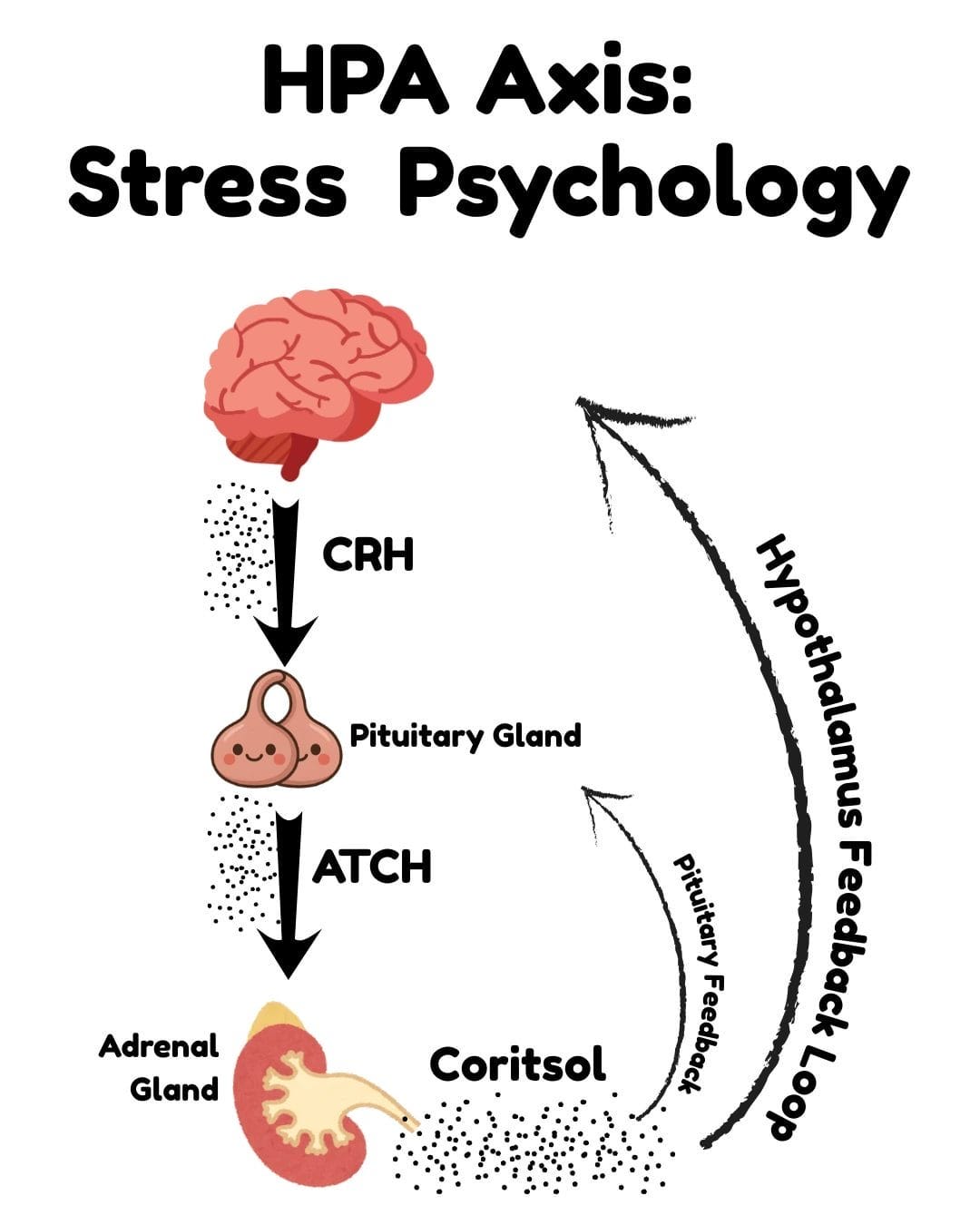
HPA Axis/source: Early Years TV
To see how this adaptation manifests physically, we have to look at the work of endocrinologist George Chrousos at the National Institutes of Health. His research centers on the hypothalamic-pituitary-adrenal axis, commonly known as the HPA axis.

George Chrousos/source: Ενδοκρινολογική Μονάδα
Disclaimer: “This article contains affiliate links. If you make a purchase through these links, I may earn a small commission at no extra cost to you.”
The HPA axis is the internal hardware that governs your body’s cortisol response to threat. It controls how quickly your cortisol levels spike when a stressor appears and how rapidly they return to a baseline state once the threat is resolved.
In an untrained professional, the HPA axis is fragile. It typically shows an exaggerated, panicked cortisol spike in response to moderate stressors, a slow, sluggish recovery back to baseline after the stressor passes, or both. This creates a physiological signature of fragility: massive overreactions, slow recovery, and cumulative, systemic wear because stress events never fully resolve before the next one strikes.
In contrast, individuals with consistent, controlled stress exposure, including cold exposure practitioners, endurance athletes, and those who regularly practice voluntary discomfort, show a highly trained HPA axis. Their cortisol still rises appropriately to meet genuine threats, but the magnitude is proportional, and the recovery back to baseline occurs significantly faster. In fact, studies of regular cold exposure practitioners found their HPA axis recovery times were reduced by roughly one-third compared to matched controls, alongside a vastly improved ability to match response magnitude to actual stressor severity.
To discover how to radically reframe your internal physiological alarm bells and transform acute corporate anxiety into a powerful performance asset during this early stage, read “The Upside of Stress: Why Stress Is Good for You, and How to Get Good at It” by Kelly McGonigal.
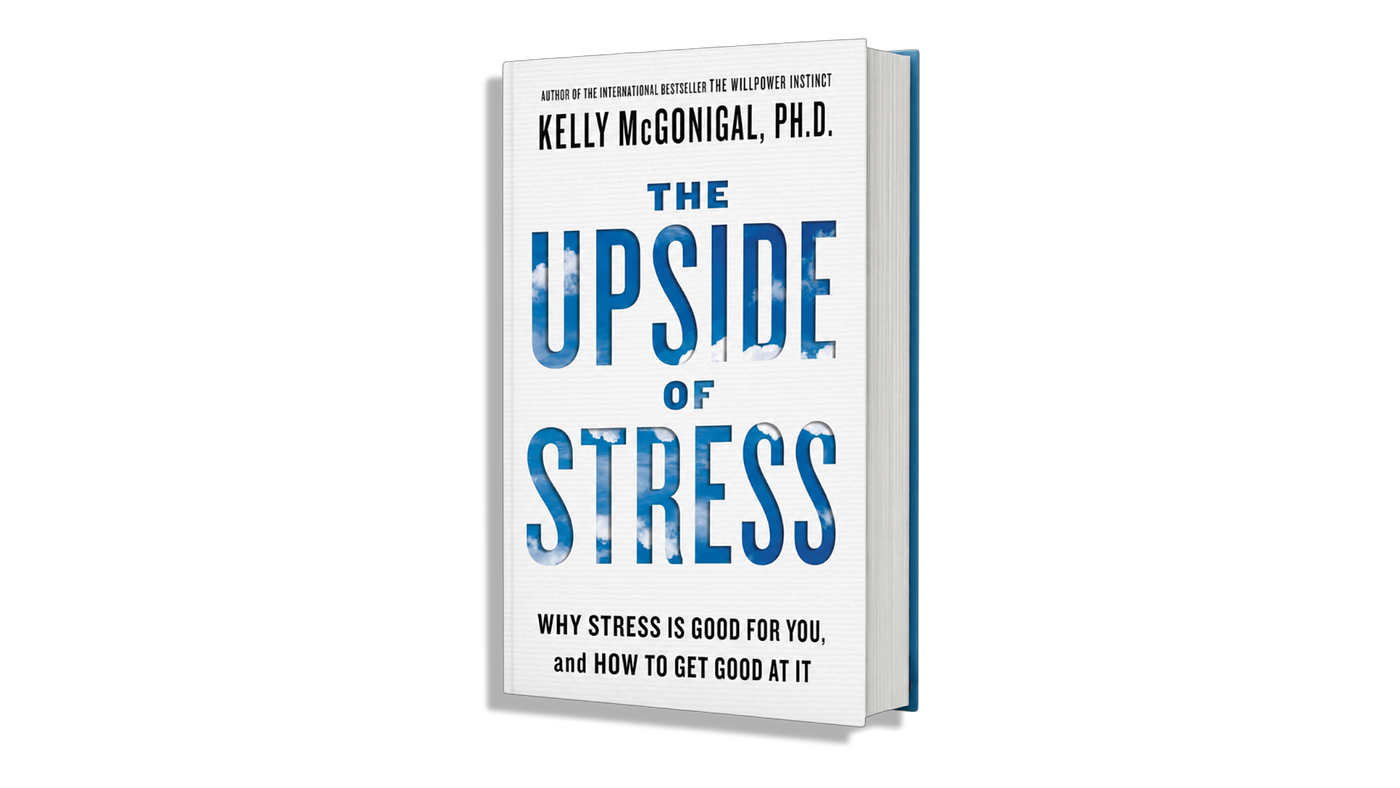
Image is enhanced by Ai
3. The Three Cs of Hardiness
Following the original Illinois Bell Telephone study, Suzanne Kobasa and her colleague Salvatore Maddi spent decades mapping the psychological architecture of hardiness. They broke it down into three actionable orientations: commitment, control, and challenge.

Suzanne Kobasa and her colleague Salvatore Maddi/source: The University of Chicago Photographic Archive
- Commitment: The active tendency to engage fully with whatever is happening around you rather than experiencing alienation, numbness, or psychological withdrawal. High-commitment individuals interpret a crisis as something to be actively worked through, rather than a catastrophe happening to them from a distance.
- Control: The deep-seated belief, grounded in real-world experience rather than delusion, that your actions can directly influence outcomes, even in highly volatile environments. This is entirely distinct from the illusion of total control. High-hardiness individuals are pragmatists; they quickly separate what they can influence from what they cannot, directing their energy exclusively toward the controllable elements.
- Challenge: The psychological interpretation of change and difficulty as a normal, even valuable, part of human life, rather than as an unfair threat to your security that should be avoided at all costs. High-challenge individuals expect disruption as a standard feature of any meaningful career.
Salvatore Maddi’s subsequent longitudinal research on the Illinois Bell Telephone population found that hardiness scores measured before the crisis predicted who thrived professionally for years afterward. Their hardiness training programs proved that these three components are not fixed genetic traits; they can be systematically built through structured practice.
4. Antifragility, Systems That Gain From Disorder
In 2012, author Nassim Nicholas Taleb introduced a conceptual framework that changes how we view vulnerability in his book, “Antifragile: Things That Gain from Disorder”. He divided systems into three categories: fragile, robust, and antifragile.

Nassim Nicholas Taleb/source: Speakers Academy
Fragile systems are easily damaged by volatility and stress, requiring absolute stability and predictability to survive. Robust systems are unaffected by volatility, remaining exactly the same regardless of what happens to them. Antifragile systems, however, actually improve because of volatility and stress, within certain bounds, and are weakened or atrophied by excessive stability and overprotection.
The human stress response, immune system, and psychological resilience are fundamentally antifragile. They do not merely tolerate disorder; they require it to develop and maintain capacity. A professional who is completely insulated from setbacks, criticism, financial pressure, or difficult decisions does not preserve their resilience. They allow it to atrophy, becoming hyper-fragile to future disruption because adversity has been systematically avoided.
Nassim Nicholas Taleb’s broader research synthesis shows that systems, organizations, and individuals who deliberately expose themselves to manageable volatility, while protecting against catastrophic, terminal risks, consistently outperform and outlast those optimized purely for stability. The absolute absence of stress is not a healthy baseline; it is a specific state of vulnerability.
To master the structural design of systems, organizations, and personal habits that grow stronger from volatility rather than breaking, read “Antifragile: Things That Gain from Disorder” by Nassim Nicholas Taleb.

Image is enhanced by Ai
5. Post-Traumatic Growth Mechanisms
How does growth actually occur after a massive disruption? The research by Richard Tedeschi and Lawrence Calhoun shows that post-traumatic growth is not just bouncing back to where you were before. It is a profound structural evolution.
When a major crisis hits, it shatters your previously unexamined assumptions about how the world works. This forced dismantling is painful, but it initiates a process the researchers call cognitive rebuilding. To survive, you must deliberately construct a more accurate, more resilient set of assumptions. This rebuilding cannot happen without the initial disruption. Comfortable, unchallenged assumptions have no reason to be examined or strengthened.
The research shows that growth is predicted by deliberate reflection and meaning-making rather than avoidance or emotional suppression. Having prior experience navigating smaller, controlled difficulties also predicts high growth rates. Finally, active social support during the processing period dramatically increases growth outcomes, whereas isolation consistently leads to worse outcomes, even when the external difficulty is identical.
6. The Confidence-Competence Loop
The final psychological engine of stress capacity is built on self-efficacy theory, pioneered by psychologist Albert Bandura. His foundational finding was that self-efficacy, the genuine belief in your capacity to handle a specific type of challenge, is built primarily through mastery experiences. These are direct, personal experiences of successfully navigating a difficulty, and they cannot be bypassed through simple observation, verbal persuasion, or positive thinking.

Albert Bandura/source: Albert Bandura , Author: bandura@stanford.edu on Wikipedia
Each time a professional deliberately faces a controlled, survivable stressor and successfully navigates it, two things occur simultaneously:
- The physiological system adapts, optimizing the HPA axis and triggering hormetic adaptation.
- The cognitive belief system updates, generating concrete, real-world evidence that this category of difficulty is manageable.
This initiates a powerful compounding loop. Capacity enables successful navigation; successful navigation builds accurate confidence; accurate confidence enables you to engage with the next level of controlled difficulty, which in turn builds further capacity. Avoidance triggers the opposite loop, where running from challenges prevents mastery experiences, keeping your confidence low and your system increasingly fragile.
What Science Says Actually Works
Building psychological hardiness is not an abstract concept. It is a highly structured process backed by decades of rigorous psychological trials. To move from vulnerability to a state of trained capacity, you must apply the specific protocols that researchers have proven to work in high-stakes environments.
1. Stress Inoculation Training, The Three-Phase Clinical Model
In 1985, clinical psychologist Donald Meichenbaum at the University of Waterloo developed a foundational protocol known as Stress Inoculation Training. Originally designed to help patients manage severe pain and anxiety, this methodology was later adopted by military groups, first responders, and elite corporate leaders.

Donald Meichenbaum/source: PsychAlive
The protocol operates on the premise that you can vaccinate your mind against stress by introducing controlled, non-damaging doses of pressure. It moves through three distinct, sequential phases:
- Conceptualization. In this initial step, you learn to analyze your automated stress response. Instead of experiencing stress as an overwhelming, undifferentiated wave of dread, you break it down into objective physical sensations, automatic thoughts, and behavioral impulses. This intellectual mapping acts as a diagnostic tool, turning an ambiguous threat into a highly specific, manageable process.
- Skill Acquisition and Rehearsal. Here, you acquire and practice specific coping mechanisms inside a safe, low-stakes environment. These skills include physiological regulation methods (such as tactical breathing protocols) and cognitive techniques to maintain sharp focus under pressure. You rehearse these skills until they become second nature, establishing genuine competence before you ever face real-world chaos.
- Application and Follow-Through. During the final phase, you enter graduated, highly authentic simulations of your target stressors. As the difficulty of these simulations increases, you actively apply your rehearsed coping skills, followed by structured feedback sessions to refine your execution.
Research trials conducted by Donald Meichenbaum confirm that individuals who complete this full, three-phase framework prior to facing a major, high-stakes stressor perform significantly better and report far less subjective distress than matched peers who face the same stressor without prior training.
2. The Graduated Exposure Hierarchy
To train your system safely, you must abandon the dangerous myth of “flooding” — the counterproductive practice of throwing someone directly into the deep end of an overwhelming crisis. Instead, behavioral science advocates for a graduated exposure hierarchy.
This approach requires you to list every single variation of your primary professional trigger, whether that is high-stakes public speaking, hostile board negotiations, or managing financial uncertainty. You rank these scenarios systematically, placing the absolute mildest version at the bottom of the ladder and the worst-case emergency at the peak.
True psychological adaptation occurs when you operate directly at the boundary of your current comfort zone. This requires careful calibration:
- If the exposure is too easy, no adaptation occurs, and you miss the lower edge of the hormetic window.
- If the exposure is too difficult, you risk overwhelming your system, leading to psychological distress and physiological damage rather than growth.
The ideal exposure level must trigger genuine physical discomfort and uncertainty about the outcome, while remaining completely survivable. Empirical studies show that graduated exposure protocols consistently outperform avoidance strategies and immediate immersion techniques, yielding long-lasting resilience gains with minimal risk of burnout.
3. Deliberate Discomfort Practice
Our nervous system does not separate professional stress from physical stress; the underlying HPA axis and self-efficacy systems are largely domain-general. This biological reality means that practicing voluntary physical discomfort is a powerful way to build transferable professional capacity.

Wim Hof Method/source: Instagram
This mechanism explains the massive wave of scientific interest in the Wim Hof Method and voluntary discomfort research. By intentionally selecting manageable physical stressors, such as structured cold water immersion, controlled fasting, or intense athletic exertion, you systematically train the exact same nervous system hardware required during a corporate crisis.
The research on structured cold exposure is especially compelling. Regular cold plunges trigger a significant release of norepinephrine, which helps with long-term mood regulation. More importantly, consistent practice reduces HPA axis recovery times by roughly one-third.
Beyond the physiological benefits, this practice builds a deep psychological state. When you successfully choose to step into a freezing ice bath and maintain your composure, your brain updates its internal belief system. You develop a transferable confidence: if you can choose to endure this profound physical discomfort and succeed, you possess the capacity to face sudden, unexpected professional challenges without losing your analytical edge.
4. Cultivating Post-Traumatic Growth Deliberately
When a major career setback or business failure occurs, simply surviving is not the goal. You want to catalyze genuine post-traumatic growth, which Richard Tedeschi and Lawrence Calhoun proved is a deliberate, facilitated practice rather than a random stroke of good luck.
Their clinical studies revealed that structured interventions following professional disruption lead to measurably higher rates of growth compared to leaving recovery to chance. Rather than ignoring a failure and trying to immediately push forward, you must engage in a disciplined cognitive rebuilding process.
This is achieved by walking through a retroactive, structured reflection built around four specific questions:
- What did this specific setback reveal about my actual capacity under pressure that I could not have known without facing it?
- What has become clearer about what genuinely matters to me, my values, and my boundaries?
- What new professional possibilities exist now that were completely invisible before this disruption occurred?
- What specific psychological or operational capacity have I built that I can carry into future crises?
The data is clear: professionals who complete this structured reflection in the weeks following a setback show a far deeper integration of the five key post-traumatic growth domains than those who attempt to suppress the event and move on without examination.
5. Building Hardiness Directly
To prove that the qualities of commitment, control, and challenge are not fixed traits, Salvatore Maddi designed a highly successful intervention called **HardiTraining**. Through randomized controlled trials in corporate settings, he demonstrated that executives can actively cultivate these orientations.

Salvatore Maddi/source: The University of Chicago Photographic Archive
- Commitment Training: This involves practicing complete presence and engagement during difficult corporate transitions, actively rejecting the urge to numb yourself or withdraw. You learn to lean into the friction rather than detaching.
- Control Training: Here, you practice the mental discipline of dividing a massive crisis into what you can directly influence versus what is entirely out of your hands. You then deliberately starve the uncontrollable elements of your attention, focusing 100 percent of your energy on the variables you can change.
- Challenge Training: This training helps you reframe disruption as an expected, highly valuable catalyst for growth. You actively study past setbacks, identifying the specific capabilities they ultimately forced you to develop, which fundamentally shifts your view of future volatility.
Salvatore Maddi’s research confirmed that corporate groups utilizing **HardiTraining** experienced major reductions in stress-related illnesses, alongside marked improvements in job performance and long-term career satisfaction under pressure, compared to control groups.
6. Recovery-Adaptation Cycling
The final, crucial principle of stress capacity is built on periodization science, a concept adapted directly from elite athletic training.
The biological reality is that physical muscles do not grow stronger while you are lifting heavy weights; they grow stronger during the recovery periods afterward. The exact same rule applies to your psychological hardware. A protocol that subjects you to continuous, unyielding stress without structured recovery will always lead to systemic exhaustion, overtraining, and burnout.
To build a hardy mind, your stress exposure must be balanced by highly disciplined recovery periods. A phase of intense professional stretch whether it is a difficult product launch, a grueling funding round, or structured cold training must always be paired with a dedicated window of complete mental and physical rest.
Resilience science proves that the actual adaptation occurs during the rest phase. Stress without recovery is merely a recipe for physical and mental breakdown, regardless of how well-calibrated the initial stress exposure was.
The Complete Stress Inoculation Framework
How do you translate these theoretical clinical insights into a practical, daily operational schedule? Transforming your nervous system requires a structured, multi-phase framework designed to safely introduce pressure and systematically expand your professional boundaries.
Phase 1: Baseline Assessment (Week 1)
The program begins with a complete diagnostic audit of your current psychological habits. During this first week, you must evaluate yourself across the three core pillars of hardiness. Ask yourself: “When I face a professional crisis, do I typically engage fully, or do I withdraw psychologically?”
Evaluate your relationship with control: “Can I accurately identify what I can and cannot influence in a difficult situation, and do I direct my energy accordingly?” Finally, examine your perspective on challenge: “Do I interpret disruption as a normal feature of meaningful work, or as an alarming sign that things have gone wrong?”
Alongside this self-assessment, you must pinpoint the exact category of professional stress that currently limits your range. Identify the specific workplace trigger that consistently causes disproportionate distress relative to its objective severity, or the difficulty you have been systematically avoiding to protect your comfort.
Phase 2: Conceptualization (Week 2)
Once your target stressor is identified, dedicate the second week purely to objective observation. During your next few encounters with this trigger, track your physical sensations, cognitive patterns, and behavioral tendencies without trying to change them.
This mapping process, pioneered by Donald Meichenbaum, takes the automated power away from the stressor. It transforms what once felt like an undifferentiated, terrifying threat into a highly specific, predictable, and manageable sequence.
Phase 3: Graduated Hierarchy Construction (Week 3)
In week three, you build your personalized exposure ladder. List every imaginable variation of your target stressor, ranking them from the absolute mildest scenario to the most severe operational emergency. Pinpoint your current comfort threshold and select the first exposure level positioned just above that line.
Simultaneously, introduce general discomfort practices to build baseline capacity. Engage in activities like structured cold exposure, calibrated fasting, or intense physical exertion two to three times a week. The goal is to choose tasks that are “genuinely uncomfortable but ultimately completable,” training your system to remain calm under physical friction.
Phase 4: Deliberate Exposure Cycling (Month 2 Onward)
Beginning in the second month, establish a disciplined weekly rhythm based on athletic periodization. Designate specific days for controlled exposure, where you actively engage with the chosen step on your exposure ladder or continue your general discomfort training.
Balance these exposure periods with dedicated days of complete recovery, allowing your physiological and psychological systems to rest fully. Immediately after each exposure, complete a brief, structured reflection: “What did I learn about my actual survival capabilities? What specifically felt more manageable than I anticipated? What adjustment does my hierarchy need?”
Never rush this process; only step up to the next rung of your ladder when the current level yields genuine, evidence-based mastery rather than mere tolerance.
Phase 5: Post-Disruption Growth Protocol (Ongoing)
This final phase serves as an active intervention protocol designed for whenever a major, unexpected setback occurs. Within two weeks of any significant career or business failure, initiate a deliberate cognitive rebuilding process.
Force yourself to answer the four core post-traumatic growth questions, looking for hidden capabilities, clarified priorities, and new opportunities created by the disruption. During this high-pressure processing window, actively seek out trusted professional networks instead of isolating yourself. Growth requires active, structured cognitive engagement with the setback; suppression only delays recovery.
Hardiness in the Wild: Case Studies of Extreme Inoculation
Theory is comforting, but the true test of stress inoculation happens when the stakes are absurdly high and the safety nets are gone. To see how these psychological mechanisms function under genuine duress, we have to look at individuals who didn’t just survive extreme professional pressure — they actively used it to bend reality to their will.
The Doctor Who Drank Poison
In 1984, a young Australian gastroenterologist named Dr. Barry Marshall found himself at a frustrating dead end. He was convinced that stomach ulcers weren’t caused by stress or spicy food, as the entire medical establishment insisted, but by a spiral-shaped bacterium called Helicobacter pylori. The scientific community didn’t just disagree; they ridiculed him. Journal editors rejected his papers, and colleagues dismissed his theories as dangerous nonsense.

Dr. Barry Marshall/source: Britannica
Because humans cannot easily be infected with experimental pathogens in a lab setting, Marshall had no animal model to prove his point. His research was stalled, his professional reputation was on the line, and the consensus against him seemed impenetrable.
So, he bypassed the system.
Marshall cultivated a massive dose of H. pylori from a patient, mixed it into a warm broth, and drank it.
This was not a reckless, impulsive stunt. It was a calculated, high-stakes application of psychological hardiness. Marshall possessed an intense sense of control over his hypothesis and viewed the immense institutional challenge not as a reason to back down, but as an invitation to innovate. Within days, he developed severe gastritis, vomiting, and halitosis. He biopsied his own stomach, proved the bacteria had colonized his gut, and cured himself with antibiotics.
By deliberately exposing himself to physical illness and professional ruin, Marshall broke the paradigm. He went on to win the Nobel Prize in Medicine. His story is the ultimate proof of hormesis in action: by leaning directly into the sharpest point of conflict, he forced both his body and his industry to adapt.
The Subway Busker and the Distortion of Value
Now consider a different kind of pressure: the absolute erasure of status.
On a cold morning in January 2007, virtuoso violinist Joshua Bell walked into a Washington D.C. subway station wearing a baseball cap and jeans. Using a handcrafted Stradivarius worth over three million dollars, he played some of the most complex, beautiful classical music ever written for 45 minutes.
Just days earlier, Bell had sold out a concert hall in Boston where mediocre seats went for $100. In the subway, he was just another face in the crowd. Over a thousand commuters rushed past him. Only a tiny handful stopped to listen. Most ignored him entirely, tossing spare change into his violin case without looking up.

Joshua Bell/source: UGA Today - University of Georgia
For an elite performer accustomed to roaring standing ovations and reverence, this environment is a psychological minefield. The sudden, total absence of validation can easily shatter an artist’s confidence, triggering a spiral of self-doubt.
Yet, Bell didn’t miss a beat. His performance was technically flawless, filled with the same emotional depth he brought to the world’s prestigious stages.
Why? Because his psychological hardiness was built on internal commitment rather than external applause. His self-efficacy was completely decoupled from his immediate surroundings. By practicing his craft under conditions of total indifference, Bell demonstrated a core truth of stress inoculation: when you train your focus to survive the absence of external validation, your performance becomes bulletproof.
The Daily Blueprint for the High-Performer
You do not need to drink pathogens or play violin in a subway station to build an uncrushable mind. The lessons from these case studies can be distilled into three distinct, everyday practices:
- Run Toward the Friction: If you are avoiding a difficult conversation, an aggressive pitch, or a pivot in your career, you are actively training your brain to choose safety over growth. The longer you wait, the more fragile you become. Step into the discomfort early, while the stakes are still manageable.
- Decouple from the Crowd: True psychological hardiness means your baseline of competence does not fluctuate based on how people treat you. Rehearse your skills in environments where nobody knows your name or cares about your title.
- View Obstacles as Experiments: When your plans fall apart, immediately shift your perspective from “Why is this happening to me?” to “What does this variable change about the experiment?” This simple linguistic shift moves your brain from a state of passive threat to active, analytical control.
Resilience is not a shield you carry to protect yourself from the world. It is the raw, internal capacity to absorb the blows, metabolize the pain, and use the energy of the collision to grow stronger. The choice is simple: you can insulate your life and slowly atrophy, or you can step into the cold, embrace the pressure, and build a mind that cannot be broken.
CONCLUSION
At the end of the day, resilience is not a magic shield that suddenly appears when disaster strikes. It is the solid infrastructure you have already built, either deliberately or accidentally, in the quiet years before the disaster arrives.
The managers at Illinois Bell Telephone who survived the catastrophic deregulation crisis without breaking were not experiencing less physical or emotional stress than their colleagues who collapsed. They had simply built, through a dedicated combination of commitment, control, and challenge, an internal psychological system capable of metabolizing massive disruption.
The scientific literature leaves no room for doubt on this reality:
The original work by Suzanne Kobasa at the University of Chicago in (1979) proved that psychological hardiness, not the level of stress exposure itself, predicted who survived organizational upheaval without falling ill. This established forever that your capacity to process stress matters infinitely more than the raw quantity of stress you face.
The clinical research by Richard Tedeschi and Lawrence Calhoun in (2004) demonstrated that post-traumatic growth is a distinct, measurable outcome that goes far beyond mere survival. It is predicted not by the severity of the crisis, but by your willing, structured reflective engagement with the disruption.
And the systems research by Nassim Nicholas Taleb in (2012) confirmed that human psychological systems are naturally antifragile. They require moderate, survivable volatility to maintain their strength, meaning the complete avoidance of stress is a direct path to systemic fragility.
Theory only takes you so far. To actively train your nervous system against pressure, look through the curated books below. Each text offers a clear, actionable roadmap to forge true psychological hardiness.
***Man’s Search for Meaning* — Viktor Frankl
***Option B* — Sheryl Sandberg & Adam Grant
***Can’t Hurt Me* — David Goggins
***Extreme Ownership* — Jocko Willink

Image is enhanced by Ai
Just a little reminder! If you enjoy what I create, you can support me at **ko-fi!**
Disclaimer — (As an Amazon Associate, I earn from qualifying purchases. I only recommend resources that changed how I understand resilience as a trainable capacity rather than a fixed trait, and the specific, research-backed practices that build it deliberately rather than accidentally.)
How We Curate & Vet Books
What Science Petal Is?
Science Petal is an independent, research-first library of books and ideas across cognition, learning, psychology, productivity, and human performance. It is built and maintained by one person — no editorial team, no advertisers, no publisher relationships. Just a genuine attempt to explain the reasoning behind an idea before recommending a book about it.
Unlike lists built around whatever is trending on a bestseller chart this week, every book here earns its place based on what it actually teaches.
1. Grounded in Real Research
We favor books whose core arguments are built on real evidence — peer-reviewed studies, documented research, established science over books built purely on opinion, anecdote, or personality.
2. Can You Actually Use It
A book can be theoretically brilliant and still not make this list if it gives you no real way to act on what it teaches. We look for books that leave you with something to do differently, not just something to think about.
3. Judged on the Idea, Not the Marketing
We look past bestseller placement and publisher push, and focus on whether the central argument holds up, including whether the author has the background to make the claims they are making.
Affiliate Honesty & Standards
To stay independent and ad-free, Science Petal participates in the Amazon Services LLC Associates Program. If you purchase a book through a link here, we may earn a small commission — at no extra cost to you.
We do not accept sponsored reviews, paid placements, or free copies in exchange for a spot on this list. If a book is here, it earned its place.
🔗 Visit **Science Petal**
👋 Feedback and suggestions are always welcome in the comments below.
메타데이터
- post_id
- 82c2c1dd215c
- slug
- the-science-of-stress-inoculation-how-controlled-discomfort-builds-an-uncrushable-mind-82c2c1dd215c
- url
- https://medium.com/the-gravity/the-science-of-stress-inoculation-how-controlled-discomfort-builds-an-uncrushable-mind-82c2c1dd215c
- canonical_url
- https://medium.com/the-gravity/the-science-of-stress-inoculation-how-controlled-discomfort-builds-an-uncrushable-mind-82c2c1dd215c
- author_url
- https://medium.com/@sciencepetal
- status
- ok
- fetched_at
- 2026-07-18 01:24:29