The Mahabharata Isn’t About War. It’s About Mentorship.
Two Mentors. One War. One Survived.
The Mahabharata Isn’t About War. It’s About Mentorship.
Two Mentors. One War. One Survived.
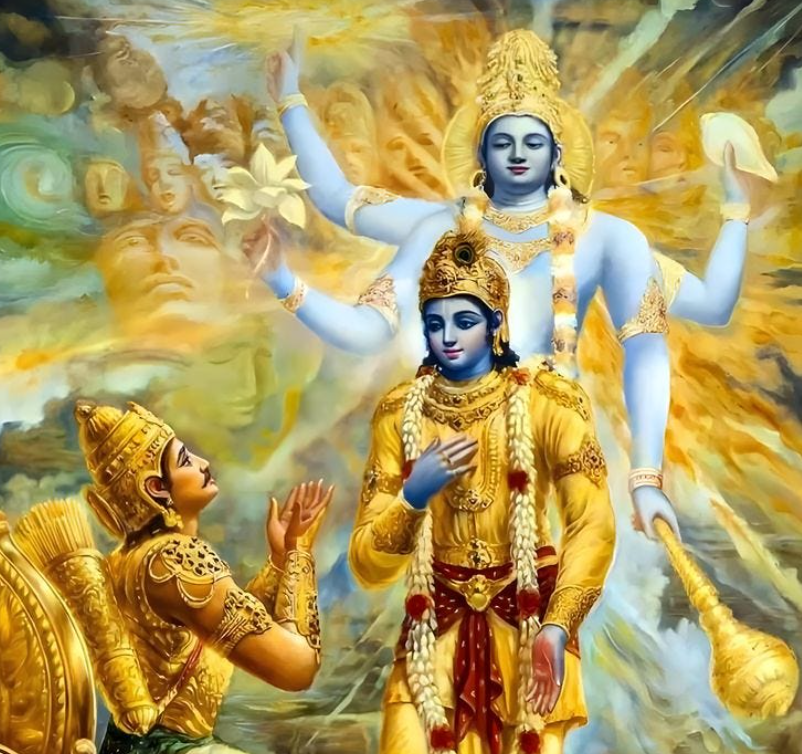
The Divine Charioteer and Teacher of the Bhagavad Gita
न हि ज्ञानेन सदृशं पवित्रमिह विद्यते। तत्स्वयं योगसंसिद्धः कालेनात्मनि विन्दति॥
Know the truth by forthcoming a true guide with humility, inquiry, and service. Those who see reality will guide you.
– Bhagavad Gita 4.34
Most people think the Mahabharata was decided by strength, strategy, or sheer numbers. That is a shallow reading.
The war was decided long before the first arrow was fired. It was decided by mentorship.
Two men stood behind the two sides of the war.
One was Shree Krishna. The other was Shakuni.
The Pandavas were not always strong. They were exiled, humiliated, uncertain, often standing at the edge of despair. What they possessed was not advantage, but guidance.
Krishna did not command them. He walked beside them. He listened more than he spoke. He questioned when others dictated. He waited until the moment ripened, and then spoke with devastating clarity.
He never promised easy victories. He never soothed their egos. Instead, he forced them to face uncomfortable truths about duty, loss, consequence, and responsibility.
Shakuni guided Duryodhana differently.
His intelligence was sharp. His tactics were clever. His understanding of human weakness was precise. But his counsel fed insecurity. It magnified envy. It rewarded shortcuts and justified resentment.
Where Krishna anchored action in purpose, Shakuni anchored it in revenge.
There is a moment in the Mahabharata that reveals everything.
Krishna stands unarmed on the battlefield. Arjuna trembles, overwhelmed by doubt. He cannot fight. His bow slips from his hands.
Krishna does not ridicule him. He does not rush him. He does not replace his judgment with commands.
He reframes the problem. He separates emotion from duty. He widens Arjuna’s vision beyond fear and attachment.
This is what real mentorship looks like. Not instruction alone, but transformation.
Shakuni never did this. He never lifted Duryodhana beyond his limitations. He sharpened them instead. Every wound became a weapon. Every slight became justification.
The Kauravas began with a hundred brothers. They ended with none.
Shree Vasudeva and Shakuni were both brilliant. Only one was wise.
A mentor reveals your blind spots.
What, then, defines a great mentor?
A great mentor does not seek obedience. They seek clarity. They do not give answers to impress. They ask questions to awaken. They do not protect your ego. They protect your future.
Krishna never needed the Pandavas to depend on him. Shakuni needed control. His guidance collapsed the moment it was questioned.
This difference matters more than talent, effort, or ambition.
Empires fall not because leaders lack power, but because they listen to the wrong voices.
The Mahabharata is not a tale of weapons and warriors. It is a meditation on influence.
The Mahabharata isn’t a story about war. It is a warning about guidance.
Choose wisely.
메타데이터
- post_id
- 82dcbf23e018
- slug
- the-mahabharata-isnt-about-war-it-s-about-mentorship-82dcbf23e018
- url
- https://medium.com/@iiprathamyadav/the-mahabharata-isnt-about-war-it-s-about-mentorship-82dcbf23e018
- canonical_url
- https://medium.com/@iiprathamyadav/the-mahabharata-isnt-about-war-it-s-about-mentorship-82dcbf23e018
- author_url
- https://medium.com/@iiprathamyadav
- status
- ok
- fetched_at
- 2026-07-14 02:21:37




