Kratom in 2026: What It Is, Why People Use It, and What the New High Potency Products Changed
You are hearing about kratom more than you did five years ago. You might see it at gas stations. You might hear friends call it “natural.”…
Kratom in 2026: What It Is, Why People Use It, and What the New High Potency Products Changed
You are hearing about kratom more than you did five years ago. You might see it at gas stations. You might hear friends call it “natural.” You might hear someone say it helps them with pain, mood, or withdrawal.
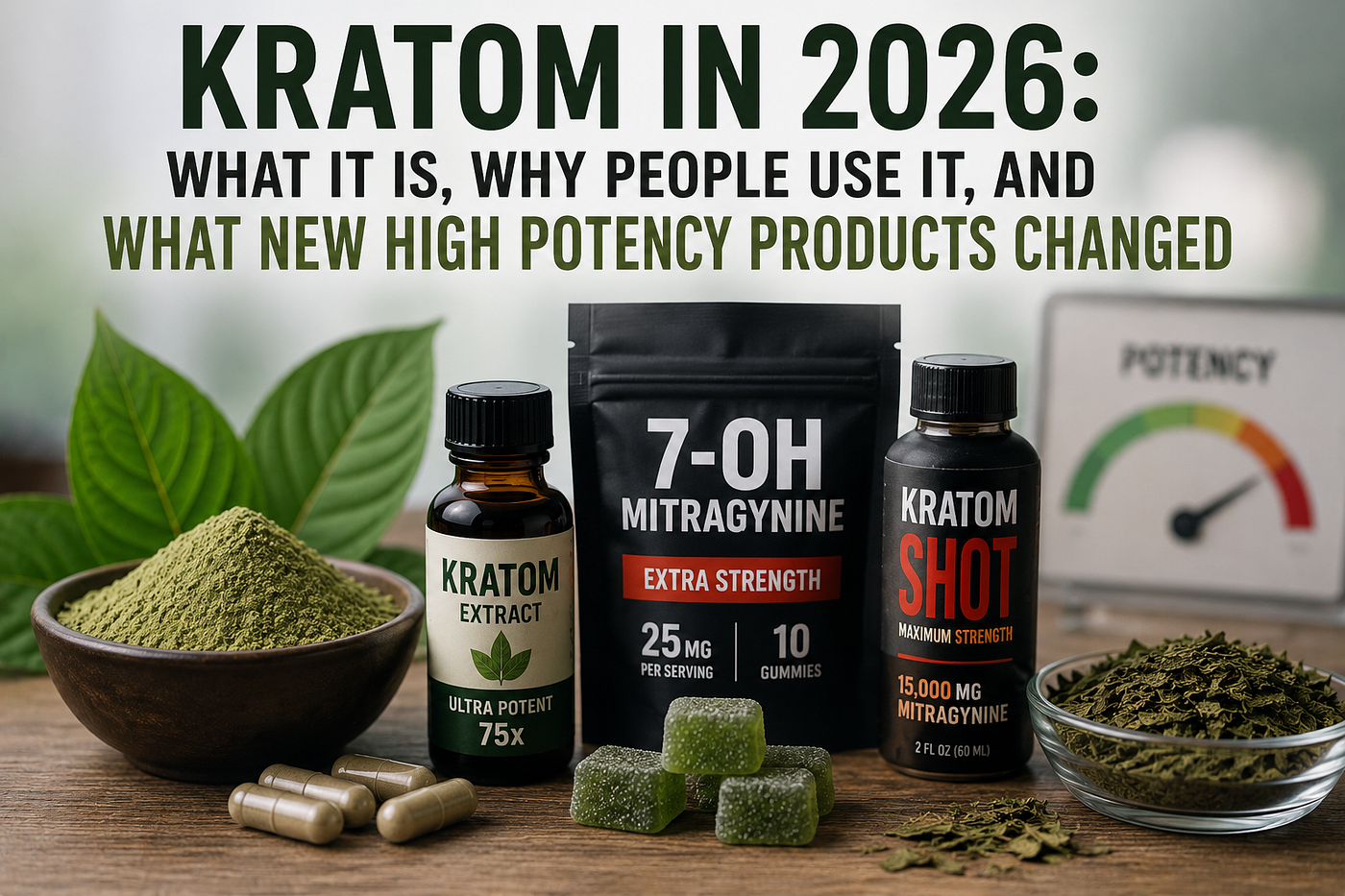
Source: Canva
Let’s keep this clear.
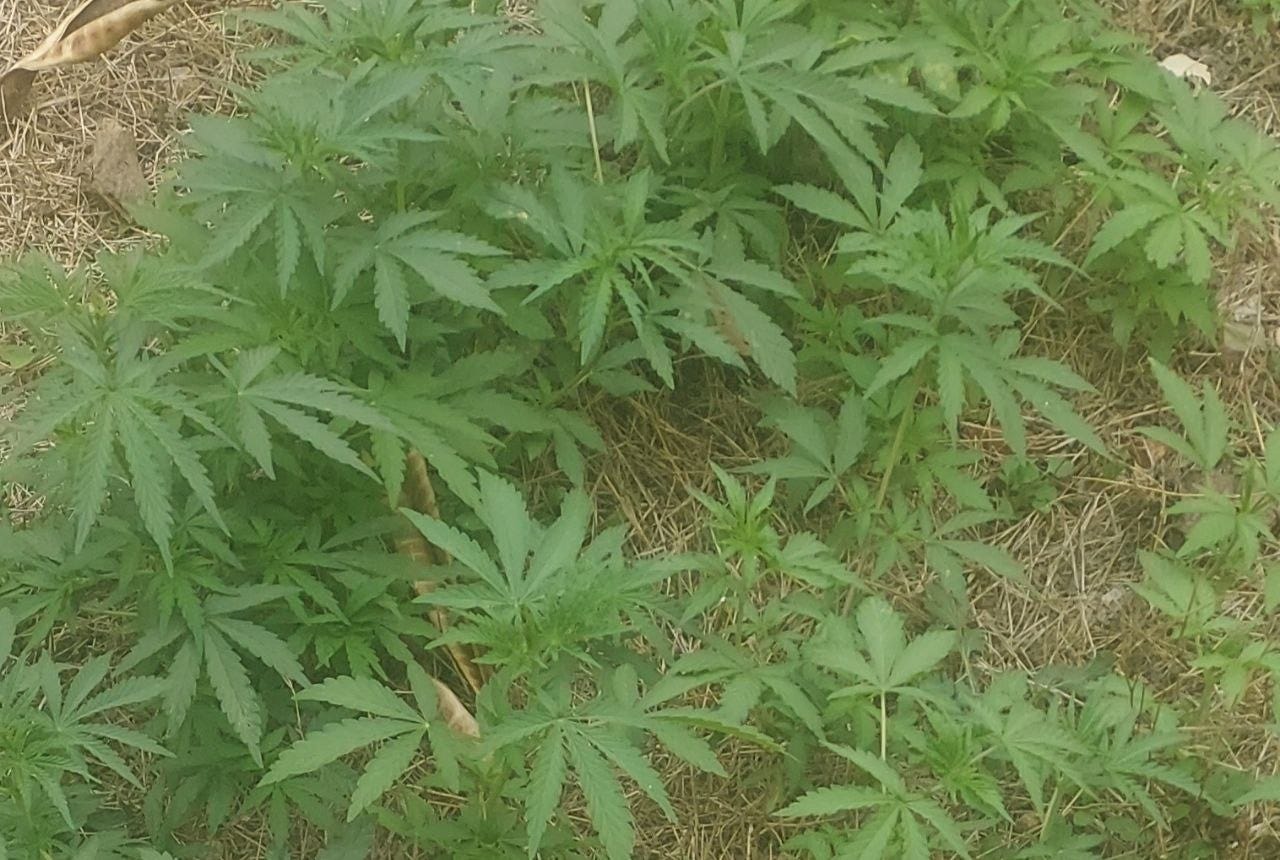
Kratom is a plant (Mitragyna speciosa). Its main alkaloids, including mitragynine and 7-hydroxymitragynine, interact with opioid receptors and other brain systems.
That one fact explains both sides of the conversation.
Why do some people feel it helps?
Why does risk show up fast when potency climbs, or products get altered?
If you are a parent, a community member, or just trying to stay informed, your goal is not to panic. Your goal is to understand what is on the market now, not what kratom used to be.
What kratom is and how it is used today
Kratom leaf has a long history of use in parts of Southeast Asia.
In the United States, kratom is sold in multiple forms:
- Powdered leaf
- Capsules
- Concentrated extracts
- Drinks and shots
- Gummies and tablets
People use it for reasons that are not hard to predict.
- Pain relief
- Anxiety relief
- Mood and energy
- Sleep
- Self-management of opioid withdrawal symptoms
NIDA describes kratom as a plant with compounds that can have stimulant effects at low doses and sedative effects at higher doses, and it notes that it is not federally scheduled in the United States.
That “not scheduled” fact is part of why the market exploded.
- Availability went up.
- Product variety went up.
- Potency variation went up.
How kratom interacts with the body
Kratom is not one simple effect.
Mitragynine has complex pharmacology. Research reviews describe activity at the mu opioid receptor and actions at adrenergic and other receptor systems.
Here is the practical takeaway.
If you are expecting kratom to behave like caffeine, you will be confused. If you are expecting kratom to behave like an opioid, you may also be confused.
It can sit in the middle.
That middle zone is where dependence risk can still develop, especially with frequent use, high doses, and extracts.
The biggest risk shift: high potency and altered products
This is the part that changed the conversation.
The current market is not only “leaf.”
A wave of products has pushed potency up and introduced chemically altered or concentrated forms.
In 2025, the FDA took steps focused on 7-hydroxymitragynine, often called 7-OH, describing it as a concentrated byproduct and distinguishing it from natural kratom leaf products.
The FDA also states that 7-OH is not a lawful dietary supplement ingredient and has issued warning letters to firms marketing products containing 7-OH.
If you want one clean point to remember, use this.
High potency products can change the risk profile, even if the label still says “kratom.”
What poison center data is showing right now
You do not need scare talk. You need trends.
**CDC published a 2026 MMWR analysis of poison center kratom exposure reports from 2015 to 2025.**
- 14,449 total reports across that period
- 3,434 reports in 2025
- about a 1,200 percent increase from 2015 to 2025
A separate CDC MMWR report notes that the percentage of exposures associated with serious medical outcomes rose over time, with a high point reported in 2024, and it reports eight deaths in the analytic period captured in those poison center data.
This does not mean every kratom product causes severe harm.
It does mean this category is “no big deal,” especially as high-potency products become more widespread.
What current research is uncovering
Research on kratom is expanding.
A 2024 review in Frontiers in Pharmacology describes mitragynine’s complex receptor activity and notes that much kratom research has focused on mitragynine and 7-hydroxymitragynine.
The World Health Organization’s Expert Committee on Drug Dependence reviewed kratom and its main alkaloids and recommended keeping it under surveillance rather than moving straight to international control.
That tells you how experts are thinking about it.
- Not a zero-risk substance.
- Not a simple ban conversation either.
- A substance category where product quality, potency, and policy matter.
What policy efforts are trying to do
Policy is not uniform.
Some states ban kratom. Some regulate it. Some do nothing.
At the federal level, the FDA has repeatedly warned consumers about kratom risks and has stated that there are no FDA-approved kratom drug products legally on the market in the United States.
More recently, the FDA has focused attention on 7 OH products.
So the policy trend is not only about “kratom.”
It is about potency and product manipulation.
If you are a parent or community member, this is a useful lens.
- Ask what form it is.
- Ask what concentration it is.
- Ask if it is an extract.
- Assume labels can be misleading.
Real-world guidance for staying informed
If you want practical and calm steps, use this checklist.
Know the form
- Leaf powder and capsules are different from extracts
- “Shots” and gummies can be much harder to dose consistently
Watch for escalation
- Increasing dose over time is a sign of tolerance
- Needing it to feel normal is a sign worth taking seriously
Avoid mixing
- Mixing any sedating substance with other sedating substances raises the risk
- If someone is also using alcohol, opioids, or benzodiazepines, the risk picture changes fast
Pay attention to withdrawal patterns
- If stopping kratom leads to significant withdrawal symptoms, it is time for support, not secrecy
Use medical support when needed NIDA notes there is still a lot to learn about kratom, and it points people toward evidence-based care for substance use and withdrawal support.
The bottom line
Kratom is not a joke substance. It is also not a one-sentence story.
It is a plant with opioid receptor activity and other pharmacology.
It is sold in forms that range from leaf to high-potency extracts.
It is tied to rising poison center reports, including serious outcomes in the CDC trend data.
It is under surveillance and active debate in research and policy circles.
If you want to stay grounded, focus on one principle.
Product form and potency matter.
That is the difference between “I tried kratom tea once” and “I am stuck on a concentrated product and cannot stop.”
Stay curious. Ask better questions. Keep the goal simple.
Clear information first. Real-world safety next.
About the Author:
Hi, I’m Johnny, an ex-street junky with 10 years sober. I’m into multiple pathways to recovery, harm reduction, alternative health & personal growth — and loud, raw, noisy guitars.
You can check out my band here.
Check out my extensive list of Self-Growth and **Recovery Workbooks**
I also create short guides to resources to help others live with more freedom and intention, work smarter, and recover openly.
메타데이터
- post_id
- 83206f3a32b8
- slug
- kratom-in-2026-what-it-is-why-people-use-it-and-what-the-new-high-potency-products-changed-83206f3a32b8
- url
- https://medium.com/@JohnMakohen/kratom-in-2026-what-it-is-why-people-use-it-and-what-the-new-high-potency-products-changed-83206f3a32b8
- canonical_url
- https://medium.com/@JohnMakohen/kratom-in-2026-what-it-is-why-people-use-it-and-what-the-new-high-potency-products-changed-83206f3a32b8
- author_url
- https://medium.com/@JohnMakohen
- status
- ok
- fetched_at
- 2026-06-09 15:37:30