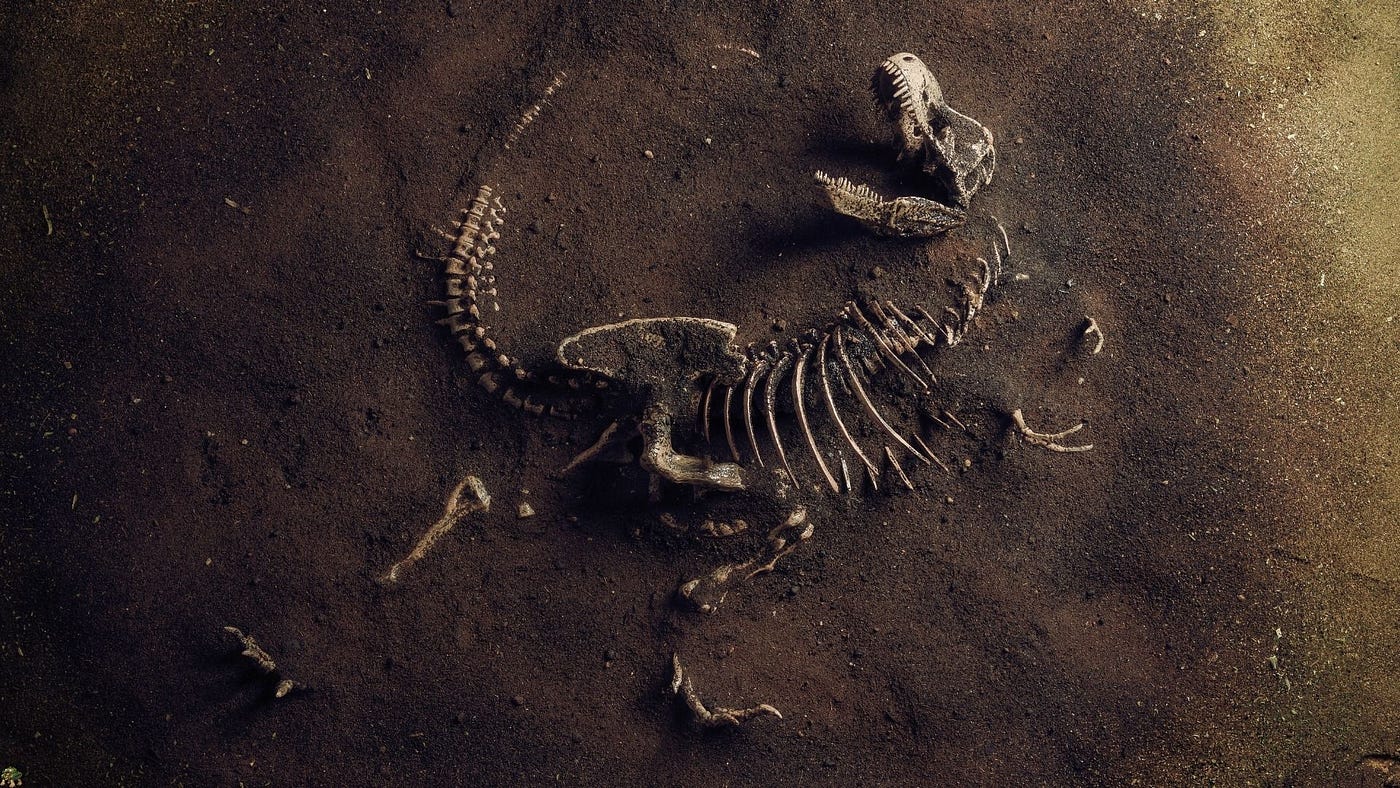
The Earliest Deliberately Collected Ichthyosaur Fossil Was Possibly Collected by a Roman
An ichthyosaur vertebral centrum from a second-century AD pit in Colchester represents the earliest known deliberately collected…
The Earliest Deliberately Collected Ichthyosaur Fossil Was Possibly Collected by a Roman
An ichthyosaur vertebral centrum from a second-century AD pit in Colchester represents the earliest known deliberately collected ichthyosaur fossil
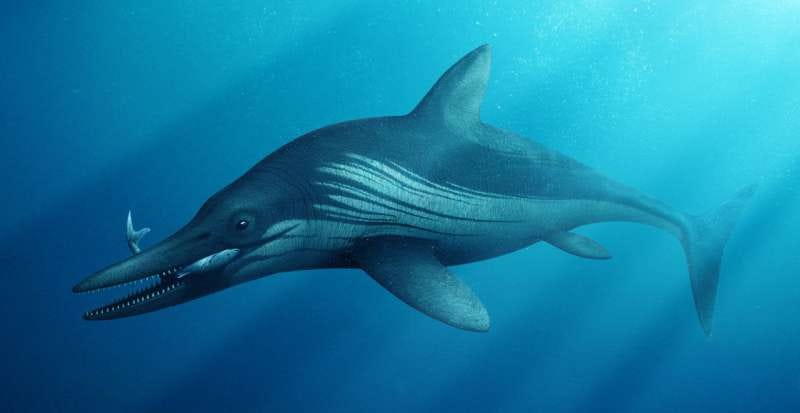
Ichthyosaur. Credit: Bob Nicholls (Thinktank, Birmingham Science Museum) via Phys.org
I have only ever found a single fossil in my entire life. I was walking down a dirt road in the middle of nowhere (okay, it was the Drakensberg), with my professor and two fellow students. We had spent the day recording rock art, and I had managed to sprain my ankle for the first time in my life.
While I hobbled along, I noticed a curious stone. As I reached down and examined it more closely, I noticed a fossilized plant. I have no idea what type, but it looked a lot like a fern. I was told to put it back where I found it, face down to protect it from erosion. I was in too much pain to take a picture, but I do still think of it often.
The same curiosity that drove me to pick up that fossil is likely a similar one that drove people centuries ago to pick up and often keep the curious fossils they found.
Among them was Mary Anning, who, together with her brother Joseph, collected the first ichthyosaur fossil in 1811. But what if Mary and Joseph were not the first to collect an ichthyosaur fossil? What if one of the first people to deliberately collect one such fossil was a Roman?
A Long History of Fossil Fascination

Mary Anning, an English fossil collector, dealer, and paleontologist. Credit: Wikimedia Commons
Hominins have been fascinated by fossils for eons, with one early example including the deliberate transport of coral-bearing chert flakes (424–374,000 before present) from Jurassic rock at Tisbury, Wiltshire, to Swanscombe, Kent, ~193 km away.
By Classical antiquity, fossils inspired myths and had become culturally embedded, with even Pliny the Elder writing about them in the 1st century AD, where he speaks of fossil fish teeth called Batrachites or frogstones.
Ichthyosaurs also have a long history. They were the first large prehistoric reptiles to be identified worldwide, becoming a prominent piece in contentious scientific and religious debates in the 19th century. These debates centered on Earth’s age, the causes of extinction, the origin of species, and the understanding of giant animals that the Bible made no mention of.
The first ichthyosaur fossil was discovered by Mary and Josef Anning in Lyme Regis, Dorset, in 1811. Early observers noted the dolphin-like body, giant toothed jaws, and enormous eye sockets, leading them to describe and depict a fearsome ‘tyrant of the deep’.
One of the oldest and most famous depictions (1830) of the creature was by Henry De la Beche, in which he depicts an ichthyosaur biting into the neck of a plesiosaur. The ichthyosaur came to carry many meanings, from vicious predator to symbol of extinction to showpiece of scientific progress and natural theology.
It also gained cultural and literary meaning, appearing in works such as Verne’s Journey to the Center of the Earth, where an ichthyosaur is described in an epic battle against a plesiosaur.
It was mistakenly believed to be very lizard-like, with early reconstructions depicting them as amphibious crawlers with pointed, lizard-like tails, and even described as cannibals due to the presence of smaller ichthyosaurs inside larger ones. Only later would those small ichthyosaurs be correctly identified as babies, not food, and the tail be depicted in a more fish-like manner.
Today, ichthyosaurs are known as a diverse group of marine reptiles that lived for over 150 million years, ranging from a few feet long to over 70 ft.
But in the Roman period, it is unlikely that most of this would have been known. And yet it is in a Roman deposit in which archaeologists recently uncovered an ichthyosaur fossil, making it the earliest known deliberately collected ichthyosaur fossil and the second known large, fossil vertebrae collected in Roman Britain, indeed in the whole of the north-western Roman provinces.
Roman-Britain’s Ichthyosaur Fossil
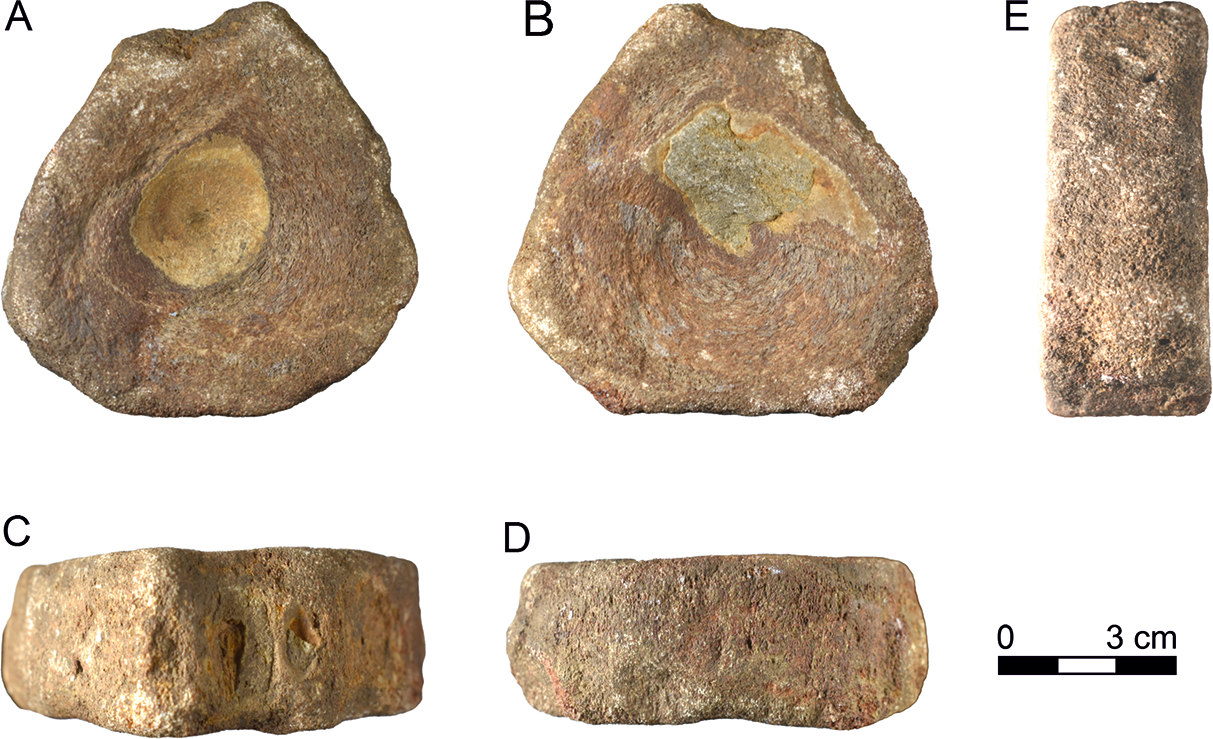
Ichthyosaur vertebra (Find no. 4022) from the Roman pit in Colchester. Credit: Spencer et al. 2026
The ichthyosaur fossil was recovered in 2024 by the Colchester Archaeological Trust during pre-construction work at the former Essex County Hospital site.
The fossil consists of a single vertebra centrum. It was found in what was possibly a quarry pit, later cut by two other pits and a ditch. Besides the fossil, the fill also included 68 Roman pottery sherds, 18 fragments of ceramic building material, various mammal bones, an iron nail, a copper alloy toilet spoon (ligula), and a Purbeck Marble veneer (thin facing slab of a decorative stone). Among the bones were cattle, pig, sheep/goat, horse, and possibly a cat, with some showing signs of butchery, deliberate breakage, and dog gnawing. All in all, the finds indicate that the pit likely dates to around the 2nd century AD.
The fossil is one of only two large fossil vertebrae found in Roman Britain, the other being a plesiosaur vertebra from the King’s Hedges of Cambridge.
But where did it come from?
To find out, the researchers studied the vertebra, specifically the residue on it. They noted that a small patch of fine, greenish sandy rock still stuck to one end of the vertebra contained glauconite (a greenish mineral) and traces of iron oxide. This type of rock is characteristic of the Lower Greensand, a geological deposit in south-east England, though a similar Greensand layer also exists near Cambridge. Both deposits are known to contain ichthyosaur fossils. Given how severely worn the vertebra is, it likely spent a long time exposed to the elements, particularly sand, before it was collected.
The researcher’s detective work did not stop there, though. During the Roman period, Kentish ragstone was quarried around Maidstone and Sevenoaks (inland sites) and along the coast near Folkestone and Hythe. But did the vertebrae come from the coast or inland?
Based on similar rounded, sea-eroded blocks used in the late 3rd-century walls of Roman Canterbury, as well as the heavily abraded, sea-worn condition of the centrum itself, the researchers concluded that the fossil most likely came from the coast rather than an inland quarry. The clues all pointed towards the foreshore or intertidal zone of the east Kent coast.
Here, they single out East Wear Bay, Folkestone, home to a Roman greensand quarrying industry that existed until at least the 4th century AD. The site also has a rich fossil deposit, including plesiosaurs, pliosaurs, turtles, pterosaurs, and ichthyosaurs.
So, now that they had identified the likely origin of the fossil, they began wondering about the motivation.
Why Collect a Vertebra
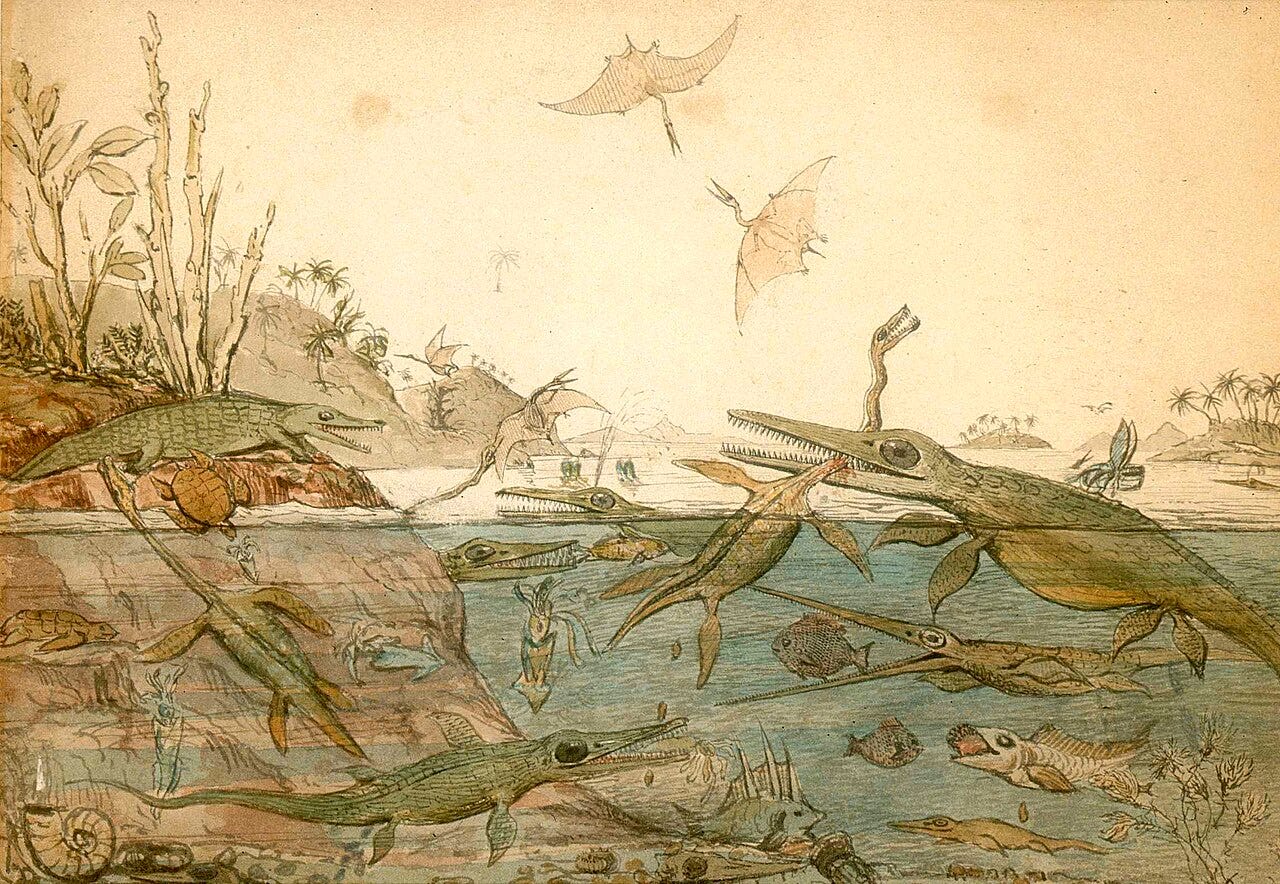
Duria Antiquior — A more Ancient Dorset, watercolour painted in 1830 by the geologist Henry De la Beche. Credit: Wikimedia Commons
Most Roman British fossils were likely collected while beachcombing and kept out of interest or curiosity. However, the archaeological context also shows that these fossils were sometimes kept for religious or superstitious reasons. At Studland in Dorset, for example, eleven fossil sea urchins were deliberately buried under the floors of huts. While elsewhere fossils repeatedly turn up at temple sites, including Wanborough, Titsey, and Farley Heath.
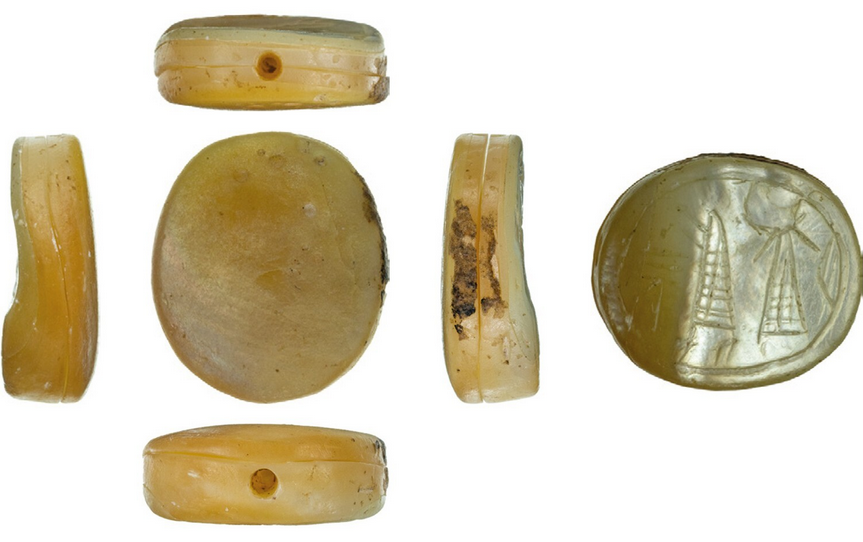
In one example, a small bead-like fossil was recovered together with a glass gem and two dice in a child’s cremation burial in Colchester. While on the European Continent, Romano-Celtic temples in France held curated hoards of polished stone axe-heads and fossil sea urchins, sometimes buried with Roman Venus figurines.
All of the above examples suggest that fossils could hold symbolic, votive, and protective meaning, though which role exactly they play is unclear. Though based on the unusual assortment of artifacts, including the ichthyosaur centrum, a toilet spoon (ligula), and a possibly unusual group of animal bones, raises the possibility that this was a structured/deliberate deposit, rather than ordinary rubbish.
Similar structured deposits are documented across Roman Britain and may reflect a merging of Iron Age and Roman beliefs. Okay, that would explain why it was deposited where it was question, but only partially why it was collected in the first place.
A simple answer would be that the collector kept it as a curiosity. A ‘stone bone,’ something noted by Theophrastus and Pliny as a curious occurrence of bone turned to stone. The other possibility is that it was collected due to its imagined link to myths and creatures of legend, since in the Classical world, large fossil bones and teeth were widely interpreted as the remains of giants, heroes, or monsters.
The Greek writer Pausanias, for example, described a giant shoulder blade attributed to the hero Pelops on display at Olympia. It may be that this fossil was believed to belong to a similar creature of myth and legend.
It cannot be said for certain why this particular Roman chose to pocket a fossil nearly 100 million years old. What can be said is that this fossil is the earliest known deliberately collected ichthyosaur fossil in Roman Britain, and it stands as a 1,900-year-old reminder of the same simple curiosity that made me stop and pick up a fossil in the Drakensberg all those years ago.
In a recent study, researchers from the Colchester Archaeological Trust documented a single ichthyosaur vertebra, deliberately collected by a Roman Briton ~1900 years ago. Why it was collected is unknown, but it is the earliest of its kind.
Why do you think the fossil was collected, and do you think the pit it was dumped in was a structured deposit or just rubbish?
Let me know your thoughts, and if you’d like to support the countless hours I pour into researching, writing, and bringing these hidden corners of history to life, why not Buy Me A Coffee
References
Glendening, J. (2009). ‘The World-Renowned Ichthyosaurus’: A Nineteenth-Century Problematic and its Representations. Journal of Literature and Science, 2(1), 23–47.
Spencer PS, Wightman AN, Pooley LEA. The Earliest Known Purposefully Collected Ichthyosaurian Fossil: A Vertebral Centrum from a Second-century a.d. Roman Pit in Colchester, Essex. Britannia. Published online 2026:1–10. doi:10.1017/S0068113X26100749
Published in Fossils et al. **Follow **to learn more about Paleontology and Evolution.
메타데이터
- post_id
- 832e724973bd
- slug
- the-earliest-deliberately-collected-ichthyosaur-fossil-was-possibly-collected-by-a-roman-832e724973bd
- url
- https://medium.com/palaeopress/the-earliest-deliberately-collected-ichthyosaur-fossil-was-possibly-collected-by-a-roman-832e724973bd
- canonical_url
- https://medium.com/palaeopress/the-earliest-deliberately-collected-ichthyosaur-fossil-was-possibly-collected-by-a-roman-832e724973bd
- author_url
- https://medium.com/@sandeeoster17
- status
- ok
- fetched_at
- 2026-07-08 21:20:17