Technology Over Law: The Flock Safety Model of AI Policing
AI-powered public safety systems are spreading fast, but the rules that should control them are lagging far behind. As a result, the same…
Technology Over Law: The Flock Safety Model of AI Policing
AI-powered public safety systems are spreading fast, but the rules that should control them are lagging far behind. As a result, the same video analytics tools that help fight crime can also be turned into always-on tracking systems for everyone else.
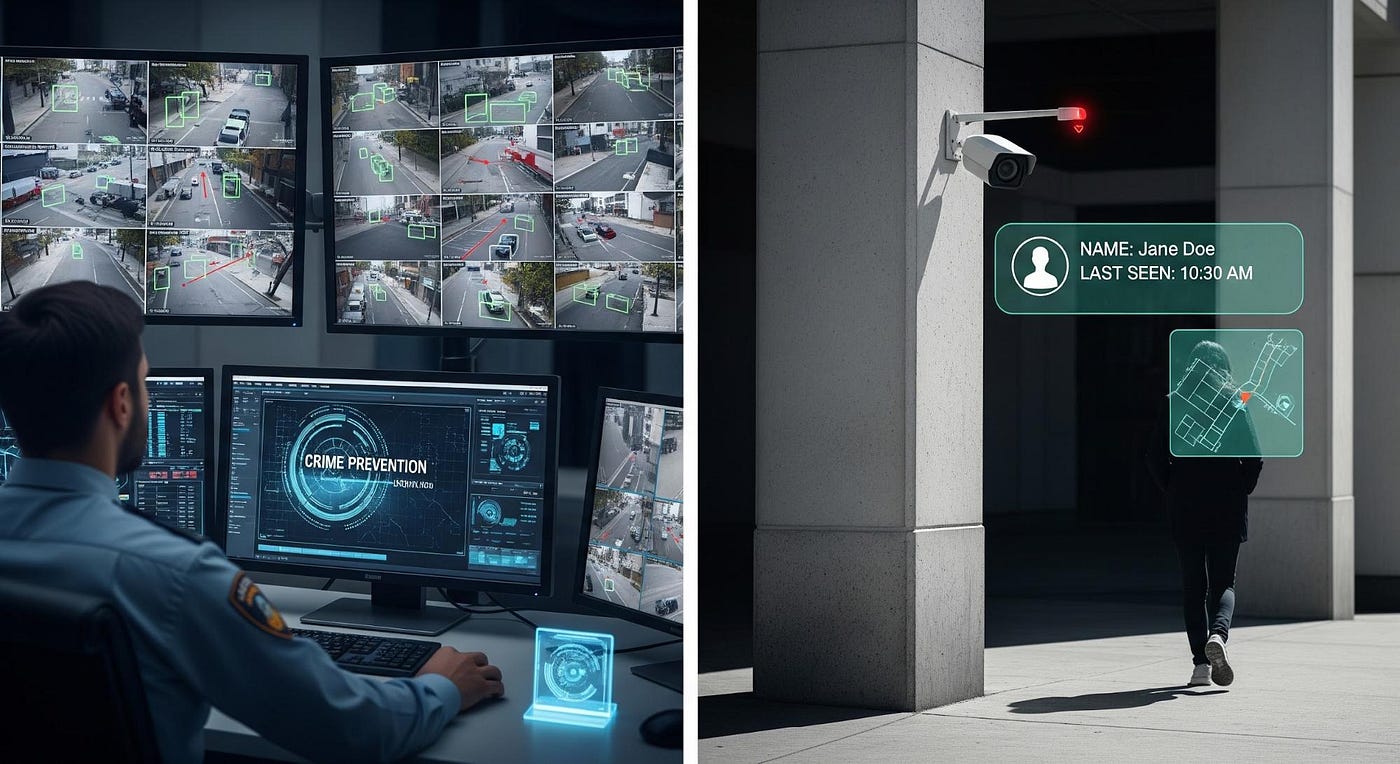
It’s not us who are spying… It’s AI who are to blame!
Flock Safety, a large US provider of Automatic License Plate Readers (ALPRs), shows how uncontrolled use of this technology can happen in practice. The company built a huge cloud video analytics network that collects license plate scans from thousands of agencies, letting police follow drivers over months with little real oversight. What started as a public safety tool, became a way to watch where people go, who they visit, and which protests or clinics they attend.

How AI surveillance vendors help bypass local laws
Civil liberties groups, including the ACLU and EFF, warn that the core problem is how these systems are set up to route around local laws. Cities may pass rules to limit how long data is kept or who it can be shared with, but once license plates are uploaded into a vendor’s cloud, those limits can be quietly bypassed.

Contracts can give the company broad rights to share agency data for “investigative purposes”, which in practice can mean sharing local data far outside the community where it was collected. In November 2025, Washington state trial court ruled that data captured on Flock Safety cameras and shared with irrelevant agencies was public records.
This is where “bypassing the law” becomes built-in. Instead of openly changing laws or going to a judge for a warrant, agencies and vendors design data flows that make those safeguards meaningless. Local police can run a search that hits ALPR cameras and surveillance databases across the country, including places where such tracking violates state rules or community promises. One documented search linked to an abortion case in another state reached over 83,000 cameras via Flock’s network, showing how a single query can tap into a nationwide grid.
Federal agencies like ICE and CBP have benefited from this design, even when they do not have direct contracts. Records show that ICE has accessed Flock data through local law enforcement portals, using local accounts as a back door into the vendor’s national video surveillance network. In states that limit cooperation with immigration enforcement, this effectively cancels local protections by shifting the technical and legal control point to the vendor’s cloud.
“I have goosebumps on my arms thinking about the absolute chaos that was happening in Minneapolis. And just the absolute insanity of what we were seeing… It was totally clear to me that we should in no way consciously be in this system at all — just no way”.
Susie O’Hara, Santa Cruz City Council Standing Committees, CA
Abuses, security gaps and local backlash

On top of this, weak governance and cybersecurity made abuse easier. Investigations found that Flock systems were used to track activists, protesters, and specific ethnic groups, and to search for people suspected of having abortions. In many cases, searches were not tied to clear Case IDs, and activity logging was not strong enough to reliably show who accessed what and why. Security researchers also pointed out dozens of technical flaws, from physical access issues to exposed network services, showing that the same system that sidestepped legal rules also failed at basic cybersecurity protection of sensitive law enforcement data.
“The court recognized the huge privacy implications of this data collection. Location data like this, that’s collected on innocent drivers, reveals sensitive information about where they have been and when, whether that’s their home, their doctor’s office, or their house of worship”.
Jennifer Lynch, EFF Senior Staff Attorney
Communities are starting to push back. Since early 2025, at least 30 cities and towns, including Flagstaff, Cambridge, Eugene, and Santa Cruz, have shut off Flock cameras or ended contracts, often after learning about federal access and the scale of tracking. Local leaders said they lost trust in the vendor and no longer believed their technology could be used in a way their residents would accept.
Building AI systems that respect the law
To avoid these failures and broken trust in future AI-powered public safety systems, strong technology and strong rules have to go together. In technical terms, systems should use end-to-end encryption, multifactor authentication, strict role-based access control, network segmentation and data minimization, with as much processing as possible kept on local or edge systems instead of a central vendor cloud. Every sensitive action — searching for a license plate, exporting or sharing data with another agency — should require a mandatory Case ID and be recorded to tamper-proof logs.

Just as important, legal and ethical limits must be hard-coded into how the system works. Data collection needs a clear, narrow purpose, and agencies must be transparent with the public about what they collect, how long they keep it, and who can see it. Sharing controls should be strict and transparent, with technical and contractual barriers that stop automatic cross-state or federal access unless it clearly complies with local law. Agencies must be able to download and review audit logs themselves and allow independent audits, so they are not forced to simply “trust” the vendor.
A safer model is to keep data in a secure private or government-controlled cloud, instead of feeding everything into a single national vendor network. Carrier-grade, multi-tenant access controls can make sure one agency can never casually browse another agency’s data. Encrypted internal communication tools can handle evidence sharing without leaking files through personal email or consumer apps. And ethical AI for public safety must mean clear bans on general population tracking, political surveillance and discriminatory targeting, not just marketing language.
The lesson from Flock Safety is simple: if convenience and growth come first, the video analytics technology will find ways around the law. By designing systems that require mandatory Case IDs, robust logs, strict sharing rules and real local control over data, we can block the back door.
We must force AI-powered public safety video analytics systems to respect the law and democratic process, closing the quiet loopholes that compromise our basic rights.
메타데이터
- post_id
- 83640ba55dbf
- slug
- technology-over-law-the-flock-safety-model-of-ai-policing-83640ba55dbf
- url
- https://medium.com/@chris.m.gabler/technology-over-law-the-flock-safety-model-of-ai-policing-83640ba55dbf
- canonical_url
- https://medium.com/@chris.m.gabler/technology-over-law-the-flock-safety-model-of-ai-policing-83640ba55dbf
- author_url
- https://medium.com/@chris.m.gabler
- status
- ok
- fetched_at
- 2026-06-23 17:05:31




