The Hormuz Paradox: “If Only We Had Known” Is Not a Strategy
By Sada Cumber, NSI Advisory Board member and The SCIF Standing Author
The Hormuz Paradox: “If Only We Had Known” Is Not a Strategy
By Sada Cumber, NSI Advisory Board member and The SCIF Standing Author
In any wider confrontation over the Strait of Hormuz, no capital should later say, “If only we had known.” The warning signs are already clear. American military superiority and Iran’s disruption capacity are both real. Gulf states fear coercion and escalation, while Asian powers prioritize stability over alignment. The question is not whether the United States can win militarily, but whether a manageable crisis can be prevented from becoming a wider regional and economic shock.
Robert McNamara’s “If only we had known” offers a useful Vietnam lesson. Iran is not Vietnam, and Hormuz is not Southeast Asia. Strategic failure rarely comes from lack of information alone. It comes when leaders recognize the risks and warnings, and still allow assumptions about power, credibility, coercion, and prestige to carry policy forward.
Washington often views Iran through raw power, where the U.S. still holds the stronger hand. Iran cannot defeat the United States conventionally, but it does not need to. Its leverage lies in its ability to impose serious economic, political, and regional costs.
Tehran’s advantage is not winning a war, but making one costly, prolonged, politically and economically destabilizing. Years of sanctions, deterrence, and proxy escalation have produced no decisive outcome, only cycles of escalation that steadily narrow the space for diplomacy.
The latest signals show a region caught between negotiation and escalation. U.S.–Iran talks continue through mediators like Qatar and Pakistan, despite mutual accusations over strikes and ceasefire violations. Discussions focus on Hormuz, sanctions relief, frozen assets, and future nuclear talks. This is not peace, but a fragile diplomatic pause under military pressure.
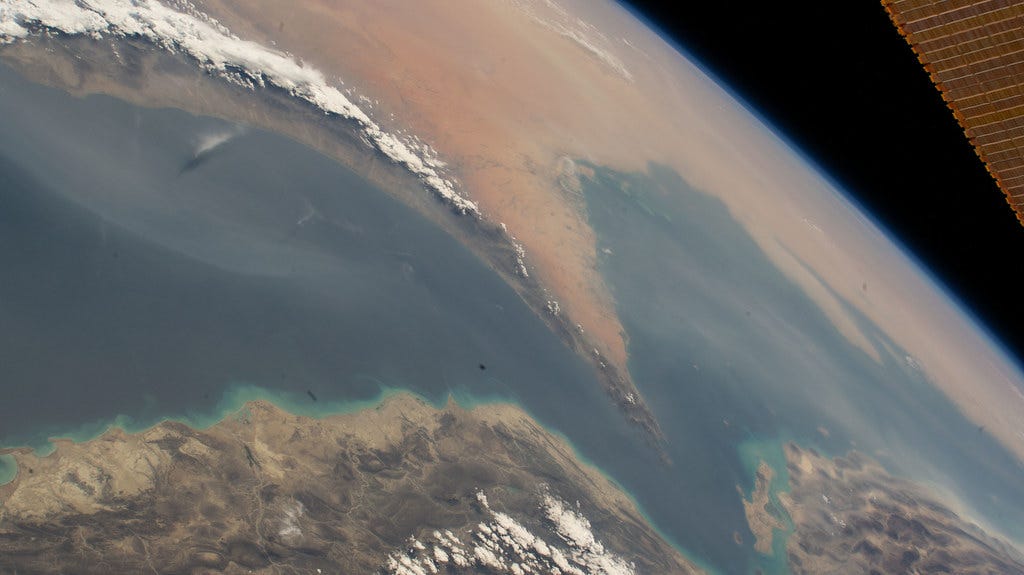
The Strait captures this dilemma better than any other theater. It is one of the world’s key energy chokepoints, yet the debate over whether it is “open” misses the larger reality. Openness is political and strategic rather than simply physical. Hormuz is both a maritime route and a bargaining system, where Iran leverages disruption, not victory, to impose global costs. Even limited disruption can affect energy prices, shipping, inflation, and investor confidence. Its goal is to maintain credible disruption capacity to impose costs on any effort to isolate or pressure Iran.
This is why regional signals matter. Gulf states are not siding with Iran, but neither are they giving Washington or Israel a blank check for escalation. The UAE has warned against renewed conflict and politicizing Hormuz. Pakistan supports diplomacy while preparing for supply disruptions. China is urging compromise to protect energy flows and regional stability.
For Gulf states, this is a direct stability challenge. Their priority is protecting infrastructure, investment confidence, energy flows, and diplomatic channels. For Asia’s energy-dependent economies, Hormuz is not a distant Middle Eastern chokepoint, but a global pressure point directly tied to their economic security.
This is where the “if only we had known” warning becomes critical. The next escalation may target systems sustaining the Gulf economy: energy infrastructure, ports, shipping corridors, desalination plants, undersea cables, digital networks, financial connectivity, and AI infrastructure. The battlefield may shift beyond bases and ships.
There is a difference between a bottleneck and a production shock. Delayed tankers and higher insurance costs are disruptive but manageable. Sustained attacks on energy, water, logistics, or digital infrastructure could trigger shortages, price spikes, capital flight, food stress, and wider instability. The issue is whether oil can pass through Hormuz and whether regional infrastructure can withstand wider conflict.
Israel and Lebanon add another layer of risk. Recent Israeli military operations in Lebanon and the resulting tensions with Hezbollah underscore how regional escalation could complicate broader diplomatic efforts, even if Washington and Tehran reach a limited understanding on Hormuz.
The policy implication is strategic discipline. Washington should resist Iranian coercion without closing off diplomacy. Tehran should not be rewarded for disruption but needs an off-ramp. Gulf states should push for restraint while hardening infrastructure, diversifying export routes, and maintaining channels with Washington, Tehran, and Asian partners.
A durable strategy must treat maritime security, sanctions relief, nuclear constraints, infrastructure protection, proxy de-escalation, and economic continuity as one strategic problem. Any agreement ignoring infrastructure vulnerability will remain fragile, while any military campaign without a political framework will only postpone the next crisis.
The United States should not confuse military superiority with strategic simplicity. Iran should not confuse disruption capacity with long-term strength. Gulf states should not assume neutrality alone will shield them from exposure, and Asian powers cannot remain observers when their energy security is directly tied to the outcome.
If this confrontation escalates into a wider regional conflict, no one in Washington, Tehran, Riyadh, Abu Dhabi, Doha, Islamabad, Beijing, New Delhi, Tokyo, Seoul, or Brussels should later say, “If only we had known.” The warning signs are already in plain sight.
Sada Cumber is a self-employed entrepreneur focused on the technology and healthcare fields. Previously, Cumber served as President George W. Bush’s Special Envoy to the OIC, a 57-nation NGO. As a US ambassador he engaged in hard and soft diplomacy, advancing the interests of America and its allies, and building new partnerships while keeping pressure on America’s rivals and putting pressure on religious extremism. Prior to being appointed Special Envoy, Cumber was a technology entrepreneur who founded over a dozen companies. Those with the most notable outcomes include Psionic Technologies, Inc, Applied Science Fiction, and Triumph Flexo Industries.
메타데이터
- post_id
- 836be7af4daa
- slug
- the-hormuz-paradox-if-only-we-had-known-is-not-a-strategy-836be7af4daa
- url
- https://thescif.org/the-hormuz-paradox-if-only-we-had-known-is-not-a-strategy-836be7af4daa
- canonical_url
- https://thescif.org/the-hormuz-paradox-if-only-we-had-known-is-not-a-strategy-836be7af4daa
- author_url
- https://medium.com/@masonnatsecinst
- status
- ok
- fetched_at
- 2026-06-11 10:13:20