I Tried Finding Campus Events the Old Way for a Week — Here’s What Happened
I gave up apps for a week and tried finding college events the old-fashioned way. Here’s exactly how that went.
I Tried Finding Campus Events the Old Way for a Week — Here’s What Happened
I gave up apps for a week and tried finding college events the old-fashioned way. Here’s exactly how that went.
A few weeks ago, a friend mentioned a hackathon that had happened the previous weekend — decent prize pool, students from a few different colleges, the kind of thing I would have actually wanted to attend. I found out about it four days after it ended.
That was the third time this semester something like this happened to me. So I decided to run a small experiment: for one week, I’d try to find every college event happening around me using only the “old” methods — no event apps, no centralized platforms, just notice boards, Instagram, WhatsApp groups, and word of mouth. I wanted to see how much I was actually missing, and why.
Here’s how the week went.
Day 1–2: The Notice Board Illusion
I started where most colleges technically still post things — the notice board outside the main block. In two days, I found exactly one flyer for an event happening that week: a guest lecture, already half over by the time I read about it. Everything else on the board was outdated — old workshop posters, a fest announcement from the previous month, a few torn corners where something had clearly been ripped down.
This was the first thing the experiment made obvious: physical notice boards are basically decorative at this point. They’re rarely updated in real time, and they only reach people who happen to walk past and actually stop to read them.
Day 3: The Instagram Rabbit Hole
Next, I tried Instagram — following every college club, fest page, and event account I could find, then scrolling daily to catch anything relevant. This actually worked better than the notice board, but it came with a real cost: I had to follow dozens of separate pages, and even then, algorithm timing meant I sometimes saw posts about an event after registrations had already closed. I also realized I was only seeing pages I already knew to search for — anything from a club or college I hadn’t thought to follow simply didn’t exist in my feed.
By the end of day 3, I’d found two more events — a workshop and a cultural night — both through pure luck of scrolling at the right moment.
Day 4–5: The WhatsApp Group Problem
This is where it got messy. A lot of genuinely good event information lives in WhatsApp groups — but only if you’re already in the right one. I asked around and got added to two new groups specifically for the experiment, and immediately found three events I hadn’t seen anywhere else, including a case competition with a real prize pool and a fest at a nearby college.
The problem became obvious fast: this information is only accessible if you already know the right people, or get lucky enough to be added to the right group. There’s no way to discover these groups on your own — you need an existing connection to even get in the door.
Day 6: Word of Mouth, the Original Algorithm
By day six, I leaned entirely on just talking to people — classmates, a senior in my hostel, a friend from another department. This was honestly the most effective method of the week. In a single afternoon of casual conversations, I heard about four separate things happening over the next two weeks that I had zero prior knowledge of.
But it also confirmed something uncomfortable: my access to information was directly tied to how many different social circles I happened to be part of. If I were quieter, newer to college, or just hadn’t built those specific friendships yet, I would have heard about almost nothing.
Day 7: Tallying It Up
By the end of the week, here’s roughly what the “old way” got me:
· 1 outdated notice board flyer
· 2 events found through scrolling Instagram at the right time
· 3 events found only because I was added to specific WhatsApp groups
· 4 events I only heard about through casual conversation
Ten events total, across seven days of active effort — and a noticeable number of them I found by luck, timing, or who I happened to talk to, not because the system made them easy to find.
Then I Checked Stulo for the Same Week
Out of curiosity, I opened Stulo afterward and checked what was listed for the same period. In a single scroll, I saw most of what I’d spent a week piecing together — plus a few additional events I’d missed entirely, including one happening on my own campus that I hadn’t heard about through any of my usual channels. No need to already follow the right page, already be in the right group, or already know the right senior. It was just there, organized by date and location, the way a notice board should have worked all along but never actually does.
What Missing Events Actually Costs You
It’s easy to brush off a missed event as “no big deal,” but the cumulative cost adds up in ways that aren’t always obvious in the moment. A missed hackathon might have been a resume line or a recruiter conversation. A missed cultural fest might have been the night you met your closest college friend. A missed workshop might have been the one skill that made your next internship application stand out.
None of these are guaranteed outcomes, of course — you could attend ten events and have none of them lead anywhere specific. But you can’t get the chance at all if you never find out the event existed in the first place. That’s really what this experiment came down to: not that the old methods never work, but that they leave too much to chance for something that doesn’t need to be left to chance anymore.
What This Experiment Actually Showed Me
The old methods aren’t completely useless — word of mouth in particular still surfaces genuinely good information. But all of them share the same flaw: they depend heavily on who you already know, what you already follow, or pure timing luck. None of them are designed for actual discovery. They’re designed for people who are already plugged in to find out slightly faster.
A centralized platform doesn’t replace any of that — the WhatsApp groups, the Instagram pages, the conversations are all still worth keeping. But it closes the gap for everything you’d otherwise only find by chance, which, based on this week, turned out to be a genuinely large chunk of what’s happening around you.
I’m not giving up notice boards and group chats entirely. But I’m also not spending another week finding out about a hackathon four days too late.
Want to skip the week-long experiment? Stulo shows you events, fests, and competitions happening near you — no scattered group chats required.
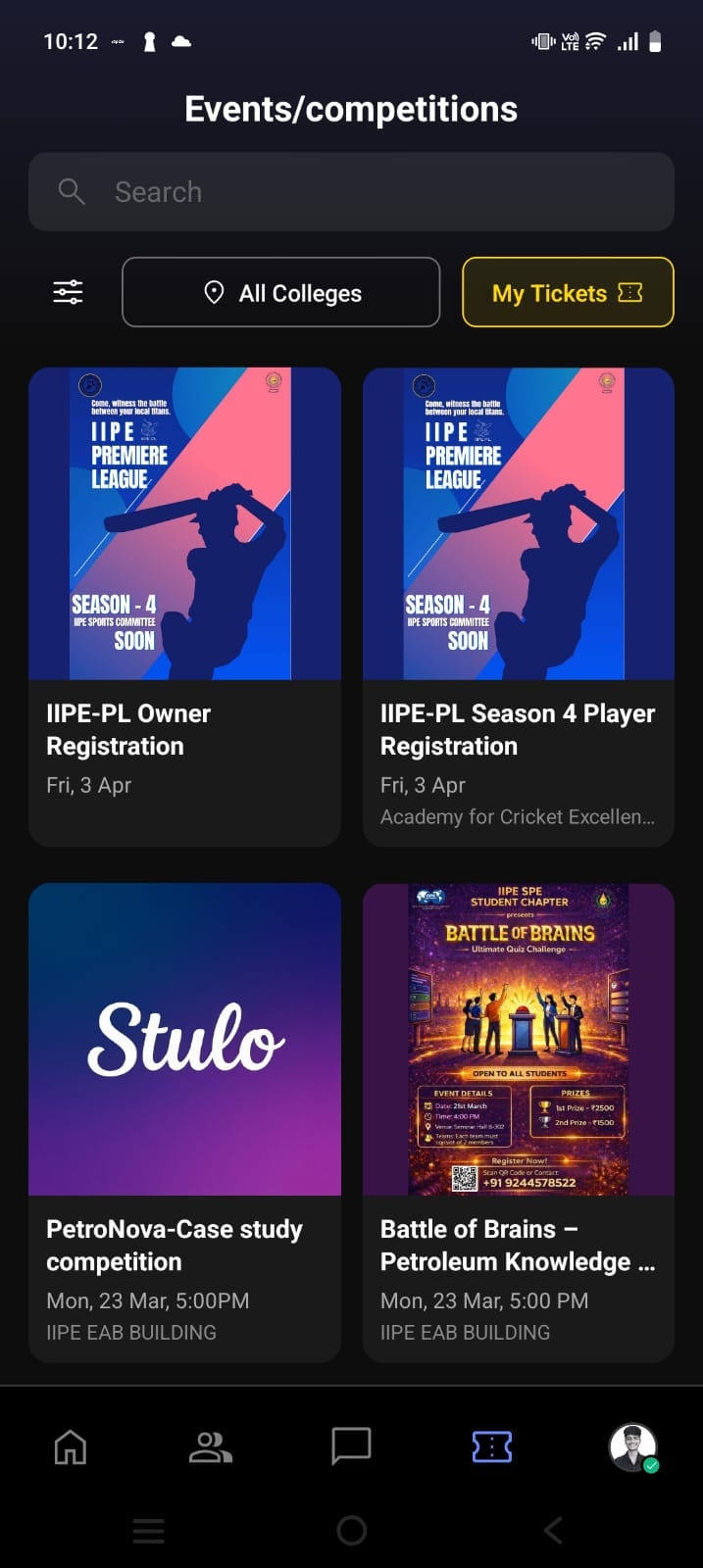
Nearby College Events on Stulo
메타데이터
- post_id
- 838b2ded664b
- slug
- i-tried-finding-campus-events-the-old-way-for-a-week-heres-what-happened-838b2ded664b
- url
- https://medium.com/@sarveshkatkar3/i-tried-finding-campus-events-the-old-way-for-a-week-heres-what-happened-838b2ded664b
- canonical_url
- https://medium.com/@sarveshkatkar3/i-tried-finding-campus-events-the-old-way-for-a-week-heres-what-happened-838b2ded664b
- author_url
- https://medium.com/@sarveshkatkar3
- status
- ok
- fetched_at
- 2026-07-09 20:42:47




