The Island So Remote It Takes Nearly a Week to Reach the Outside World
Fewer than 300 people live on Tristan da Cunha, a volcanic island in the South Atlantic where supply ships are lifelines and the nearest…
TRAVEL|HISTORY
The Island So Remote It Takes Nearly a Week to Reach the Outside World
Fewer than 300 people live on Tristan da Cunha, a volcanic island in the South Atlantic where supply ships are lifelines and the nearest continent is more than 1,500 miles away

The remote island of Tristan da Cunha — NASA.GOV
I spend an embarrassing amount of time wandering around maps.
Not because I’m planning vacations. Most of the places I end up looking at aren’t exactly tourist destinations.
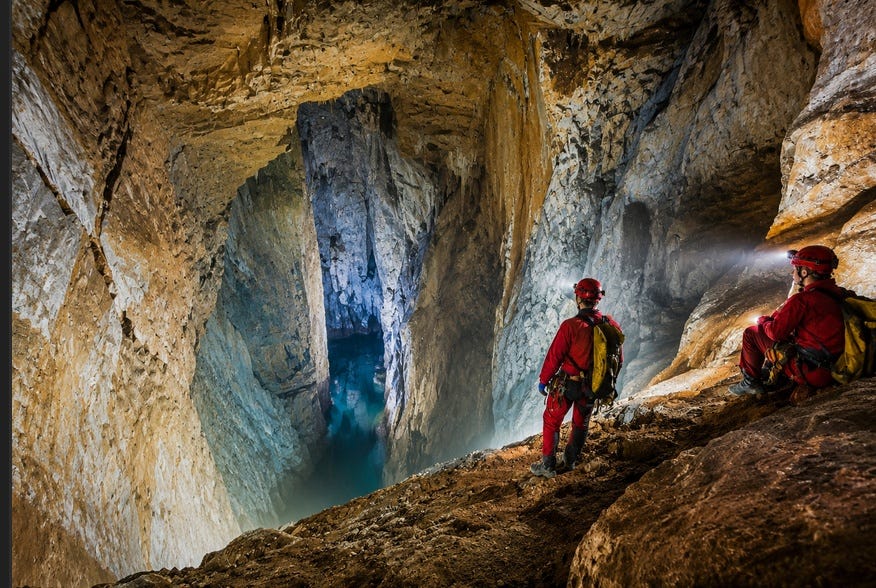
I like finding places that seem impossible. The deepest cave on Earth, the coldest inhabited town or the most remote islands.
Every once in a while, I stumble across something that makes me stop scrolling and think, Wait. That’s real?
The Place That Made Me Stop Scrolling
Tristan da Cunha was one of those places.
At first, it looked like a speck of dust in the middle of the South Atlantic Ocean. There were no nearby countries, neighboring towns, or airport. There is no easy way in or out.
It’s just a tiny volcanic island floating in one of the emptiest stretches of ocean on Earth. I was in awe. But then I learned that nearly 300 people actually live there.
There are families, children, teachers and fishermen who all inhabit this remote island. These are people who willingly call this place home.
That fact was also incredibly fascinating to me.
But then I discovered something that completely changed how I thought about the island.
The Entire Population Once Left — and Came Back
In 1961, Tristan da Cunha’s volcano erupted. The situation became dangerous enough that the entire population had to be evacuated.
Every single resident left the island. Can you even imagine that for a moment? It blew my mind to think of an entire community packing up and moving thousands of miles away.
All of the islanders were relocated to England. Suddenly they had access to things most of us take for granted. They were living in cities with nearby hospitals, airports and modern conveniences.
They suddenly could shop anytime they wanted in stores. Entertainment was at their fingertips and they have new opportunities in the form of job. The islanders had everything they could possibly want.
Most people would assume they never wanted to go back. I certainly did. But that’s not what happened.
When scientists eventually declared the island safe, most residents chose to return. They wanted to go back to the isolated volcanic island in the middle of nowhere.
Once I read that story I couldn’t stop thinking about it. Because suddenly the story wasn’t about geography anymore. It was about people.
What kind of place makes someone leave modern civilization behind and willingly return? I was absolutely obsessed with finding out as much as I could about these people.
The Google Maps Test
Whenever I find a place that claims to be remote, I do the same thing. I zoom out multiple times. Eventually another town appears.
Or I find highways, a city or town and usually I find an airport. I locate something that reminds me that civilization isn’t far away.
But Tristan da Cunha is different. I kept zooming out and I couldn’t find anything. Nothing was coming into view no matter how much I zoomed out.
This remote island looked less like a destination and more like a typo. The nearest inhabited place is Saint Helena, more than 1,500 miles away. To put that into perspective, that’s farther than the distance from New York City to Miami.
And that’s just the nearest inhabited island. The nearest continent is farther still. There are remote places.
But then there’s Tristan da Cunha.
Getting There Is an Adventure All by Itself
One of the strangest things about Tristan da Cunha is that you can’t simply book a flight. There isn’t one.
No airport, runway, commercial airline or private aviation terminal. The island’s rugged volcanic terrain makes building an airport extraordinarily difficult.
Instead, visitors arrive by ship. Most journeys begin in Cape Town, South Africa. From there, passengers spend nearly six days crossing the South Atlantic Ocean.
Six long days on a ship. Can you even imagine that.
Think about that for a minute. I don’t know about you, but I become annoyed when a flight is delayed by even two hours. Some of my friends get impatient when an Amazon package arrives a day late.
The people of Tristan da Cunha live in a world where reaching the outside world takes nearly a week. That’s not just a transportation issue. It changes your entire relationship with time.
And, by the way, when you want to leave, weather may prevent your departure.
Sometimes the Ocean Decides You’re Not Leaving
One detail about Tristan da Cunha fascinated me more than almost anything else. Sometimes people simply can’t leave.
Not because of airport closures or because flights are sold out. Because the ocean says no.
The South Atlantic surrounding Tristan da Cunha is famous for its rough weather. Powerful storms routinely sweep across this part of the world, generating enormous swells and dangerous seas.
And since the island has no airport, every arrival and departure depends on conditions offshore. When the weather cooperates, passengers and supplies are transferred between ships and the island.
When it doesn’t, everyone waits. And nobody knows exactly how long that wait will be. Imagine planning a trip where your departure date is more of a suggestion than a certainty.
Imagine knowing that a storm hundreds of miles away could determine whether you leave tomorrow, next week, or sometime after that.
For most of us, weather is an inconvenience. On Tristan da Cunha, it can completely control your schedule. In many ways, that’s what makes the island feel so different from the modern world.
We’re accustomed to believing we control time. The people of Tristan know better. Out there in the middle of the South Atlantic, the ocean still makes the rules.
Waiting for the Supply Ship
Life on Tristan da Cunha operates on a schedule that would feel completely foreign to most of us.
When a supply ship arrives, it isn’t merely a delivery, but a major event. It means that the island has new reinforcements. Everyone on the island get excited because there’s a new supply of food, medicine, mail, replacement parts, machinery, and building materials.
Items that most of us can order with a few taps on a smartphone arrive by sea. The ship is more than transportation.
It’s a lifeline, and I kept imagining what that must feel like. How differently would we treat our possessions if replacing them wasn’t easy?
What changes would we make for our lives if convenience wasn’t available at the push of a button? Modern life has trained us to expect instant solutions.
Tristan da Cunha reminds us that for most of human history, patience wasn’t a virtue. It was a necessity. This is fascinating and few people know it.
Unusual Medical Conditions
Because the population is so small and inbred, the island has one of the highest of asthma and glaucoma-related genetic conditions in the entire world.
Scientists have studied Tristan for decades because its isolation creates a unique genetic population.
A Village Where Everybody Knows Everybody
The island’s only settlement is called Edinburgh of the Seven Seas. And when I say it’s the only settlement, I mean exactly that. There isn’t another town down the road.
Nor is there a neighboring suburb or a next stop. Everyone lives in close proximity to each other. Many residents can trace their ancestry back to a surprisingly small number of original settlers.
One of the strangest things about Tristan da Cunha is opening the phone directory. On most islands, you’ll find hundreds of family names.
On Tristan, the same handful appear over and over again. Only a handful of surnames dominate the population. The names include Glass, Swain, Green, Rogers, Hagan, Repetto and Lavarello
In many ways, the island feels less like a town and more like an enormous extended family. Imagine growing up in a place where everyone knows your parents, grandparents, and probably your great-grandparents too.
Envision living somewhere where your neighbors aren’t strangers.
In an era when loneliness has become increasingly common, there is something almost startling about that level of connection.
But a quirky fact that adds to the fascination with his island is that fact that collectors around the world buy Tristan da Cunha stamps. It gives the island a strange connection to people thousands of miles away.
Could I Actually Live There?
This is the question I kept asking myself while reading about Tristan da Cunha.
At first, the answer seemed obvious to me. No, absolutely not. There’s no airport, nearby city or spontaneous weekend trips. There’s no quick escape if cabin fever sets in. Everything requires planning, patience and waiting.
But the longer I read, the less certain I became. The island has extraordinarily low crime. People know their neighbors and all the children grow up surrounded by community.
Residents describe a strong sense of belonging that many people spend their entire lives searching for. And that’s when Tristan da Cunha stopped feeling like a curiosity and started feeling like a challenge.
Maybe the things we think we need aren’t always the things that matter most.
The Real Mystery of Tristan da Cunha
At first glance, Tristan da Cunha seems remarkable because of its isolation. It’s a tiny volcanic island that is nearly a week from the outside world. It’s one of the most remote communities on Earth.
But I don’t think that’s the real story. Instead the real story is that when the people who lived there were given the opportunity to leave, most chose to return.
Not because life was easier, because it wasn’t. Or because it was more convenient. Because it wasn’t. They returned because it was home.
In a world where millions of people are more connected than ever and somehow feel more isolated than ever, I find that strangely moving.
Maybe the most remarkable thing about Tristan da Cunha isn’t how far away it is. I think it’s that the people who live there seem to have found something many of us are still looking for.
A place where they truly belong.
메타데이터
- post_id
- 83d9130e1d2f
- slug
- the-island-so-remote-it-takes-nearly-a-week-to-reach-the-outside-world-83d9130e1d2f
- url
- https://medium.com/secrets-and-mysteries/the-island-so-remote-it-takes-nearly-a-week-to-reach-the-outside-world-83d9130e1d2f
- canonical_url
- https://medium.com/secrets-and-mysteries/the-island-so-remote-it-takes-nearly-a-week-to-reach-the-outside-world-83d9130e1d2f
- author_url
- https://medium.com/@kelly.carmichael
- status
- ok
- fetched_at
- 2026-06-24 11:06:28