10 Reasons Businesses Are Choosing EV Vans in 2026
The EV van has become one of the fastest-growing segments in commercial transportation. Across industries such as logistics, retail…
10 Reasons Businesses Are Choosing EV Vans in 2026
The **EV van **has become one of the fastest-growing segments in commercial transportation. Across industries such as logistics, retail, hospitality, food distribution, healthcare, and facility management, businesses are increasingly replacing conventional diesel vans with electric alternatives.
This shift is being driven by more than environmental concerns. Companies are realizing that an EV van can help reduce operating costs, improve fleet efficiency, meet sustainability goals, and prepare for the future of commercial mobility. As battery technology improves and charging infrastructure expands, electric vans are becoming a practical solution for businesses of all sizes.
According to industry forecasts, the global market for electric commercial vehicles is expected to continue growing throughout the decade as governments introduce stricter emissions regulations and organizations prioritize cleaner transportation. Businesses that invest in EV vans today are positioning themselves ahead of changing regulations while benefiting from lower running costs and modern vehicle technology.
The UAE is also witnessing significant growth in electric mobility. Investments in charging infrastructure, smart city initiatives, and corporate sustainability programs are creating an ideal environment for commercial EV adoption. Whether used for last-mile delivery, refrigerated transport, passenger movement, or service operations, EV vans are becoming an increasingly common sight on UAE roads.
So why are businesses making the switch?
Here are ten reasons why the EV van is becoming the preferred choice for commercial transportation in 2026.
1. Lower Operating Costs Make EV Vans a Smart Investment
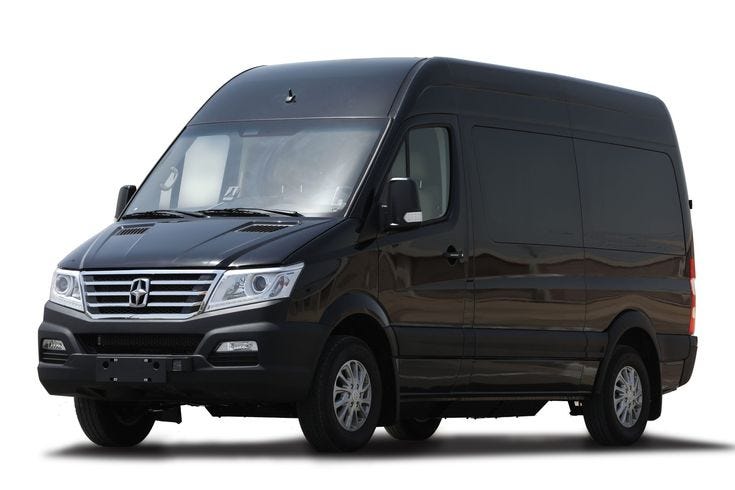
Electric Van — EGME
For any business that relies on commercial vehicles, operating costs directly impact profitability. Fuel expenses, maintenance, servicing, and unexpected repairs can quickly add up, especially for fleets operating every day.
One of the biggest reasons businesses are investing in an EV van is the opportunity to reduce these ongoing expenses.
Unlike diesel-powered vans, electric vans run on electricity, which is generally more cost-effective than conventional fuel. Companies operating multiple vehicles can achieve substantial savings over time, particularly for urban delivery routes where daily mileage is predictable.
Maintenance costs are also significantly lower.
Traditional diesel vehicles require:
- Engine oil changes
- Fuel filter replacements
- Exhaust maintenance
- Transmission servicing
- Engine cooling system repairs
Electric vans eliminate many of these requirements because electric drivetrains have fewer moving parts. This reduces scheduled maintenance and minimizes downtime, allowing businesses to keep vehicles on the road for longer periods.
Lower running costs translate into improved profitability, making EV vans an attractive long-term investment rather than simply an environmentally friendly choice.
2. Sustainability Has Become a Business Priority
Environmental responsibility is no longer limited to government organizations or multinational corporations. Businesses of every size are increasingly expected to demonstrate sustainable practices.
Customers, investors, and stakeholders now pay close attention to a company’s environmental impact, and transportation plays a major role in overall carbon emissions.
An EV van produces zero tailpipe emissions, helping organizations reduce their carbon footprint while contributing to cleaner air and quieter cities.
For businesses, adopting electric commercial vehicles can also support:
- ESG (Environmental, Social, and Governance) objectives
- Corporate sustainability reporting
- Green procurement requirements
- Carbon reduction initiatives
- Brand reputation
Many organizations are now promoting their use of electric vehicles as part of their sustainability strategy, demonstrating a commitment to cleaner transportation without compromising operational efficiency.
3. EV Vans Are Perfect for Urban Delivery Operations
Urban logistics has changed dramatically over the past decade.
The rapid growth of e-commerce has increased demand for same-day and next-day deliveries, requiring commercial vehicles to navigate congested city streets efficiently.
This is where the EV van excels.
Electric motors deliver instant torque, making stop-and-go driving smoother and more efficient than conventional diesel engines. Regenerative braking also helps recover energy during braking, improving efficiency in urban environments where frequent stops are common.
An EV van is particularly well suited for:
- Courier services
- Parcel delivery
- Grocery delivery
- Retail distribution
- Pharmaceutical logistics
- Food and beverage transport
Quiet operation is another major advantage.
Electric vans generate significantly less noise than diesel vehicles, making them ideal for early morning or late-night deliveries in residential areas.
As cities continue introducing low-emission zones and sustainability policies, businesses operating EV vans will be well positioned to comply with future regulations.
4. Battery Technology Has Improved Faster Than Expected
A few years ago, businesses hesitated to adopt electric vans because of concerns about battery performance and driving range.
Those concerns are rapidly disappearing.
Modern EV vans benefit from major advances in battery technology, including:
- Higher energy density
- Longer driving range
- Faster charging
- Improved thermal management
- Enhanced battery durability
Today’s battery systems are designed to withstand demanding commercial use while maintaining reliable performance over many years.
Battery management systems continuously monitor temperature, charging cycles, and overall battery health, helping maximize efficiency and extend battery life.
Manufacturers have also made significant progress in reducing battery weight, allowing modern EV vans to offer competitive payload capacities while maintaining practical driving ranges.
These improvements have transformed the electric van from a niche product into a reliable commercial vehicle suitable for everyday business operations.
5. Businesses Want to Future-Proof Their Fleets
Technology is changing rapidly, and businesses understand that today’s investment decisions will affect future competitiveness.
Fleet operators are increasingly adopting EV vans not only because of current benefits but also to prepare for the future.
Governments worldwide are implementing stricter emissions regulations, while many cities are planning restrictions on diesel-powered commercial vehicles over the coming years.
Businesses that begin electrifying their fleets today gain several advantages:
- Experience with EV fleet management
- Better understanding of charging requirements
- Lower long-term operating costs
- Improved sustainability credentials
- Reduced exposure to future regulatory changes
Instead of waiting until regulations force a transition, many organizations are choosing to gradually introduce EV vans into their operations.
This phased approach allows businesses to evaluate vehicle performance, optimize charging strategies, and build confidence before expanding electric fleets.
Future-proofing is no longer simply about adopting new technology — it is about ensuring that business operations remain competitive in an increasingly sustainable transportation landscape.
6. Charging Infrastructure Is Expanding Faster Than Ever
One of the biggest concerns businesses had when considering an EV van was charging infrastructure. A few years ago, limited charging stations made many fleet operators hesitant to transition from diesel vehicles.
Today, that situation has changed significantly.
Governments, private organizations, and energy providers are investing heavily in EV charging networks, making electric mobility more practical than ever before. Across the UAE and many international markets, businesses now have access to a growing number of public charging stations, high-speed DC chargers, and workplace charging solutions.
Many fleet operators are also installing dedicated charging systems at their own facilities. Depot charging allows vehicles to recharge overnight, ensuring they are fully prepared for the next day’s operations.
For businesses operating predictable daily routes, this charging model works exceptionally well.
Unlike diesel vehicles that require trips to fuel stations, an EV van can simply recharge while parked, reducing downtime and simplifying fleet management.
Fast-charging technology has also advanced considerably. Many commercial electric vans can replenish a significant portion of their battery capacity within a relatively short period, making it easier to maintain productivity during busy operating schedules.
As charging infrastructure continues expanding, range anxiety is becoming less of a concern for commercial fleet operators.
7. Smart Technology Improves Fleet Management
Modern commercial vehicles are no longer just transportation tools — they are connected, intelligent assets that generate valuable operational data.
Today’s EV vans are equipped with advanced telematics and fleet management technologies that help businesses improve efficiency, reduce operating costs, and optimize vehicle performance.
Many modern electric vans offer features such as:
- Real-time vehicle tracking
- GPS navigation
- Battery health monitoring
- Energy consumption reports
- Driver behavior analysis
- Remote diagnostics
- Predictive maintenance alerts
Fleet managers can use this information to make informed decisions about route planning, charging schedules, vehicle utilization, and maintenance planning.
Unlike conventional fleets that rely heavily on manual inspections and scheduled servicing, connected EV fleets provide continuous performance insights.
These intelligent systems help reduce downtime while improving operational reliability.
As commercial transportation becomes increasingly digital, businesses adopting EV vans gain access to technologies that extend far beyond electrification.
8. Customers Prefer Sustainable Businesses
Consumer expectations have changed dramatically over the past decade.
People increasingly choose businesses that demonstrate environmental responsibility.
Whether ordering products online, selecting logistics partners, or choosing service providers, customers often view sustainability as an important factor in purchasing decisions.
Operating an EV van fleet sends a clear message.
It shows that a company is committed to:
- Reducing emissions
- Supporting cleaner cities
- Investing in innovation
- Building a sustainable future
For industries such as hospitality, retail, tourism, healthcare, and e-commerce, sustainable transportation can strengthen brand image while differentiating the business from competitors.
Many organizations now include their electric vehicle initiatives in annual sustainability reports and corporate communications.
While customers may not always ask what powers a delivery vehicle, they increasingly appreciate businesses taking visible steps toward environmental responsibility.
An EV van therefore becomes more than just a commercial vehicle — it becomes part of the company’s brand identity.
9. Total Cost of Ownership Is Becoming More Important Than Purchase Price
One of the biggest misconceptions surrounding electric commercial vehicles is that they are too expensive.
While an EV van may have a higher upfront purchase price than a comparable diesel model, experienced fleet operators increasingly focus on Total Cost of Ownership (TCO) rather than initial purchase cost.
TCO considers the complete financial picture, including:
- Purchase price
- Fuel or electricity costs
- Scheduled maintenance
- Repairs
- Vehicle downtime
- Operating efficiency
- Resale value
When these factors are evaluated over several years, electric vans often become highly competitive.
Fuel savings alone can significantly reduce operating expenses for businesses running multiple vehicles daily.
Maintenance savings further improve long-term economics because electric drivetrains eliminate many traditional servicing requirements.
As battery technology becomes more affordable and production volumes increase, the purchase cost of EV vans is also expected to become increasingly competitive.
Businesses making decisions based solely on sticker price may overlook substantial long-term financial benefits.
10. EV Vans Are Shaping the Future of Commercial Mobility
The transportation industry is entering a new era.
Electric mobility is no longer limited to passenger cars — it is rapidly transforming commercial transportation as well.
Across the world, governments are investing in clean mobility initiatives, while manufacturers continue introducing more capable electric commercial vehicles.
Advancements expected over the coming years include:
- Longer driving ranges
- Faster charging speeds
- Higher battery efficiency
- Improved payload capacity
- Enhanced vehicle connectivity
- Smarter energy management systems
These developments will continue making EV vans even more practical for logistics companies, delivery services, corporate fleets, municipal operators, and commercial businesses.
Companies adopting electric vans today are gaining valuable experience that will help them remain competitive as transportation continues evolving.
Instead of reacting to future industry changes, they are helping shape them.
How EGME Supports the Transition to Electric Commercial Mobility
As businesses across the UAE explore cleaner transportation solutions, choosing the right mobility partner is just as important as selecting the right vehicle.
EGME supports organizations transitioning to electric commercial mobility by offering advanced EV van solutions designed for a wide range of industries. Whether businesses require cargo vans for logistics, passenger vans for staff transportation, or chiller vans for temperature-controlled deliveries, electric vehicles provide an efficient and sustainable alternative to conventional diesel fleets.
Beyond supplying commercial electric vehicles, EGME also supports fleet electrification with charging solutions, industry expertise, and a commitment to helping organizations embrace the future of sustainable transportation.
Conclusion
The rapid growth of the EV van market is not simply another automotive trend — it reflects a fundamental shift in how businesses approach transportation.
Lower operating costs, improved battery technology, expanding charging infrastructure, advanced fleet management systems, and growing sustainability expectations are encouraging organizations to rethink traditional commercial vehicles.
While diesel vans have served businesses reliably for decades, electric alternatives are proving that efficiency and sustainability can go hand in hand.
For logistics companies, retailers, hospitality providers, healthcare organizations, municipalities, and commercial fleet operators, the question is no longer whether EV vans are practical.
The real question is how quickly businesses can benefit from making the transition.
As technology continues advancing and infrastructure expands, the EV van is set to become a cornerstone of modern commercial mobility. Companies that invest today are not only reducing operating costs and emissions — they are positioning themselves for a future where electric transportation is the new standard.
Whether supporting last-mile deliveries, transporting passengers, or enabling sustainable business operations, EV vans are helping shape a cleaner, smarter, and more efficient transportation ecosystem. For forward-thinking organizations, the journey toward commercial electrification has already begun, and the EV van is leading the way.
메타데이터
- post_id
- 83f9936ba229
- slug
- 10-reasons-businesses-are-choosing-ev-vans-in-2026-83f9936ba229
- url
- https://medium.com/@priyap11202/10-reasons-businesses-are-choosing-ev-vans-in-2026-83f9936ba229
- canonical_url
- https://medium.com/@priyap11202/10-reasons-businesses-are-choosing-ev-vans-in-2026-83f9936ba229
- author_url
- https://medium.com/@priyap11202
- status
- ok
- fetched_at
- 2026-07-08 20:12:56