Sleep Is the New Oil — And We’re Running on Empty
Sleep Is the New Oil — And We’re Running on Empty
Capitalism didn’t just steal your sleep. It’s selling it back to you at a premium, and the price depends entirely on who you are.

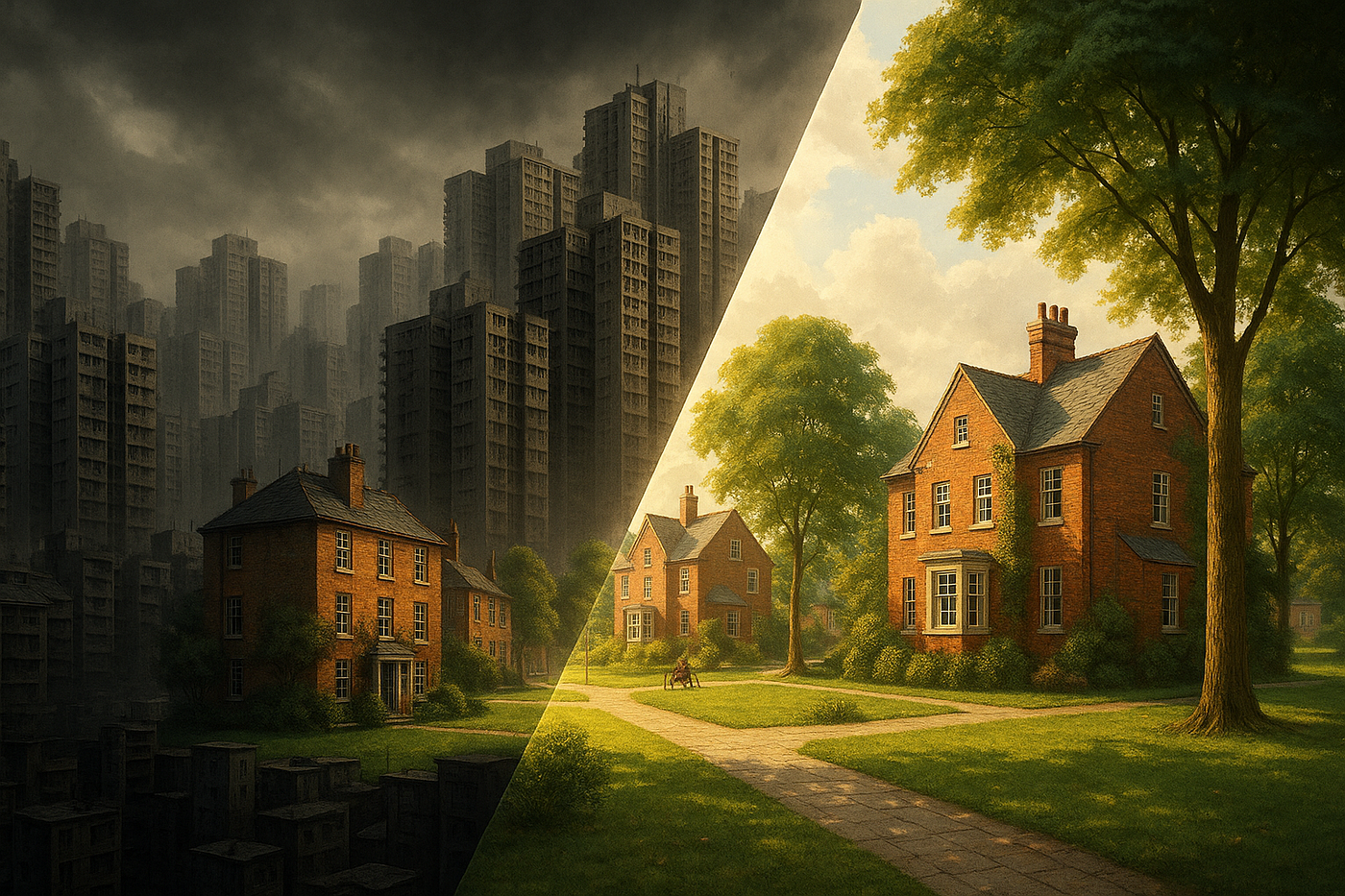
image created by author using image-1
The average American loses the equivalent of a full working month every year to sleep deprivation. That’s not a personal failing. It’s an engineered outcome — and somewhere, someone is profiting from your exhaustion.
The Last Territory Capitalism Cannot Colonise — Yet
Jonathan Crary, in his unsettling 2013 work 24/7: Late Capitalism and the Ends of Sleep, made an observation that cuts to the bone: sleep is the last remaining barrier to the total, uninterrupted operation of global capitalism. It cannot be monetised. It generates no data. It produces nothing.
Which is precisely why the system treats it as a problem to solve.
The 24/7 economy doesn’t merely inconvenience sleepers — it pathologises rest itself. The cultural glorification of the four-hour night, the Silicon Valley fetishisation of the all-nighter, the quiet corporate approval of someone who “grinds” through fatigue — these aren’t accidents. They are the ambient ideology of an economic order that views unconsciousness as dead air.
Key Insight: Sleep isn’t a productivity variable. It’s a political boundary — and it’s under sustained assault.
Your Postcode Determines How Well You Sleep Tonight
Here’s where the ideology lands in flesh and bone.
Research published in the American Journal of Epidemiology and reported by The Atlantic found that Black Americans are approximately five times more likely to get fewer than seven hours of sleep than their white counterparts. The mechanisms aren’t mysterious: environmental noise, unsafe neighbourhoods, jobs that offer no flexibility, shift patterns designed around production schedules rather than human biology.
Sleep inequality is infrastructure inequality wearing pyjamas.
The working poor don’t struggle with sleep because of poor habits or insufficient discipline. They struggle because their lives offer no insulation from disruption — no quiet, no schedule control, no buffer against the relentless friction of economic precarity. Meanwhile, the wealthy retrofit their homes with acoustic panels and commission specialists to optimise their sleep architecture.
Same biological need. Radically different outcomes. The gap between them is measured not in hours but in years of life.
The Irony of Selling Back What Was Stolen
And so we arrive at the beautiful, grotesque paradox at the heart of modern sleep culture.
The global sleep economy is projected to reach $585 billion — a market built almost entirely on the damage caused by the same economic system funding it. Smart beds at $40,000. Oura rings at $300. “Sleep stacks” assembled from a dozen supplements, each promising the deep restorative rest that a sane working culture would simply allow to happen naturally.
Capitalism first extracted the sleep. Now it’s offering to sell it back.
“The market first stripped the conditions for natural rest, then packaged rest as a luxury product. It is a perfect closed loop of manufactured need.”
The biohacking community tracks sleep scores with the intensity once reserved for stock portfolios. The anxiety about sleep quality has become, for some, a greater impediment to rest than any external noise. There is a clinical term for this: orthosomnia — the obsessive pursuit of perfect sleep data, which itself causes insomnia.
TL;DR: The sleep economy thrives on the sleep crisis it helped create. Spending more on optimisation tools doesn’t address the cause — it monetises the wound.
Staying Up Late Is an Act of Quiet Rebellion
There’s a phenomenon worth naming here. Across overworked populations in East Asia, North America, and Europe, a pattern has emerged: people who feel their days are entirely owned by their employers refuse to go to sleep at a reasonable hour — not from carelessness, but from a deep, almost desperate need to reclaim a few autonomous hours.
The Sleep Foundation describes this as “revenge bedtime procrastination” — the trading of rest for agency.
It is a rational response to an irrational situation. When your waking hours belong entirely to someone else, midnight becomes the only sovereign territory left. The cost, of course, is paid in cortisol, cognitive fog, and long-term health consequences that arrive quietly, years later.
Working Nights Is a Carcinogen — Literally
The International Agency for Research on Cancer classifies night shift work as a Group 2A carcinogen — the same category as red meat and emissions from high-temperature frying. The mechanism is circadian disruption: the systematic overriding of the body’s internal clock produces hormonal dysregulation with measurable downstream effects on cancer risk.
Millions of essential workers — nurses, logistics staff, warehouse operatives — absorb this risk as a condition of employment. It is, in the most precise sense, a health cost externalised onto workers by an economy that needs 24-hour throughput.
The RAND Corporation has calculated that the United States loses up to $411 billion annually in productivity to sleep deprivation. The economic argument for protecting sleep is, by any measure, overwhelming. Yet policy remains largely unmoved.
Being Awake for 19 Hours Makes You a Drunk Driver
Research cited by Johns Hopkins Medicine establishes that 17 to 19 hours without sleep produces cognitive impairment equivalent to a blood alcohol concentration of 0.05%. Hustle culture, in other words, is dispatching functionally intoxicated people to drive, make clinical decisions, and operate machinery — then celebrating their dedication.
Pro-Tip: The next time someone brags about their four-hour night, note that you wouldn’t board a flight with a pilot who’d had four drinks.
Sleep Justice Is the Civil Rights Issue Nobody Is Talking About
The open loop posed at the start of this piece — who benefits from your exhaustion? — resolves here, uncomfortably.
The system that profits from round-the-clock production also profits from the remediation of its damage. The workers absorbing the greatest biological cost have the fewest resources to recover it. And the political will to treat sleep as a public health priority remains, for now, a distant aspiration.
Rest is not laziness. It is resistance. And the fact that it needs defending at all tells you everything about the world that was built while you weren’t looking.
If this was useful, the biggest favor you can do is share it with someone who’d benefit.
Enjoyed this?
Share it, clap, and follow for more. Your support makes all the difference.
Don’t Miss out, get every new article in your inbox — subscribe here.
**Get an email whenever I publish.**
Sources
- Crary, J. (2013). 24/7: Late Capitalism and the Ends of Sleep. Verso Books.
- The Atlantic (2015). The Sleep Gap: How Race and Class Affect Your Rest.
- Bloomberg Business (2022). The Global Sleep Economy to Reach $585 Billion by 2024.
- Sleep Foundation. What Is Revenge Bedtime Procrastination?
- International Agency for Research on Cancer (IARC). IARC Monographs — Night Shift Work.
- RAND Corporation. Why Sleep Matters — The Economic Costs of Insufficient Sleep. RR1791.
- Johns Hopkins Medicine. Sleep Deprivation: Symptoms, Causes, and Effects.
- Harvard Health Publishing. Blue Light Has a Dark Side.

in collaboration with AI
메타데이터
- post_id
- 83fa8bfd760e
- slug
- sleep-is-the-new-oil-and-were-running-on-empty-83fa8bfd760e
- url
- https://medium.com/perspective-matters/sleep-is-the-new-oil-and-were-running-on-empty-83fa8bfd760e
- canonical_url
- https://medium.com/perspective-matters/sleep-is-the-new-oil-and-were-running-on-empty-83fa8bfd760e
- author_url
- https://medium.com/@lesliecoelho
- status
- ok
- fetched_at
- 2026-06-14 11:28:49