I Stopped Writing for Years. Here’s What I Was Building.
A Personal Update
I Stopped Writing for Years. Here’s What I Was Building.
A Personal Update
Photo by Neil Soni on Unsplash
A personal update on where I disappeared to, and the three Android apps that came out of it
It’s strange to open a blank Medium draft after years of silence.
I used to write here regularly. I had a small but genuine group of followers, a handful of you left comments that actually made me think, and for a while, writing felt like part of my routine. Then, without any announcement or explanation, I just stopped.
No farewell post. No “taking a break” update. I simply vanished from this platform for years.
If you’re one of the people who followed me back then, you might have wondered what happened. Did I lose interest? Get busy? Give up on writing entirely?
The honest answer is simpler and, I think, more interesting: I was building things. Quietly, slowly, and mostly for an audience of one — myself.
This article is my attempt to explain where I’ve been, what I’ve been working on, and why I’m finally ready to talk about it.
What I Was Actually Doing During the Silence
Photo by Glenn Carstens-Peters on Unsplash
While I wasn’t publishing, I wasn’t idle either.
I spent those years studying computer science, which sounds straightforward but was, in practice, a slow and often humbling process. I was learning how software actually works under the hood, not just how to copy a tutorial and get something running. Alongside that, I was teaching myself Android development in far more depth than I originally intended to.
At the same time, I was dealing with something a lot of students, developers, and honestly most people with a smartphone deal with: I couldn’t focus. I was distracted constantly, my study sessions kept collapsing into scrolling sessions, and my “background music while working” setup was a mess of apps that weren’t built for what I actually needed.
So somewhere along the way, studying computer science and solving my own daily frustrations started to merge into the same project.
Why I Started Building Apps for My Own Problems
Photo by Daniel Korpai on Unsplash
I want to be upfront about something: I didn’t set out to become an “indie Android developer” with a portfolio of published apps. That wasn’t the plan.
What actually happened is that I kept running into small, annoying, very specific problems in my own life — problems with focus, with listening to music while working, with my own relationship to my phone — and I got tired of settling for apps that almost did what I needed but not quite.
So instead of publishing random apps just to have something on the Google Play Store, I decided to build tools that solved problems I actually had. If they turned out to be useful only to me, that would still have been worth it. The fact that other people might find them useful too was a bonus, not the starting point.
That mindset shaped everything that came after: three applications, each born out of a genuine personal need, each still very much a work in progress.
HushFlow: A Background Music and Podcast Player Built for Focus
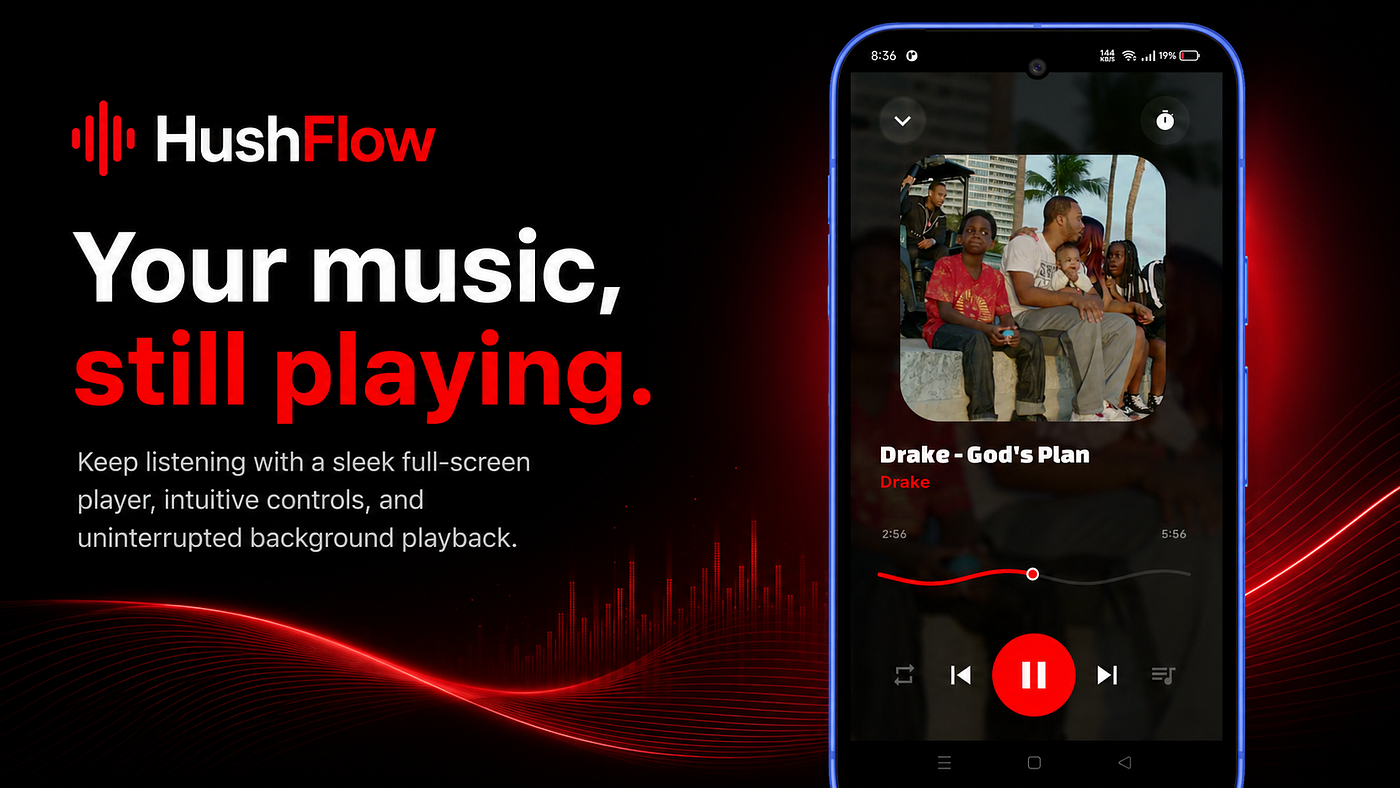
Hushflow works at the background, music and podcasts as well.
The first app I built was HushFlow, a background music and podcast player designed for focused work, studying, relaxing, and screen-off listening.
The problem was simple. I wanted to listen to music or podcasts while coding, studying, or just trying to unwind, without needing my screen on the entire time and without dealing with clunky controls buried three taps deep. I wanted something clean, quiet, and reliable in the background.
HushFlow ended up including:
- Background and screen-off playback
- Support for both music and podcasts
- Notification and lock-screen controls
- Playback queue management
- A sleep timer for winding down at night
- A calm, distraction-free interface with nothing fighting for your attention
It’s not trying to be a full streaming platform or compete with the giants of audio. It’s meant to do one thing well: let you listen the way you actually want to, whether that’s a focused coding session, a late study night, or just background sound while your phone stays face-down on the desk.
Out of the three apps, HushFlow is the one I use the most, almost every day, which is exactly the kind of validation that matters most to me right now.
FocusFlow: A Focus Timer I’m Still Building

Feature graphic of FocusFlow
The second project, FocusFlow, is still in development. I want to be clear about that upfront, because it would be easy to describe a vision so polished it sounds finished. It isn’t.
FocusFlow is a focus timer and productivity app inspired by the Pomodoro technique, deep-work sessions, and the kind of structured study routines I wish I had used earlier in my education. I’m building it with students, developers, and anyone who struggles to stay on task in mind, because that “anyone” definitely includes me.
Some of the ideas I’m exploring for FocusFlow include:
- A Pomodoro-style focus timer
- Support for longer deep-work sessions
- Dedicated study timers
- Break reminders that don’t feel naggy
- Ambient sounds for concentration
- Different focus modes depending on the type of work
- Productivity insights over time
- A few different visual timer styles, since not everyone focuses the same way
None of these are locked in yet, and some may change entirely before release. What I can say is that building FocusFlow has already forced me to rethink how I personally structure study sessions, programming work, and the constant juggling act of university assignments and side projects. Even in its unfinished state, it’s changing how I plan my day.
Noctra: Facing My Own Doomscrolling Habit

Noctra’s apps blocking page
The third app, Noctra, came from the most uncomfortable realization of the three.
Noctra is a digital detox and app blocker built to fight doomscrolling and compulsive phone checking. The features include:
- Blocking distracting apps during focus periods
- Daily app usage limits
- Interventions specifically aimed at anti-doomscrolling
- Dedicated focus sessions
- Boredom training, to relearn how to sit with unstructured moments
- Calming atmosphere rooms
- Digital wellbeing insights
- Tools for building healthier phone habits over time
I didn’t fully appreciate how much endless scrolling and constant notifications were eating into my concentration until I started designing a tool meant to stop it. Building Noctra meant confronting my own screen time data, my own late-night scrolling sessions, and my own excuses about “just checking one more thing.”
It wasn’t always a comfortable process. But it was a necessary one, and Noctra exists because I needed it just as much as anyone else might.
What Building These Apps Taught Me
Building them taught me things that years of just consuming content never could.
I learned how much harder it is to finish something than to start it. I learned that solving your own problem is a far better compass than chasing trends. I learned to sit with unfinished, imperfect versions of my own work without abandoning them out of frustration. And I learned that “indie developer” isn’t a title you earn once, it’s something you keep proving to yourself, one buggy release and one late-night fix at a time.
I’m still learning. I’m still testing. I still make mistakes, sometimes the same ones twice. But I’d rather write about that honestly than pretend I have this all figured out.
What I Plan to Write About Next
Now that I’m back, I want to keep writing, this time about the process itself, not just the outcomes.
In future articles, I’m planning to cover:
- Building Android applications from scratch
- What indie app development actually looks like day to day
- Productivity experiments I’ve tried on myself
- The realities of publishing on Google Play
- App design decisions, including ones I got wrong
- Mistakes I made as a developer, in detail
- Balancing university, coding, and personal projects without burning out
- What worked, what failed, and what I’d do differently
I don’t want this to read like a highlight reel. I want it to be useful to anyone else who’s building something on the side while juggling school, work, or a full-time job.
Coming Back, For Real This Time
I don’t know if the people who followed me years ago are still around, but if you are, thank you for sticking with an account that went quiet without explanation.
I didn’t disappear because I lost interest in writing. I disappeared because I got pulled into building things I needed for myself, and somewhere along the way, I forgot to write about it while it was happening.
That’s changing now. HushFlow, FocusFlow, and Noctra aren’t finished stories, they’re ongoing ones, and I’d rather tell them as they unfold than wait until everything feels perfect.
If you’re curious about productivity apps, Android development, focus and concentration tools, or just want to follow along as an indie developer figures things out in public, I’d love to have you along for the next chapter.
메타데이터
- post_id
- 83fd187d2eae
- slug
- i-stopped-writing-for-years-heres-what-i-was-building-83fd187d2eae
- url
- https://medium.com/dancing-elephants-press/i-stopped-writing-for-years-heres-what-i-was-building-83fd187d2eae
- canonical_url
- https://medium.com/dancing-elephants-press/i-stopped-writing-for-years-heres-what-i-was-building-83fd187d2eae
- author_url
- https://medium.com/@tasfin165
- status
- ok
- fetched_at
- 2026-07-14 18:07:17