I’m a Cardiologist. Here’s the Number on Your Watch I Actually Look At.
Resting heart rate sits inside the “normal” range from 60 to 100 beats per minute. A meta-analysis of nearly 1.25 million adults suggests…
I’m a Cardiologist. Here’s the Number on Your Watch I Actually Look At.
Resting heart rate sits inside the “normal” range from 60 to 100 beats per minute. A meta-analysis of nearly 1.25 million adults suggests the top half of that range is not as reassuring as it sounds.
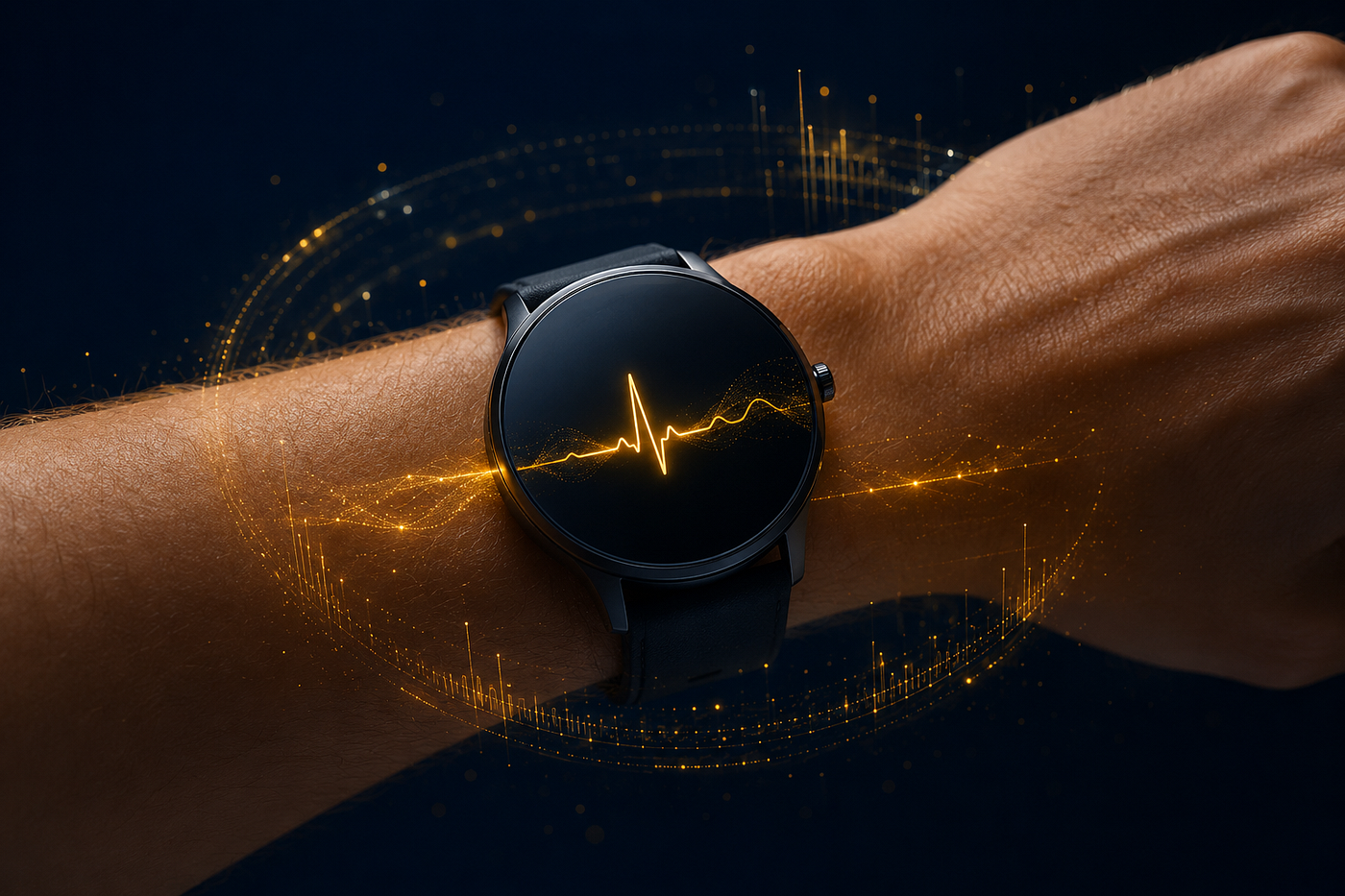
A normal resting heart rate does not always mean a settled one. Trend matters. Your watch has been keeping score. The question is whether you have been reading it.
The number sitting on your wrist
You probably already have this number. Your watch has been tracking it for months, perhaps years. Most people glance at it, see it inside the normal range, and look no further.
That is the problem. The normal range is wide enough to hide a real signal.
The American Heart Association defines a normal adult resting heart rate as 60 to 100 beats per minute. That is the range your GP uses, the range your watch labels green, the range that gets a tick on your annual check-up.
It is also a range that includes meaningful differences in long-term cardiovascular risk.
The normal range tells you whether you are ill. It does not tell you which way you are heading.
A 2016 meta-analysis in the Canadian Medical Association Journal pooled 46 prospective cohort studies, covering 1.24 million adults and 78,349 deaths. Each 10 beats per minute increment in resting heart rate was associated with a 9 per cent higher risk of all-cause mortality and an 8 per cent higher risk of cardiovascular mortality. These associations persisted after adjusting for traditional risk factors.
The same analysis broke the data into bands. Compared with the lowest category, adults with a resting heart rate between 60 and 80 had a 12 per cent higher risk of all-cause mortality. Adults above 80 had a 45 per cent higher risk.
A larger 2017 meta-analysis covering 87 studies extended this. Each 10 beats per minute step up was associated with an 18 per cent higher risk of heart failure, a 15 per cent higher risk of cardiovascular disease overall, and a 17 per cent higher risk of all-cause mortality.
This is association, not causation. Resting heart rate is not a disease. It is a window onto something underneath.
Why a higher resting heart rate may signal more
Your resting heart rate reflects the balance between two arms of your autonomic nervous system. The sympathetic arm speeds the heart up. The parasympathetic arm slows it down. A higher resting figure suggests sympathetic dominance, which over time is associated with poorer cardiovascular outcomes.
It also tracks loosely with fitness. A fitter heart fills more completely and pumps a larger volume per beat, so it needs fewer beats to do the same work. A heart resting at 75 is doing measurably more work over a day than the same heart at 60. Over a decade, that adds up.
A trained endurance athlete may sit in the 40s, and that is a different story. The signal in this article is about the broad middle of the population, not the trained tail.
Sex matters too. Women on average run about 5 to 10 beats per minute faster than men at rest, largely because the female heart is slightly smaller and compensates for a smaller stroke volume with a higher rate. This does not change the message. It just means your personal trend matters more than where you sit against the population average.
The number can be raised by things worth examining: poor sleep, chronic stress, low aerobic fitness, alcohol the night before, untreated anaemia, a thyroid that is running hot. It does not diagnose any of these on its own. It needs clinical context.
The point is direction. If your resting heart rate has drifted from 62 to 74 over three years, the smartwatch will still label that green. The trend tells you something the threshold does not.
What to ask
At your next health review, ask one question: what is my average overnight resting heart rate over the last three months, and how has it changed from the year before? The answer lives in your watch, not in the surgery’s notes. Bring it.
Three things you can do this week:
1. Open your watch or fitness tracker and find your three-month average overnight resting heart rate. Note it.
2. Compare it with the same number from twelve months ago, if your device stores it. Direction matters more than any single reading.
3. If your figure has been consistently above 80 for several months, raise it at your next GP appointment alongside sleep, stress, and aerobic activity in the past year.
Resting heart rate is one of the cheapest, most continuously measured biomarkers most adults already collect. Reading the trend, not the snapshot, is where the value sits.
메타데이터
- post_id
- 8425df3f7257
- slug
- im-a-cardiologist-here-s-the-number-on-your-watch-i-actually-look-at-8425df3f7257
- url
- https://medium.com/heart-reset-journal/im-a-cardiologist-here-s-the-number-on-your-watch-i-actually-look-at-8425df3f7257
- canonical_url
- https://medium.com/heart-reset-journal/im-a-cardiologist-here-s-the-number-on-your-watch-i-actually-look-at-8425df3f7257
- author_url
- https://medium.com/@h.bulluck
- status
- ok
- fetched_at
- 2026-06-14 11:28:49