Nature Journaling for Anxiety: Why Writing Outside Works When Your Brain Won’t Shut Up
A science-backed grounding technique that requires nothing but a notebook and the willingness to sit still for ten minutes
Nature Journaling for Anxiety: Why Writing Outside Works When Your Brain Won’t Shut Up
A science-backed grounding technique that requires nothing but a notebook and the willingness to sit still for ten minutes
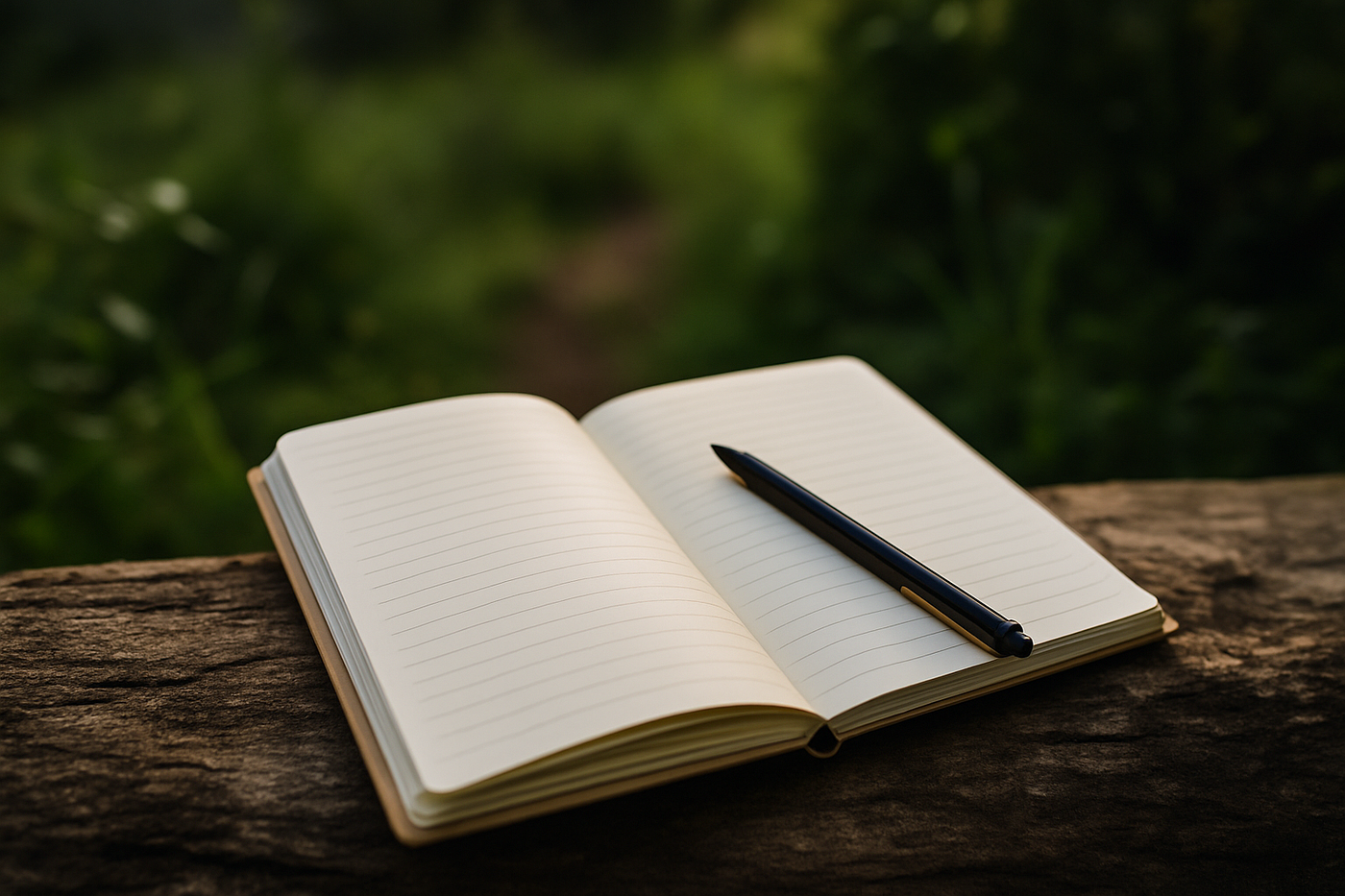
Your brain is a browser with 47 tabs open, three of them playing video, all of them urgent, none of them productive. Anxiety has transformed your thoughts into a continuous stream of worst-case scenarios narrated by someone who really hates you. Sleep feels like a theoretical concept. Breathing like something you forgot how to do correctly.
The wellness industrial complex offers solutions: meditation apps that cost more than therapy, breathwork classes that make you hyperventilate, crystals that do absolutely nothing except look pretty on your nightstand while you spiral at 3 AM.
But occasionally, research identifies something that actually works without requiring a trust fund or the ability to sit cross-legged without your knees screaming in protest.
Nature journaling — the practice of writing while physically present in outdoor spaces — demonstrates measurable anxiety reduction in multiple peer-reviewed studies. Not through mystical energy or manifesting good vibes, but through documented neurological and physiological mechanisms that combine sensory grounding with reflective writing.
No app subscription required. No instructor telling you you’re doing it wrong. Just a notebook, a pen, and your overwhelmed brain meeting something older and considerably more patient than your anxiety.

No app subscription required. Just a notebook, a pen, and your overwhelmed brain…
Here’s how it works — and why your therapist will probably approve.
Nature Journaling vs. Regular Journaling: What Makes Outdoor Writing Different for Anxiety Relief
Nature journaling combines two evidence-backed anxiety interventions: expressive writing and time in natural environments. The practice involves writing while physically present in natural settings — parks, gardens, beaches, forests, or that weird patch of grass in the parking lot behind your apartment building.
This isn’t traditional journaling where you dissect your emotions while hunched over a desk under fluorescent lighting. Nature journaling anchors the writing process in immediate sensory experience: what you see, hear, smell, feel against your skin. The environment becomes part of the therapeutic intervention, not just a scenic backdrop.
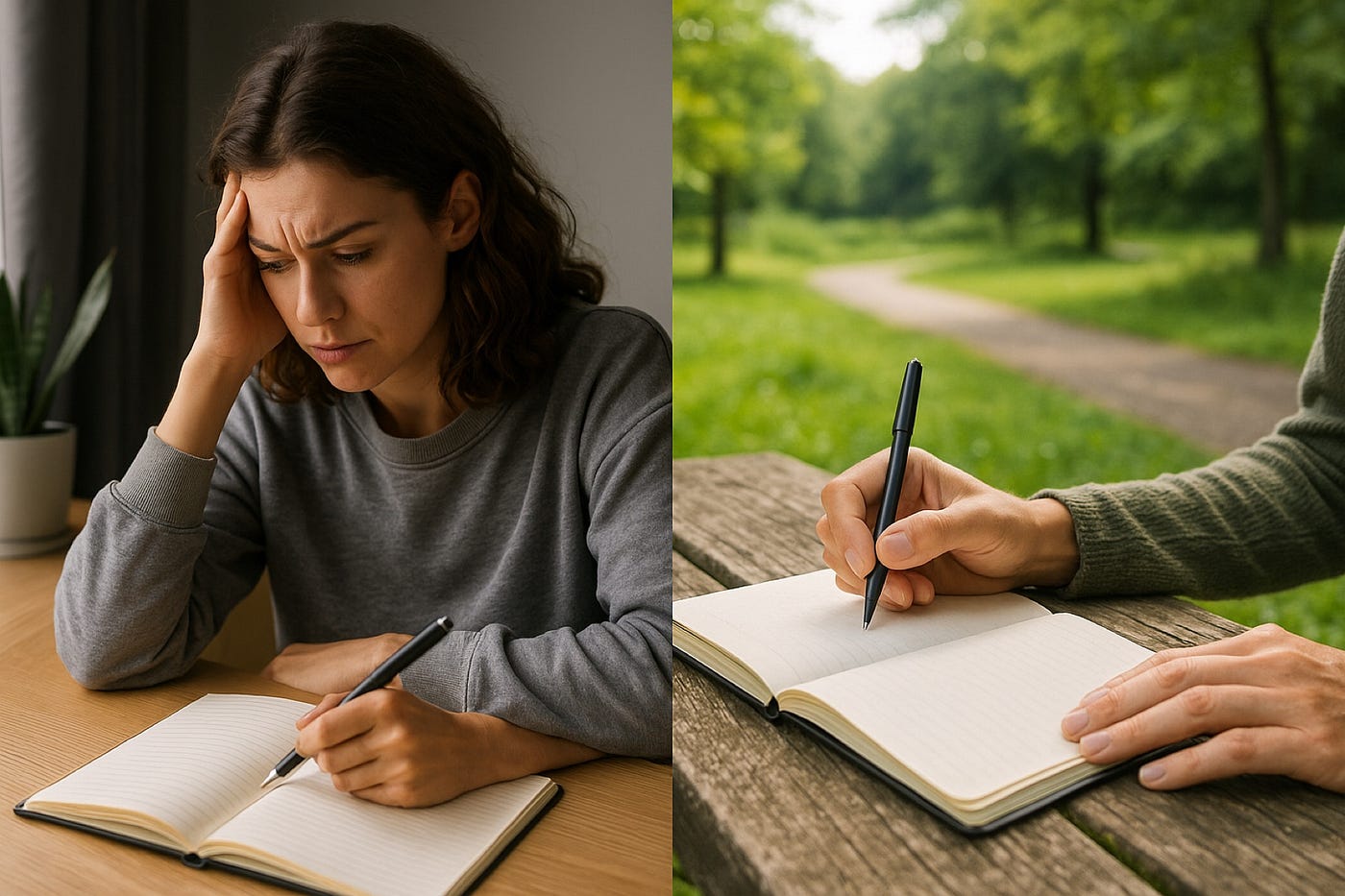
Nature journaling involves writing while physically present in natural settings
What You Need for Nature Journaling
The essentials:
- Notebook (a $2 composition book works fine; your anxiety doesn’t care about aesthetic)
- Pen or pencil (whatever writes)
- Easily accessible outdoor space
- 10–20 minutes you weren’t using productively anyway
What you absolutely don’t need:
- Literary talent or drawing skills
- Perfect grammar or eloquent prose
- Deep insights about yourself
- The ability to identify bird species
- Instagram-worthy photos of your journaling setup
- Any special equipment or expensive supplies
The practice works whether you write full paragraphs, disconnected observations, fragmented thoughts, or just “the wind feels nice” seventeen times. Your journal isn’t performing for an audience. It’s a receptacle for whatever your brain needs to discharge.
How Nature Journaling Actually Reduces Anxiety: The Science Behind Outdoor Writing
Several mechanisms explain the measurable impact of nature journaling on anxiety symptoms — and none involve toxic positivity or pretending trees are sentient therapists. It’s not mystical, it’s mechanical. Just your brain doing what millions of years of evolution designed it to do when you stop fighting it.
1. Sensory Grounding Interrupts Anxiety Rumination Loops
Anxiety thrives on abstract threats: imagined catastrophes, anticipated rejections, potential disasters your brain insists on rehearsing. Nature journaling forces attention toward concrete, present-moment sensory input.
The rough texture of tree bark. Bird calls you can’t identify but can definitely hear. A breeze creating goosebumps on your forearm. These immediate physical sensations interrupt rumination by demanding attention your brain can’t simultaneously allocate to catastrophizing.
Research found that adolescents who journaled in natural environments showed improved emotional regulation and reduced anxiety symptoms. The combination of outdoor exposure and reflective writing created stronger effects than either intervention alone (Wang et al., 2025).
2. Writing Externalizes Internal Chaos and Creates Cognitive Distance
Your anxious thoughts exist in a recursive loop — the same worries circling endlessly, gaining intensity with each repetition. Writing forces linear organization. You can’t write three thoughts simultaneously. Words on paper create external distance from internal experience.
This externalization doesn’t solve problems, but it creates cognitive space around them. The anxiety is still there — on the page, where you can see its actual dimensions instead of its shadow version projected across your entire mental landscape.
3. Natural Environments Lower Cortisol Without Requiring Meditation Skills
An integrative review showed that nature-based therapy practices result in measurable reductions in stress hormones, anxiety symptoms, and depressive symptoms (Bonham-Corcoran et al., 2022).
Being outside in green spaces reduces stress hormones through mechanisms that remain partially mysterious but consistently reproducible. You don’t need to achieve mindfulness or clear your mind or any other instruction that makes anxiety worse by adding performance pressure. You just need to be outside while your nervous system does what it evolved to do in response to natural environments.
4. The Practice Creates Structured Routine Without Rigid Requirements
Anxiety loves chaos and uncertainty. Nature journaling provides structure — designated time, specific activity, predictable format — without the rigidity that makes anxious people feel trapped.
You can journal for five minutes or thirty. You can write or sketch or just list things you notice. The practice adapts to whatever capacity you have on any given day.
Studies found that individuals engaging in nature journaling reported improved sleep quality, reduced anxiety, and stronger sense of peace. The flexible structure created consistency without triggering the control issues that often accompany anxiety disorders (Reality Pathing, 2025).
Being outside in green spaces reduces stress hormones through mechanisms that remain partially mysterious but consistently reproducible.
How to Start Nature Journaling for Anxiety Relief: A Non-Overwhelming Guide
Most wellness advice assumes you have unlimited time, boundless motivation, and the organizational skills of someone who definitely doesn’t have anxiety. This guide assumes you’re working with limited resources and a brain that fights you.
Step 1: Define “Outside” Loosely (Because Perfection Is the Enemy of Actually Doing Things)
Forget pristine wilderness or scenic overlooks. You need access to some version of nature you can reach regularly without requiring a day trip.
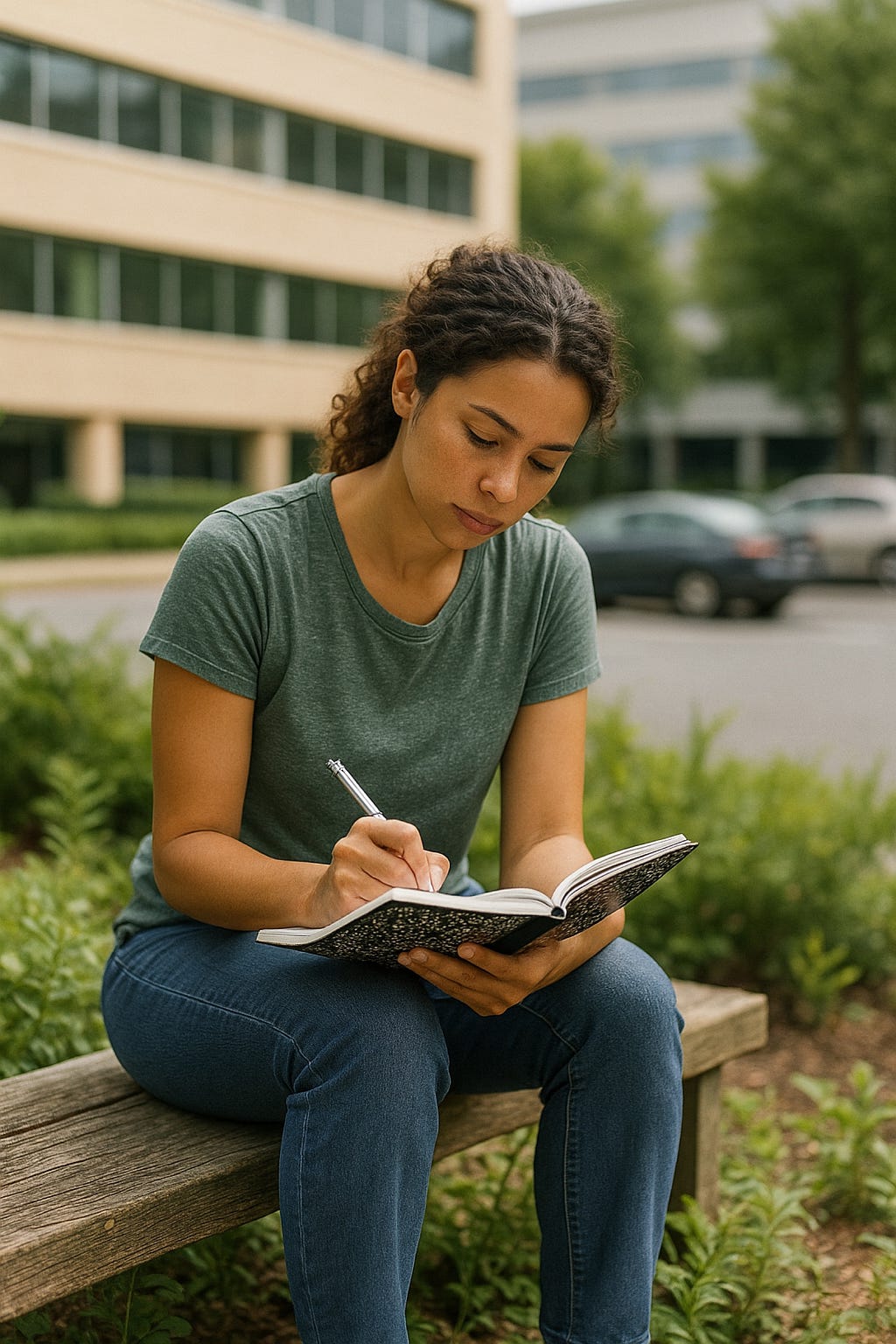
Literally anywhere you can see sky and won’t get arrested for loitering
Acceptable outdoor spaces for anxiety-relief nature journaling:
- A park within walking distance
- Your backyard or patio (even with traffic noise)
- A bench under a tree on your street
- A community garden you can access
- Literally anywhere you can see sky and won’t get arrested for loitering
According to research studies published by the University (UC) of San Diego, participants reported calm and increased clarity after just 10 minutes of writing in natural environments (Brady, 2023). The research doesn’t specify pristine wilderness — just outdoor spaces with some natural elements. A single tree counts. A patch of dandelions counts. Birds visible from a window technically count, though getting outside produces better results.
Step 2: Start With Sensory Observation, Not Emotional Insight
Sit. Breathe. Notice what’s happening around you. Begin with sensory prompts that require zero emotional processing.
“I see…”
- List everything visible: colors, shapes, movement, light quality
- Include the boring stuff: concrete, dead leaves, trash
- No judgment about what “should” be beautiful
“I hear…”
- Traffic, wind, rustling, birds, distant conversations
- Everything counts, even the annoying sounds
- Notice how sounds change as you pay attention
“I feel…” (physical sensations only)
- Temperature, wind, sun, fabric against skin
- Ground beneath you, pen in hand
- Tension in your jaw you didn’t realize was there
This sensory inventory grounds attention in immediate physical reality. You’re not processing emotions, analyzing problems, or trying to achieve anything. You’re just noticing things that exist outside your head.
Step 3: Write Whatever Your Brain Produces (Grammar Police Have No Jurisdiction Here)
After sensory observation, write whatever emerges:
- Disconnected thoughts: “The wind is cold. I forgot to eat lunch. That cloud looks angry. My shoulder hurts.”
- Fragment sentences: “Too much. Loud. Need quiet. This helps maybe.”
- Repetitive observations: “Leaves moving. Leaves moving. Leaves moving. Leaves still moving.”
- Terrible poetry: “The tree / Is tree-ing / I am / Not dying / Today / Probably”
- Honest assessments: “Still anxious but at least I’m sitting down.”

Your journal isn't performing for an audience
Research found that guided journaling, body scans, and mindfulness walks in nature promoted introspection, emotional regulation, and reduction in generalized anxiety symptoms (Lee, et al, 2021). The format mattered less than the practice of externalizing internal experience through writing while physically present in a natural environment.
Step 4: Include Drawing If Words Feel Impossible (Artistic Talent Not Required)
Some days, anxiety makes language impossible. Your brain can’t organize thoughts into sentences. Words feel heavy and wrong.
Draw instead:
- Terrible sketches of leaves (three lines count as leaves)
- Color swatches of things you see
- Abstract scribbles representing how you feel
- Stick figures of birds (all birds are essentially stick figures anyway)
- Literal squares and circles if that’s all you can manage
Studies found that combining eco-therapy with expressive arts, including nature journaling and visual documentation, decreased anxiety symptoms and increased environmental connection (Codding, 2025). The visual expression created an alternative pathway for processing when verbal processing felt overwhelming.
Step 5: Keep Your Writing Sessions Short (Burnout Isn’t Motivational)
Start with 5 minutes. Not 30. Not even 15. Five minutes of sitting outside with a notebook.
Your anxiety will insist this is insufficient — that real change requires substantial effort and commitment. Your anxiety is wrong about many things. Add this to the list.
Five minutes daily creates more benefit than 60 minutes weekly attempted once then abandoned because it felt too hard. Consistency beats intensity for anxiety management. Small, sustainable practices compound over time.
Five minutes daily creates more benefit than 60 minutes weekly attempted once then abandoned because it felt too hard.
Once five minutes feels automatic — not easy, but automatic — extend to ten. But not until five minutes becomes genuinely sustainable for at least two weeks.
Nature Journaling Prompts for Anxiety (When Your Brain Needs Structure)
Blank pages trigger anxiety for many people. Here are prompts that provide direction without requiring emotional excavation:
Grounding Prompts for Anxiety (Sensory Focus)
Use these when you need to interrupt rumination and anchor in the present moment:
- “Right now, I notice…”
- “Three things I can see / hear / feel…”
- “The temperature is…”
- “My body feels…”
- “The ground beneath me…”
Perspective Prompts for Anxiety (Cognitive Distance)
These create space between you and your anxious thoughts:
- “From the tree’s perspective, my problems are…”
- “If this anxiety were weather, it would be…”
- “This feeling will pass like…”
- “In this moment, I am safe because…”
Observational Prompts (Attention Redirection)
Redirect attention from internal catastrophizing to external reality:
- “How many shades of green can I identify?”
- “What’s moving right now?”
- “What sounds are constant vs. changing?”
- “What surprises me about this space?”
Gratitude Prompts (Without the Toxic Positivity)
Research supports gratitude practices for anxiety reduction, but toxic positivity makes everything worse. Use these only when they don’t feel like gaslighting yourself:
- “One thing that didn’t go wrong today…”
- “Something that requires zero effort from me…” (sun, wind, trees existing)
- “Something I don’t have to fix or improve…”
Honest Assessment Prompts (Because Sometimes It Just Sucks)
Permission to acknowledge reality without forced positivity:
- “What I’m avoiding right now…”
- “Things that feel too big…”
- “What I need but don’t have…”
- “How I actually feel instead of how I should feel…”
Making Nature Journaling a Daily Anxiety Management Practice
Pair With Existing Routines (Because New Habits Need Anchor Points)
Morning coffee/tea: Drink it outside with your notebook instead of scrolling doom news
Lunch breaks: 10 minutes in nearest outdoor space beats eating at your desk while working
Transition times: Between work and home, stop at a park instead of going directly from one stress environment to another
Wind-down routine: Evening outdoor journaling signals day-end better than watching TV until you’re numb
The practice works best when attached to existing daily rhythms rather than separate obligation requiring additional planning and motivation.
Track Patterns, Not Perfection (Data Your Anxiety Can’t Argue With)
Anxiety insists nothing helps and everything is pointless. Counter this with evidence:
- Mark journal dates when you actually did it (no commentary about quality)
- Note anxiety levels before and after (1–10 scale, no overthinking)
- Track sleep quality on journaling days vs. non-journaling days
- Observe physical symptoms: jaw tension, shoulder tightness, breathing depth
After two weeks, patterns emerge. Not dramatic transformations — measurable differences. Anxiety can’t argue with your own documented experience showing consistent 2–3 point anxiety reduction after outdoor writing sessions.
Anxiety insists nothing helps and everything is pointless. Counter this with evidence…
Adjust for Weather and Season (Because Nature Isn’t Always Cooperative)
Winter/cold: Shorter sessions, layers, covered locations, hot drinks
Rain: Covered porches, gazebos, or just wait — gaps between storms count
Extreme heat: Early morning or evening, shade, water
Limited mobility: Windows facing trees, balconies, rooftop access

The practice adapts to conditions rather than requiring perfect circumstances. Anxious brains excel at identifying obstacles. Flexible practice removes obstacles before they become reasons to quit.
What Nature Journaling Won’t Fix: Managing Expectations So You Don’t Abandon Ship
Nature journaling demonstrably reduces anxiety symptoms through multiple evidence-based mechanisms. It is not, however, a cure for anxiety disorders, a replacement for medication or therapy, or a solution to systemic problems causing your stress.
What Nature Journaling for Anxiety Won’t Do:
Fix the circumstances creating your anxiety: Your job still sucks, your family still makes you anxious, the world remains objectively overwhelming. Nature journaling helps you tolerate these realities, not eliminate them.
Work immediately or consistently: Some sessions will feel helpful. Others will feel like sitting outside being anxious while also holding a pen. Both are fine. The benefits accumulate gradually, not instantaneously.
Replace professional treatment for clinical anxiety: If your anxiety significantly impairs functioning, interferes with daily life, or includes panic attacks, see a mental health professional. Nature journaling complements treatment; it doesn’t substitute for it.
Require you to enjoy it: This isn’t about finding joy or connecting with nature. It’s a practical intervention that works through biological mechanisms regardless of your emotional state.
Your First Nature Journal Entry: Getting Started Today
7 Easy Steps for Starting Your Outdoor Writing Habit
- Find your notebook. Any notebook. Fancy ones aren’t better.
- Find the nearest outdoor space you can access in 5 minutes.
- Sit for two minutes without writing. Just notice what’s around you.
- Write “I am sitting outside” (this counts)
- List three things you notice with your senses
- Write whatever comes next for 5–10 minutes
- Stop
Do this three times this week. Notice what changes. Notice what doesn’t change but feels slightly different. Notice whether those ten minutes outside with a notebook create any space between you and your anxiety, even temporarily.
Because that space — that brief gap between stimulus and overwhelm — that’s what you’re cultivating. Not permanent calm. Not enlightenment. Just… a bit more space. A bit more capacity to observe what you’re experiencing instead of being completely consumed by it.
Most anxiety interventions fail because they demand too much: consistency, emotional availability, belief in the process, time you don’t have. Nature journaling succeeds through achievability. It asks only that you sit outside with a notebook for a few minutes.
Your anxiety will insist this is insufficient — too simple, too easy, too little effort to really work. Try it anyway. Not because you believe it will help, but because ten minutes outside with a notebook costs nothing except ten minutes you were probably spending catastrophizing anyway.
The research suggests it helps. Your brain’s probability calculations are currently compromised by anxiety. Trust the data over your feelings, just this once.
Your brain’s probability calculations are currently compromised by anxiety. Trust the data over your feelings, just this once.
So grab your $2 notebook. Find your weird patch of grass. And write what you see.
You might find the path to peace isn’t behind a paywall. It’s outside your door, waiting for you to notice it’s been there all along.
References
**Reality Pathing. **The Therapeutic Benefits of Nature Journaling Daily (2025). Retrieved from: https://realitypathing.com/the-therapeutic-benefits-of-nature-journaling-daily/
Bonham-Corcoran M, Armstrong A, O’Briain A, Cassidy A, Turner N (2022), “The benefits of nature-based therapy for the individual and the environment: an integrative review”. Irish Journal of Occupational Therapy, 50(1) 16–27. https://doi.org/10.1108/IJOT-06-2021-0015
Brady, E. (2023). Nature Rx: Addressing Climate Anxiety Through Eco Therapeutic Practices and Nature Immersion to Increase Earth Stewardship, Health, and Hope. UC San Diego: Climate Science and Policy. Retrieved from https://escholarship.org/uc/item/6r06j5tm
Codding, C. (2025). Integrating Nature and Creativity: Exploring the Therapeutic Potential of Expressive Arts Therapy in Eco-Retreats. Expressive Therapies Theses. 12. https://digitalcommons.lesley.edu/cgi/viewcontent.cgi?article=1008&context=expressive_therapies_theses
Lee, A.-Y., Kim, S.-Y., Kwon, H.J. and Park, S.-A. (2021), Horticultural Therapy Program For Mental Health Of Prisoners: Case Report. Integrative Medicine Research, Vol. 10(2),. 100495.
Wang, E., Jones, H., Carus, A., James, C., & Whelan, M. (2025). Ecotherapy for Adolescents Experiencing Mental Health Challenges: Qualitative Exploration of Perspectives of Adolescents and Parents. Journal of Creativity in Mental Health, 20(3), 451–467. https://www.tandfonline.com/doi/abs/10.1080/15401383.2024.2411221
Additional Sources
Moula, Z. (Ed.), Whitaker, P. (Guest ed.), & Hickman, C. (Guest ed.) (2025). The nature of art therapy: uniting human and planetary health. International Journal of Art Therapy, 30(1), 2–4. https://doi.org/10.1080/17454832.2025.2458382
Saraceno, J. (2017), CBT Eco-Art Therapy: Mood Regulation with Young Adults in Nature. ProQuest Dissertations & Theses
메타데이터
- post_id
- 84a073fa3149
- slug
- nature-journaling-anxiety-relief-guide-84a073fa3149
- url
- https://medium.com/@hashagentara/nature-journaling-anxiety-relief-guide-84a073fa3149
- canonical_url
- https://medium.com/@hashagentara/nature-journaling-anxiety-relief-guide-84a073fa3149
- author_url
- https://medium.com/@hashagentara
- status
- ok
- fetched_at
- 2026-07-26 05:12:50