The Evolution of Printing Technology in Digital Fabric Printing
In the vibrant world of fashion and design, the evolution of printing technology has been a game-changer, pushing the boundaries of…
The Evolution of Printing Technology in Digital Fabric Printing
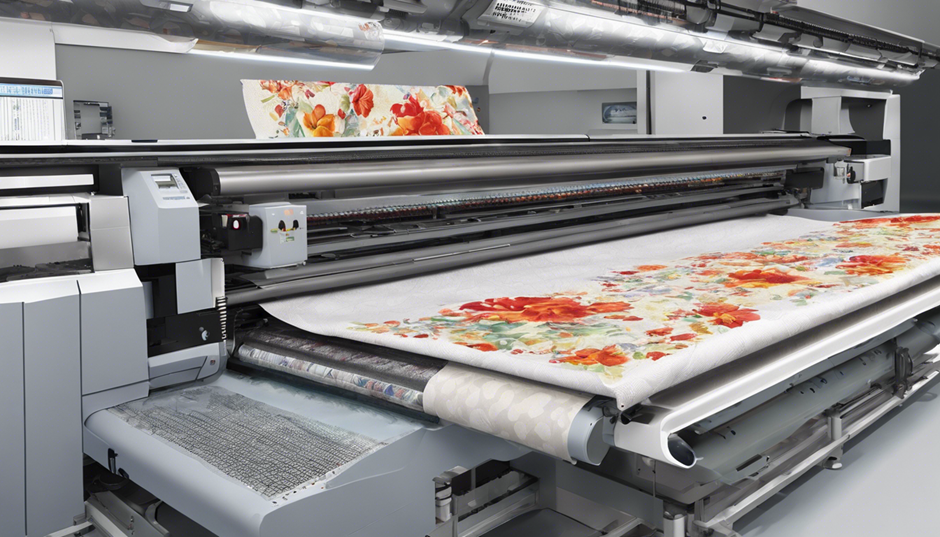
In the vibrant world of fashion and design, the evolution of printing technology has been a game-changer, pushing the boundaries of creativity and customization in fabric printing. This advancement not only revolutionized textile printing but also significantly contributed to textile manufacturing, enabling designers to transform their visions into reality with high quality printing. The significance of this technological leap extends beyond mere aesthetics; it represents a shift in how textile products are produced, emphasizing customization, efficiency, and sustainability. At the heart of this transformation is the intricate history of printing technology, which has evolved over centuries to meet the ever-changing demands of the fashion industry.
This article will delve into the rich historical background of fabric printing, spotlighting key developments and milestones that have shaped the landscape of digital fabric printing. From the impactful Japanese technologies that have refined textile printing to Soundarya’s personal journey with digital fabric printing, readers will gain insight into the pivotal moments and figures that have influenced this field. Furthermore, the discussion will extend to the current trends shaping the future of fabric printing, including advancements in pre-treatment and post-treatment processes, highlighting how these innovations continue to enhance customization and quality in textile manufacturing. Through this exploration, a comprehensive understanding of the evolution of printing technology in digital fabric printing will be unfolded, offering a glimpse into what the future holds for this dynamic industry.
Historical Background of Fabric Printing
Traditional Methods
The historical journey of fabric printing began in ancient China around 220 AD, where artisans utilized carved wood blocks to imprint designs onto fabrics. This traditional block printing method, known for its simplicity and artistic value, spread through trade routes to other parts of Asia and eventually reached Europe by the 12th century via the Islamic world. In Europe, textile printing evolved with the introduction of stencils and stamps, allowing for the application of dyes in predefined patterns.
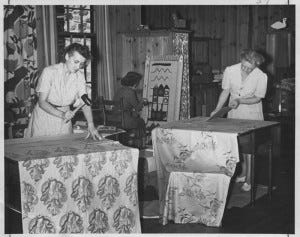
By the 17th century, the technique had further developed with the French importing knowledge and samples of Indian blue and white resist prints, which were notable for their washability. This period also marked the introduction of calico printing in Europe, which rapidly developed due to its commercial viability, particularly in France where it became renowned for artistic quality.
Limitations and Challenges
Despite the widespread adoption and cultural significance of these traditional methods, they were not without limitations. The early European dyes, for instance, were prone to liquefying during washes, which restricted the use of printed patterns to non-washable textiles like wall hangings. Additionally, the labor-intensive nature of block printing and the high costs associated with setting up and running screen printers posed significant challenges. Each color in a design required a separate screen, escalating production costs and limiting the technique to large-scale outputs.
The advent of roller printing in the 18th century by Thomas Bell in Scotland marked a significant technological advancement, reducing the costs associated with earlier copperplate printing and allowing for more economical production of printed textiles. However, this method still faced challenges such as the inability to effectively reproduce colors with the same accuracy as digital methods, and issues related to the ink not fully penetrating the fabric, leading to potential cracks in the design.
The evolution of fabric printing technology reflects a blend of artistic innovation and industrial challenges, shaping the path from traditional block printing to modern digital techniques.
Development and Milestones in Digital Fabric Printing
Early Innovations
The journey of digital fabric printing began with significant early innovations that set the stage for modern techniques. In the 1930s, flatbed screen printing was introduced, leading to mechanized versions in the 1950s which enhanced production efficiency. By 1962, rotary printing had taken over, known for its speed and effectiveness. The digital breakthrough came in the 1980s with the development of the first digital printing methods, where computerized lasers injected ink directly into the fabric, opening new possibilities for designers.
Key Technological Breakthroughs
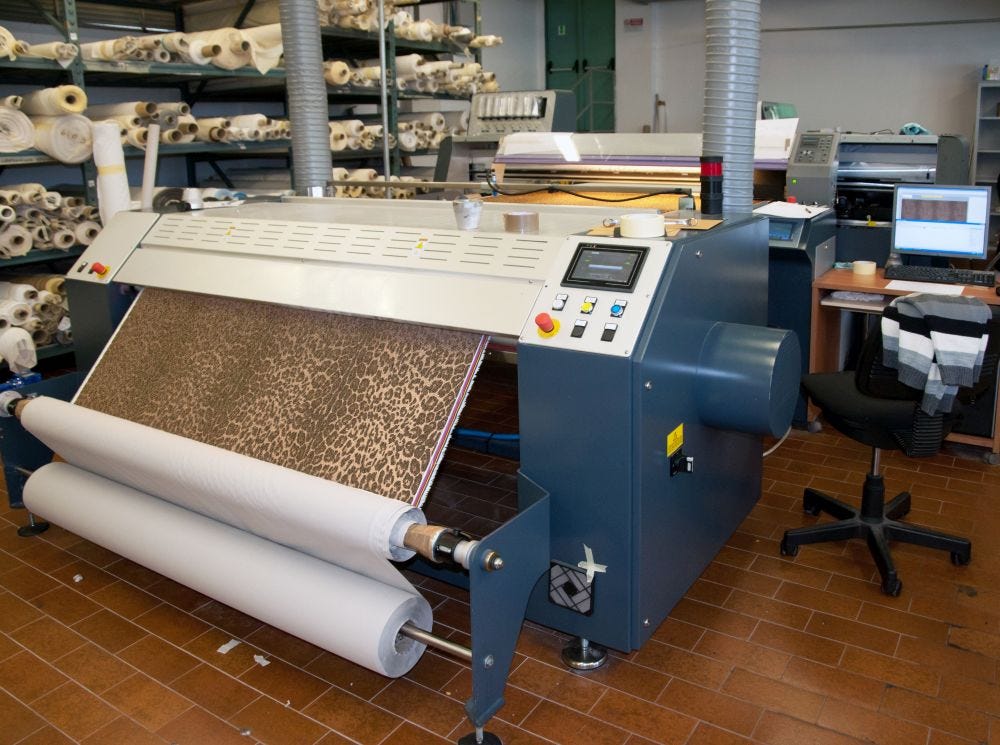
The 1990s witnessed the introduction of dye sublimation printing, pushing the boundaries of pattern creation in fabric printing. Progress continued into the 21st century with the popularization of wide-format digital textile printing machines in Europe by 1995, which were initially slow but set a foundational technology for future developments. The pace of innovation accelerated with the introduction of high-speed digital textile printers in 2011, capable of supporting mass production. Most recently, the development of single-pass printing technology in 2015 marked a significant milestone, achieving speeds of 70 meters per minute, thereby revolutionizing production rates.
These advancements have been complemented by a focus on sustainability and efficiency, with recent exhibitions like ITMA 2023 highlighting the integration of advanced materials, artificial intelligence, and automation into digital printing processes. The evolution of digital fabric printing technology continues to transform the textile industry, offering enhanced quality, faster production times, and new creative possibilities for fabric design.
Impact of Japanese Technologies on Digital Fabric Printing
Leading Companies and Products
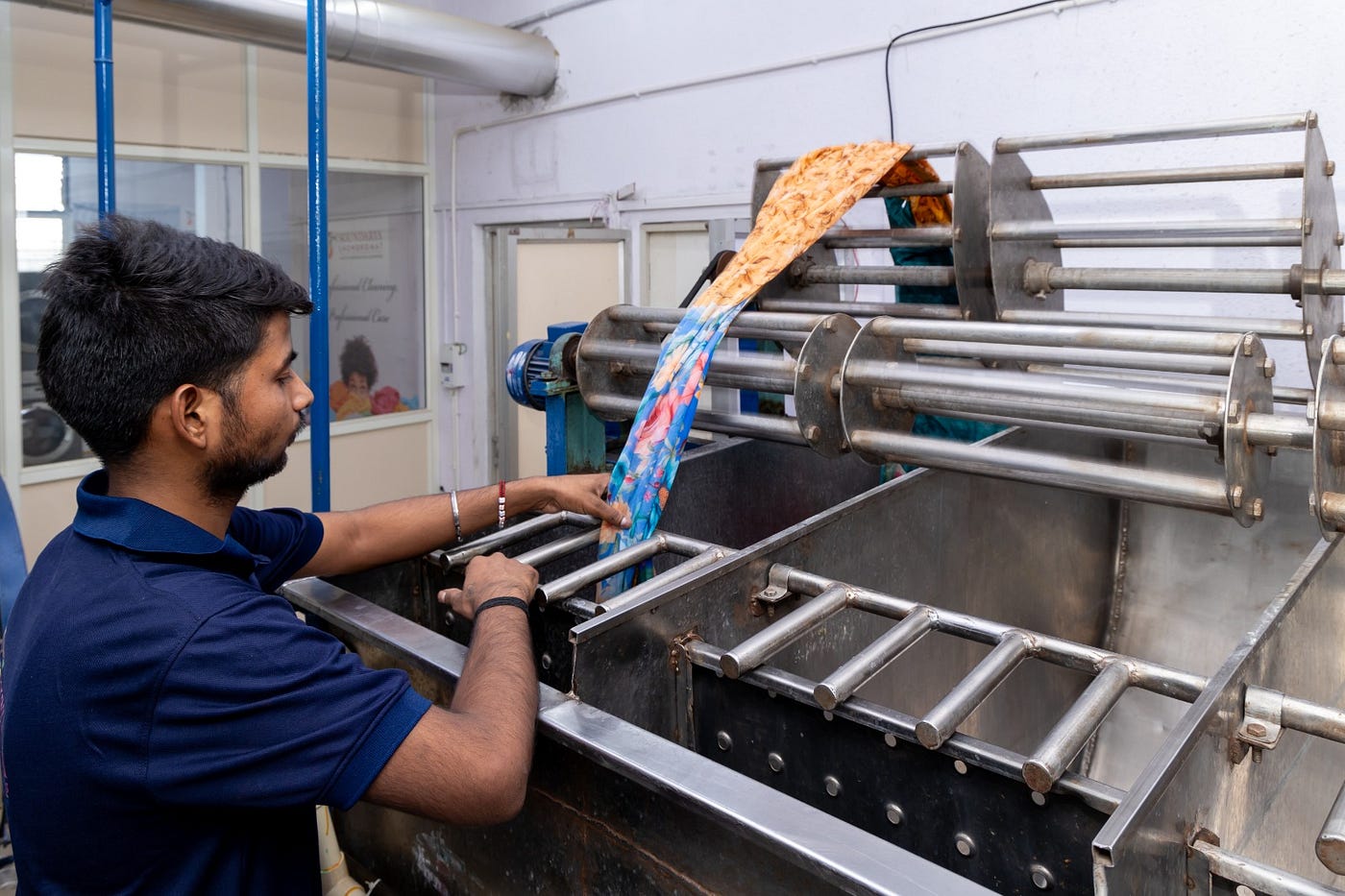
Japanese companies such as Kyocera and Seiko Epson have significantly influenced digital textile printing, leveraging inkjet technology to create detailed and fine patterns on fabric. Kyocera, for instance, has developed a digital textile printer capable of producing intricate designs on 2-meter-wide fabrics, mimicking the appearance of a large home printer but with advanced capabilities. This innovation marks a substantial shift from traditional analog dyeing methods, with a focus on water conservation and efficiency.
Seiko Epson has also made notable contributions, particularly with its partnership with the fashion designer Yuima Nakazato at Paris Haute Couture Fashion Week. This collaboration showcased garments created using Epson’s sustainable dry fiber technology, which emphasizes reduced water usage and the recycling of used garments into printable non-woven fabric.
Unique Contributions from Japan
The integration of traditional Japanese techniques with modern technology has been a hallmark of Japan’s impact on digital fabric printing. Historical methods like the katazome, which utilizes stencils and paste-resist dyes, have been adapted to contemporary printing technologies, blending artistry with innovation. This approach not only preserves the cultural heritage of Japanese textile art but also enhances it with the precision and versatility of digital technology.
Companies such as Toshin Kogyo have upheld these traditions by incorporating state-of-the-art techniques to reproduce the vibrant hues and intricate patterns characteristic of traditional Japanese textile printing. Their products, highly regarded both in Japan and globally, demonstrate a commitment to maintaining the aesthetic qualities of Japanese design while advancing the capabilities of textile printing technology.
This fusion of old and new has positioned Japanese digital textile printing at the forefront of the industry, offering both artistic depth and technological advancement.
Soundarya’s Journey with Digital Fabric Printing
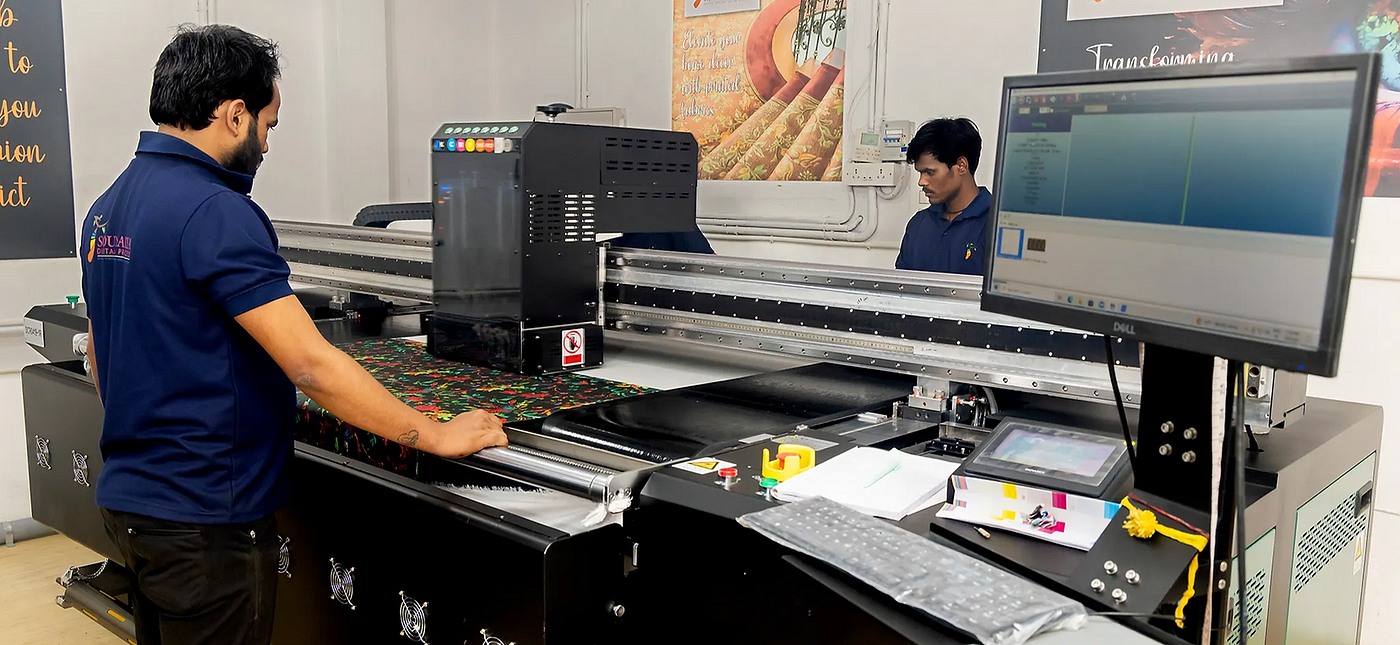
Soundarya’s engagement with digital fabric printing began in 1996, marking a significant turn in her career as a textile designer. Initially, she adopted digital techniques to enhance the precision and variety of her fabric designs. This early adoption allowed her to experiment with complex patterns and vibrant colors that were not feasible with traditional printing methods.
[embed]
https://www.youtube.com/@SoundaryaDigitalFabricPrints
Adoption of Digital Techniques in 1996
In 1996, Soundarya integrated digital printing technologies into her design process. This shift not only revolutionized her approach to textile design but also positioned her as a pioneer in the digital fabric printing industry. The use of these advanced techniques enabled the creation of intricate and high-quality prints that significantly reduced production time and costs.
Partnerships and Collaborations
Throughout her career, Soundarya formed several strategic partnerships and collaborations that furthered her impact in the industry. She worked closely with technology providers to refine digital printing processes and with fashion houses to bring innovative textiles to the market. These collaborations were pivotal in setting new standards in fabric printing, emphasizing the importance of synergy between design creativity and technological innovation.

Technological Evolution Over the Years
Over the years, Soundarya has witnessed and contributed to the technological evolution in digital fabric printing. From the initial adoption of basic digital printing equipment to the integration of cutting-edge technologies involving AI and automation, her journey reflects the broader trends in the industry. Each technological advancement has allowed her to push the boundaries of what is possible in textile design, continually enhancing both the aesthetic qualities and functionality of her fabrics.
Current Trends and Future Prospects in Digital Fabric Printing
Technological Advances
The digital fabric printing industry is witnessing significant technological advancements, particularly in high-speed production printers and nanotechnology-based inks. These innovations not only enhance color vibrancy and longevity but also improve compatibility with various fabrics, including natural fibers and synthetic materials. Advanced color management software further ensures accurate color reproduction, facilitating the creation of complex designs with extensive color palettes and gradients.
Industry Integration
Digital fabric printing is increasingly integrated with cutting-edge technologies such as artificial intelligence (AI) and machine learning (ML), which optimize the entire printing process from design creation to quality control. This integration is crucial for enhancing speed, cost-effectiveness, and overall print quality. Additionally, the fusion of digital and 3D printing technologies is expected to revolutionize fabric functionalities, offering multi-material and multi-functional textiles.
Future Innovations
Looking ahead, the digital fabric printing market is set to expand significantly, with projections showing a potential market value increase to 4.9 billion euros by 2023. This growth is driven by the rising demand for customization and the ability to print on a diverse range of substrates using eco-friendly methods. Innovations such as one-step digital textile printing are simplifying the production process by eliminating the need for pre and post-treatment, thus saving water, energy, and time. Furthermore, the adoption of Direct to Film (DTF) printing technologies is opening up new possibilities for personalized garments and sportswear, highlighting a shift towards more sustainable and versatile printing solutions.
Conclusion
Through the journey of this article, we’ve traversed the rich tapestry of the evolution of printing technology in digital fabric printing, from its ancestral roots in traditional methods to the burgeoning horizon of modern innovations. The narrative not only spotlighted pivotal developments and figures like the Japanese technologies and Soundarya’s pioneering adaptation but also unveiled the shifting paradigms in the industry, underscored by advancements in sustainable practices and AI integration. Such exploration reinforces the dynamic nature of digital fabric printing, underscoring its growth from rudimentary techniques to complex methods that cater to the ever-evolving demands of fashion and design.
As we stand on the cusp of future innovations, the significance of these advancements cannot be overstated. They herald a new era of fabric printing that promises even greater customization, efficiency, and environmental stewardship. The anticipation of technologies like one-step digital textile printing and Direct to Film (DTF) technologies not only showcases the industry’s capability to innovate but also its commitment to sustainability. In reflection, the evolution of digital fabric printing narrates a story of human innovation and creativity, driven by the desire to blend art and technology harmoniously, setting a vibrant course for the future of textile manufacturing.
FAQs
1. When did digital fabric printing first emerge? Digital textile printing began transforming the fashion industry in the late 1980s with the introduction of dye sublimation printing in the 1990s further enhancing its impact.
2. How is digital printing on fabric carried out? The digital printing process on fabric starts with pretreating the fabric with liquid solutions to enhance dye absorption. Following this, the fabric is fed through a printer that sprays dye onto the textile using tiny droplets. The final step involves fixing the fabric to ensure the design’s permanency.
3. Can you explain the historical development of fabric printing? Fabric printing dates back to before 220 CE in China, with the earliest surviving examples. It spread to Europe around the 12th century through the Islamic world. Although widely adopted, the quality of European dyes initially limited the use of printed patterns due to their tendency to liquify.
4. What impact has digital printing technology had on traditional commercial printing? Digital printing has revolutionized traditional printing by enhancing speed, efficiency, and cost-effectiveness. It has significantly reduced setup times and enabled on-demand printing, which shortens production schedules, facilitates quick revisions, and reduces waste.
메타데이터
- post_id
- 84cfdc0b0cd0
- slug
- the-evolution-of-printing-technology-in-digital-fabric-printing-84cfdc0b0cd0
- url
- https://medium.com/@soundaryadigitalfabricprints/the-evolution-of-printing-technology-in-digital-fabric-printing-84cfdc0b0cd0
- canonical_url
- https://medium.com/@soundaryadigitalfabricprints/the-evolution-of-printing-technology-in-digital-fabric-printing-84cfdc0b0cd0
- author_url
- https://medium.com/@soundaryadigitalfabricprints
- status
- ok
- fetched_at
- 2026-07-31 14:22:00