When Your PTT Radio Is Also a Web Browser: Managing Data on Android Field Devices
Android-based PTT devices give field teams powerful communication tools — and an open door to the internet. Here’s how to control what…
When Your PTT Radio Is Also a Web Browser: Managing Data on Android Field Devices
Source
Android-based PTT devices give field teams powerful communication tools — and an open door to the internet. Here’s how to control what happens on the other side of that door.
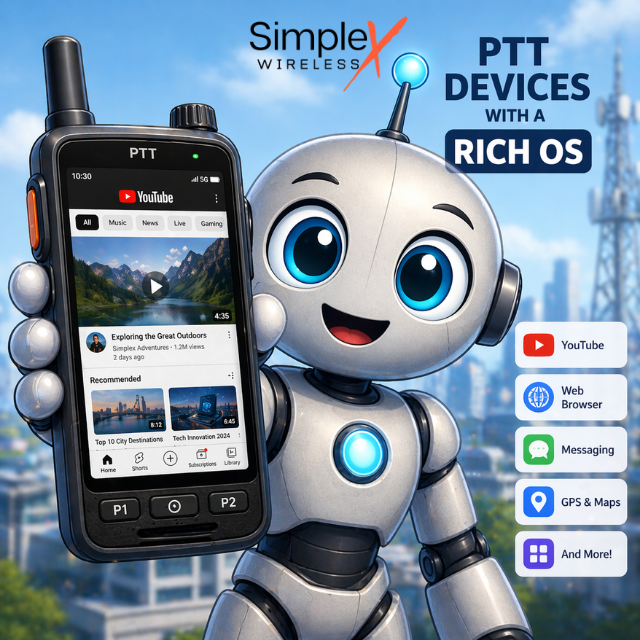
The shift from dedicated two-way radios to Android-based push-to-talk devices has real operational advantages: richer displays, GPS integration, app flexibility, and cellular coverage that follows carrier networks rather than proprietary frequencies. But Android is a general-purpose operating system. The same device running your PTT app can also run a browser, stream video, download apps from the Play Store, and consume data your organization is paying for in ways you never intended. For PTT resellers and the enterprise customers they serve, that’s not a hypothetical problem — it’s a billing and policy reality that surfaces as soon as devices leave the office.
The challenge: open internet on a purpose-built device
A PTT device used the way it’s supposed to be used consumes very little data. PTT over cellular traffic is low-bandwidth by design — voice packets are small, and a well-run deployment with 50 active field radios can operate comfortably within a modest pooled data plan. The economics of PTT connectivity work precisely because voice traffic is predictable and lean.
Android breaks that predictability. A worker who discovers the device has a browser and a YouTube app can consume in an afternoon what 20 PTT-only devices would use in a month. Multiply that across a fleet, and the data cost model collapses. Beyond cost, there are operational concerns: distracted workers, unauthorized app installs, and in regulated industries, potential data handling issues if personal browsing happens on a corporate SIM with a fixed IP address.
The devices themselves compound the problem. Modern Android PTT hardware often features large touchscreens designed to make the device more capable — but that same screen makes it easy and intuitive to use as a general smartphone. The hardware isn’t the issue. The issue is that the operating system was never designed to be a one-app device, and without deliberate configuration, it won’t behave like one.
Four dimensions of the open internet problem

Source
Why the SIM card alone can’t solve it
Continue reading the full article →
This article was created by Jan Lattunen, CCO Simplex Wireless
Jan Lattunen manages Sales and Marketing for Simplex Wireless. Jan has 20+ years’ experience in working with SIM card technology and was involved in launching the eSIM in North America with major carriers and OEMs. His expertise in telecommunications is around SIM cards. You can connect with Jan on https://linkedin.com/in/JanLattunen or send us an email as sales@simplexwireless.com for more information.
메타데이터
- post_id
- 84e64e355ff7
- slug
- when-your-ptt-radio-is-also-a-web-browser-managing-data-on-android-field-devices-84e64e355ff7
- url
- https://medium.com/@simplexwireless/when-your-ptt-radio-is-also-a-web-browser-managing-data-on-android-field-devices-84e64e355ff7
- canonical_url
- https://medium.com/@simplexwireless/when-your-ptt-radio-is-also-a-web-browser-managing-data-on-android-field-devices-84e64e355ff7
- author_url
- https://medium.com/@simplexwireless
- status
- ok
- fetched_at
- 2026-08-04 14:52:33