The Pill Replaced My Thyroid. It Didn’t Replace My Metabolism.
What a total thyroidectomy actually does to your metabolism.
Thyroid Health | Metabolism
The Pill Replaced My Thyroid. It Didn’t Replace My Metabolism.
What a total thyroidectomy actually does to your metabolism.

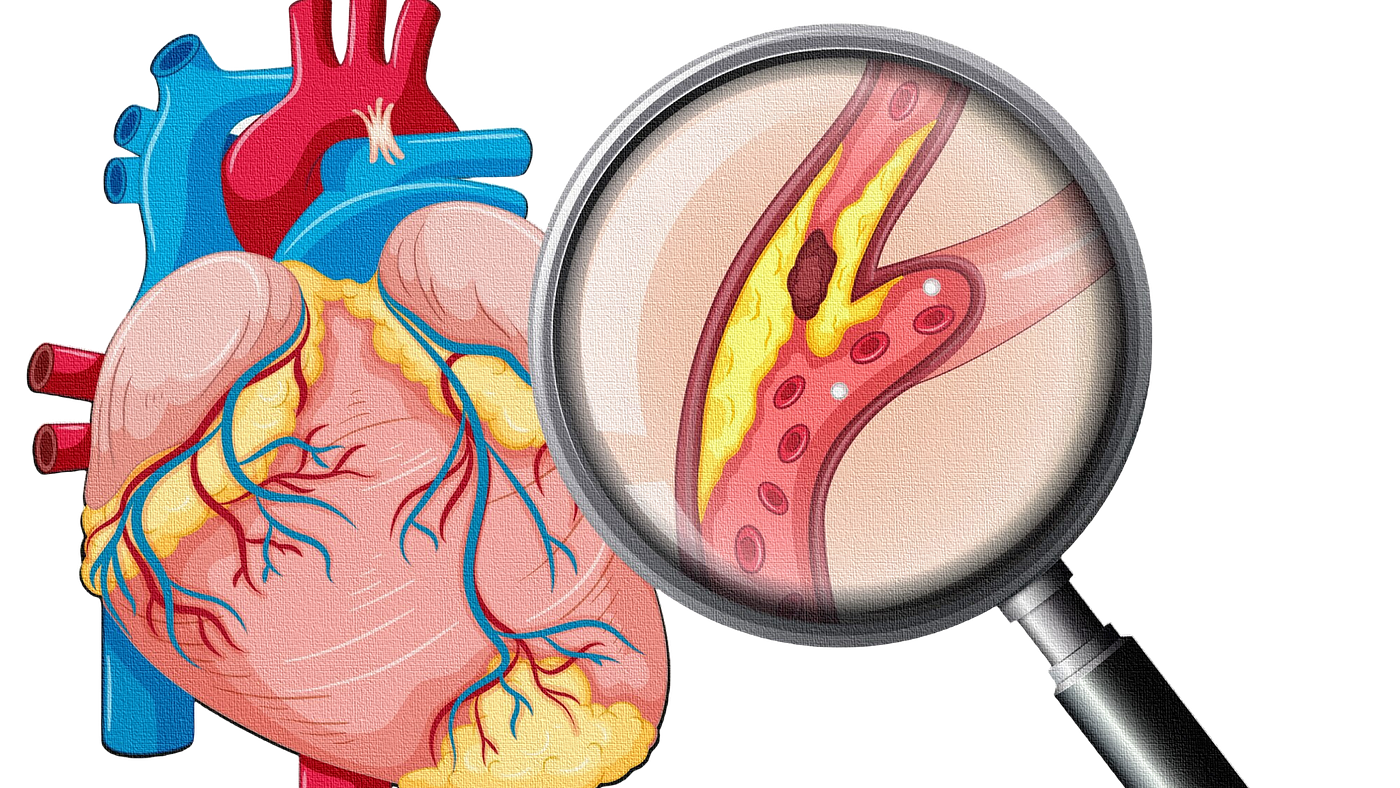
AI image generated by the author
The surgeon did a good job. Clean margins, no spread, the kind of outcome you want when somebody says the word cancer to you. I walked out of that with my life and a scar across the front of my neck, and I was grateful. Still am.
What nobody sat me down and explained was that losing your thyroid changes the math on your body for the rest of your life. Not for a few months. Not until the medication kicks in. For good. And the part that took me the longest to accept, the part that still gets argued with me in comment sections and at the gym, is that the number of calories my body burns at rest is lower than it used to be, and lower than the standard charts say it should be for a man my size and age.
I want to walk through why that happens, what the research actually says, and what you do about it. Because if you came out of a total thyroidectomy and your weight started creeping no matter what you did, you are not lazy and you are not imagining it.
What the thyroid was actually doing
Your thyroid makes two hormones that matter here. T4, which is mostly a storage form, and T3, which is the active one that drives metabolism in your cells. A healthy thyroid pumps out both. It makes most of your T4 and a meaningful share of your T3 directly, and it adjusts on the fly.
When the whole gland comes out, that on-site T3 production is gone. You are now what doctors call athyreotic. No thyroid tissue. The standard fix is a daily pill of levothyroxine, which is synthetic T4. The theory is that your body will convert that T4 into T3 in your liver, kidneys, and other tissues, and you will end up right where you were before.
For a lot of people, that theory holds well enough. For a meaningful minority, it does not. And that gap is where the weight problem lives.
The part people argue with
Here is the claim that gets pushback, stated plainly. After total thyroidectomy, a real subset of patients end up with lower active T3 and a lower resting metabolic rate than they had with a working thyroid, even when their TSH bloodwork reads perfectly normal.
That is not a fringe idea. A study of 1,811 patients with no thyroid, all taking levothyroxine and all showing normal TSH, found that their free T3 ran lower and their free T4 ran higher than matched people with healthy thyroids. More than one in five of those patients failed to keep their T3 or T4 in the normal range despite a TSH number that looked fine on paper. The conversion from the pill to the active hormone is not equally efficient in everyone.
That matters for weight because T3 is the hormone tied most directly to how many calories you burn sitting still. Researchers measured resting energy expenditure in women on levothyroxine and found it ran several percent lower per pound of lean mass than in healthy controls, and the women with the lowest readings also had the lowest T3. A few percent does not sound like much until you carry it across every day of every year.
I will be straight about the other side, because honest is more convincing than loud. Not every study agrees. One well-known trial found normal T3 levels were achievable on levothyroxine alone after thyroidectomy. The dosing studies are mixed on how much metabolism actually shifts. The fair reading of all of it is this: it is not universal, but it is real, and if it is happening to you, a normal TSH does not rule it out.
Why your doctor may say you are fine
Most thyroid care is built around one number, your TSH. Get that into range and the standard appointment is over. The trouble is that TSH is the pituitary’s opinion of your thyroid status, and after a thyroidectomy that feedback loop behaves differently than it did when you had a gland. You can land a textbook TSH while your free T3 sits at the bottom of the range or below it.
So when you say you are gaining weight on the same food and the same training, and the lab says you are fine, both things can be true at once. You are fine by the one measure being checked. You are also burning less than you used to. Ask for free T3 and free T4 to be run, not just TSH. You want to see the whole picture, not one slice of it.
What I actually changed
I stopped expecting my old maintenance calories to hold. That was the hardest mental adjustment, harder than the diagnosis in some ways, because it felt like a loss I had not agreed to. The food intake that kept me steady in my fifties now puts weight on me. So I eat less than the calculator tells a 62-year-old man my weight to eat, and I built the deficit slowly so I could actually live with it.
I protect muscle, because muscle is the part of your metabolism you still control. Resting burn is mostly driven by lean mass, and a thyroidectomy gives you a reason to fight for every pound of it. I lift heavy, three days a week, with real progression. I keep protein high, around a gram per pound of goal bodyweight, because protein both feeds muscle and costs more energy to digest than carbs or fat.
I walk. Not as exercise, as a thumb on the scale. The energy you burn moving around outside the gym is the most adjustable lever you have when your resting rate has dropped, and steps are the easiest way to pull it.
I take the pill the same way every single day, on an empty stomach, water only, then wait before coffee or food. Levothyroxine absorption is fussy and inconsistent dosing makes everything downstream harder to read.
And I had the T3 conversation with my doctor. Some people who stay symptomatic on levothyroxine alone do better with a small amount of added T3, and the research on combination therapy in post-surgical patients is cautiously encouraging on safety. It is not a guaranteed fix and it is not for everyone, but if you are doing everything right and still stuck, it is worth raising rather than suffering quietly.
The thing I want you to take with you
A thyroidectomy is not a death sentence, and it is not the end of being strong and lean. I am living proof of the strong part. But it does reset your baseline, and the advice to just eat less and move more lands like an insult when you have been doing exactly that and the scale keeps climbing.
You are not failing. The math changed. Now you understand why. Adjust the inputs, defend your muscle, watch the right labs, and keep going.
I am still here, still lifting, still arguing with my own body. So far I am winning.
If this helped, the Proud Boomer Wellness newsletter goes deeper on training and nutrition for the back half of life. Free signup is at https://the-proud-boomer.kit.com/proudboomerwellness. And if you want the full playbook on getting strong after 50, my book Not Done Yet is on Amazon: https://amzn.to/4ed2Td6.
This is education from a coach and a patient, not medical advice. Thyroid replacement is individual. Work the changes out with your own doctor and your own bloodwork.
References
- Gullo D, Latina A, Frasca F, Le Moli R, Pellegriti G, Vigneri R. Levothyroxine monotherapy cannot guarantee euthyroidism in all athyreotic patients. PLoS One. 2011;6(8):e22552.
- Peterson SJ, McAninch EA, Bianco AC, et al. Effects of levothyroxine replacement or suppressive therapy on energy expenditure and body composition (Samuels MH and colleagues). J Clin Endocrinol Metab / related thyroid literature, 2016.
- Izkhakov E, Meyerovitch J, Stern N, et al. Body composition, resting energy expenditure, and metabolic changes in women diagnosed with differentiated thyroid carcinoma. Thyroid. 2019;29(8). PMID 31088334.
- Jonklaas J, Davidson B, Bhagat S, Soldin SJ. Triiodothyronine levels in athyreotic individuals during levothyroxine therapy. JAMA. 2008;299(7):769–777.
- American Thyroid Association. Clinical Thyroidology for the Public: Safety of levothyroxine plus liothyronine (T4/T3) therapy in postsurgical hypothyroidism. Vol 17, Issue 3.
메타데이터
- post_id
- 84febb2e4587
- slug
- the-pill-replaced-my-thyroid-it-didnt-replace-my-metabolism-84febb2e4587
- url
- https://medium.com/no-time/the-pill-replaced-my-thyroid-it-didnt-replace-my-metabolism-84febb2e4587
- canonical_url
- https://medium.com/no-time/the-pill-replaced-my-thyroid-it-didnt-replace-my-metabolism-84febb2e4587
- author_url
- https://medium.com/@theProudBoomer
- status
- ok
- fetched_at
- 2026-06-25 07:00:49