The Lifecycle of a Business Rule: From Policy to Production
A Business Rule Is Never Just a Business Rule
The Lifecycle of a Business Rule: From Policy to Production
A Business Rule Is Never Just a Business Rule

A policy is approved.
A requirement is documented.
A development team implements it.
The feature is released.
The rule is now live.
Simple.
At least that’s how many organizations think business rules work.
But the reality is very different.
Because every business rule follows a journey that is far more complex than most teams realize.
A rule that begins as a simple business decision eventually influences:
- customer experience
- system architecture
- operational processes
- integrations
- data flows
- support activities
- compliance controls
And by the time it reaches production, it often looks very different from the original statement that started it all.
What This Article Will Change for You
If you work in:
- Business Analysis
- Product Management
- Agile Delivery
- Digital Transformation
- System Design
This article will help you understand the complete lifecycle of a business rule.
Because one of the biggest reasons requirements fail is that teams focus on the rule itself…
Instead of understanding the journey that rule must travel.
The Hidden Reality of Business Rules
Most organizations think business rules look like this:
Policy
→ Requirement
→ Development
→ Release
Reality Looks More Like This
Business Need
→ Policy
→ Rule Definition
→ Requirement
→ Design
→ Architecture
→ Development
→ Testing
→ Operations
→ Customer Experience
→ Production Reality
Key Insight
A business rule is not a statement.
It is a chain of decisions that eventually becomes system behavior.
Stage 1: The Rule Begins as a Business Problem
Every business rule starts because someone is trying to solve something.
Examples
Reduce fraud.
Improve compliance.
Protect customers.
Increase operational efficiency.
Reduce risk.
Example
A business leader says:
Customers should not be able to transfer more than their available balance.
At This Stage
Nobody is discussing:
- databases
- APIs
- workflows
- validation engines
The discussion is purely business-focused.
Insight
Business rules originate as solutions to business problems.
Stage 2: Policy Creates Direction
The organization formalizes its intention.
Example
Policy:
Transactions must be restricted when sufficient funds are unavailable.
The Challenge
Policies are designed for people.
Not systems.
Policies often contain:
- ambiguity
- interpretation
- assumptions
Example Questions
What qualifies as available balance?
What about pending transactions?
What about overdrafts?
What about account holds?
Insight
Policies provide direction, not implementation detail.
Stage 3: Business Analysis Turns Policy into Requirements
This is where Business Analysis becomes critical.
The Business Analyst starts asking questions.
Example
Instead of:
Sufficient funds required.
The analyst explores:
- Which balance should be checked?
- At what point should validation occur?
- What message should the customer receive?
- What happens when validation fails?
The Transformation
Policy becomes operational logic.
Insight
Requirements are where business intent starts becoming executable.
Stage 4: Business Rules Become System Behavior
Now architects and engineers enter the conversation.
The rule must become something a system can enforce.
Human Thinking
Enough balanceSystem Thinking
If Available Balance >= Transaction Amount
Then Allow Transfer
Else Reject Transfer
The rule becomes deterministic.
Precise.
Enforceable.
The Hidden Shift
The organization moves from meaning…
To logic.
Insight
Systems require certainty where businesses often tolerate ambiguity.
Stage 5: Architecture Begins Shaping the Rule
This stage is frequently overlooked.
Many people assume architecture simply implements rules.
In reality:
Architecture often influences how rules behave.
Example
Balance validation may require:
- Core Banking
- Customer Service
- Transaction Engine
- Fraud Service
Now Questions Appear
What happens if one service is unavailable?
Should validation continue?
Should the transaction wait?
Should retry logic exist?
The Rule Evolves
The original business statement now depends on technical realities.
Insight
Business rules rarely survive architecture unchanged.
Stage 6: Testing Reveals Hidden Assumptions
This is where reality starts challenging theory.
Example Test Cases
What if:
- balance updates simultaneously?
- network latency exists?
- multiple transfers occur together?
- data synchronization is delayed?
Discovery Happens
The team realizes:
The original rule didn’t answer everything.
New Clarifications Appear
Additional conditions.
Additional scenarios.
Additional controls.
Insight
Testing often discovers business rules that were never documented.
Stage 7: Production Creates New Reality
The rule finally goes live.
The organization expects:
Policy
=
System Behavior
Reality
Customers interact differently than expected.
Operations discover new challenges.
Support receives unexpected questions.
Example
Customers repeatedly complain:
“Why was my transfer rejected?”
Investigation Reveals
The system behaved correctly.
The customer didn’t understand the rule.
The Lesson
A rule is not complete until it works in production.
Insight
Production is where business rules meet reality.
Business Case: The Daily Transfer Limit
Original Policy
Customers may transfer up to $10,000 per day.
Simple?
Seems so.
Business Analysis Discovers
- calendar day?
- rolling 24 hours?
- local time?
- account time zone?
Architecture Discovers
- transaction aggregation required
- historical data needed
- performance implications
Testing Discovers
- concurrent transactions
- duplicate requests
- timing issues
Production Discovers
Customers travelling internationally experience confusion due to timezone differences.
The Lesson
The business rule was never just:
$10,000 per day.
The Hidden Costs Along the Lifecycle
Poorly managed business rules create:
- requirement ambiguity
- inconsistent implementations
- customer confusion
- operational complexity
- technical debt
- compliance risk
Most Teams Focus On
The requirement.
Strong Teams Focus On
The lifecycle.
Insight
The quality of a business rule depends on how well its entire journey is managed.
How High-Performing Teams Handle Business Rules
They stop asking:
“What is the rule?”
And start asking:
“What will this rule become?”
The Business Rule Lifecycle Framework
1. Understand The Business Problem
Ask:
Why does this rule exist?2. Clarify Meaning
Ask:
How should people interpret this rule?3. Define Behavior
Ask:
How should systems enforce it?4. Validate Architecture
Ask:
Can the platform support this consistently?5. Test Real Scenarios
Ask:
What happens when reality becomes messy?6. Observe Production
Ask:
How are customers actually experiencing this rule?Reusable Business Rule Review Checklist
Before approving any business rule, ask:
What business problem does this solve?

Is the policy clear?

Have assumptions been identified?

How will systems enforce it?

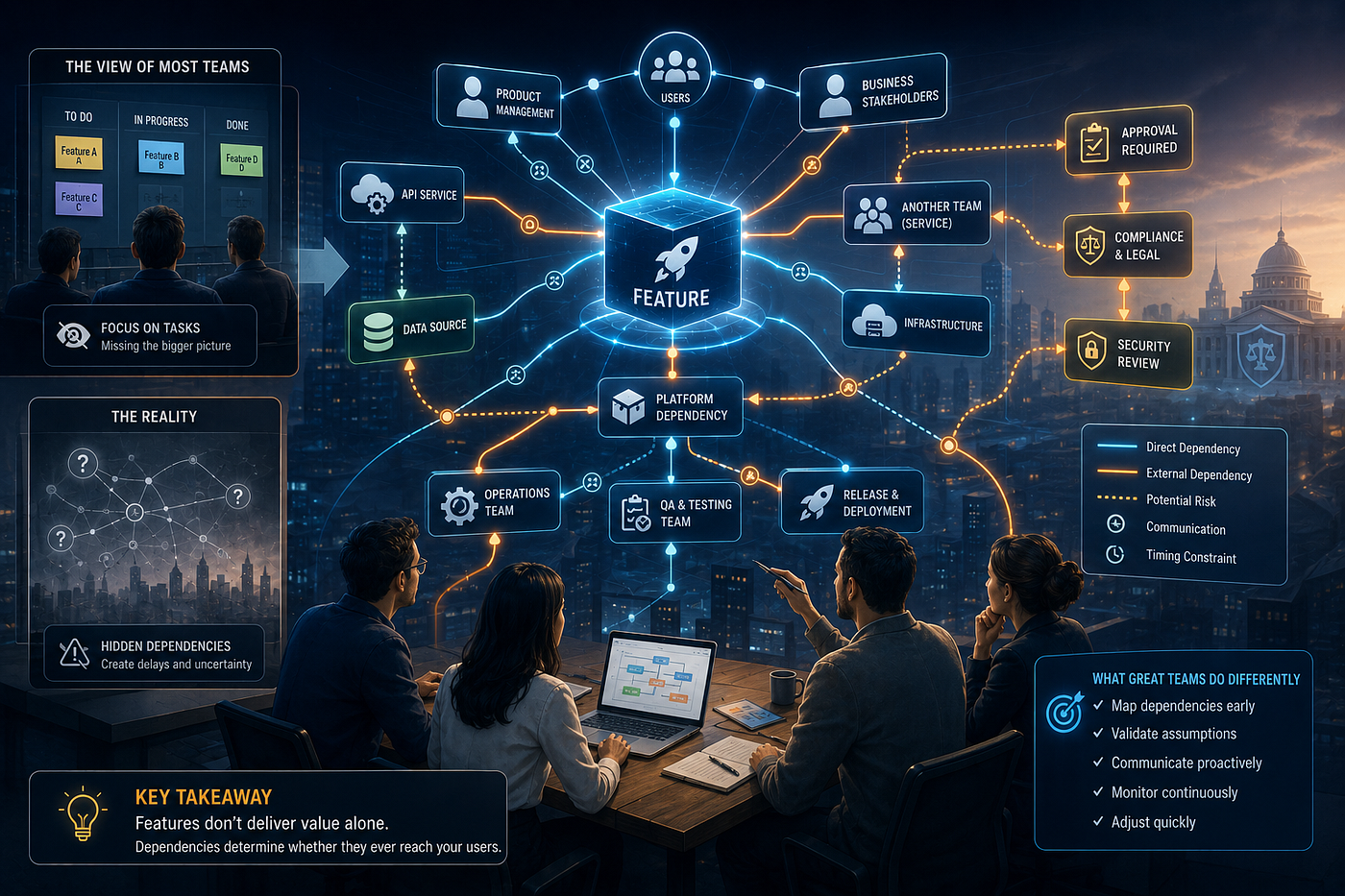
What dependencies exist?

How will customers experience it?

How will operations support it?

What happens when exceptions occur?
Learning Block
A business rule does not become valuable when it is documented.
It becomes valuable when:
Business intent, system behavior, and customer experience remain aligned throughout its lifecycle.
Final Reflection
Many organizations spend significant effort defining policies.
Far fewer spend the same effort understanding how those policies evolve through delivery.
Yet the biggest problems rarely occur at the policy level.
They occur during translation.
Between business intent and production reality.
Closing Thought
The next time someone says:
“It’s just a business rule.”
Remember:
That rule is about to begin a long journey.
A journey through requirements, architecture, development, testing, operations, and customer experience.
And every step along that journey will shape the product your customers ultimately experience.
Let’s discuss
- What business rule caused the most unexpected complexity in your organization?
- Where do you think business rules most commonly break down: requirements, architecture, testing, or production?
Connect & Keep Building! 🌟 Loved this article? You’re the architect of change in your organization and I’m here to help you build smarter. Share it with your team to spark fresh ideas or drop your thoughts and real-world stories in the comments. I’d love to hear how you’re driving transformation from insight to impact.
📢 Want more on Digital Banking, AI, and Business Transformation Follow for weekly deep dives on how technology and human intelligence are reshaping the future of finance.
If you’re exploring how Agile teams learn, decide, and deliver real value, you may also find these guides useful:
- The Requirement That Meant 5 Different Things to 5 Different People How a single requirement can create five different realities across the same project.
- A Practical Discovery Checklist Every Agile Team Should Use Before Sprint Planning A simple checklist to uncover hidden assumptions before they become sprint problems.
- What High-Performing Teams Do Differently (That No One Documents) The invisible habits and behaviors that make great teams consistently effective.
- The Technical Thinking Gap Between Business and Engineering Why business and engineering teams often solve different problems while discussing the same requirement.
- A Decision-Making Framework Product Teams Can Use When Everything Feels High Priority A practical approach to prioritization when everything seems urgent.
- Outcome Mapping for Agile Teams: A Simple Way to Connect Stories to Value Learn how to connect delivery efforts directly to measurable business outcomes.
- Why Backlog Refinement Isn’t Discovery (And What Agile Teams Miss) Understanding the critical difference between refining work and discovering the right work to do
📩 For collaborations, discussions, or speaking opportunities: Connect with me directly on LinkedIn or email me at **eslamelemam2015@gmail.com**
메타데이터
- post_id
- 852425db838b
- slug
- the-lifecycle-of-a-business-rule-from-policy-to-production-852425db838b
- url
- https://medium.com/agileinsider/the-lifecycle-of-a-business-rule-from-policy-to-production-852425db838b
- canonical_url
- https://medium.com/agileinsider/the-lifecycle-of-a-business-rule-from-policy-to-production-852425db838b
- author_url
- https://medium.com/@eslamelemam2015
- status
- ok
- fetched_at
- 2026-07-09 16:25:21