The Biohacker’s Delusion: 10 Popular Methods That Mostly Just Drain Your Wallet
Cold plunges, red light panels, NAD drips, and smart drugs. Biohacking promises to upgrade your biology. Your biology would like a word.
Health // Fitness // Myths
The Biohacker’s Delusion: 10 Popular Methods That Mostly Just Drain Your Wallet
Cold plunges, red light panels, NAD drips, and smart drugs. Biohacking promises to upgrade your biology. Your biology would like a word.
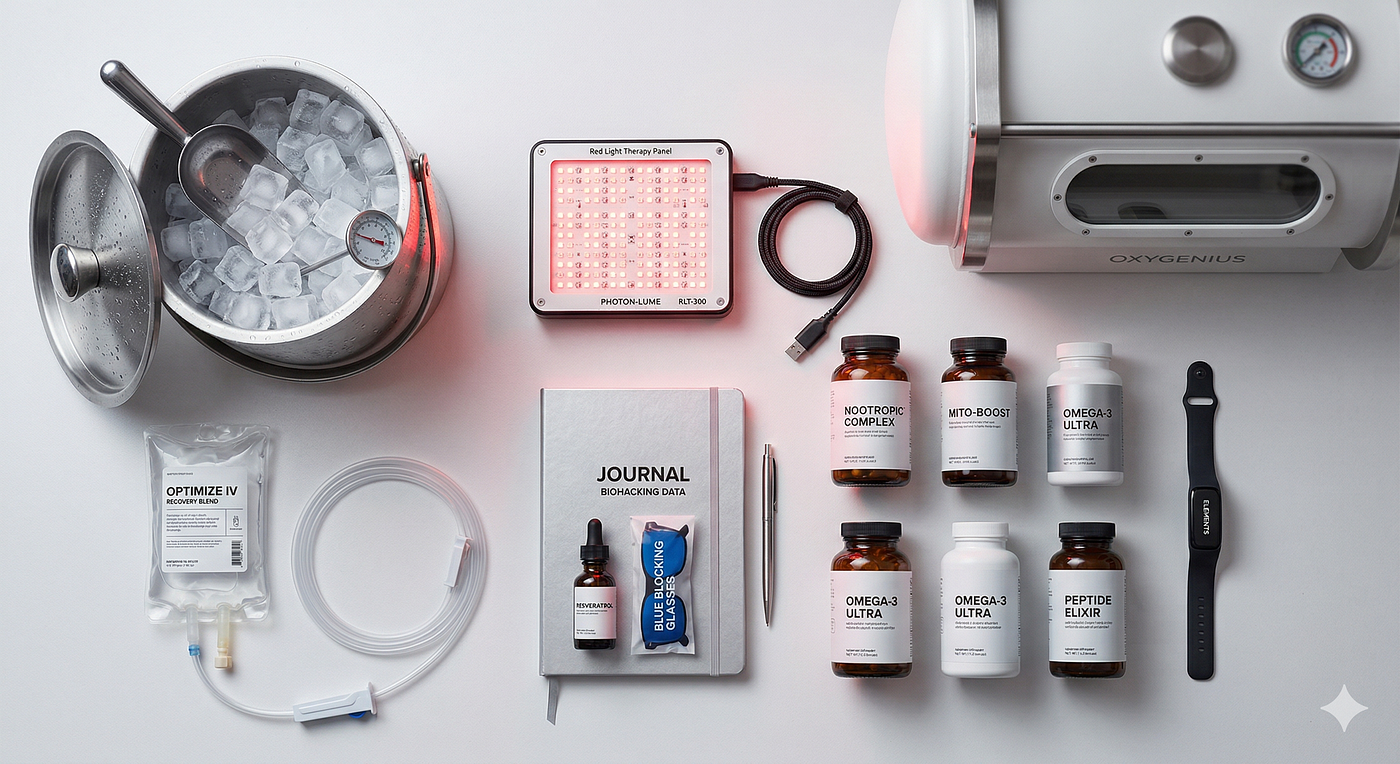
There is a $25 billion industry built on the premise that you are a machine in need of an upgrade. The biohacking movement would have you believe that the right combination of cold water, colored lights, smart pills, and electronic gadgets can make you live longer, think faster, and perform better than your genetics intended. Some of it is genuine science. A lot of it is expensive theater dressed up in the language of optimization.
Even the market research reports on the biohacking industry concede that the majority of techniques may lack supporting medical evidence. That’s not a critic talking. That’s the people counting the money.
Here are ten of the most popular biohacking methods, what the science actually says, and why you should probably hold onto your credit card.
1. Cold Plunges
You’ve seen them. Men with neck tattoos and podcast deals sitting in tubs of ice water, looking like they’re having a spiritual experience. The cold plunge has become the signature ritual of the optimization crowd, and the claims are breathtaking: boost immunity, torch fat, elevate mood, extend lifespan, and apparently become a better human being in general.
The evidence is considerably less dramatic. A 2025 study on the Wim Hof method found no positive changes in blood pressure, heart rate, heart function, or mood after 15 days of cold exposure. There’s more: research shows that cold plunging after resistance training may actually blunt muscle growth by decreasing the activation of satellite cells responsible for building and repairing muscle. A 2024 meta-analysis confirmed this, concluding that cold water immersion immediately following resistance training may reduce hypertrophy.
So if you’re chasing gains, that ice bath after the gym may be actively working against you. The ritual feels like discipline. Sometimes it’s just cold.
2. Red Light Therapy
Panels of red and near-infrared LEDs have become wellness room fixtures, marketed for everything from skin rejuvenation to muscle recovery to brain enhancement. A device radiating healing photons at your face sounds almost too convenient to be true. That instinct is worth trusting.
Human research on red light therapy remains extremely limited outside narrow dermatology applications. The consumer panels sold online are a different animal from clinical devices entirely. Frequency ranges vary, doses are inconsistent, and the gap between what happens in a controlled clinical setting and what happens in your living room is vast. The devices are largely unregulated, the claims are broad, and the price tags are steep. It’s a lot of money to potentially feel slightly warmer.
3. NAD+ Supplements
NAD is a molecule involved in cellular energy metabolism. As we age, NAD levels decline. Supplementing with precursors like NMN or NR has become one of the hottest longevity plays in the biohacking space, backed by celebrity endorsements and supplements priced like they contain actual gold.
A 2024 randomized controlled trial on NAD supplementation found that while it did raise NAD levels, it did not significantly improve cognition, fatigue, sleep, or mood versus placebo. Studies on sleep benefits are flat-out contradictory, with one 2024 study showing modest improvements and a 2022 study showing none at all in a similar population. One paper raises a flag worth noting: since NAD fuels all cells, researchers have suggested it could also support cancer cell development, recommending screening before starting NAD treatment.
The mouse studies are genuinely interesting. You are not a mouse.
4. Nootropics / Smart Drugs
Take a pill, get smarter. Nootropics are supplements and compounds marketed for cognitive enhancement, memory, focus, and “neurohacking.” The market exceeded $16 billion in 2025, which tells you a lot about how badly people want to believe a capsule can replace sleep and a 20-minute walk.
Most of what people spend serious money on has limited human trial data, inconsistent dosing, no long-term safety record, and no FDA oversight on purity or accuracy of label claims. The most consistently effective cognitive enhancement protocol remains the same boring one it’s always been: sleep well, exercise, manage stress, eat vegetables. The supplement industry finds this profoundly inconvenient.
5. Continuous Glucose Monitors for Healthy People
CGMs are genuinely useful tools for people managing diabetes. Somewhere along the way, they migrated to the wrists of perfectly healthy people who want to optimize their “metabolic flexibility” and then panic about their ancient grain bread choices.
Glucose variability in healthy adults is normal. It’s called eating. The data generated by a CGM for someone with no metabolic disorder is largely noise getting interpreted as signal. Research has documented that constant health tracking can generate stress rather than relieve it, leading to overanalysis, health anxiety, and unnecessary dietary restrictions. Removing rice from your diet because a $400 device flagged a brief and completely normal glucose response is not optimization. It’s a condition.
6. Hyperbaric Oxygen Therapy
Climbing into a pressurized chamber and breathing pure oxygen sounds like something a Bond villain would do to himself for health reasons. HBOT has legitimate clinical uses for wound healing, carbon monoxide poisoning, and certain infections. The biohacking spin extends those narrow indications into claims about anti-aging and cognitive enhancement.
Personal units run $5,000 to over $20,000. The clinical evidence for anti-aging applications is preliminary, conducted in small samples, often funded by people with financial stakes in the outcome. The wounds HBOT genuinely helps heal are not the kind you’re shopping for on a biohacking forum.
7. Peptide Therapy
Certain therapeutic peptides have legitimate medical applications. Then there’s the biohacker version, which involves ordering research chemicals online labeled “not for human consumption” and injecting them anyway because a guy on YouTube says they gave him the recovery capacity of a 25-year-old.
Many of these products originate from dubious sources, may contain impurities, and carry a real record of reported side effects and injuries. The optimism required to inject an unregulated substance from an unverified supplier into your own body in pursuit of marginal recovery gains is a particular kind of faith that science is not currently in the business of rewarding.
8. IV Drip Therapy / Nutrient Infusions
Pay a few hundred dollars, lie in a recliner, and have vitamins dripped directly into your bloodstream. The pitch is that oral supplements don’t absorb well, so bypassing the digestive system delivers superior results. This sounds logical. It mostly isn’t.
If you’re not deficient in the nutrients being delivered, flooding your bloodstream with high-dose vitamins has no established benefit for healthy people, and some fat-soluble vitamins can accumulate to toxic levels. The experience of lying in a dim room while something drips into your arm does have a potent placebo effect. At those prices, it should.
9. Infrared Sauna
Regular sauna use does have some legitimate cardiovascular evidence behind it, particularly for traditional high-heat sauna use in Finnish populations over decades of habitual use. The infrared version appeals to biohackers because it heats at lower temperatures while allegedly penetrating tissue more deeply.
The evidence specific to infrared saunas, as distinct from conventional saunas, is thin. Most of the useful research was done on traditional saunas in populations with long-term habitual use, and extrapolating that to 30 minutes in a cedar box at your local biohacking studio requires imaginative leaps. Sweating feels like it’s doing something. That’s not the same as it doing something.
10. Wearables and Biometric Obsession
Full disclosure: I wear an Oura ring and train with a Garmin. I track my HRV, my sleep stages, and my resting heart rate, and I actually enjoy the data. Watching the resting heart rate trend downward over months of consistent training is satisfying in the same way a logbook is. It confirms what you’re doing is working.
But I’m under no illusions about what these devices are and aren’t. Wearables account for nearly 30% of the biohacking market, and the industry has pushed them well past their evidence base. The problem isn’t the data. It’s what people do with it. You wake up feeling fine, but your HRV score is yellow, and now you’re second-guessing whether to train. You slept seven hours but the ring says sleep quality was poor, so now you’re anxious about your anxiety-causing device. Research has documented that over-reliance on biometric devices can reduce intuitive body awareness, leading people to prioritize data over how they actually feel.
Use the data as a trend line, not a verdict. If your metrics say rest and your body says train, I’d lean toward the body. It has more experience.
The Bottom Line
None of this means every biohack is worthless. Some have real but narrow applications under specific conditions for specific populations. What they don’t have is the sweeping, anti-aging, performance-unlocking power the industry sells. Study after study points to the same unsexy conclusion: foundational habits like regular exercise, adequate sleep, and real food outperform the vast majority of what the optimization industry peddles.
The biohacking industry is worth $25 billion because people have legitimate concerns about aging and performance and a powerful desire for shortcuts. That’s not a character flaw. It’s human nature. The flaw is an industry that meets that desire with gadgetry and supplements priced well above their evidence base.
Sleep enough. Lift something heavy. Eat food that grew in the ground. Walk outside. Repeat for the rest of your life. That protocol is free, thoroughly supported by decades of research, and deeply unsexy. It will never be sponsored by a podcast.
Stay strong. Stay skeptical.
John Harris, The Proud Boomer
Sources
- Grand View Research. Biohacking Market Size & Industry Report, 2030.
- Metatech Insights. Biohacking Market Size, Growth, Share, Trends and Forecast 2032.
- Mayo Clinic Press. Cold Plunge Benefits: The Science Behind Ice Baths for Recovery. November 2025.
- NPR Health. What Are the Health Benefits of a Cold Plunge? Scientists Vet the Claims. October 2023.
- PLOS One. Effects of Cold-Water Immersion on Health and Wellbeing: A Systematic Review and Meta-Analysis. January 2025.
- Wikipedia. Ice Bath. (citing 2024 meta-analysis on resistance training.)
- The Lancet / eClinicalMedicine. Effects of Nicotinamide Riboside on NAD+ Levels, Cognition, and Symptom Recovery in Long-COVID: A Randomized Controlled Trial. November 2025.
- Nucleus. NAD Benefits: Should You Take NAD Supplements?
- Bridges for Parkinson’s. Nootropics, Red Light Therapy, and Adaptogens: Separating Hope from Hype. November 2025.
- Medical Daily. Biohacking Trends in 2026: Exploring Risks, Benefits, and Safety of Popular Health Hacks.
- News-Medical. 5 Biohacking Secrets to Help You Live Longer. March 2025.
This article was researched with AI assistance from Claude. All scientific claims were verified against the peer-reviewed sources and reputable health publications listed. The opinions, voice, and editorial judgment are the author’s own.
메타데이터
- post_id
- 8551aad45197
- slug
- the-biohackers-delusion-10-popular-methods-that-mostly-just-drain-your-wallet-8551aad45197
- url
- https://medium.com/@theProudBoomer/the-biohackers-delusion-10-popular-methods-that-mostly-just-drain-your-wallet-8551aad45197
- canonical_url
- https://medium.com/@theProudBoomer/the-biohackers-delusion-10-popular-methods-that-mostly-just-drain-your-wallet-8551aad45197
- author_url
- https://medium.com/@theProudBoomer
- status
- ok
- fetched_at
- 2026-07-19 10:33:50